orgo test 4
 Call Kai
 Learn
 Practice Test
 Spaced Repetition
 Match
 Flashcards
 Knowt Play
1/39

There's no tags or description
Looks like no tags are added yet.
40 Terms
R-OH
alcohol
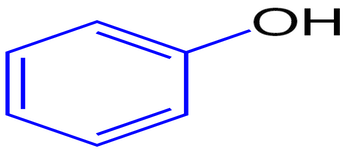
phenol
how to name alcohol
1) identify longest chain (must include OH), 2) identify/name sabs, 3) number the chain starting on the side closest to the OH group (name ends in anol)
what part of R-OH is polar
OH because h bond, making it hydrophilic
what part of R-OH is nonpolar
R, making it hydrophobic
which alcohols are completely soluble in water
small alcohols (1,2,3 carbons)
what alcohols are partially soluble in water
alcohols with 4,5,6, or 7 carbons
what alcohols are not soluble in water
large alcohols, more than 7 carbons
R-O- + H+
alkoxide, conjugate base of alcohol, pka: 16-18, needs a strong base to be fully deprotonated
acidities of alcohol are affected by
resonance, induction, and solvent
more resonance
increases base stability (weaker base, more acidic, lower pka)
more polarity
more base stability (weaker base, more acidic)
more solvation
increases base stability (weaker base, more acidic)
solvation
solvent molecules surround and interact with solute particles, stabilizing them in solution

NaOH, Sn2
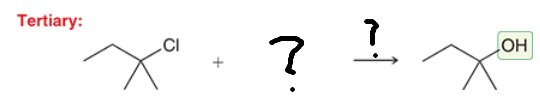
H2O, Sn1
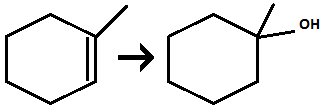
dilute H2SO4 or 1) Hg(OAc)2, 2) NaBH4 (NO RAR)

1) BH3, 2)NaOH, H2O2
oxidation state
all electrons go to the more electronegative atom (same electronegativity share), higher number the less electrons a element has
oxidation
increase in C-O, decrease in C-H, increase in oxidation state of carbon
reduction
decrease in C-O, increase in C-H, decrease in oxidation state of carbon
hydride reducing agents
NaBH4 and MeOH, 1) LAH, 2) H3O
ketone + hydride reducing agents=
secondary alcohol
aldehyde + hydride reduction agents=
primary alcohol

1) xs LAH, 2)H3O
why can NaBH4 not be used to reduce esters
NaBH4 is less nucleophilic than LAH and ester is less electrophilic than ketones and aldehydes
Grignard reagents
(R-)Mg-X, used to reduce and add R groups (2nd step is H3O), good nucleophile, strong base

1) R-Mg-X, 2)H3O
ketone + grignard=
tertiary alcohol
aldehyde + Grignard=
secondary alcohol

2 CH3-MgCl
1) Mg, 2) H2O is used to…
remove halogens
protective group
lower reactivity of functional group, tms-cl, et3N
reagents that substitute OH with no RAR
SOCl2/pyride and PBr3
oxidation of a secondary alcohol makes
ketone
oxidation of a primary alcohol makes
aldehyde
oxidation of aldehyde makes
acid
chromic acid
a strong oxidizing agent, can be made with CrO3/acetone/H3O or Na2Cr2O7/H2SO4/H2O
mild oxidizing agents
less reactive, more slective, PCC, swern, DMP