5 Ancient Maya
 Call Kai
 Learn
 Practice Test
 Spaced Repetition
 Match
 Flashcards
 Knowt Play
1/9

There's no tags or description
Looks like no tags are added yet.
10 Terms
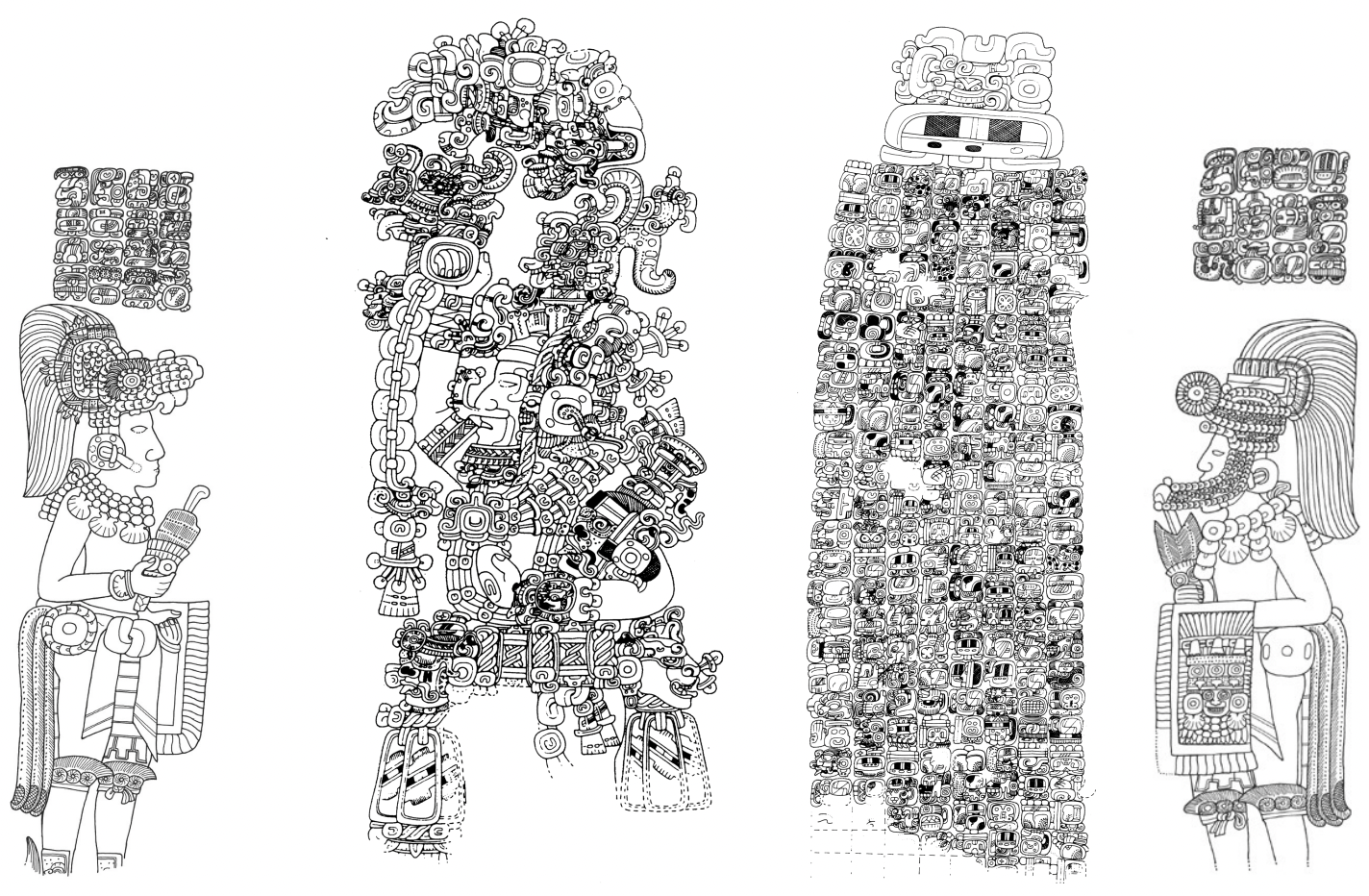
Line drawing of Stela 31 from Tikal, original dedicated 445 CE, limestone, h. approximately 8 ft.
contrast Teotijuacan figure with maya figure
M figure feels more overwhelming and powerful
guy holding chain is portrait of specific Tikal ruler. He is richly attired and holds aloft a headdress. The personal names of ancestors, rulers, nobles, and gods appear in hieroglyphics in various parts of Siyaj Chan K'awiil's costume and in the headdress he holds (lineage theme)
he’s in traditional early classic maya style
two warriors show influence of Teotihuacan style
• Atlatl (Spearthrower): He holds a central Mexican atlatl (spearthrower), a weapon and symbol of authority native to Teotihuacan that was not commonly used by the Maya.
• Tlaloc Shields: He carries rectangular or square shields adorned with the face and iconography of Tlaloc, the Teotihuacan war/storm god.
• Warrior Costumes & Headdresses: The figures wear Teotihuacan-style war garb, plate/tassel headdresses, and square-shaped military shields associated with the central Mexican highlanders

Pyramid I at Tikal, c. 734 CE, h. approximately 154 ft
burial monument to deceased ruler (visual representation of site history)

Reconstruction of the Temple of Inscriptions at Palenque, original late 7th century CE
corbel vaults represent levels of upper world
representations in carvings of pakal’s son as royal diety
legitimizing his lineage through divine connection

Lid of Pakal’s Sarcophagus from the Temple of Inscriptions at Palenque, c. 683 CE, limestone (dolomite), 12.5 × 7.2 ft
skeleton found wearing lots of jade and jewelry
lid covered in inscriptions and images of specific rulers
face on bottom (snarling mouth)
waves coming up makes image of Pakal being lifted into underworld
pakal in middle realm where people are
cross is the great tree- the tree connecting middle realm into upper world
bird on top of world tree is associated with divine kinship and the heavens
pakal dressed as maize god
sides of sarcophogus has pakal’s ancestors
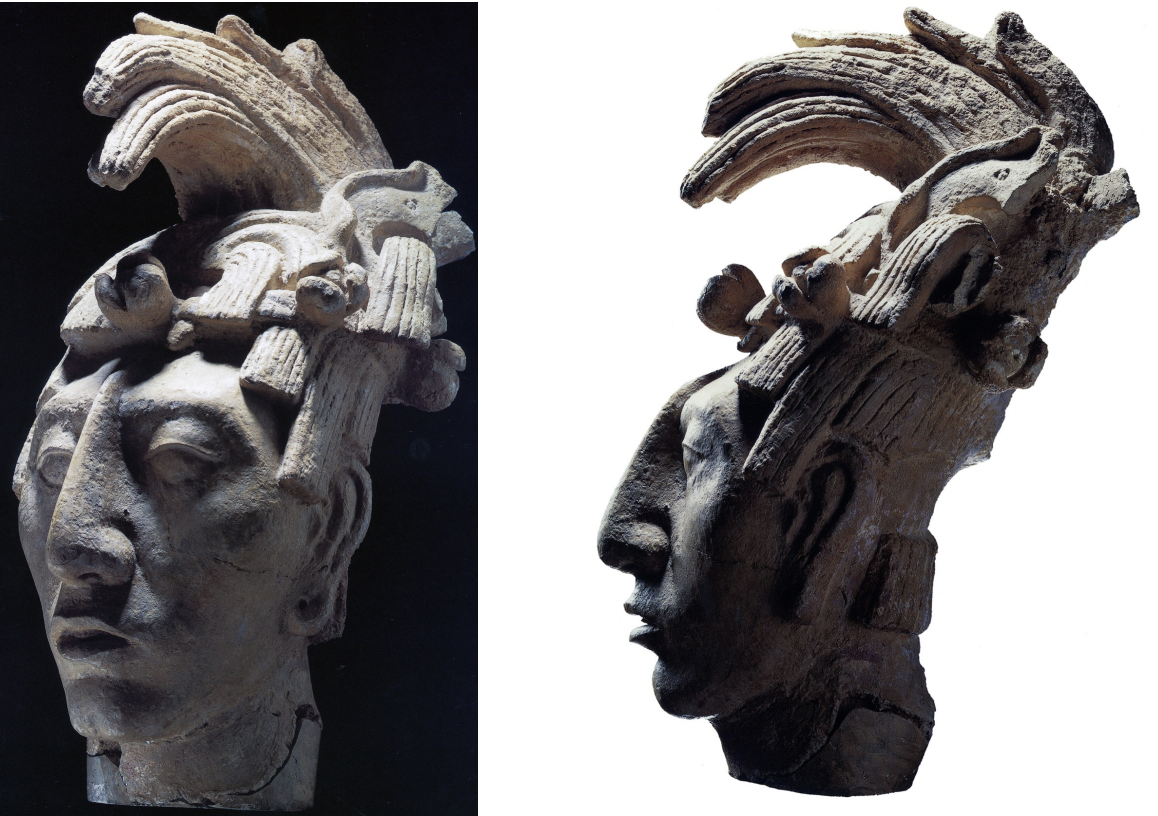
Portrait Head of Pakal from the Temple of Inscriptions at Palenque, c. 683 CE, stucco, h. 16 in
attention to specific physiognomy of Pakal
but also connecting Pakal to maize god (sloping forehead; hair as corn silk; thick neck like corn stalk)

Lintel 24 from Yaxchilán, c. 725 CE, limestone, h. 43 in
carved stone lintels in doorways of royal buildings at Yaxchilan (carving only visible from directly underneath)
A Late Classic Maya carved wooden lintel depicting Lady Xok (Lady Xoc), the wife of ruler Shield Jaguar, performing a bloodletting ritual. It illustrates the importance of royal women and bloodletting ceremonies in Maya religion and rulership.
king standing over her has corn imagery

Cylindrical Vessel, c. 550-900 CE, clay, pigment, slip, h. 9.5 in
dark spot on cheek of one figure and hair on chin of other identifies them as the hero twins
they’re wearing accessories associated with the ball game
ruler depicted in imitation of maya maize god (hair coming off head like corn silk; elongated/sloping forehead imitates corn cob)
exploring ruler’s power through connection to life cycle aka maize god via the ball game
Stela
A tall, upright stone monument carved with Maya rulers, hieroglyphic inscriptions, and important historical events; often erected in plazas.
Popol Vuh
collection of stories recorded in 16th century guatemala that are used to understand the creation story of the Maya (creation of humanity and creation of hero twins are two main stories)
distinct levels of upperworld and underworld
hero twins defeat lord of underworld in ball game which leads to cylindrical cycle of life
maize sustains humanity
Lintel
A horizontal stone beam placed above a doorway, sometimes carved with Maya rulers, rituals, or hieroglyphic texts.