intro to helminthology
 Call Kai
 Learn
 Practice Test
 Spaced Repetition
 Match
 Flashcards
 Knowt Play
1/30

There's no tags or description
Looks like no tags are added yet.
31 Terms
Nematoda (roundworms)
ID Phylum

Phylum Platyhelminthes (flatworms): Class Cestoda (tapeworm)
ID Phylum & Class

Phylum Platyhelminthes (flatworms): Class Trematoda (flukes)
ID Phylum & Class

Phylum Platyhelminthes (flatworms): Class Cestoda (tapeworm)
ID Phylum & Class

Phylum Acanthocephalans (thorny-headed worm)
ID Phylum

Trematoda (flukes)
dorsoventrally flattened, leaf-shaped, not segmented
Cestoda (tapeworms)
dorsoventrally flattened, elongated, segmented
Nemathelminthes
round, elongated, not segmented
Acanthocephalans (thorny-headed worms)
round w/ spiky proboscis, elongated, segmented
Nematoda (roundworms)
ID Phylum
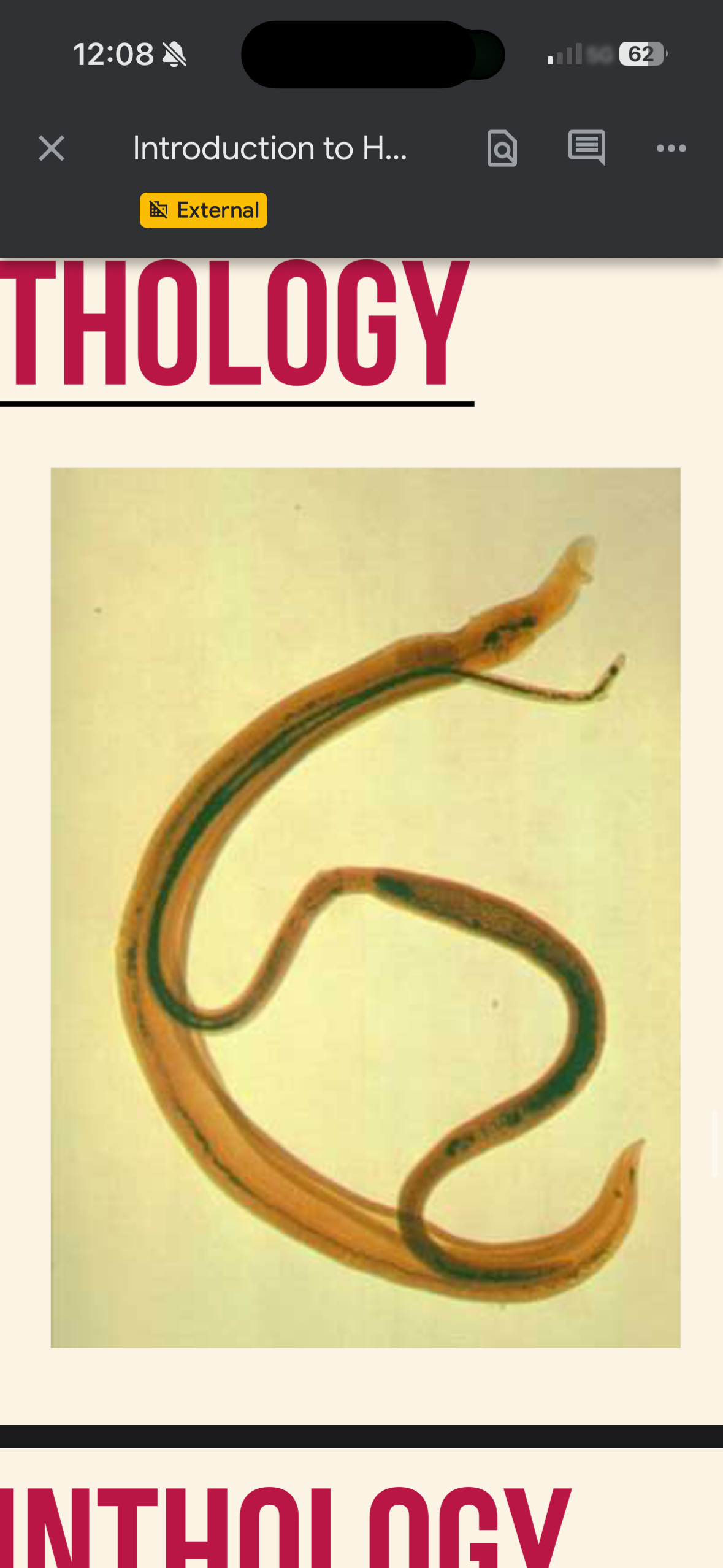
Trematoda, Cestoda
acoelomate (2)
Nemathelminthes, Acanthocephalans
Pseudocoelomate (2)
Trematoda
incomplete digestive tract(no anus)
Cestoda, Acanthocephalans
absent digestive tract (2)
Nemathelminthes
Complete digestive tract
Trematoda, Cestoda
monoecious
helminthology
study of helminths or parasitic worms
vermeology
study of worms in general
oligochaetology
study of earthworms
fixed
many helminths are ___ parasites, they usually cannot easily pass from one host to another.
primary/definitive/final host
the host where the parasite becomes sexually mature
secondary / intermediate
host in which the parasite undergoes juvenile or larval development; where asexual multiplication occurs
prepatent / incubation period
the interval between exposure to a pathogen (parasite) and the first appearance of clinical symptoms
patent period
Time when direct evidence of the parasite can be detected in the patient’s blood, feces, or secretions.
Phylum Nematoda and Phylum Platyhelminthes
two major taxa of vet importance
Phylum Acanthocephalans
taxa of minor vet importance
Nemathelminthes and Acanthocephalans
dioecious
flame cells / protonephridia / solenocytes
excretory cells of helminths
cirrus
primitive penis of helminths
vitellaria
secretes yolk
Mehli’s gland
shell gland of helminths