ARS 472 Module 6
 Call Kai
 Learn
 Practice Test
 Spaced Repetition
 Match
 Flashcards
 Knowt Play
1/35

There's no tags or description
Looks like no tags are added yet.
36 Terms
The Ming Dynasty
1368-1644

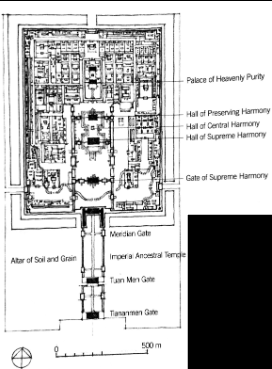
Plan of the Forbidden City
imperial palace complex in central Beijing that served as the residence and political center for 24 Ming and Qing emperors from 1420 to 1924
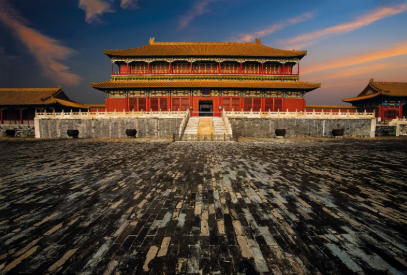
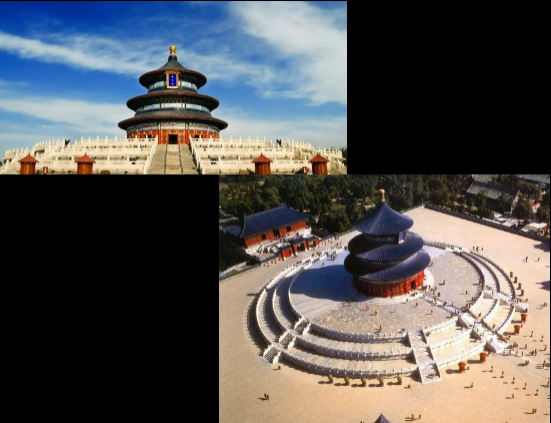
Temple of Heaven

Name
Artist and date
Dynasty, Culture, Period
material
Where is it now
A Pair of Wild Geese on a Snowy Bank
Lü Ji (late 15th to early 16th century)
Hanging scroll, ink and color on silk. Height: 185 cm
The National Palace Museum, Taipe

Name
Artist
Dynasty, Culture, Period
material
dimensions
Returning Home Late from a Spring Outing
Dai Jin (1388-1462),
Ming Dynasty
Hanging scroll, ink and colors on silk
167.9 x 83.1 cm

Comparison of
Dai Jin Returning Home Late from a Spring Outing (left)
Xia Gui Twelve Views of Landscape, ca. 1225 (top right)
Ma Yuan Walking on a Mountain Path in Spring (bottom right)

Name
Artist
Material
Dimensions
Where is it
Fishermen (detail of a handscroll)
Dai Jin
Ink and slight color on paper.
Height: 46 cm
Freer Gallery of Art, Washington D.C.

Idk

Name
Date
Artist
Material
dimension
where is it at now
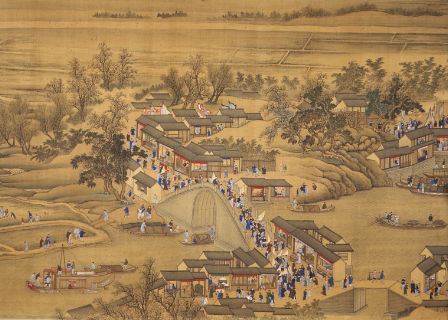
The Kangxi Emperor’s Southern Inspection Tour, scroll Three: Ji’nan to Mt. Tai
datable to 1698
Wang Hui
Handscroll, ink and color on silk
67.9 x 1393.8 cm
Metropolitan Museum of Art
Name
Artist
Date
material
Dimension
where is it now
Southern Inspection Tour: Benniu Zhen to Changzhou on the Grand Canal
Wang Hui
Documented 1691-98
Handscroll, ink and color on silk
68.4 x 576 cm
The Roy and Marilyn Papp Collection

Name
Artist
What is it a part of
Material
dimension
Where is it at
“In the Method of Fan Kuan’s Landscape”
Wang Hui
Album leaf from Wang Hui and Yun Shouping, Collaborative Album of Flowers and Landscapes
is a twelve-leaf Qing dynasty painting album created by close friends Wang Hui (1632–1717) and Yun Shouping (1633–1690), both counted among the "Six Masters of the Early Qing"
Ink and color on paper, 28.5 x 43.1 cm
National Palace Museum, Taipei

Name
Artist
Material
dimensions
Where is it now
Peonies
Yun Shouping (1633-1690)
Album leaf, ink and color on paper
28.5 x 43 cm
National Palace Museum, Taipei

Name
Artist
Where is it now
One Hundred Horse
Giuseppe Castiglione (Lang Shining)
National palace Museum, Taipei

Idk

Name
Artist
Material
Dimension
Where is it now
Coming of Autumn
Hongren (1610-1664)
Hanging scroll, ink on paper
48 x 25 inches
Honolulu Academy of Arts

Name
Artist
Material
Dimensions
Where is it now
A Man in a House beneath a Cliff
Shitao (1642-1707)
Album leaf, ink and color on paper, 24 x 28 cm
C. C. Wang Family Collection, New York

Name
Artist
Date
Where is it now
Fish and Rocks,
Zhu Da (Bada Shanren)
17th century
Cleveland Museum of Art.

Name
Artist
Materials
Dimensions
Where is it now
The Poet Tao Yuanming Enjoys the Early Chrysanthemums
Huang Shen (1687 - c.1768)
Album leaf, ink and color on paper
28 x 32.5 cm
Stanford University, Museum of Art

Name
Artist
Date
Material
Dimensions
Where is it now
Plum Blossoms
Jin Nong (1687-1764)
1761
Hanging scroll, ink on paper
116 x 41.5 cm
Yale University Art Gallery

Idk
Idk
Kangxi
The Kangxi period spans the 61-year reign of the Kangxi Emperor
1736-1795
Yongzheng
The Yongzheng period 1722-1736
Qianlong
The Qianlong period 1662-1722
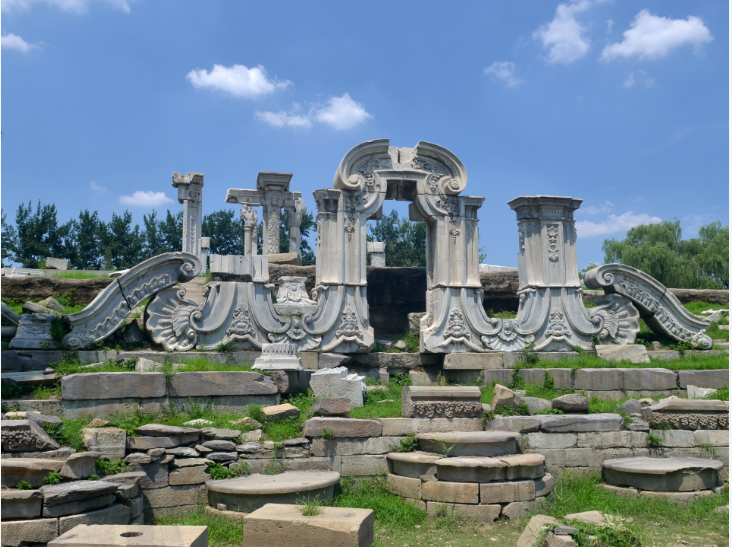
Yuanmingyuan
Yuanmingyuan was first built in the 46th year of the Kangxi era (started building in 1707). Known as the old summer palace and were old imperial gardens that later got destroyed during the opium wars, leaving only these ruins
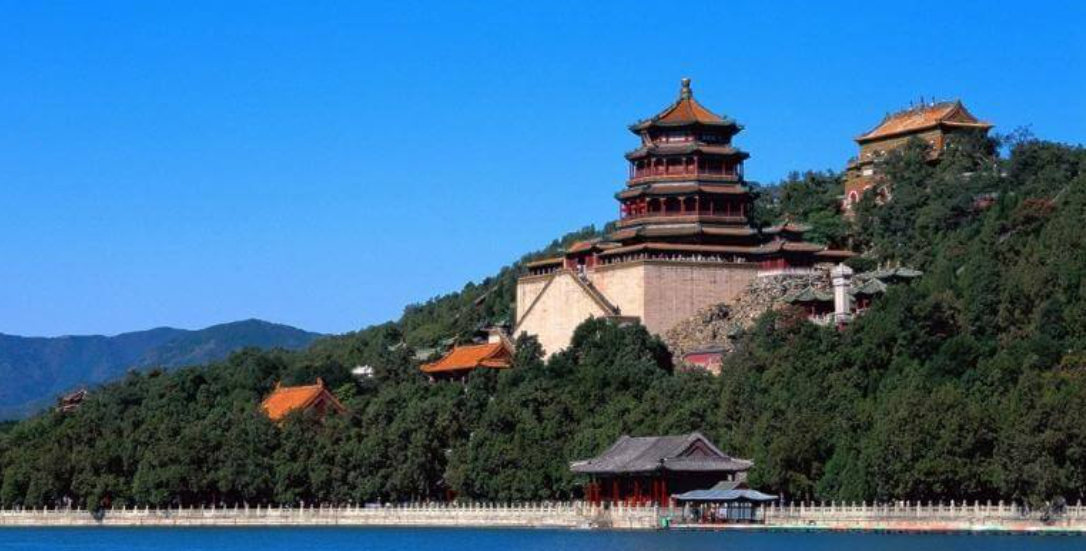
The Summer Palace (Yihe yuan)
An imperial garden during the Qing dynasty that was built in the 19th century (associated with Empress Dowager Cixi) and sometimes called the "New Summer Palace" to distinguish it from Yuanmingyuan,
The Wu School
a Ming dynasty painting movement active mainly from the mid-15th to mid-16th century. Rather than a formal academy, it was a loose circle of scholar-artists (literati) who treated painting as personal expression and self-cultivation rather than courtly or commercial service.
The Zhe School
a major group of professional and court painters active primarily during the 15th century in the Ming dynasty (1368–1644), named after Zhejiang province. Founded by Dai Jin (1388–1462), the school became known for large-scale, decorative works that revived Song dynasty court and academic traditions
AKA the orthodox school
Dong Qichang, Southern school and Northern school
Late Ming painter, calligrapher, and theorist Dong Qichang (1555–1636) divided Chinese landscape painting into the Southern School and Northern School.
Dong elevated the Southern School as the orthodox lineage of literati painting (wenren hua)
Dong contrasted the Southern School with the Northern School, which he associated with professional and court artists.
Giuseppe Castiglione (Lang Shining)
n Italian Jesuit brother and missionary in China, where he served as an artist at the imperial court of three Qing emperors – the Kangxi, Yongzheng and Qianlong emperors. He painted in a style that is a fusion of European and Chinese traditions.
The Four Wangs
four influential Chinese landscape painters of the late Ming and early Qing dynasties
who belonged to the "Six Masters" of the early Qing period
These were the 4:
Wang Shimin
Wang Jian
Wang Hui
Wang Yuanqi
Mogu (boneless)
a traditional Chinese painting technique that builds forms directly with washes of ink and color rather than ink outlines

Yinmin painters
I lowkey might be wrong but
Ming dynasty loyalists—scholars, officials, and imperial clan members—who refused to serve the Manchu Qing dynasty after the Ming fell in 1644.
Many withdrew from public life, became Buddhist monks, or painted expressive, allegorical works to cope with loss and political dissent
The Eccentrics of Yangzhou
Qing dynasty Chinese painters and calligraphers active in Yangzhou, Jiangsu province, mainly during the 18th century (especially the Qianlong era, 1735–1796). Known for expressive, individualist art that broke away from orthodox literati traditions.
They rejected rigid, traditional painting conventions in favor of personal expression, spontaneity, and creative independence
The Shanghai School
The Shanghai School emerged in the late 19th century as a distinctive artistic movement that blended traditional Chinese painting techniques with modern influences.
Rooted in the bustling, cosmopolitan environment of Shanghai, this style was known for its bold calligraphic brushwork, innovative compositions, and a willingness to depart from rigid classical traditions.
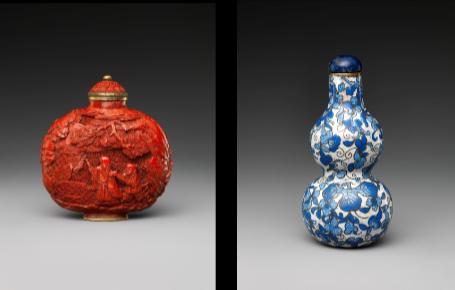
Snuff bottle
s a small, handheld container with a fitted stopper and an attached internal spoon, originally created in 17th-century Qing dynasty China to store powdered tobacco (snuff)