Survey of Art History Exam 2 - Slide Identification
 Call Kai
 Learn
 Practice Test
 Spaced Repetition
 Match
 Flashcards
 Knowt Play
1/19

Earn XP
Description and Tags
Early Asian - Ancient Greek - Ancient Rome
20 Terms

Great Stupa at Sanchi
Founded 3rd century BCE
India
A dome, or big pillow
Stupa: “empty seat”: sacred Buddhist monuments
Relics: objects associated with a holy person
Axis Mundi: axis of the world
Connected to the power center of the world
The upper and lower walkways (circumambulate) are used for walking meditation
The higher walkway was likely for hierarchy; the higher enlightened would literally be walking on a higher level
This was technically a Buddhist structure, but at this point, Hinduism was closely intertwined.
Yakshi: female figure associated with the fertility of nature

Buddha and Attendants
c. late 1st - early 2nd century
India
mudra
high relief sculpture

Bodhisattva Seated in Meditation
early 7th century
Three Kingdoms period - Korea
Cast bronze
freestanding sculpture
Buddha vs. Bodhisattva
an almost Buddha, partially enlightened but holding off on becoming completely enlightened to help others (like teaching and guiding others to enlightenment).
they look much fancier
still attached to the world and riches
jewels and drapery
androngonous figures, serpentine figure/post
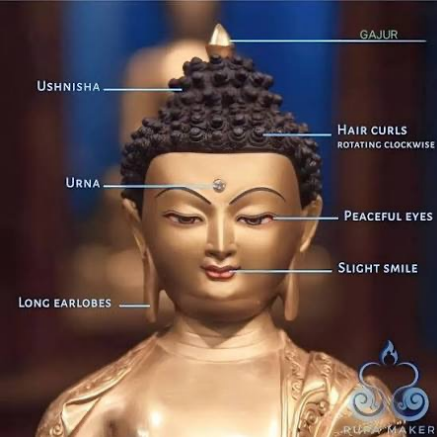
Symbols of the Buddha
Ushnisha: mound of wisdom; topknot
Urna: tuft of hair between eyes
Mudras: hand gestures
Chakras: wheels, often on soles of feet
Stretched Earlobes: detachment from wealth
How to spot a Buddha:
Wearing a monk’s robes: sign of renunciation of material objects
outer mantle, lower wrapping, underrobe
Mudras: different positions of hands, each has meaning
Elongated earlobes are a designation of elite status
Reminder that Buddha was born a prince, but gave that up
Face expresses serenity and focus
closed eyes, slight smile
Ushnisha: bun on top of head
Flame on top of that (enlightenment)
Short curls
Urna: symbol of wisdom (dot in between eyebrows)
Lotus posture: control of body

Shiva Nataraga
c. 7th century
India
Hindu
Shiva Nataraja is the form that Shiva takes when it is time to destroy.
Standing on a little creature (representing the crushing of evil or ignorance).

Main Hall, Inner Shrine, Ise
Japan
690 CE
Last rebuilt in 2013
Shinto (nature, finding balance): is the indigenous religion of Japan
centered around the worship of Kami (deities/nature spirits)
emperor/ruling families are descended from the kami
everything has a spirit
“to leave this world in a better harmonious state for the next generation”
caring for the past and recognizing ancestors will make you a better person in the present
This shrine is reborn (rebuilt) every twenty years
The spirit of the temple stays the same
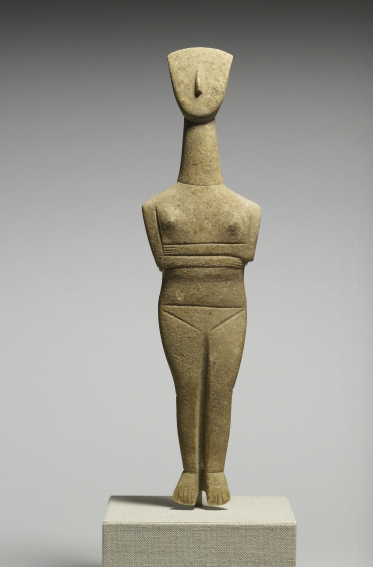
Woman
c. 2,4000 BCE
Cycladic Greek

Octopus Flask
c. 1500-14,50 BCE
Minoan Greek
The drawing/octopus can fit the form and wrap its arms around the spherical vessel
The painter had to consider how this image would fit the form
synergy between potter and painter (different people)

Funerary Krater
750-735 BCE
Geometric period
Attic Greek
Funerary Krater, Dipylon Cemetery, Athens
Put ashes in it
Simplified, stylized depictions of daily life, animals
depicts a dead person on a coffin, funerary procession
registers!!

Achilles and Ajax Playing a Game
c. 540-530 BCE
greek
Exekias
black figure decoration
amphora
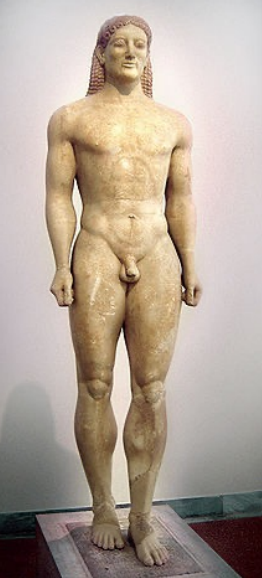
Anavysos Kouros
c. 530 BCE
Archaic Greek
Archaic smile

Spear Bearer (Doryphoros)
Polykleitos (sculptor)
440 BCE
Classical Greek
Originally titled Canon (model of perfection/the model to be emulated)
established Polykleitos’ canon of proportions, setting ideal correlations among body parts
Contrapposto
notice the harmony of opposites
if the left hip is tense, then the right hip must be relaxed
Calm, reserved, peaceful, neutral
likely supposed to be holding a spear in right hand
this gets copied many many times, other sculptors start sketching from it, modeling from it, learning from it!!

Grave Stele of a Little Girl
c. 450 BCE
classical Greek

Praxiteles
Aphrodite of Knidos
c. 350 BCE
Hellenistic Greek
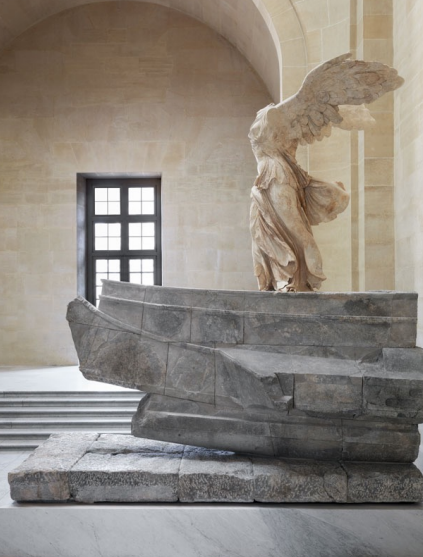
Nike of Samothrace
c. 180 BCE
Hellenistic Greek
Nike alighting on a warship
Baroque: the headpiece on the front of the ship/this was originally part of a huge ship
Goddess of achievement, championship

Apollonius - seated boxer
c. 50 BCE
Hellenistic Greek
Greek art was no longer about idealization and perfection
he looks proud, defiant (looking up), but there is a sense of tiredness, he is bruised and battered
looks warm and human rather than the earlier style of cold and perfect
there is real emotion on his face

Pont du Gard
Roman
last 1st century CE
Aqueduct: brings fresh water in from a mountain reservior (using gravity)
like a railroad track meant to carry water
keystone, voussoirs, rounded arch
the arch allows for them to use less material, less money, to create it, also lighter and less likely to break

Augustus of Primaporta
Roman
Early 1st century CE
apotheosis: ascension to godhood
emerges as the first emperor of Rome
This could be a marble copy of a bronze statue
The Parthians often won over Rome (stealing their Standards (war symbols))
Under the reign of Augustus, Rome finally defeated the Parthians
Very naturalistic depiction of the human body
not static
once painted
raises right hand - addressing his troops
uses contrapposto (the relaxed pose - term came from Greece)
Cupid (riding a dolphin) depicted on his left leg
recalls Venus: meaning Augustus was descended from the gods
The artist intentionally idealized Augustus
making him younger, beautiful (he was much old at this time)
recalls Greek idealization
Augustus “invented” this new era of idealization > verism - this is a change
lots of imagery on the chest plate

Equestrian portrait of Marcus
Roman
Aurelius c. 176 CE
They thought this was supposed to be Jesus or one of the Apostles - or Constantine
This is why it didn’t get melted down to reuse it
It had to have been something special to not destroy and repurpose
Orator pose: hand up, gesturing as they are talking (to troops/senate/citizens of rome/etc)
authority
Horse is striding in motion, pulling to the right
reins controlling him
powerful animal yet Marcus is in full control of it
Cast in individual pieces (horse and man) then put together

Pantheon
Roman 110-128 CE
Temple to all gods (pan = all encompassing, theo = gods)
Building things like this would be the emperors trying to flex on everyone
Not super impressive from the front; this is a common theme from the Romans. They hide the impressive parts inside.
Incredibly large open area covered by a dome
Geometric shapes having special meaning
Circle = perfection
Perfection of gods/heaven
Squares = the earth
Drama of going from ordinary entrance (cramped) to an expansive, detailed area.
recognize:
Coffers: carving out material of the roof to make it light and keep structure
Oculus:
Rotunda:
Portico:
Facade
The Truvian Man: greek architect that talked about structure that combined circle and square to create the most divine and special place
Bringing together heaven and earth