Lab 1 Study
 Call Kai
 Learn
Learn Practice Test
 Spaced Repetition
 Match
Match Flashcards
 Knowt Play
1/82

There's no tags or description
Looks like no tags are added yet.
Name | Mastery | Learn | Test | Matching | Spaced | Call with Kai | Chat |
|---|
No analytics yet
Send a link to your students to track their progress
83 Terms
What is anatomical position and its importance
standing, feet apart, arms by side, palms out. provides standard reference point
Sagittal
vertical (right and left)
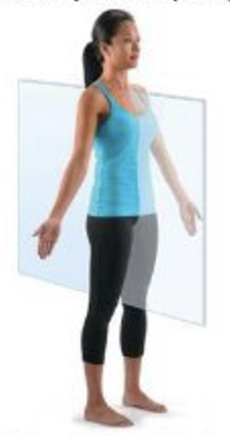
Frontal/Coronal
Vertically (front and back)

Transverse
Horizontal (top and bottom)


1 (top left)
Cephalic

2 (second from top left)
Cervical

3 (third from top left)
Thoracic

4 (fourth from top left)
Abdominal

5 (fifth from top left)
Pubic

6 (middle top)
Upper limb

7 (second down in middle)
Manus

8 (third down in middle)
Lower limb

9 (fourth down in middle)
Pedal

10 (top right)
Cephalic

11 (second from top right)
Cervical

12 (third from top right)
Back
What does the axial skeleton consist of
skull, spine, ribs
What does the axial skeleton consist of?
head, neck and trunk
Closest to the point of attachment to the trunk
proximal
Beneath the surface of the body
deep
Farther from the point of attachment to the trunk
distal
Toward the surface of the body
superficial
Away from midline
lateral
Below; toward feet
inferior
Toward midline
medial
At the tail end
caudal
Above; closer to head
superior
Toward front of body
anterior
Head of body
cranial
Toward the back end
posterior
What are the body cavities and their importance?
Residence for specific organs; independent function, compartmentalization, prevents infectious spread

1 (far left)
Dorsal body cavity

2 (first in middle)
Cranial cavity

3 (second in middle)
Vertebral cavity

4 (third in middle)
Thoracic cavity

5 (fourth in middle)
Mediastinum

6 (fifth in middle)
Pleural cavity
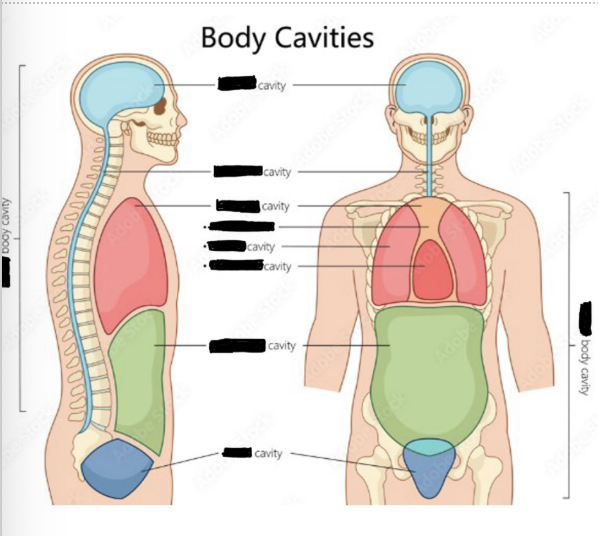
7 (sixth in middle)
Pericardial cavity

8 (seventh in middle)
Abdominal cavity

9 (eighth in middle)
Pelvic

10 (far right)
Ventral body cavity
What are serous membranes?
double layered tissue membranes that reduce friction
Where are serous membranes found?
Lining of closed venral body cavities and covering the organs
Where does the visceral layer lie?
External surface of organ
Where does the parietal layer lie?
Inner wall of body cavity
Cells that compose the serous membrane secrete a slippery substance called ——— into the space between the two layers of membrane to act as a lubricant.
Serous fluid

1 (first right)
Parietal pleura

2 (second right)
Visceral pleura
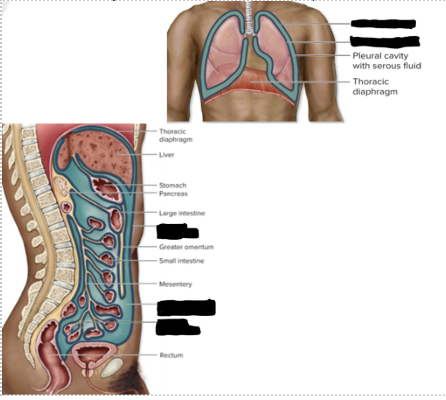
3 (top left)
Parietal peritoneum
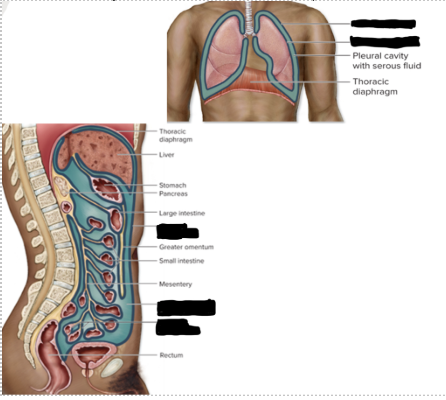
4 (middle left)
Peritoneal cavity with serous fluid

5 (bottom left)
Visceral peritoneum
What does the oral cavity contain?
Teeth, tongue, and gums
Where does the nasal cavity reside?
Inside and behind the nose
Where do the orbital cavities reside and what do they house?
In the skull; they house the eyes and supporting muscles/nerves
What do the middle ear cavities contain?
Tiny bones that transmit sound vibrations to the inner ear
What are the synovial cavities?
Joint cavities enclosed within fibrous capsules that contain lubricating synovial fluid
What are quadrants?
4 main divisions of the abdominopelvic cavity
What are regions?
9 smaller subdivisions of the abdominopelvic cavity
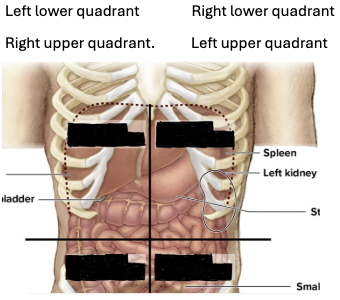
1 (top left)
Right upper quadrant
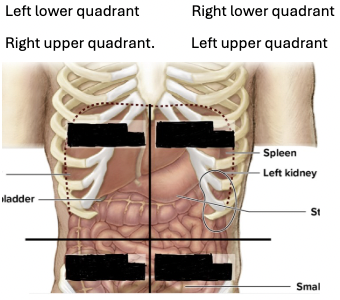
2 (top right)
Left upper quadrant

3 (bottom left)
Right lower quadrant

4 (bottom right)
Left lower quadrant

1 (top left)
Right hypochondriac region

2 (top middle)
Epigastric region

3 (top right)
Left hypochondriac region

4 (middle left)
Right lumbar region

5 (center)
Umbilical region

6 (middle right)
Left lumbar region
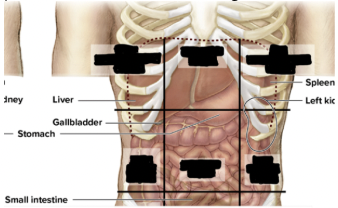
7 (bottom left)
Right iliac region

8 (bottom middle)
Hypogastric region
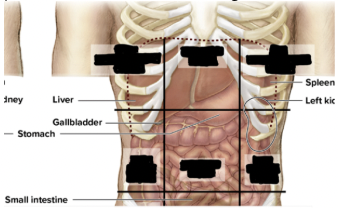
9 (bottom right)
Left iliac region
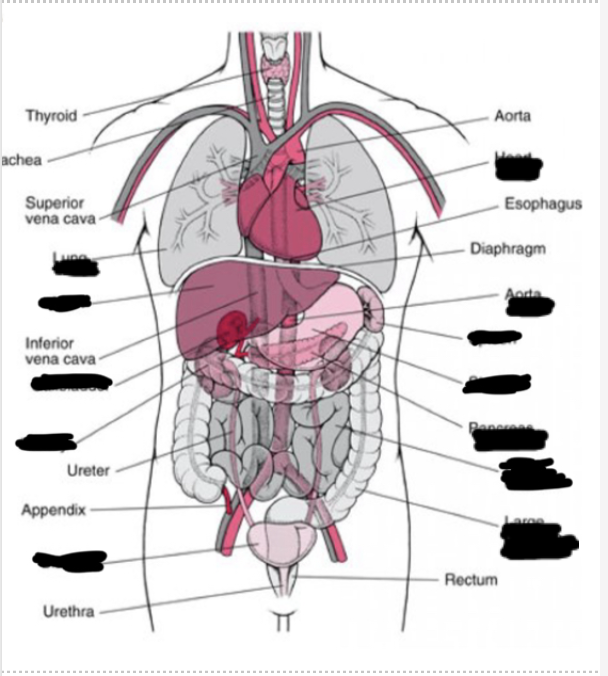
1 (top left)
Lung

2 (second left)
Liver
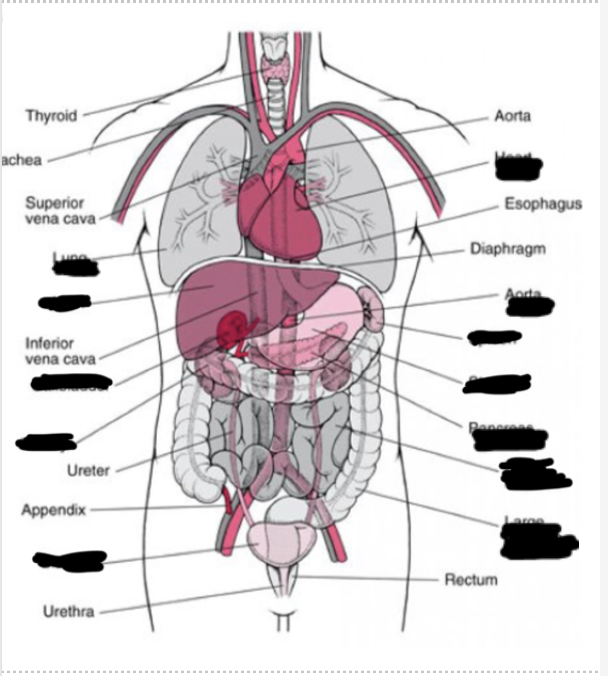
3 (third left)
Gallbladder

4 (fourth left)
Kidney

5 (fifth left)
Bladder

6 (top right)
Heart

7 (second right)
Aorta

8 (third right)
Spleen

9 (fourth right)
Stomach

10 (fifth right)
Pancreas

11 (sixth right)
Small intestine

12 (seventh right)
Large intestine