CE 5575 Project Management Quiz 1, Lectures 1-5
 Call Kai
 Learn
 Practice Test
 Spaced Repetition
 Match
 Flashcards
 Knowt Play
1/54

Earn XP
Description and Tags
Vocabulary flashcards generated from lecture notes covering early project initiation, scope definition, life cycle costing, organizational structures, communication management plans, and management methodologies.
55 Terms
Project
A temporary activity intended to create a unique product or service.
Program
A group of projects that are related and managed in a coordinated manner.
Portfolio
A collection of programs and projects managed to achieve strategic organizational objectives.
Project Life Cycle
The cycle of project initiation, project planning, project execution, and project closure.

Business Case
A document issued during concept development that justifies project need, outlines benefits, costs, risks, and demonstrates alignment with organizational objectives.
Project Charter
A document issued by the project sponsor (not the PM) that authorizes the project and grants the PM authority to use organizational resources.
Life Cycle Cost
The total cost of a project calculated over its entire useful life.
Scope
The work required to deliver a project with specified features and functions.
Scope Creep
The uncontrolled, undocumented expansion of a project beyond its original goals, leading to budget overruns, schedule delays, and team burnout.
Communication Management Plan
A plan describing how project communications are planned, structured, implemented, and monitored to ensure the right information reaches the right people at the right time in the right format.
Interactive Communication
A real-time, two-way exchange of information, such as meetings, phone calls, or workshops.
Push Communication
Information sent directly to specific recipients, such as emails or status reports, without direct confirmation of immediate receipt or understanding.
Pull Communication
Information made available in a shared repository or platform for recipients to access at their own discretion, such as group chats or web repositories.
Horizontal / Lateral Communication
Communication occurring among individuals at the same organizational level.
Vertical Communication
Communication moving up or down the levels of an organizational hierarchy.
Feasibility Study
An evaluation during early project initiation that assesses whether a project is economically viable, worth pursuing, technically feasible, environmentally and legally compliant, and supported by stakeholders.
Alternatives Analysis
An evaluation of different project options, analyzing their pros, cons, costs, technical feasibility, site assessments, and contracting choices to select the best option.
Functional Organization Structure
An organizational structure divided by discipline where units possess in-depth expertise and easy post-project transition, but project execution can be slow due to competing departmental priorities.
Projectized Organization Structure
An organizational structure organized around projects with high cross-functional integration and speed, though it can be expensive and provide limited functional expertise.
Matrix Organization Structure
An organizational structure blending project and functional lines, classified as Weak, Balanced, or Strong based on whether authority primarily resides with the line manager or project manager.

Traditional Waterfall Project Management
A sequential project management methodology where detailed planning is conducted up front and each phase must be fully completed before advancing to the next.

Agile Project Management
An iterative, incremental product development approach focused on continuous development, short feedback loops, and ongoing adjustment.

Work Breakdown Structure (WBS)
The deconstruction of a large project task into smaller, manageable, and hierarchical components.
Triple Constraint / Iron Triangle
A core project management model consisting of three legs—cost, time, and scope—which cannot be adjusted independently without impacting quality at the center.
Project Manager Prerequisites
The two core requirements needed to act as a Project Manager: authority and responsibility.

Functional Organizational Structure
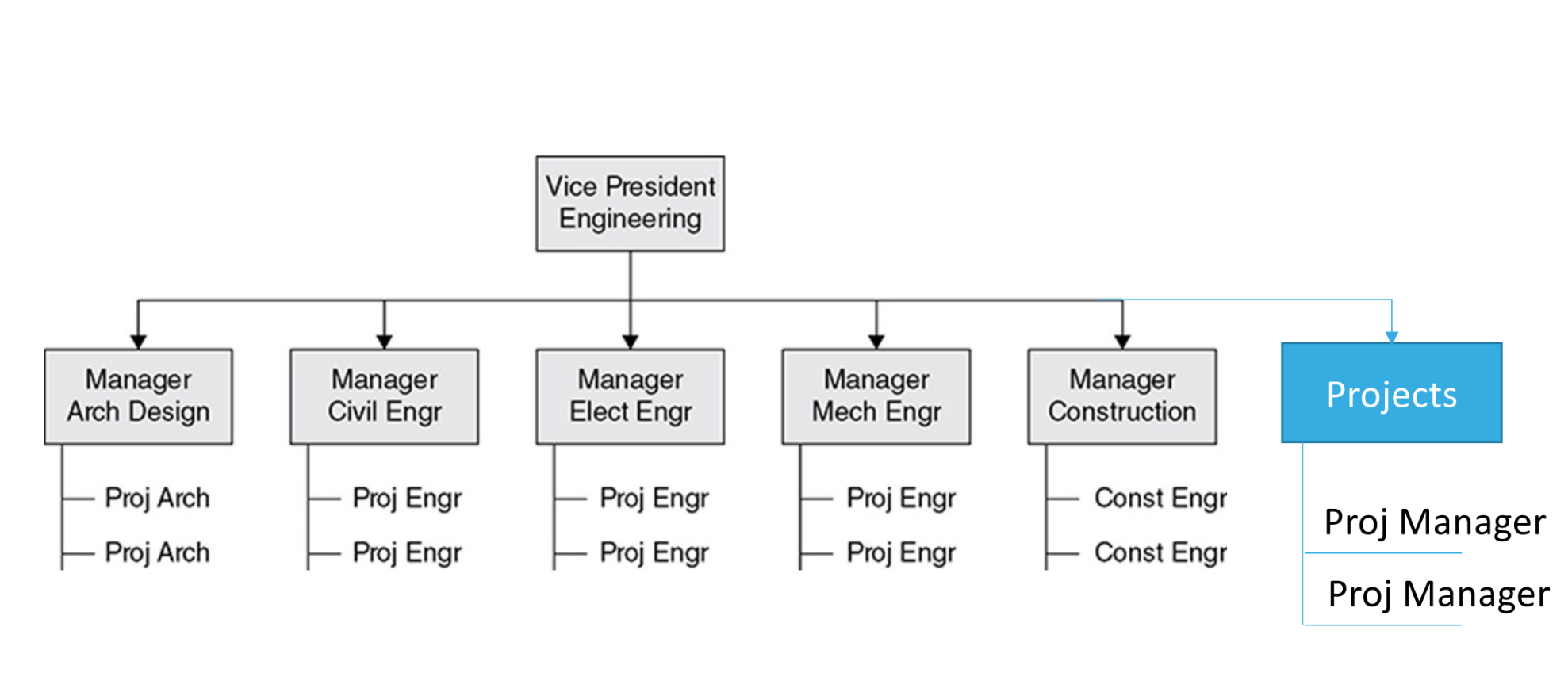
Projectized Organizational Structure

Projectized Organizational Structure

Matrix Organizational Structure
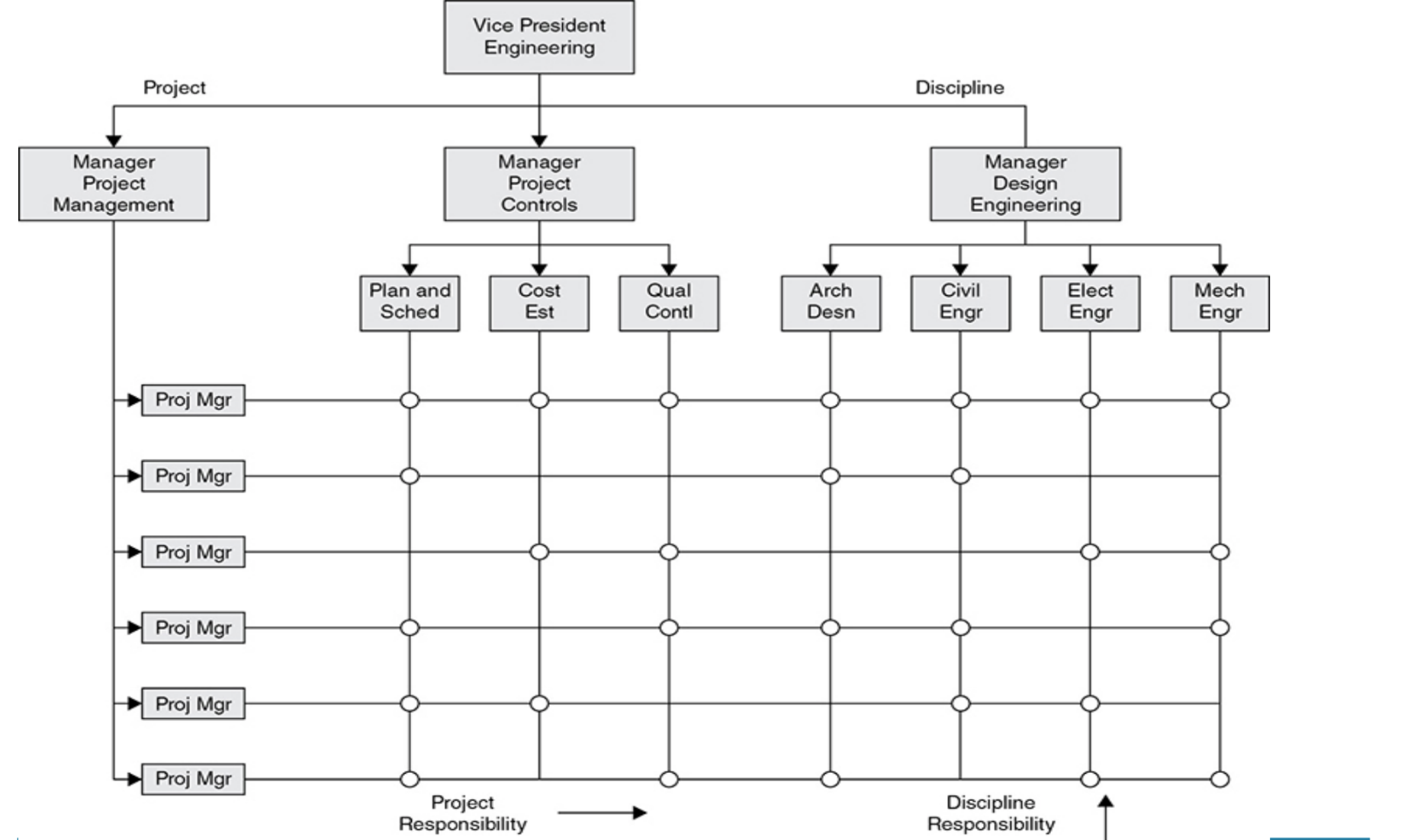
Matrix Organizational Structure
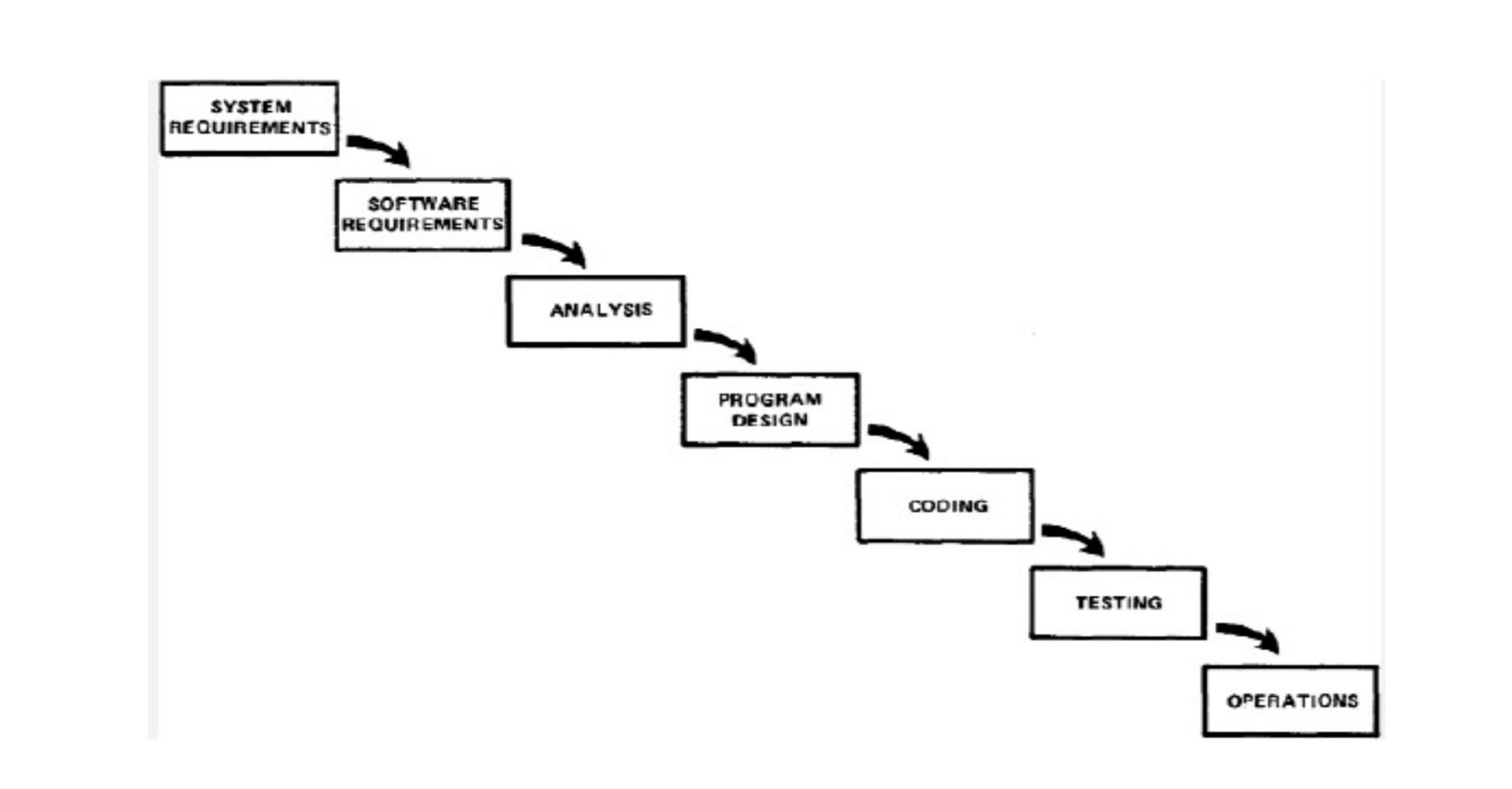
Waterfall type Project Management

Agile Project Management
Skills for PM
communication, understanding drawings/plans, scheduling, time management, establishing leadership, understanding frequency of communication needed, understanding client’s needs, contract knowledge, business development, understanding public involvement
PM
Project Manager
PMO
Project Management Office
Project Management Team
people the PM is responsible for
Project Team
members of a project team
Value
benefits gained from achieving project goal
Two things needed to be PM
authority, responsibility
Early Project Initiation and Planning Phases
Concept
Feasibility Study
Alternatives Analysis
Detailed Scope
Communication Management Plan
Business Case
justifies project need; outlines benefits, costs, risks and alignments with org objectives; serves as decision making tool for project sponsors
Charter
authorizes project, provides PM authority to use org resources, authorizes PM lead, issued by sponsor
Life Cycle Cost
Total cost of the project over its entire useful life
Scope
work required to deliver a project with specified features and functions, scope too broad is invitation to scope creep
Communication Management Plan - Purpose
keep all parties informed and ensure project remains transparent and on track, right info reaching right people in the right time and form
Communication Management Plan - Components
describe how, when, by whom info
Administered
giving, applying, or implementing
Disseminated
spreading, distributing, or making widely available
Methods of communication
email, phone call, text, message platform, fax, meeting, public meeting, web, report
Stakeholder communication needs for an Executive
concise and high level
Stakeholder communication needs for an engineer
detailed technical information
Stakeholder communication needs for a member of the public
familiar terms, appropriate language
Push communication
sent directly
Interactive communication
two-way, real-time
Pull communication
available for access, shared repository