01 public health
 Call Kai
 Learn
 Practice Test
 Spaced Repetition
 Match
 Flashcards
 Knowt Play
1/15

There's no tags or description
Looks like no tags are added yet.
16 Terms
Health Definition who
“Health is a state of complete physical, mental and social
well-being and merely the absence of disease or infirmity”
Biomedical disease approach
Noxious (Chemical Physical Biological)
→
Pathology (Structure changes and dysfunction)
→
Recovery
Defect dealing
Death
Ethology
Theory of the cause
Pathogenesis
Theory of the origin of disease
Risk factor approach
Risk factors:
noxious (0.90)
Health behaviour e.g. smoking (0.45)
Living conditions (0.60)
Psychosocial components (0.20)
Prevention
The likelihood of a disease or injury occurring is determined differently by the various risk factors.
→ illness/death
Internal risk factors
• Age
• Sex/Gender
• Body composition
• Health
• Physical fitness
• Anatomy
• Skill level
→ predisposed athlete
Exposure to external risk factors
Human factors (e.g. teammates etc.)
Protective equipment (e.g shin guard)
Sport equipment
Environment (e.g. weather)
→ susceptible athlete
Inciting event
• Joint motion (e.g. joint forces)
• Playing situation (e.g. skill performed)
• Training programme
• Match schedule
→ injury
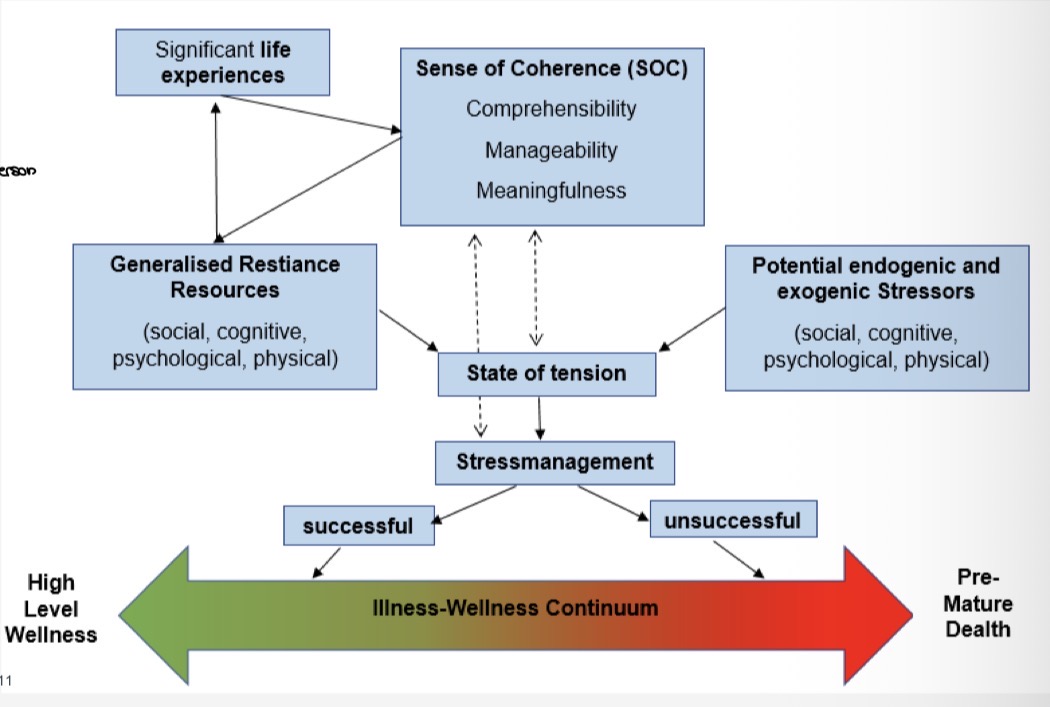
Salutogenesis
The science and art dealing with the maintenance of health and the prevention, alleviation, or cure of disease.
Public health
Public health is one of the collective efforts organized by society to prevent premature death, disease, injury and disability, and to promote the health of populations
Public health is a field that encompasses many disciplines in an effort to promote and protect health and prevent disease and disability in defined populations and communities. The key difference between public health and medicine is that public health traditionally has focused less on individuals and treatment and more on populations and preventions.“
Five Pillars of public health
epidemiology and disease control
Environmental health
Health promotion and eduction
Health administration
Biostatistics
Pillar 1: Epidemiology and disease control
They track who gets sick, where it happens, and when it occurs.
Sport scientists
Tracking Physical Activity Patterns and Inactivity Rates in Population Groups
Pillar 2: environmental health
Environmental health is not only about protecting people from environmental hazards.
It is also about creating environments that make healthy physical activity possible.
Pillar 3: health promotion and education
Health literacy
• Understand
• Health information
• Make informed choices
Physical literacy
• Competence
• Confidence
• Motivation
Active lifestyle
Transfer knowledge into sustainable physical activity

Pillar 4: health administration
Evidence-Based Policy: Integrating exercise science metrics into healthcare reimbursement and preventive funding models.
Cross-Sector Collaboration: Aligning municipal planning, educational facilities, and clinical healthcare systems.
Resource Allocation: Investing in community-level infrastructure for active living to reduce long- term hospital burdens.
→ the progress pyramid
Pillar 5: biostatistics
The big questions
When does an intervention take effect, and how effective is it?
When do you see real changes?
Does it matter for the population?
When it some one at risk?