Canine DCM and other myocardial diseases
 Call Kai
 Learn
 Practice Test
 Spaced Repetition
 Match
 Flashcards
 Knowt Play
1/39

There's no tags or description
Looks like no tags are added yet.
40 Terms
What are the primary cardiomyopathies to know?
DCM (most common)
Arrythmogenic right ventricular cardiomyopathy
hypertrophic cardiomyopathy (HCM)
Atrial cardiomyopathy/ Atrial standstill
List some of the causes of secondary cardiomyopathy
Tachycardia induced (TICM)
Systemic hypertension
Drugs/Toxins
Infiltrative disease
Metabolic/endocrine e.g. hyperthyroid
Nutritional
Taurine
L-Carnitine
Grain free diet
Inflammatory (myocarditis) (infec/non-infec)
Connective tissue disease (RARE)
Muscular dystrophy (GR, GSD)
What is the typical presentation of DCM?
Large breeds
Adult onset
idiopathic (1o) or 2o
(Guarded prognosis)
What changes does DCM cause in the heart?
Impaired systolic function
Dilated cardiac chambers (All 4 but L>R)
impact contractility
Thin walls (Thickness LV:diameter LV decreased)
heart weight:body weight increase as heart is larger
Mitral/tricuspid annulus stretch
regurg due to leaflets being pulled away due to chamber dilation
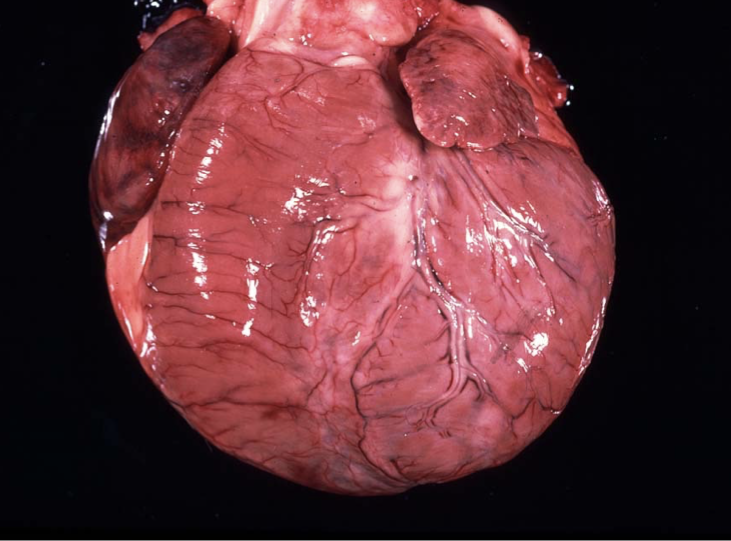
Which 3 breeds have the largest incidence of DCM?
Dobermann (2 in 3)
Great Danes (1 in 3)
Newfoundlands (1 in 5)
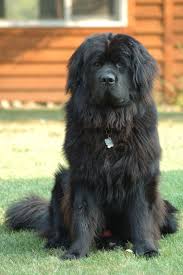
What main histopath changes are seen in DCM?
Attenuated fibres (atrophied)
myocytes thin
degen
fibrosis
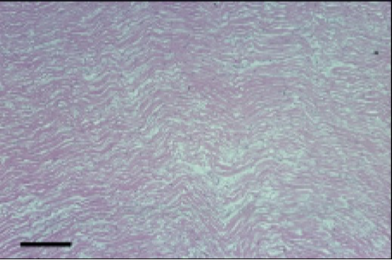
Fibro fatty infiltration
myocyte lysis
vacuolisation
fibrosis
fatty infil.
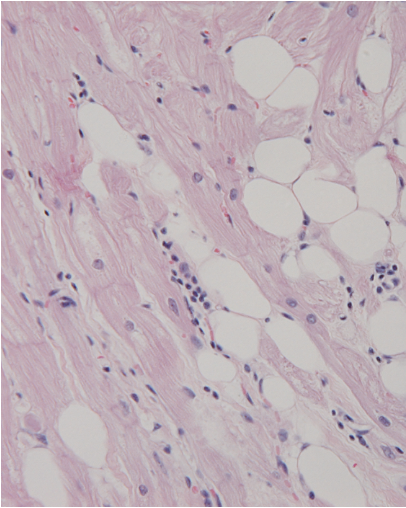
Explain the sequelae of DCM
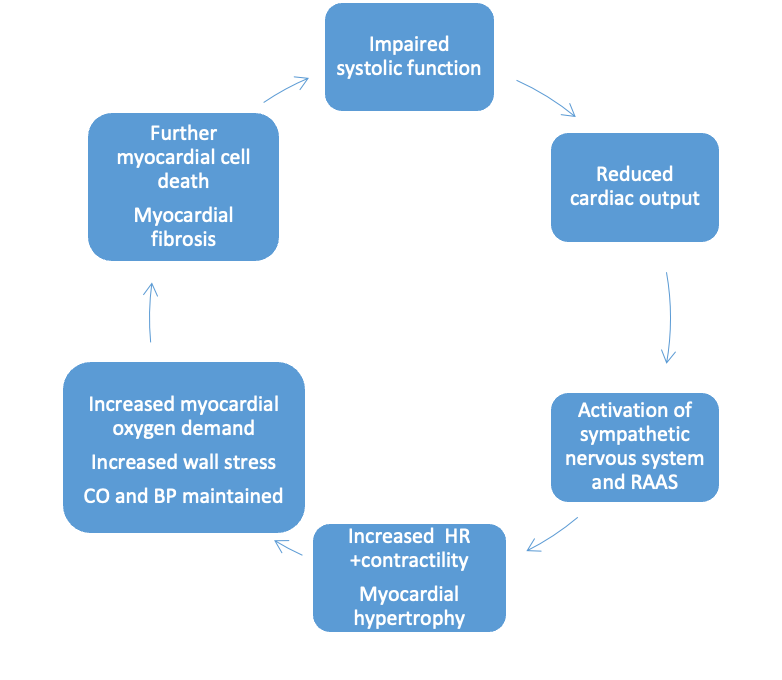
Damaged cells no longer function effectively as a syncytium
Cell death and fatty or fibrous replacement (as per histopath)
IMPAIRED SYSTOLIC FUNCTION
Also mitral annulus stretch so mitral regurg too
What does neurohormonal activation lead to?
decompensation + heart failure
Sympathetic nervous system
Tachycardia
Positive inotrope
Vasoconstriction
Toxic for myocytes à intracellular Ca overload
Increased oxygen demand
Cell death, decrease in systolic function
RAAS
Retention of Na and fluid
Increased circulatory volume = increased hydrostatic pressures
Vasoconstriction
Remodeling
Fibrosis (arrhythmias)
Increased wall stress
Dilatation of the valvular annulus —> Mitral Regurgitation
What are the similarities between MDVD vs DCM?
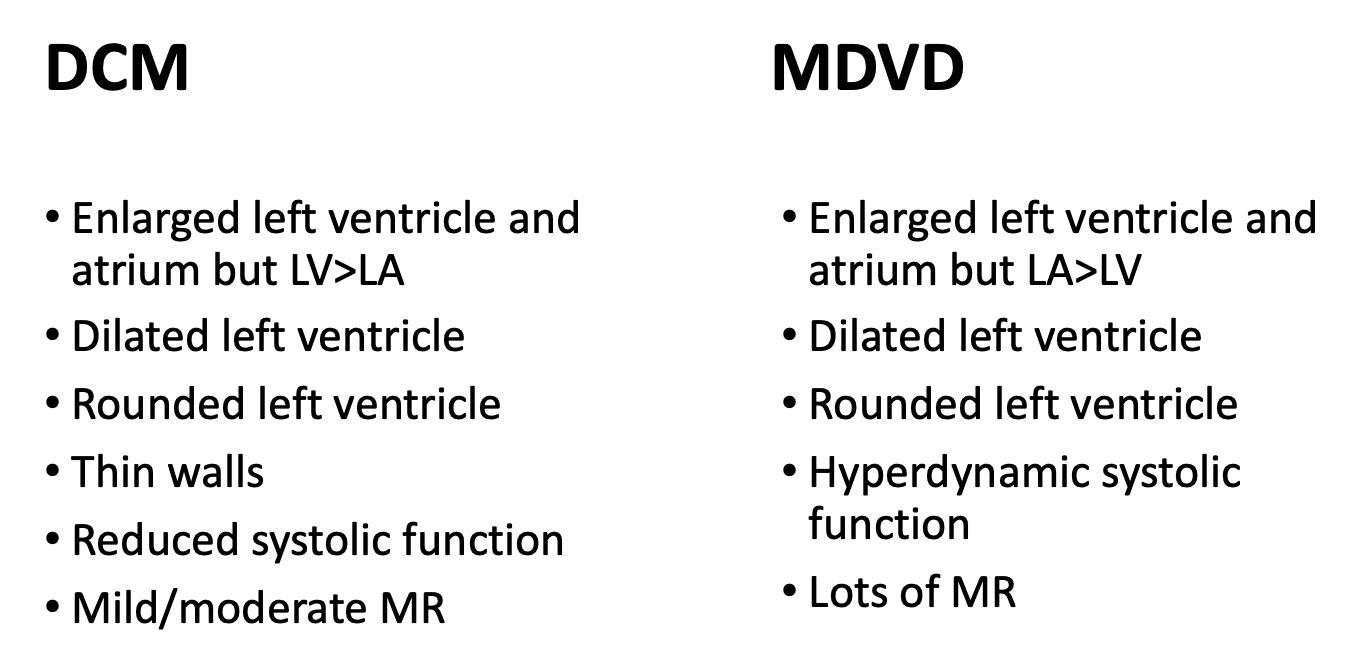
Enlargement of left ventricle (+/- right)
Enlargement of left atrium
Mitral regurgitation
What are the differences between MDVD v DCM?
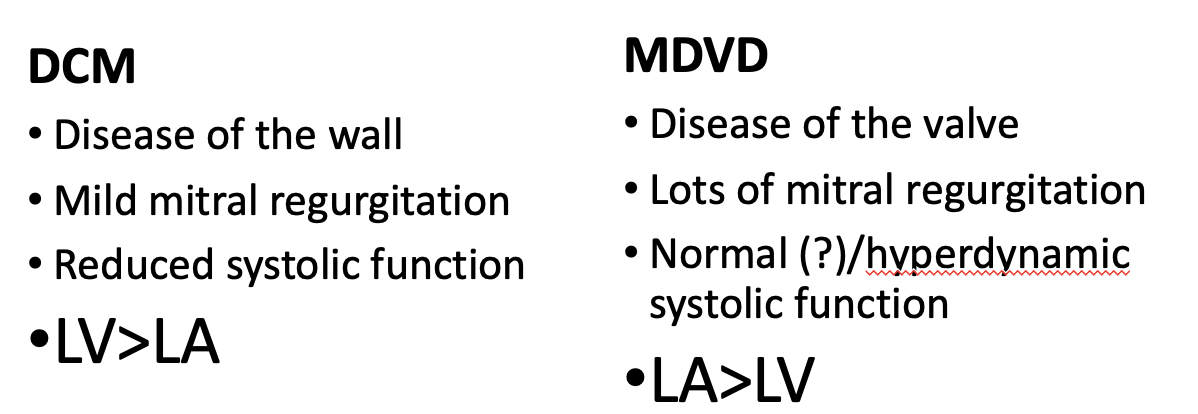
Contractility maintained in MDVD which is why you get lots of MR
MDVD harsh murmur (stage B2 murmur normally >/= grade 3) cf to DCM softer murmur (easier to miss)
List some of the breed variation in DCM
Dobermann- high prev, slow progress, long asymptomatic preclin, sudden death, cardiomegaly less obvious, short survival postCHF
ventricular arrhythmias
VPCs = first marker
Great danes- freq VPCs, AFib, sudden death
Irish wolfhound- ‘lone’ AFib (like AFib but slower HR) —> progress to overt DCM
Cocker - slower progression, taurine deficiency, get DCM + MDVD
Dalmations - VPCs
Portuguese water dogs- juveile onset, highly aggressive
What can cause nutritional DCM?
Grain free diet
Taurine deficiency
no pulses, legumes or potatoes in 1st 10 ingredients of diet (incr risk DCM)
What breeds are typically predisp to arrhythmogenic right ventricular cardiomyopathy? What is the prognosis?
Boxer
Also other big brachys- english bulldog, dog de bordeaux, birman cats
11y but that is typical lifespan anyways, inc sudden death
What is the gross path of ARVC?
Right ventricular dilation, wall thinning (BUT DOES NOT ALWAYS BECOME VISIBLE)
What is the histo path of ARVC?
loss myocytes + fatty/fibrofatty replacement

What are the three presentation possibilites of ARVC?
Asymptomatic with VPCs
Symptomatic with VPCs (e.g. collapse)
structural dz + VPCs (Ventricular dilation, myocardial dysfunction, arrhythmias)
What are some CS of ARVC?
ventricular arrhythmias (monitor with 24hr ECG)
asympt, sudden death, progress into CHF
adult onset
syncope
exercise intolerance
ascites due to RHS-CHS
How does atrial cardiomyopathy present?
Thinning atrial walls
No p waves (atrial standstill)
LA>>>>>>LV
Syncope main sign - pacemaker
What is the typical patient that has atrial standstill?
English springer, Labrador
Younger (med. 3yo)
Median survival 4-4.5 post pacemaker
improve with time ± atenolol
What breeds are prone to hypertrophic cardiomyopathy?
usually hypertrophic obstructive cardiomyopathy (similar to feline HCM)
terriers, pointers, golden retrievers
What can lead to a DCM like phenotype?
Myocarditis
Primary —> viral, autoimmune response
Secondary —> inflammation, spec pathogens
Traumatic —> could be post RTA contusions
tachycardia induced CM (AF, SVT, VT can produce same effect)
due to strain from incr HR
Taurine deficiency
spaniels
supplementation improve systolic function
How might you identifiy a DCM case in a consult?
Large breed, adult
DCM —> doberman, GD, newfoundland, irish wolfhound etc.
ARVC —> boxer, bulldog
Arrythmia
Soft, quiet, left apical systolic murmur
Resp signs if in failure (incl cough), crackles
Collapse quite common
A lot are Asym
Compare DCM to MDVD
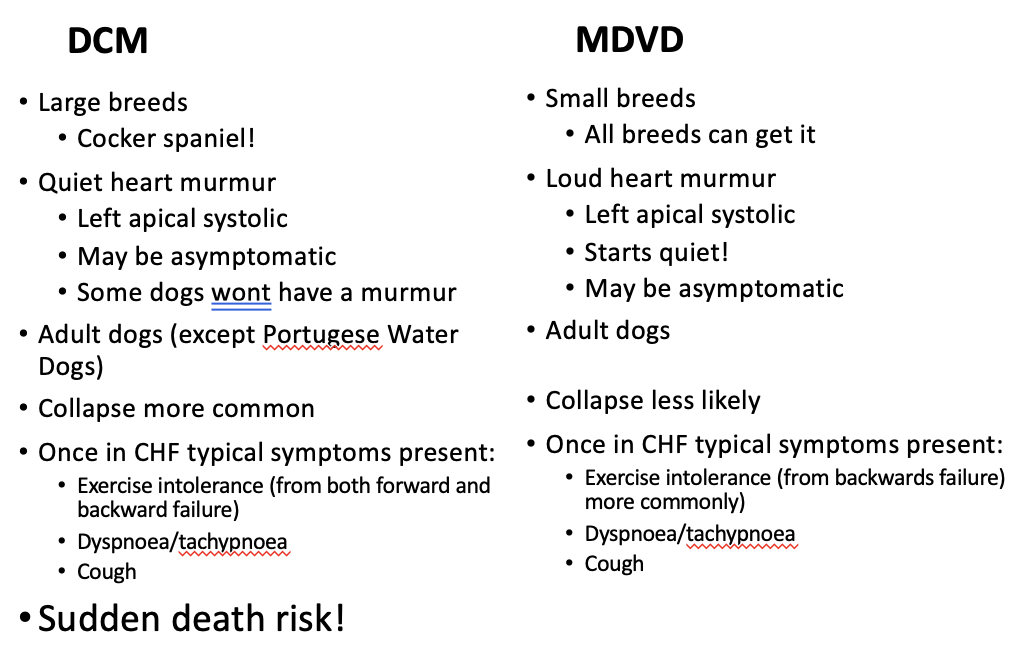
What investigations would you do for DCM?
History + physical examination
Blood pressure- could be low if forward failure, or high bc afterload inc
Clinical pathology- pre renal, electrolytes, hypothyroid
Biomarkers- NTproBNP and Troponin (more relevant than BNP)
ECG- Afib, VPCs, SVPCs
Radiography
Echocardiography
Ambulatory ECG
What would you expect blood pressure to be like in a DCM patient?
often low BP
How does low and high BP affect the heart?
Systolic hypotension
Low if forward failure = systolic dysfunction (decreased contractility)
Systolic hypertension
Leads to increased afterload —> increased myocardial oxygen demand and workload —> increased risk of arrhythmia —> increased mitral regurgitant fraction (more regurg as LA has lower pressure than aorta)
What should you look at when running bloods and biomarkers for DCM?
Pre renal azotemia (diuretic use)
Assess electrolytes (diuretic use)
Increased risk of arrhythmia if electrolyte abnormalities
Thyroid
Hypothyroid contributes to systolic dysfunction
Biomarkers
NT-proBNP (wall stretch)
differentiate respiratory/cardiac cause of cough + assess severity
Predict onset CHF
Prognostic indicator
Troponin I (cell death)
Genetic testing (rarely done)
PDK4
Striatin
Compare the ECG arrythmias you would find in DCM cf to MDVD?
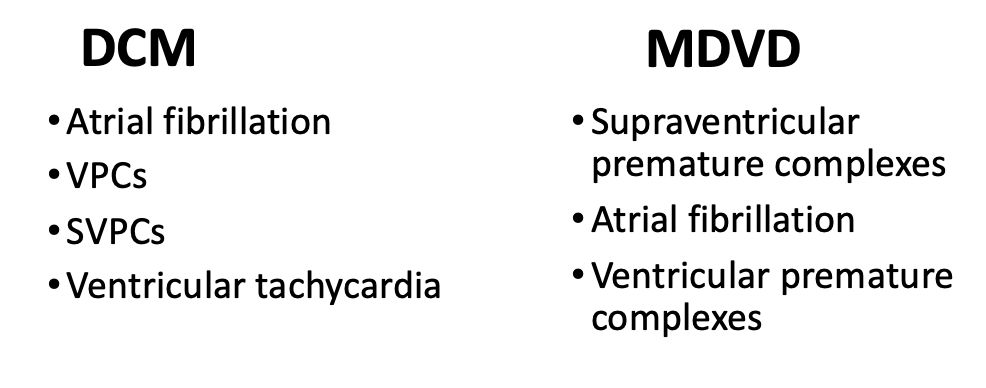
sinus arrhythmia = not in CHF due vagal tone

What does this ECG show?
SVPC
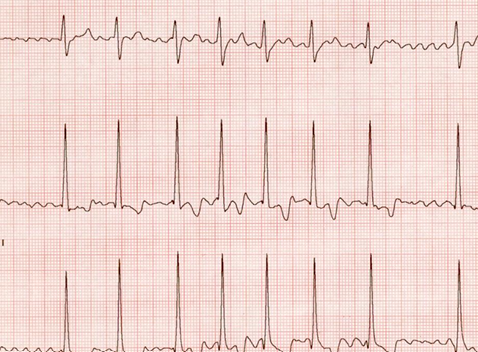
What does this ECG show?
AFib
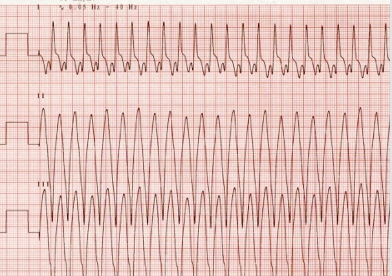
What does this ECG show?
ventricular tachycardia
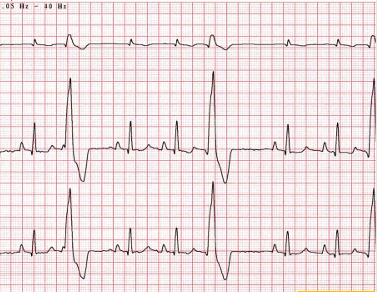
What does this ECG show?
VPC
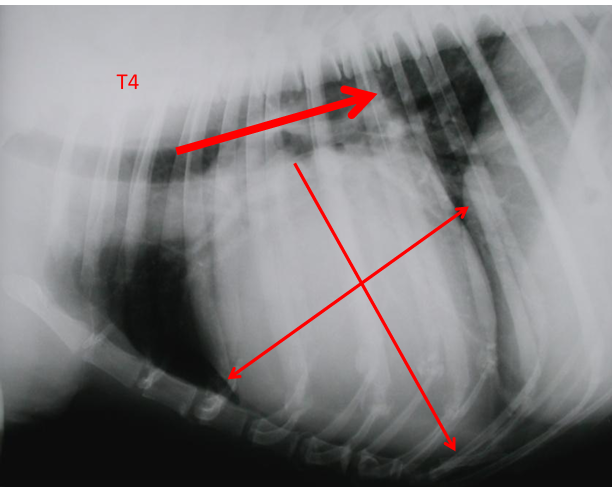
Cardiac xray analysis
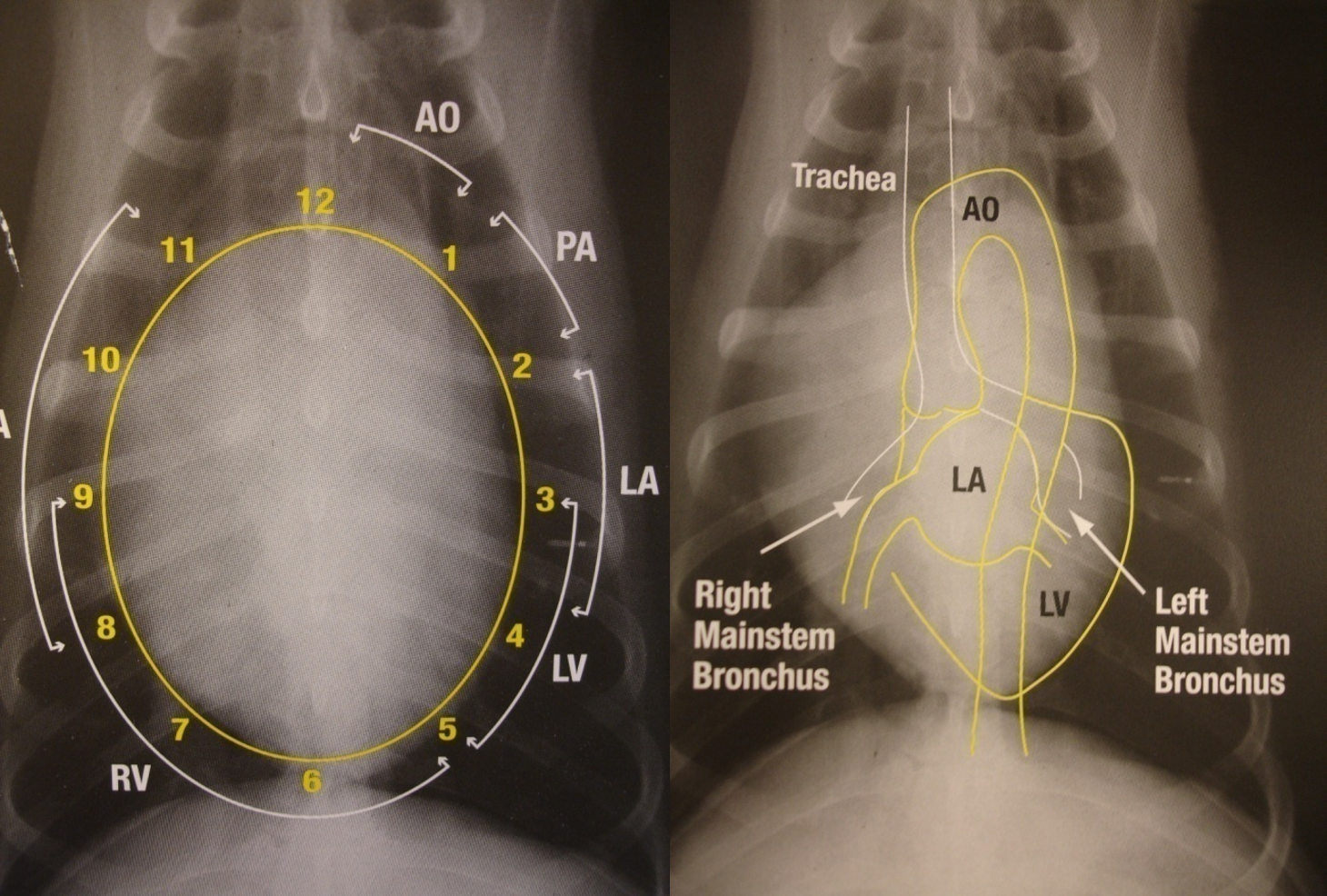
DV + R lat views
assess cardiac size (tracheal elevation
pulmonary vessels
lung infiltrate
Compare DCM echo findings compared to MDVD
in DCM ventricles won’t contract well
Compare normal vs DCM M mode
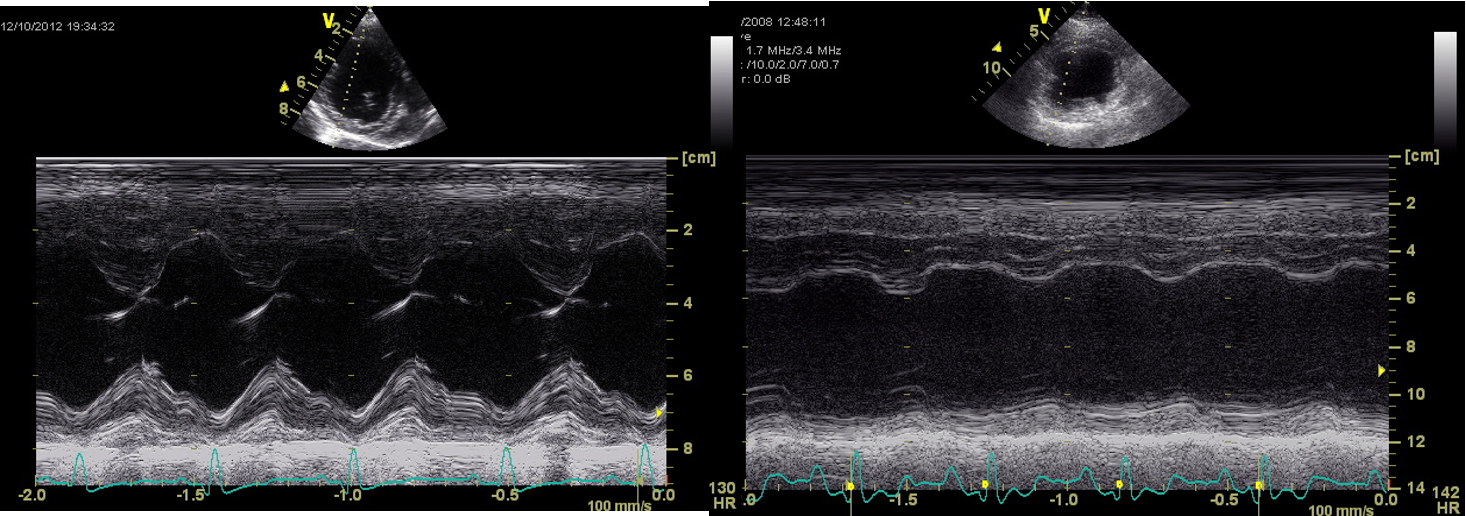
larger gap
less wall contraction at systole
What can be used to screen for DCM and what would cause suspision of DCM?
ambulartory ECG
VPC numbers
Normal dogs: < 4/24h
0-50 single VPCs
Indeterminate: 51-100
suspicious
Doberman > 50
Boxer 100-300
Likely affected: 300-1000
Affected > 1000
would give antiarrhythmics
How would you treat preclinical DCM?
Pimobendan
if structural changes are present then meds indicated
Inc 9 months clinical symptom free time
Recall congestive heart failure treatment
Furosemide
+ other diuretics?
Pimobendan
ACE-inhibitors
Spironolactone
What other treatments can you add for CHF other than PFAS?
Arrythmias
SV- diltiazem and digoxin
V- Sotalol
Pulmonary hypertension
Sildenafil
Nutraceuticals
omega 3 fish oils
taurine
What are some negative prognostic indicators in DCM?
young
ascites
dyspnoea
AFib
progression to RHS-CHF