Bio Lab Exam II Review
 Call Kai
 Learn
 Practice Test
 Spaced Repetition
 Match
 Flashcards
 Knowt Play
1/48

Earn XP
Description and Tags
Vocabulary practice flashcards covering cell transport mechanisms (diffusion, osmosis, and tonicity) and human histology (epithelial, connective, muscle, and nervous tissues) including their functions and specific anatomical locations.
49 Terms
Diffusion
The passive movement of solutes from high → low concentration requiring no energy, such as O2 and CO2 exchange in the lungs.
Osmosis
The passive movement of water across a membrane from a low solute concentration → high solute concentration.
Solute
The substance that is dissolved in a solution (e.g., salt).
Solvent
The substance doing the dissolving in a solution (e.g., water).
Isotonic Solution
A solution where the solute concentration outside the cell is the same as inside; results in no net water movement, and the cell stays the same.
Hypotonic Solution
A solution where the solute concentration outside the cell is lower than inside; water moves into the cell, causing the cell to swell or burst.
Hypertonic Solution
A solution where the solute concentration outside the cell is higher than inside; water moves out of the cell, causing the cell to shrink.
Crenation
The shrinking of a cell when placed in a hypertonic solution.
Lysis
The bursting of a cell when placed in a hypotonic solution.
Simple Squamous Epithelium
An epithelial tissue that allows diffusion, filtration, and exchange of gases, and reduces friction; located in the air sacs (alveoli) of lungs, lining of the heart, blood vessels (endothelium), lymphatic vessels, and kidney glomeruli.
Stratified Squamous Epithelium
An epithelial tissue that protects underlying tissues from abrasion, pathogens, and chemical attack; located in the epidermis of skin (keratinized), and the lining of the mouth, esophagus, vagina, and anal canal (nonkeratinized).
Simple Cuboidal Epithelium
An epithelial tissue functioning in secretion and absorption; located in kidney tubules, thyroid gland follicles, ducts of small glands, and the surface of ovaries.
Stratified Cuboidal Epithelium
An epithelial tissue providing protection and limited secretion/absorption; located in the ducts of sweat glands, mammary glands, and salivary glands.
Simple Columnar Epithelium
An epithelial tissue functioning in absorption and secretion of mucus/enzymes (may have microvilli or cilia); nonciliated form lines the digestive tract (stomach → rectum) and gallbladder; ciliated form lines uterine tubes and small bronchi.
Stratified Columnar Epithelium
A rare epithelial tissue providing protection and secretion; located in the male urethra, large ducts of some glands (salivary), and conjunctiva of the eye.
Transitional Epithelium (Urothelium)
An epithelial tissue that permits stretching and recoil, forming a barrier to prevent urine diffusion; located in the lining of the urinary bladder, ureters, and part of the urethra.
Pseudostratified Columnar Epithelium
An epithelial tissue functioning in secretion (mostly mucus) and propulsion by ciliary action; ciliated form is found in the trachea and upper respiratory tract; nonciliated form is found in male sperm-carrying ducts and ducts of large glands.
Areolar Connective Tissue (Loose)
A loose connective tissue that cushions organs, provides support while allowing movement, holds tissue fluid, and defends against pathogens; widely distributed under epithelia (lamina propria), around organs, and around capillaries.
Adipose Tissue
A connective tissue that stores energy (fat), insulates, and cushions organs; located under skin (subcutaneous layer), around kidneys, eyeballs, within the abdomen, and in breasts.
Reticular Connective Tissue
A connective tissue that forms a soft internal framework (stroma) that supports cells; located in lymphoid organs such as the spleen, lymph nodes, and bone marrow.
Dense Regular Connective Tissue
A connective tissue that attaches muscles to bones or bones to bones, and resists tensile stress in one direction; located in tendons, ligaments, and aponeuroses.
Dense Irregular Connective Tissue
A connective tissue that provides strength to resist forces from multiple directions and provides structural support; located in the dermis of skin, fibrous capsules of organs/joints, periosteum, and perichondrium.
Elastic Connective Tissue
A connective tissue that allows recoil of tissue after stretching and maintains pulsatile flow of blood; located in the walls of large arteries, bronchial tubes, and ligaments of the vertebral column.
Hyaline Cartilage
A supporting connective tissue that supports and reinforces, resists compressive stress, and provides a smooth surface for joint movement; located at the ends of long bones (articular cartilage), nose, trachea, larynx, and costal cartilages.
Elastic Cartilage
A cartilage that maintains shape while allowing great flexibility; located in the external ear (pinna) and epiglottis.
Fibrocartilage
The strongest cartilage that absorbs compressive shock; located in intervertebral discs, pubic symphysis, and menisci of the knee.
Bone (Osseous Tissue)
A supporting connective tissue that supports and protects, stores calcium and fat, and serves as the site for blood cell formation; located in the bones of the skeleton.
Blood (Vascular Tissue)
A fluid connective tissue that transports gases, nutrients, wastes, and hormones, and functions in defense and clotting; located within blood vessels and heart chambers.
Skeletal Muscle
A muscle tissue responsible for voluntary movement, locomotion, facial expression, and heat generation; attached to bones or skin (tongue, diaphragm).
Cardiac Muscle
A muscle tissue that pumps blood involuntarily through the circulatory system; located in the walls of the heart (myocardium).
Smooth Muscle
A muscle tissue under involuntary control that propels substances (food, urine, etc.) and regulates vessel diameter; located in the walls of hollow organs: digestive tract, bladder, uterus, and blood vessels.
Neurons
Nervous tissue cells that generate and conduct electrical impulses, and transmit information to other neurons, muscles, or glands; located in the brain, spinal cord, and nerves.
Neuroglial (Glial) Cells
Cells that support, protect, insulate, and nourish neurons, and maintain homeostasis; located surrounding neurons in the brain, spinal cord, and peripheral nerves.

Areolar Tissue

Hyaline Cartilage

Simple Cubodial

Transitional Epithelium

Pseudostratified Epithelium

Skeletal Muscle

Nervous Tissue

Blood

Cardiac Muscle

Bone

Simple Squamous

Adipose Tissue

Dense Regular

Simple Columnar

Dense Irregular
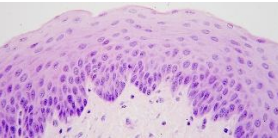
Stratified Squamous