che 118c - midterm 2 MASTER
 Call Kai
 Learn
 Practice Test
 Spaced Repetition
 Match
 Flashcards
 Knowt Play
1/79

Earn XP
Description and Tags
need to get perfect 10 rating
80 Terms
what does the benzylic position stabilize
cation, anions, and radicals
what is the purpose of electrophilic aromatic substitution
H on the benzene ring is replaced with an electrophile

what are the two key steps of eas and whats the intermediate formed
nucleophilic attack to proton transfer and forms an arenium carbocation
activator group
electron donating groups and place the electrophile to the ortho or para direction
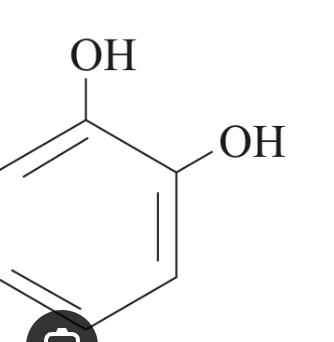
what position is this
ortho

what position is this
meta

what position is this
para
what are examples of activators
O-, NH2, NR2, OH, OR, R
what are examples of deactivators
carbonyl, CF3, CN, SO3H, NO2, and NR3
deactivator group and what position it directs in
electron withdrawing group and directs in the meta direction
what is special about Cl, Br, and I
they are electron withdrawing groups but they direct in the ortho/para direction
halogenation of benzene reagents (also add when there is excess)
Br2 and FeBr2 or Cl2 and AlCl3 and when there’s exess then every hydrogen will be replaced with a halogen)

what is required to get prepared for oxidation and elimination of benzene
need to get a benzylic carbon so add an alkane so there is a carbon right next to the benzene so a stable carbocation is formed
deprotonation of benzenes purpose
to make a benzene a good enough nucleophile and then add electrophile you want
deprotonation of benzene reagents
nBuLi (strong organometallic base) THF, and heat and then add any nucleophile to attatch whatever
how to prepare to the benzylic carbon
add an alkyl group with a good leaving group attatched and add AlCl3 as a catalyst

what is hydrohalogenation of benzene
add a halogen and a H to remove a alkene so it can undergo Mark or anti-Mark addition
hydrohalogenation of benzene reagents (Mark and anti-Mark addition)
Mark addition is HBr and anti-Mark addition is HBr but add peroxide and light
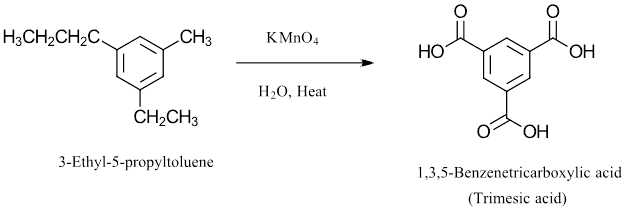
oxidation of benzene (add a carbonyl) reagents
add CrO3, carb acid, water, 25 degrees C to get a ketone, to get carboxylic acid add a oxidizing agent like KMnO4, NaOH, heat and then acid work-up

how can you use benzene to protect an -OH group so it doesn’t react
can add a aryl halide so it can attach to the -OH to convert to ester and then can reform alcohol via reduction such as H2 and Pd-C
why is phenol really acidic
due to resonance stabilization and -OH is an electron donating group
do EDG experience EAS or NAS
EAS as electron rich so it activates the benzene so then it can act as a nucleophile
does EWG experience EAS or NAS
NAS as the benzene is now electron deficient and then it deactivates it making it a electrophile so now need to add a nucleophile

what is the intermediate in the NAS
Meisenheimer complex (nucleophile adds to the electrophilic benzene)
what can be the reagent in NAS
any strong nucelophile that is rich in electrons
elimination-addition of benzene rings and what is the reagent used
strong base used like NH2 that is a way to add a nucleophile in aryl halides that don’t have electron withdrawing groups (as there is no strong electrophile created)
what is the ipso carbon
site of of the LG (non-H substituent)/

what is the substitution way of making phenols (when theres a NH2) and reagents
nitration reduction with a NH2 being reduced to N2 and then hydrolysis to add a -OH 1) NaNO2, HCl 2) H2O
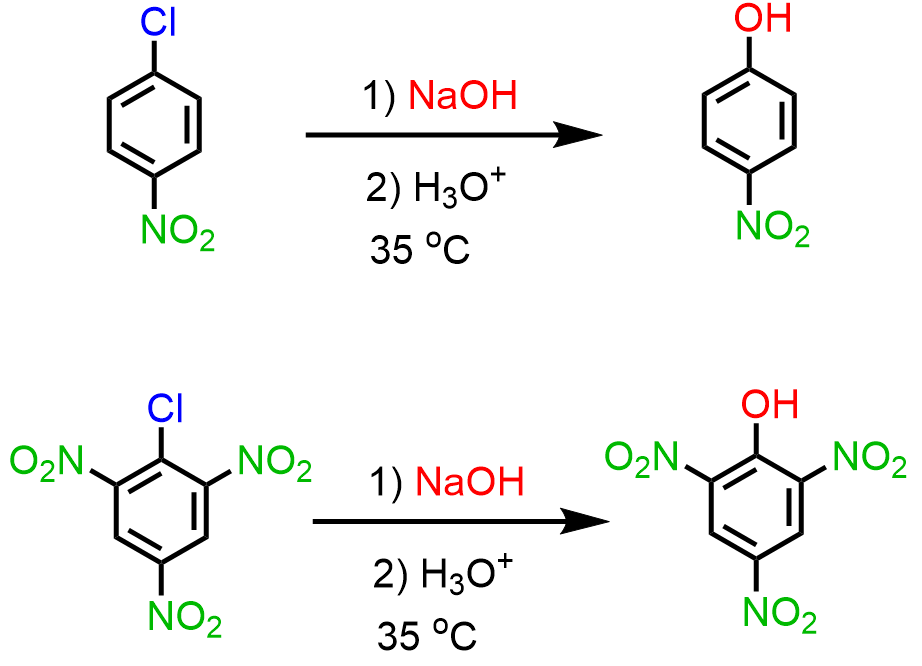
what is the substitution way of making phenols (SnAR method)
add eliminate (must make sure there’s a good LG so can add -OH) so can use NaOH and heat

what is the metal catalysts of making phenols (reagents and start and end product)
use KOH, Pd and PR3 and heat to convert aryl halide to phenol

what is the ether cleavage method of making phenols
ether attatched to the benzene and then use a HBr or HI (strong acid) and heat to remove the alkyl group and add H to the benzene to make -OH that follows a Sn2
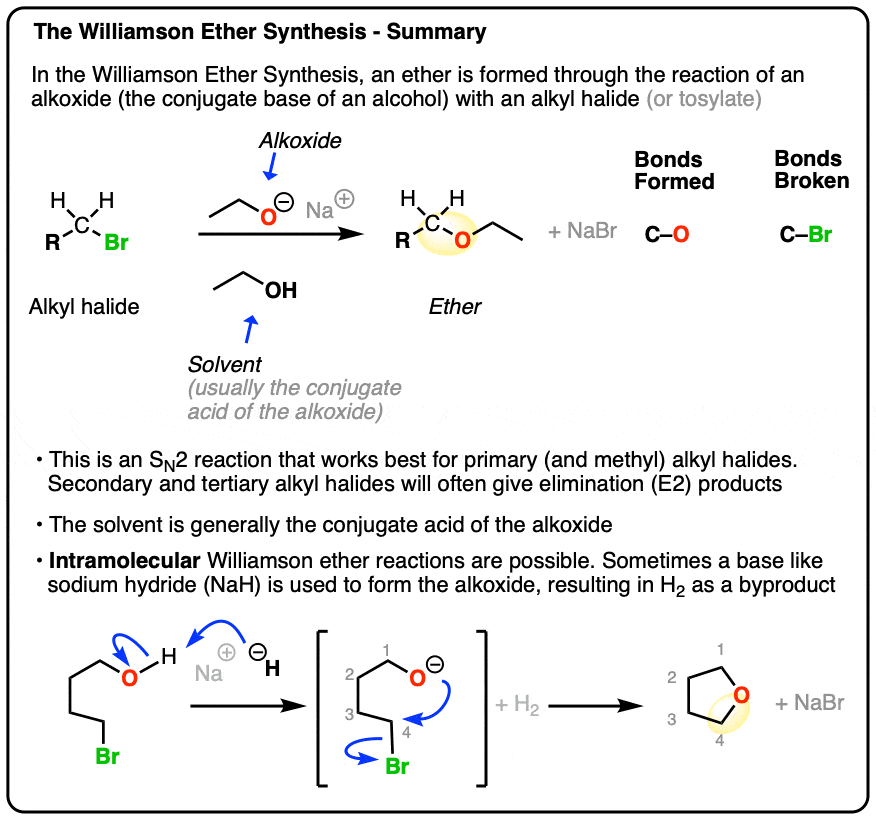
williamson ether synthesis of phenols (reagents and what it makes)
add an ether to a benzene via using a phenol and add 1) alkyl halide 2) NaOH, H2O in DMF solvent
esterification of phenols reagents
add ester with Et3H to add a ester to a benzene ring

why is a phenoxide ion an important intermediate before carbonation, esterificaiton, and halogenation can occur
to make it a strong nucleophile because by itself a phenol is a weak nucleophile

what does the kolbe reaction do to phenols and mech
makes salicylic acid by adding a carboxylic acid to a phenol and uses EAS

kolbe reaction reagents
1) NaOH 2) CO2 3) H3O+

what compund is this
salicylic acid

salicylic acid to aspirin reagent
acetic anhydride and then H3PO4

what does Bakelite polymerization do
connect phenols together in a network polymer
reagents for bakelite polymerization of phenol
formaldehyde and acid/base catalyst

what compound is this
quinones
how to make cyclic quinones from diphenols
use a oxidizing agent such as Jones
what are the key traits of quinones (3 traits)
nonaromatic, can act as dienophile, and reacts like a alpha beta unsaturated carbonyls
OH to carbonyl
any strong oxidizer such as a metal, Jones, PCC

what are the key properties of beta-dicarbonyls
has a lower pka meaning its a better acid than carbonyl compounds due to resonance stabilization as there are more electron withdrawing groups
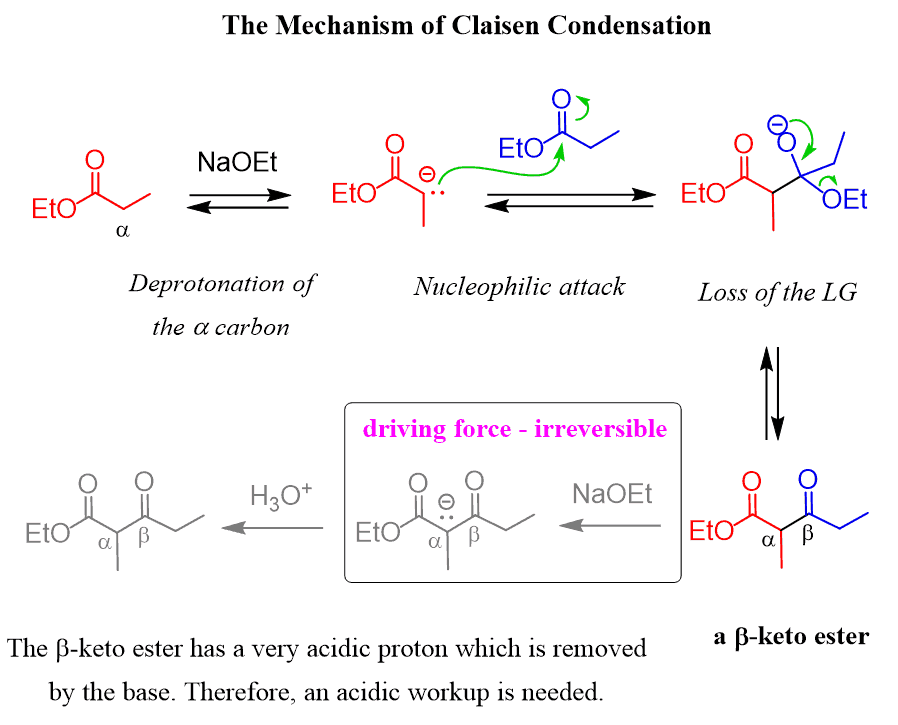
describe the mech of the self claisen condensation
first you need a ester that has alpha hydrogens that can react with a strong base like NaOET and ETOH so then the enolate ion can form to make a good enough nuclephile to attack the electrophilic carbon of the ester to do addition elimination and then a beta keto ester is formed however the alpha hydrogen between the two carbonyls is highly acidic so acid base will occur because of the strong base added so then must add H3O+ to do acid work up and stay as a beta keto ester and not revert back to being a enolate

describe the mech of the Dieckman condensation (intramolecular claisen condensation)
same as the self claisen except need to add 1) NaOMe but still do the acid workup with H3O+ but now a cyclic ring is formed
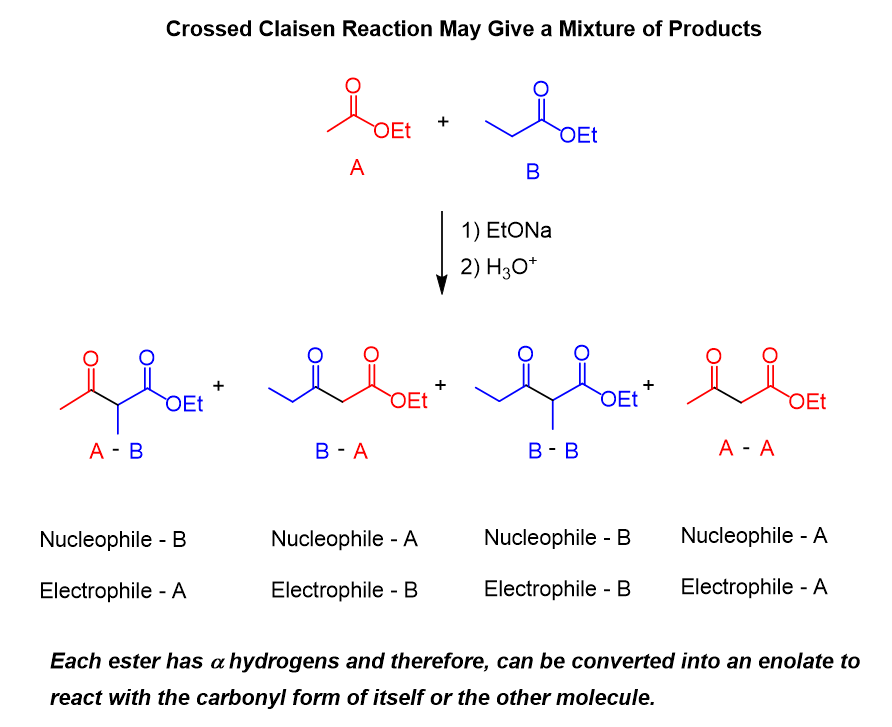
mixed claisen condensations reagents
1) NaO__ (MATCH THE ESTERS ALKOXY GROUP)
2) ester of choice
3) H3O+
why is it important to convert beta dicarbonyls into enolates
to make the dicarbonyl a good enough nucleophile so that Sn2, acylation, and addition can occur
alkylation of beta dicarbonyls reagent and mech
CH3Br and follows Sn2
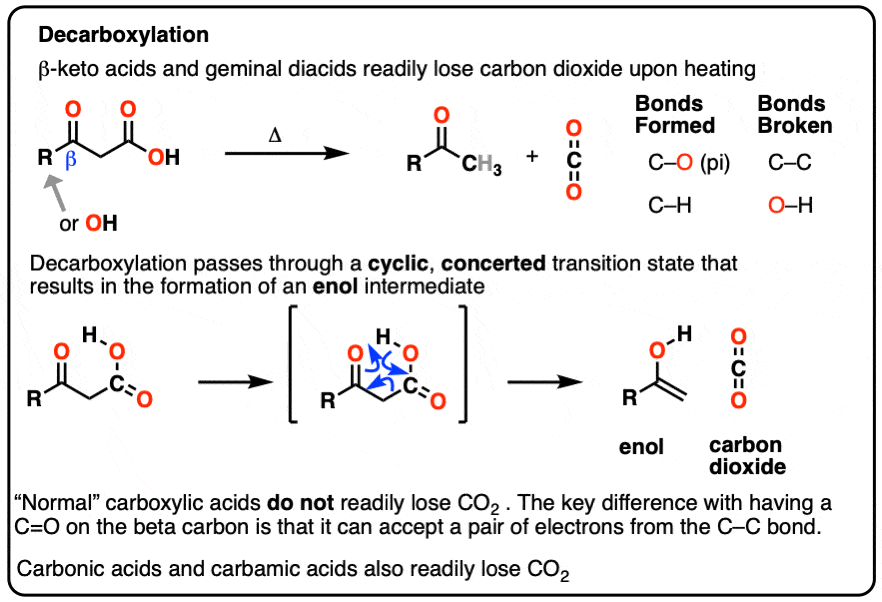
decarboxylation of beta dicarbonyls mech intermediates and reagents
first hydrolysis occurs to convert the ether part of a carboxylic acid and then heat is added for the actual carboxylation which involves a pericyclic intermediate in order to remove a carbonyl as CO2
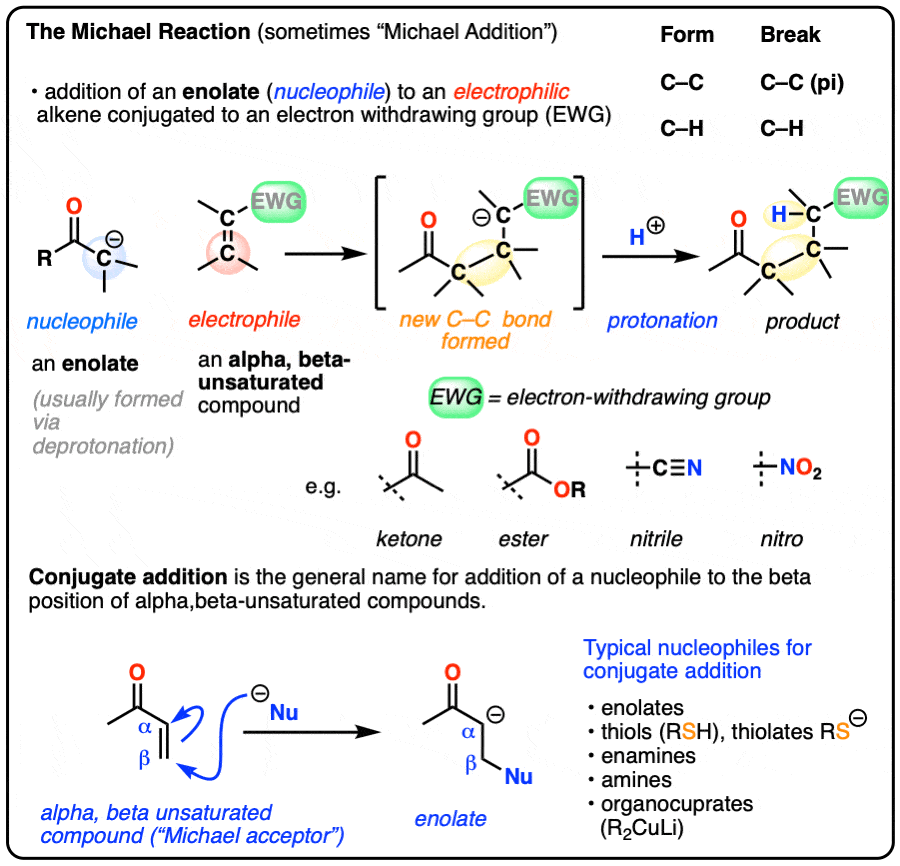
Michael addition of beta-dicarbonyls
first enolate formation using a strong base like NaOEt and then adding a Michael acceptor (any carbonyl with a alkene because its a good electrophile) and then H3O+ to neutralize the enolate

Robinson Annulation of beta dicarbonyls
only occurs if Michael acceptor has alpha hydrogens and can create an intramolecular ring as another enolate forms and then it attacks the electrophilic carbonyl
how to make a alpha di-carbonyl into a good Nu-
by making it into a masked acyl anion so then the carbon can now act as a nucleophile because of the instability
thiazolium salt usage in the stetter rxn
so that a strong enough nucleophile can be formed so that 1,4 addition can occur and can form a new C-C bond
two types of sugars
aldoses (has a aldehyde) and ketoses (has a ketone)
are almost all carbohydrates chiral molecules (true or false)
true
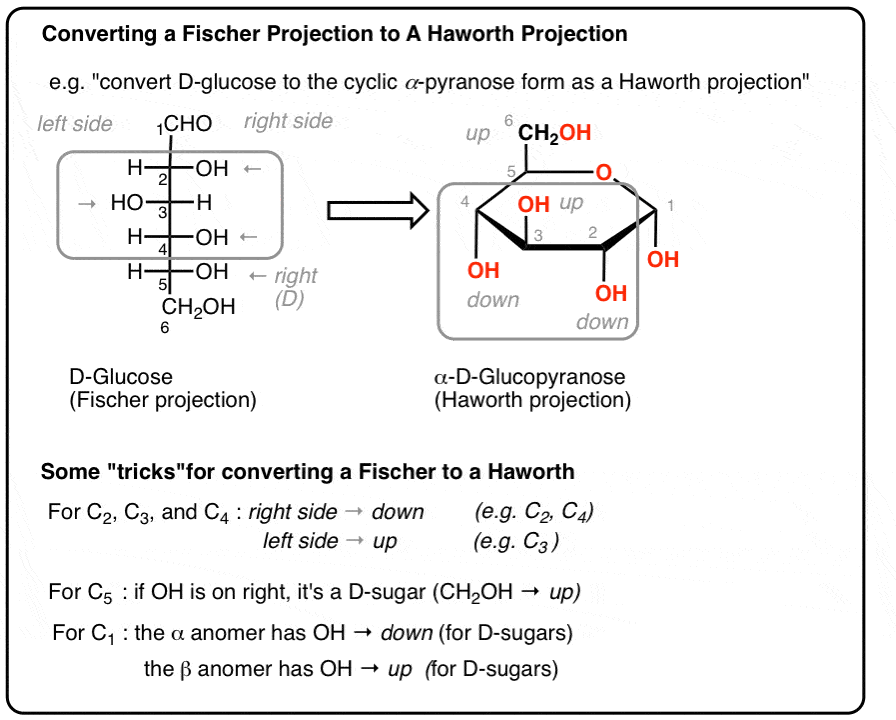
when going from fischer to haworth projection what does the right and left positioning of C2 C3 C4 tell us
right on fischer gets drawn down and left on fischer gets drawn up
on a fischer projection on the C5 what determines if its D or L
OH on right then D and then if on left then L
anomeric C
C1 where either the OH and H can be up or down
how to determine if a sugar has a alpha or beta anomeric C
alpha means the OH points the opposite way of the terminal C so usually when the OH is pointing DOWN and beta means the OH points the same way of the terminal C so usually when the OH is pointing UP

what compound is this (main character or assinging D and L)
glyceraldehyde

what compound is this
D-glucose

what compound is this
D-fructose
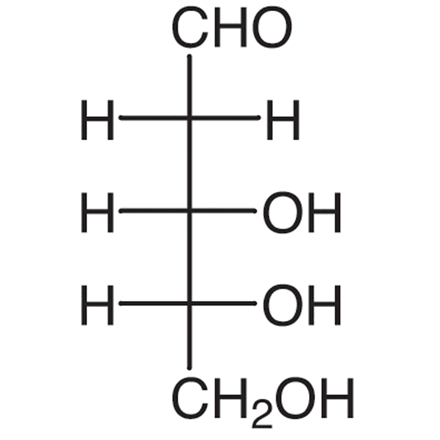
what compound is this
D-Ribose

epimers defintion
diastereomers that differ at ONE CHIRAL CENTER ONLY
enantiomers defintion
ALL CHIRAL CENTERS SWITCHED
diastereomers defintion
more than one chiral center switched but not all of them

mutarotation
change in optical activity at the anomeric carbon
what does reduction of carbohydrates use and reagent
makes a new chiral center (for example from the carbonyl) and use NaBH4 and CH3OH
what does oxidation of carbohydrates use and reagent
use strong oxidizer (Fehlings or Benedicts) and Tollen’s
what are 6 reducting sugars (gets oxidized)
glucose, fructose, mannose, galactose, maltose, and lactose
what are 3 non-reducing sugars (acetals)
sucrose, glucosides, and starch

what does Kiliani-Fischer synthesis do and reagent and mech
add ONE C and use HCN or NaCN and then acid hydrolysis with H3O+ and two step partial reduction and then hydrolysis

what does the Ruff Degradation do and reagent and mech
LOSE ONE C and use 1) Br2, H2O 2) Fe3+, H2O2 and its hydrolysis of aldoses (ONLY WORKS WITH ALDOSES)

esterification of carbohydrates (every -OH gets converted to COO) reagents
add acetic anhydride, pyridine, and 0 degrees celsius
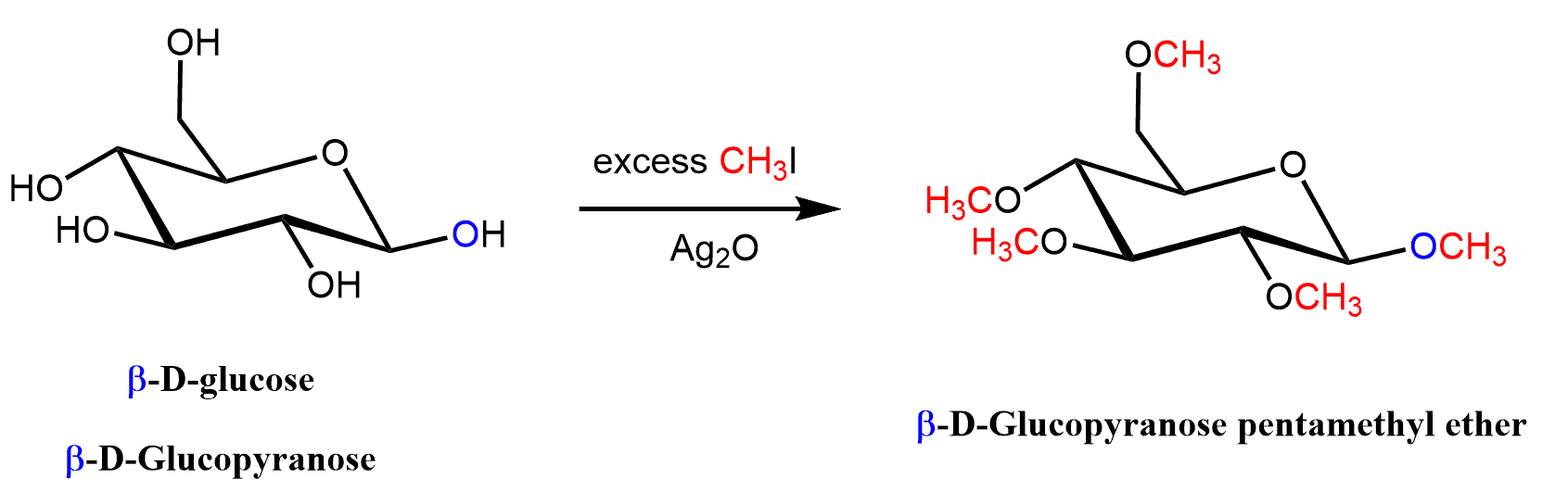
ether synthesis of carbohydrates (every -OH gets converted to -OCH3) reagents
add Ag2O and CH3I (xs)

what is selective hydrolysis of carbohydrates reagents and what does it do
converts only the anomeric C to -OH using HCl, H2O and heat

what does periodic acid cleavage do to carbohydrates and reagents
can chop carbon carbon bonds and uses HIO4
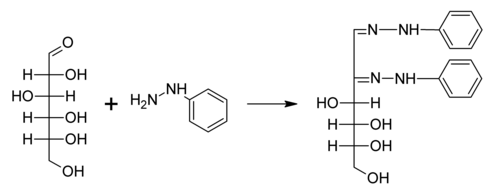
what is osazones and purpose and reagetns
add phenyl hydrazines to aldose/fructose/mannose/glucose so can crystallize and give osazone