a&p ch 1&2
 Call Kai
 Learn
Learn Practice Test
 Spaced Repetition
 Match
Match Flashcards
 Knowt Play
1/82

There's no tags or description
Looks like no tags are added yet.
Name | Mastery | Learn | Test | Matching | Spaced | Call with Kai | Chat |
|---|
No analytics yet
Send a link to your students to track their progress
83 Terms
what nitrogenous base pairs with adenine
thymine and uracil
fatty acid with only single covalent bonds
saturated
levels of organization from least to most complex
smallest unit of matter that retains properties and characteristics of an element
glucose, fructose, & ribose are examples of
starch and glycogen are examples of
hydrophobic components of a phospholipid
electrolytes that are hydrogen ion donors
electrolytes that are hydrogen ion acceptors
acts as a solvent for ionic compounds in body fluids
substances that cannot be split into simpler substances
found in the valence shell of an atom
made up of amino acids
double helix structure
Solution A has a pH of 7.08, and Solution B has a pH of 7.41 Compare hydrogen ions, acid/base, prescense in human body
Amino acids
anatomy
study of the structure of body parts and their relationship to one another
regional
all structures in one part of the body (ex abdomen or leg)
systemic
gross anatomy of the body studied by system
surface
study of internal structures as they relate to overlying skin
microscopic
cytology (cell) and histology (tissues)
developmental
studies changes over time
embryology
study of developmental changes before birth
pathological anatomy
study of structural changes caused by disease
radiographic anatomy
study of internal structures visualized by specialized scanning (ex x-ray)
molecular biology
study of anatomical structures at a sub cellular level (organelles)
operation of endocrine system
hormones
operation of endocrine system
hormones
operation of nervous system
brain, sc, nerves
operation of cardiovascular system
heart, blood vessels
operation of integumentary system
skin
operation of skeletal system
bones
operation of muscular system
muscles, movement
operation of lymphatic system
dealing with ECF
operation of respiratory system
gasses (o2, co2)
operation of digestive system
absorption of nutrients
operation of urinary system
elimination of nitrogenous wastes
operation of reproductive system
reproducing
physics in physiology
electrical currents, blood pressure, how muscles use bones for movement
principle of complementarity
function always reflects structure, what a structure can do depends on its specific form
levels of organization (sm to lrg)
subatomic - atom - molecule - organelle - cell - tissue - organ - system - organism
eleven systems of human body
integumentary, skeletal, muscular, nervous, endocrine, cardiovascular, lymphatic (immune system), respiratory, digestive, urinary, reproductive
integumentary system
forms external body covering, composed of skin, sweat glands, oil glands, hair, and nails, protects deep tissue from injury, synthesizes vitamin d
skeletal system
composed of bone, cartilage, and ligaments. protects and supports body organs, provides framework for muscles, site of blood cell formation, stores minerals
muscular system
composed of muscles and tendons. allows manipulation of environment, locomotion, facial expression. maintains posture, produces heat
nervous system
composed of brain, spinal chord, nerves. fast acting control system of body. responds to stimuli by activating muscles and glands
endocrine system
composed of glands. secretes hormones that regulate body processes (growth, reproduction, metabolism)
cardiovascular system
composed of heart & blood vessels. heart pumps blood, blood vessels transport blood throughout body
lymphatic system
composed of red bone marrow, thymus, spleen, lymph nodes, & lymphatic vessels. picks up fluid leaked from blood vessels & returns it to blood. disposes of debris in lymphatic system. houses white blood cells involved with immunity
respiratory system
composed of nasal cavity, pharynx, trachea, bronchi, lungs. keeps blood supplied with oxygen, removes carbon dioxide.
digestive system
composed of oral cavity, esophagus, stomach, small intestine, rectum, anus, liver. breaks down food into absorbable units to enter blood, eliminates indigestible food as feces
urinary system
composed of kidneys, ureters, urinary bladder, urethra. eliminates nitrogenous wastes from body, regulates water electrolyte and pH balance of blood
reproductive system (male)
composed of prostate gland, penis, testes, scrotum, and ductus deferens or vas deferens. main function is production of offspring. testes produce sperm & male sex hormones, ducts and glands deliver sperm to female reproductive tract
reproductive system (female)
composed of mammary glands, ovaries, uterine tubes, uterus, vagina. main function is production of offspring. ovaries produce eggs and female sex hormones. remaining structures serve as sites for fertilization and development of fetus. mammary glands produce milk to nourish newborn
what are the necessary life functions?
maintaining boundaries: internal environment remains distinct from external environment. cellular - plasma membrane. organismal - skin.
movement: locomotion, propulsion (peristalsis), contractility
responsiveness: ability to sense & respond to changes in environment
digestion: breakdown of ingested food
metabolism: all chemical reactions occurring in body
excretion: removal of wastes
reproduction: cellular (cell division), organismal (combination of sperm & egg to form new person)
growth: increase in size of a body part or organism
survival needs
nutrients (energy & cell building - PROs, CHOs, lipids)
oxygen (metabolic reactions)
water (provides environment for chemical reactions - 60-80% of body weight)
normal body temperature (necessary for chemical reactions to occur at life sustaining rates)
atmospheric pressure (required for proper breathing, gas exchange in lungs)
homeostasis
ability to maintain a stable internal environment in changing outside world (dynamic state of equilibrium. chemical, thermal, and neural factors)
homeostatic control mechanisms
receptor: monitors environments and responds to changes (stimuli), control center: determines set point at which variable is maintained, effector: provides means to respond to stimuli

homeostatic control mechanisms

negative feedback
output shuts off original stimulus, maintains homeostasis. example: blood pressure

positive feedback
output enhances or exaggerates original stimulus (example: parturition, giving birth)

homeostatic imbalance
disturbance to normal equilibrium. overwhelming usual negative feedback allows destructive positive feedback to take over
anatomical position
body erect, feet slightly forward, palms forward, thumbs facing away from body. standard reference point for directional terms


directional terms
• Superior
• Inferior
• Anterior
• Posterior
• Medial
• Lateral
• Intermediate
• Ipsilateral
• Contralateral
• Proximal
• Distal
• Superficial
• Deep

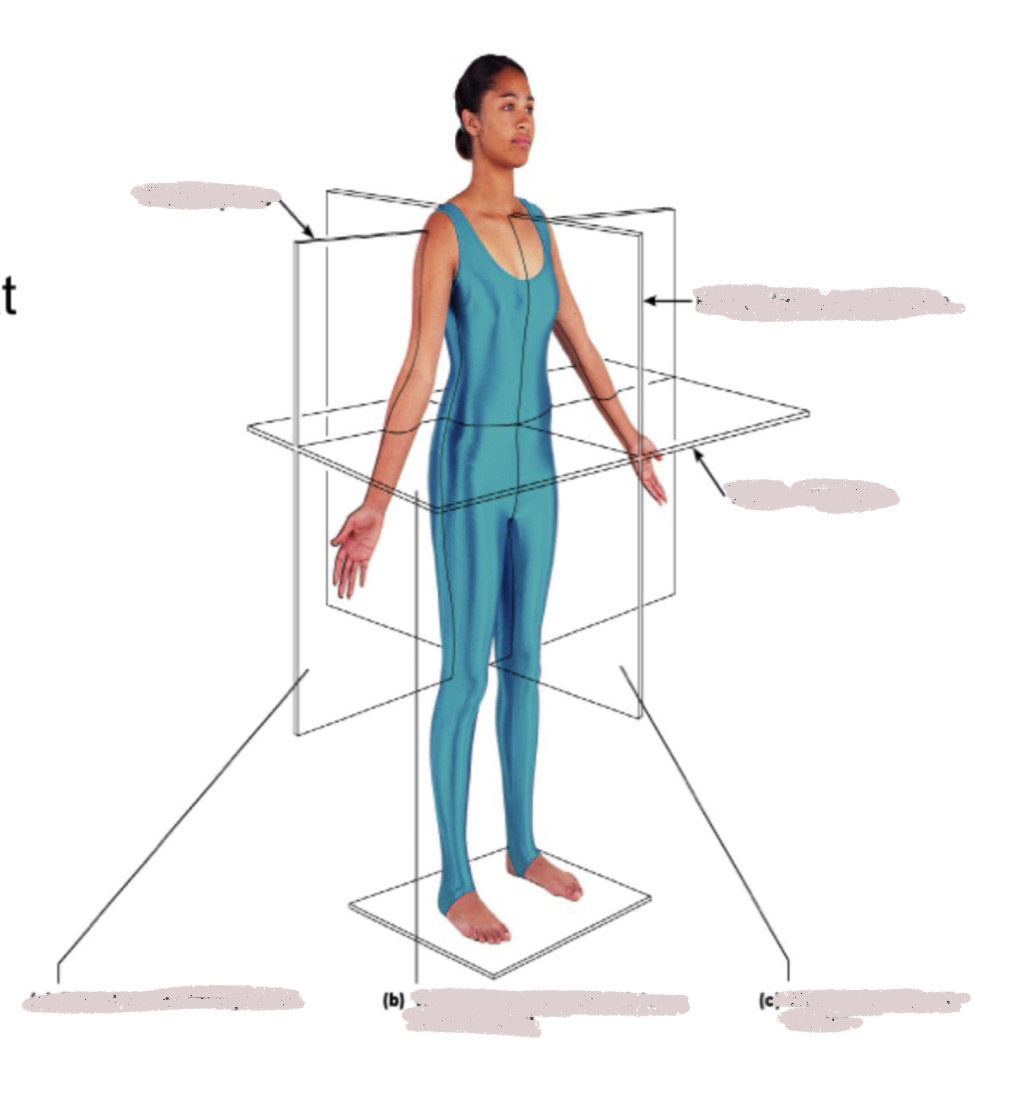
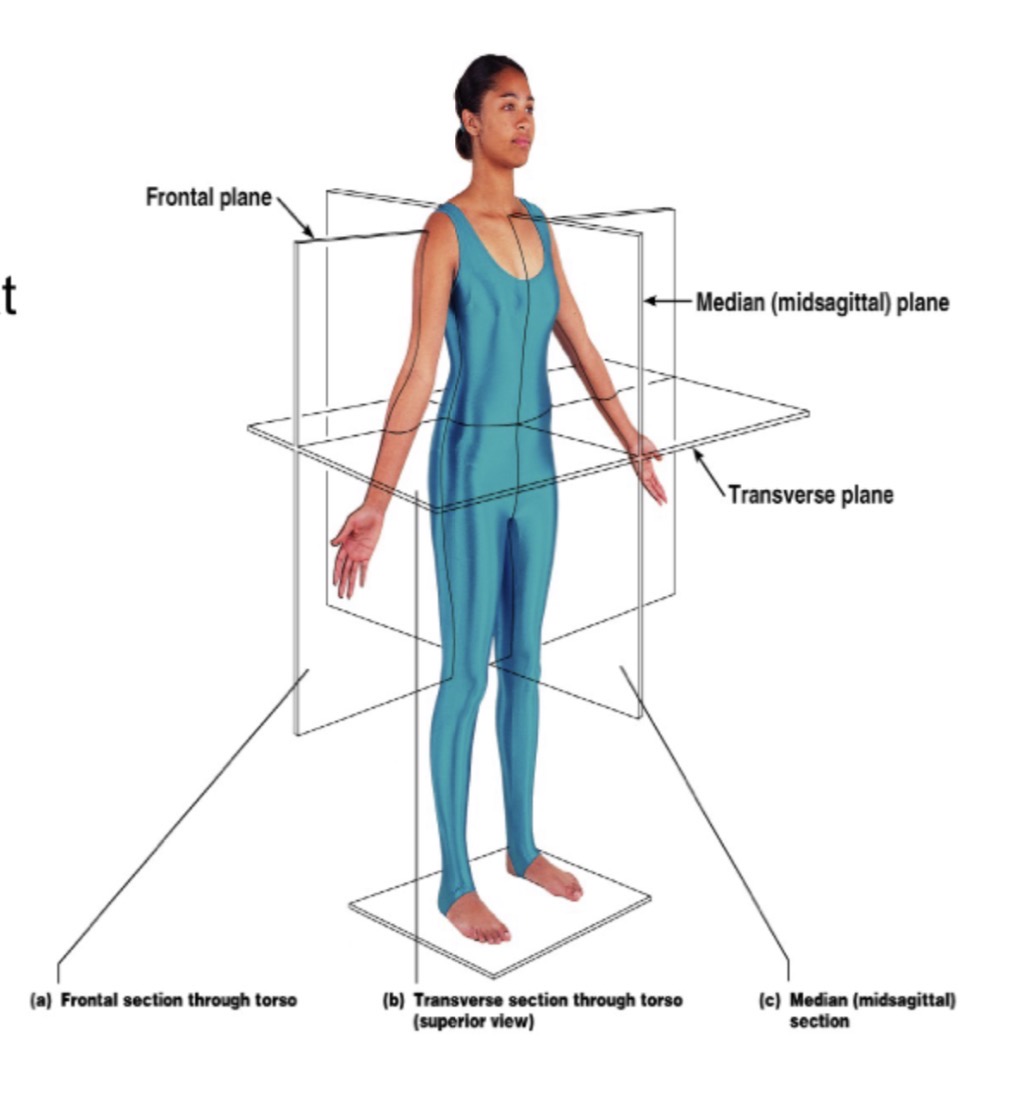
body planes
sagittal- divides into L/R (midsagittal or medial lies on midline, parisagittal divides into unequal parts)
frontal or coronal- divides into anterior/posterior parts
transverse- divides into superior/inferior parts
oblique- cuts made diagonally
anatomical variability
humans vary slightly in internal and external anatomy. nerves/blood vessels may be out of place, small muscles may be missing. seldom extreme anatomical variations, over 90% of all anatomical structures match textbook definition
ventral body cavity membranes
parietal serosa or layer - lines internal body walls
visceral serosa or layer - covers internal organs
serous fluid - separates serosae, acts as lubricant
atom
smallest unit of matter that retains the properties and characteristics of its element
stable atoms
nuclear structure does not change over time, 8 electrons in the valence shell
unstable atom
unpaired electron makes it highly reactive to nearby molecules (often destructive)
isotopes
different atomic form of same element, vary only in # of neutrons they contain, heavier species tend to be radioactive
radioactivity
spontaneous decay seen in heavier isotopes - particles or energy emitted from nucleus leading to atom becoming more stable