MID 2 PSYCH 367
 Call Kai
 Learn
Learn Practice Test
 Spaced Repetition
 Match
Match Flashcards
 Knowt Play
1/29

There's no tags or description
Looks like no tags are added yet.
Name | Mastery | Learn | Test | Matching | Spaced | Call with Kai | Chat |
|---|
No analytics yet
Send a link to your students to track their progress
30 Terms
4 types of information required to identify distal stimulus
light sources
reflectance of surfaces
surface orientation
viewing position
what is the inverse projection problem
going from the proximal stimulus to identifying the distal stimulus
what is underdetermination
any 2D image may have many potential 3D sources
contour
border between light and dark areas in an image
what was ganzfeld
sensory deprivation experiment, developed to test for telepathic communication
microsaccades
involuntary eye movements that occur during fixations
what is the purpose of microsaccades
to change the position of the image on the retina
illusory contours
contours not present on the retina, but still affect contour perception

what law is this
proximity

what law is this
similarity
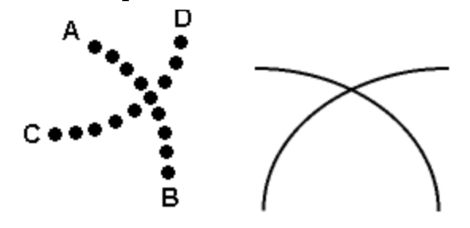
what law is this
good continuation

what law is this
closure

what law is this
common fate

what law this this
meaningfulness / familiarity
what is the Law of Pragnanz
every stimulus pattern is seen in the simplest way
recognition definition
perceiving something as previously experiences
identification definition
naming or classifying an object
what are template theories
compare input to a model/template stored in memory
pros of template theories
successfully used by machines
cons of template theories
intolerant to variations in a stimulus
too many templates required
cannot account for novel stimuli
cannot handle context
pandemonium model is what type of theory
feature-based
4 stages of pandemonium theory
image demon
feature demon
cognitive demon
decision demon
stage 1: image demon
gets sensory input
stage 2: feature demons
analyze input in terms of features
stage 3: cognitive demons
determine which groups of features are present
stage 4: decision demons
identifies pattern by listening for cognitive demon shouting the loudest
pros of pandemonium
feature-detectors physiologically relate to cells in visual system
can identify wide range of stimuli — just specify component features
cons of pandemonium
doesn’t define “feature”
cannot handle Gestalt organizational principles
cannot handle context
computational approach
multi-stage approach that applies precise mathematical formulas