General yard call outs
 Call Kai
 Learn
 Practice Test
 Spaced Repetition
 Match
 Flashcards
 Knowt Play
1/33

There's no tags or description
Looks like no tags are added yet.
34 Terms
A-Band
NEVER changes size during contraction!
Motor unit
Consists of one motor neuron and all the muscle fibers(cells) it innervates
Sarcomere definition
The basic functional unit of striated muscle, bounded from Z-disc to Z-disc
G-actin vs F-actin
Individual G-actin beads contain the active binding sites , they string together to make F-actin strands(actin itself I can explain more to yall)
Key chemical requirements for contraction
ATP(energy),Acetylcholine(ACh) at receptors on motor end plate, and Calcium(Ca) to bind troponin.
Type I(slow) vs Type IIX(fast) muscle fibers
Type I = Slow red, fatigue resistant, ABUNDANT myoglobin(imagine marathon runners) , Type IIX = Fast white , pale , low myoglobin, rapid fatigue(imagine Sprinters)
Why muscle tissue is red
myoglobin
Facial Expression muscles
Facial Nerve (Cranial Nerve VII) innervates all muscles of facial expression(IMPORTANT)
Masseter and Temporalis
Primary muscles for mastication(chewing) they elevate the mandible to close the jaw.
Platysma
Sheet like muscle in subcutaneous(right under the skin) neck tissue
Sternocleidomastoid (SCM) - his fav muscle
Bilateral contraction flexes head/neck forward , Unilateral contraction rotates head to the opposite side
Risorius
Pulls corners of mouth laterally when smiling, causes “smile of death” (rictus sardonicus)
Anterior Neck Strap Muscles (-hyoid vs -thyroid)
Sternohyoid (long) & Sternothyroid (short) depress hyoid/larynx; if suffix is -hyoid it inserts on hyoid bone, if -thyroid it inserts on thyroid cartilage
Erector Spinae Group (Lateral to Medial)
"I Like Spaghetti" mnemonic: Iliocostalis (lateral), Longissimus (middle), Spinalis (medial), extends the spine
Serratus Anterior
Serrated knife muscle, known as the “throwing muscle” for scapular protraction/abduction.
Rectus abdominis landmarks( your abs)
Enclosed in rectus sheath, divided down the middle by Linea alba and Transversly by Tendinous Inscriptions
Abdominal Obliques
External Oblique = superficial (“hands in pockets” direction), Internal = deep ( opposite diagonal)
Biceps Brachii - Insertion and Actions
Inserts on radial tuberosity, acts as an elbow flexor AND a powerful supinator of forearm
Brachialis
Deep and wide to Biceps Brachii, inserts on ulnar tuberosity as a pure elbow flexor
Humerus Epicondyles
Forearm flexors originate on Medial Epicondyle(Med to Lat) , Forearm extensors originate on Lateral epicondyle ( Lat to Med)
Major or Brevis ?
He said he will generally test “Major” or “Longus” muscles ( Rhomboid Major , Extensor Carpi radialis longus) usually skips “brevis” or “minor” so if you have to pick between minor or major always pick major (except Teres Minor and Major because Minor is a rotator cuff not Major)
Palmaris Longus
Passes over flexor retinaculum into palmar aponeurosis, absent in ~30% of people

Brachioradialis
forearm muscle, forms a "V" shape with Pronator Teres
Gluteus Medius (IM Injection Site)
Primary site for intramuscular (IM) injections to prevent damaging the thick Sciatic Nerve exiting inferior to Piriformis

Lateral Hip Rotators
Piriformis, Superior Gemellus, Obturator Internus, Inferior Gemellus, Quadratus Femoris
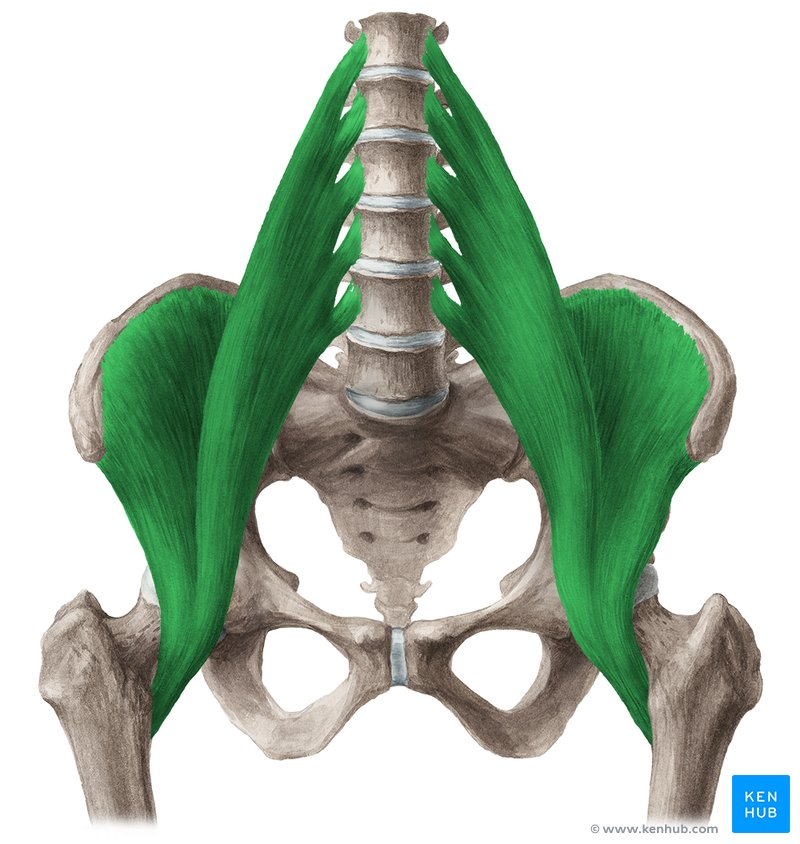
Iliopsoas
Iliacus + Psoas Major ("human tenderloin"); primary powerful hip flexor / kicker
Sartorius
Longest muscle in the body, flexes BOTH hip and knee (action = sitting cross-legged)
Vastus Intermedius
Deep to Rectus Femoris in the Quadriceps Femoris group
Semimembranosus
Deep and wide to Semitendinosus (medial hamstrings)
Popliteus (he may not ask according to BRC)
Located directly behind the knee, unlocks the knee joint
Tibialis Posterior( wont be on THIS exam but its 100% on finals According to Yard)
Deep posterior leg muscle, for ankle inversion and plantarflexion
Triceps Surae Group
Composed of Gastrocnemius + Soleus (soleus is deep/wide), inserts on calcaneus via Achilles tendon

Femoral Triangle Boundaries & Contents
Inguinal Ligament (superior), Sartorius (lateral), Adductor Longus (medial). Inside it/Contents(NAVL): Femoral Nerve, Artery, Vein, Lymphatics(lymph nodes)
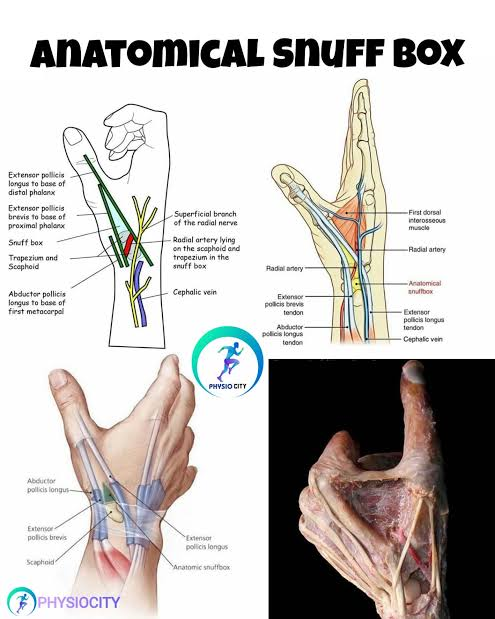
Anatomic Snuffbox
Bounded by Extensor Pollicis Longus, Extensor Pollicis Brevis, and Abductor Pollicis Longus; clinical site to feel Radial Pulse