Health Assessment Lecture - Vocab - Week 3
 Call Kai
 Learn
Learn Practice Test
 Spaced Repetition
 Match
Match Flashcards
 Knowt Play
1/37

There's no tags or description
Looks like no tags are added yet.
Name | Mastery | Learn | Test | Matching | Spaced | Call with Kai | Chat |
|---|
No analytics yet
Send a link to your students to track their progress
38 Terms
accessory muscles
Muscles that sometimes assist in breathing
- scalene muscles
- sternocleidomastoid
- deep muscles of the neck and thorax
- posterior neck and back muscles
- pectoralis major
- pectoralis minor
- abdominal muscles
adventitious
extraneous, irregular breath sounds
- crackles, wheezes, rhonchi, &pleural friction rub
anterior-posterior diameter
the measurement of the chest from the front (anterior/sternum) to the back (posterior/spine)
asthma
hyperreactive airway disease characterized by bronchoconstriction, airway obstruction, and inflammation
- Symptoms: dyspnea & tightness in the chest
- Signs: tachycardia, tachypnea with prolonged expiration, audible wheezes, the use of accessory muscles, and cough
- Expiratory and occasionally inspiratory wheezes and diminished breath sounds are common findings
auscultate
the act of listening to sounds arising within organs
asymmetry
a lack of balance or a difference in size, shape, or function between the left and right sides of the body
- Unilateral or unequal movement of thumbs suggests asymmetry of expansion
barrel chest
chest wall may have a barrel chest appearance because of an increased AP diameter
- The ribs are more horizontal, and the chest looks as if it is held in constant inspiration
- sometimes the costal angles are increased
- often found in emphysema patients

bradypnea
abnormally slow breathing
breathing effort
the energy consumed by your respiratory muscles—like your diaphragm—to pull air into and push it out of your lungs
bronchial
characteristic of breath sounds
- high pitch
- loud intensity
- lasts longer during expiration
- location: over trachea
- abnormal location: over peripheral lung fields
acute bronchitis
inflammation of the mucous membranes of the bronchial tree
- symptoms: sore ribs from coughing fits
- signs: cough, sputum (yellow & green)
- Rhonchi heard on auscultation & wheezing heard after coughing
chronic bronchitis
hypersecretion of mucus by the goblet cells of the trachea and bronchi, resulting in a productive cough that lasts at least 3 months in two successive years
- Symptoms: productive cough (the first symptom), chronic mucus production, dyspnea (initially associated with exercise and ultimately at rest), and the presence of risk factors (cigarette smoking, genetic factors, lung growth and development)
- Findings: rhonchi, sometimes cleared by coughing, cyanosis, and clubbing of nails
bronchovesicular
breath sound
- moderate pitch
- medium intensity
- duration is same for insp. & exp.
- location: First & second intercostal spaces at sternal border anteriorly; posteriorly at T4 medial to scapula
- abnormal location: Over peripheral lung fields
chest expansion
a clinical measurement of the difference in chest circumference between a full exhalation and a full inhalation
- used to evaluate chest wall mobility and respiratory function

cough
to expel air from the lungs suddenly with a sharp, short noise
crackles
adventitious sound previously called rales
- Fine, high-pitched crackling and popping noises (discontinuous sounds) heard during inspiration and sometimes during expiration
- not cleared by cough or altered by changes in body position
- heard in pneumonia, heart failure, and restrictive pulmonary diseases
crepitus
crackly sensation under your fingers (from bones or tissues rubbing up against each other)
cyanosis
pallor of the nails, skin, or lips
- sign of inadequate oxygenation of tissues caused by an underlying respiratory or cardiovascular condition

expiration
the act or process of releasing air from the lungs through the nose or mouth
inspiration
the drawing of air into the lungs
intensity
how loud something is
kussmaul's
deep, rapid, and labored breathing pattern that signals a life-threatening medical emergency caused by dangerous acid buildup in the blood
occupational hazards
hazards that threaten workers' physical and mental well-being through daily patient care and medical environments
orthopnea
difficulty breathing when the individual is lying down
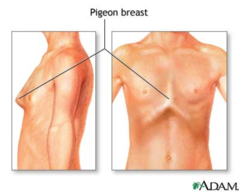
pectus carinatum
aka pigeon chest
chest wall condition that causes the breastbone and ribs to push outward
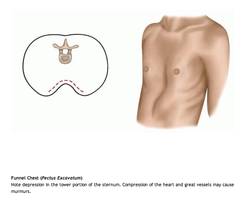
pectus excavatum
aka funnel chest
congenital chest wall deformity where the breastbone (sternum) and ribs grow inward, creating a sunken appearance
pitch
How high or low a sound is
pleural friction rub
adventitious sound
- Superficial, low-pitched, coarse rubbing or grating sound (sounds like two surfaces rubbing together)
- heard throughout inspiration and expiration
- loudest over the lower anterolateral surface
- not cleared by cough
- Heard in individuals with pleurisy (inflammation of the pleural surfaces) or with pericarditis
pneumothorax
Air in the pleural spaces (can result in collapsed lung)
- closed, open, & tension
pursed lip breathing
a simple exercise that slows your breathing rate, keeps your airways open longer, and helps release trapped air from your lungs

respiratory/ventilation cycle
one complete sequence of inspiration (inhalation) and expiration (exhalation) that moves air into and out of the lungs
retraction
chest retraction appears when intercostal muscles are drawn inward between the ribs and indicates airway obstruction that may occur during asthma attack or pneumonia

rhonchi
adventitious sound
- aka sonorous wheeze
- Low-pitched, coarse, loud, low snoring or moaning tone
- heard primarily during expiration but may also be heard during inspiration
- coughing may clear
- Heard in disorders causing obstruction of the trachea or bronchus such as bronchitis or COPD
tachypnea
abnormally rapid breathing, increased rate of respiration
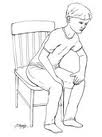
tripod position
- enhances accessory muscle use
- observed in patients that are short of breath
shortness of breath
aka dyspnea
- occurs when breathing becomes difficult
- difficult or labored respiration
vesicular
breath sound
- low pitch, soft intensity
- inspiration lasts longer
- location: peripheral lung fields
- no abnormal location
wheezes
adventitious sound
- aka sibilant wheeze
- High-pitched, musical sound similar to a squeak
- heard more commonly during expiration but may also be heard during inspiration
- occurs in small airways
- Heard in airway diseases when the thickness of airways increases such as asthma