Polysystemic Mycotic Infections
 Call Kai
 Learn
 Practice Test
 Spaced Repetition
 Match
 Flashcards
 Knowt Play
1/30

Earn XP
Description and Tags
Lecture 53
31 Terms
What is the organism in Blastomycosis?
Blastomyces dermatitidis

What organism is this?
Blastomyces dermatitidis (Blastomycosis)
What clinical signs can be associated with Blastomycosis?
anorexia, cough, dyspnea, exercise intolerance, weight loss, ocular disease, skin disease, depression, lameness
sometimes fever, lymphadenopathy, fungal osteomyelitis and lameness
ocular: anterior uveitis, endophthalmitis, optic neuritis, posterior segment disease
CNS: seizures, depression
What clinicopathologic abnormalities can be seen with Blastomycosis?
normocytic, normochromic, nonregenerative anemia
lymphopenia
neutrophilic leukocytosis with or without a left shift, and monocytosis
hypoalbuminemia and hyperglobulinemia (polyclonal gammopathy)
hypercalcemia (infrequent)
How can we diagnose Blastomycosis?
serum antibodies
urine/serum antigen test
definitive via cytology of FNA, histopathology, culture
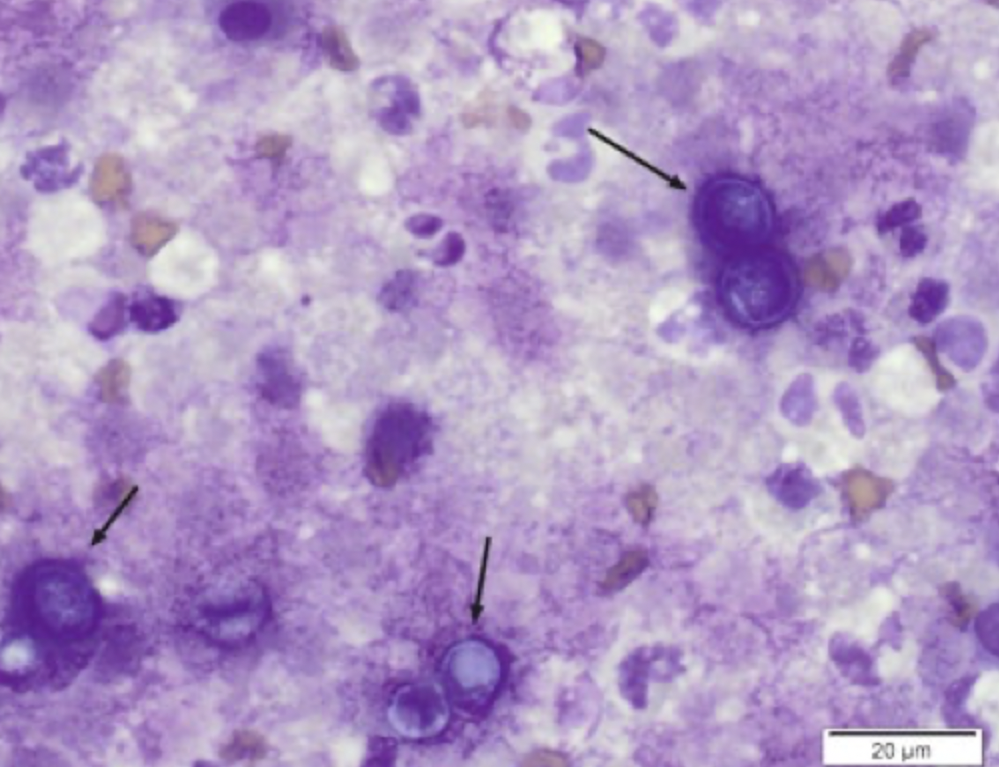
What organism is this?
Blastomyces
How can we treat Blastomycosis?
amphotericin B IV for life threatening
itraconazole
What organism causes Histoplasmosis?
Histoplasma capsulatum

What organism is this?
Histoplasma capsulatum
What clinical signs can be associated with histplasmosis?
subclinical infection common
pulmonary infection and disseminated infection are most common with clinical infection
anorexia, fever, depression, weight loss, cough, dyspnea, diarrhea
large bowel diarrhea most comon
ocular lesions: chorioretinitis most common, can include conjunctivitis, retinal detachment, optic neuritis
What clinicopathologic abnormalities can be seen with Histoplasmosis?
normocytic, normochromic, nonregenerative anemia most common
neutrophil counts can be normal, increased, or decreased
occasionally seen in circulating cells on buffy coat smear
thrombocytopenia
hypoproteinemia
How can we diagnose Histoplasmosis?
urine antigen testing
definitive via cytology (rectal scrapings, bone marrow, buffy coat, FNA), histpathology, culture, PCR
How can we treat Histoplasmosis?
itraconazole
amphotericin B for life threatening
What organism causes coccidioidomycosis?
Coccidioides immitis

What organism is this?
Coccidioides immitis
What clinical signs can be associated with Coccidioidomycosis?
dogs: lame with swollen, painful bones or joints
cats: skin lesions, respiratory disease
cough, dyspnea, anorexia, weakness, weight loss, lymphadenopathy, ocular inflammation, and diarrhea
pulmonary abnormalities: crackles, wheezes, pleural effusion
restrictive pericarditis, mycocarditis
CNS: depression, seizures, ataxia, central vestibular disease
What clinicopathologic abnormalities can be seen with Coccidioidomycosis?
normocytic, normochromic, nonregenerative anemia
leukocytosis, leukopenia, and monocytosis
hyperglobulinemia
hypoalbuminemia, renal azotemia, proteinuria
How can we diagnose coccidioidomycosis?
antigen testing
serum antibodies detected via complement fixation, AGID, and tube precipitin
combine with clinical signs to increase accuracy
definitive via cytology, histopathology, PCR, culture
How can we treat Coccidioidomycosis?
Amphotericin B if life threatening
fluconazole if respiratory
itraconazole and ketoconazole can be used
What organism causes Sporotrichosis?
Sporothrix schenckii

What organism is this?
Sporothrix schenckii
Where is sporotrichosis most commonly seen in the US?
coastal regions, river valleys, rose bushes
What clinical signs can be associated with Sporotrichosis?
lymphocutaneous form most common —> small firm nodules in skin, infection ascends along lymphatics
nodules rupture and drain
in cats, lesions seen most often on bridge of nose or head (pinnae)
How can we diagnose Sporotrichosis?
culture from lesion samples (exudate from unopened lesions)
cytology
fluorescent antibody test available
How can we treat Sporotrichosis?
itraconazole

What is causing these ulcerated lesions on the head of this cat?
Sporothrix schenckii
What is the most common clinical sign for coccidioidomycosis infection in a dog?
lameness with swollen, painful bones or joints

What is your diagnosis and what drug will you use for treatment?
Blastomycosis
Treat with itraconazole

This map outlines the endemic areas for which mycotic infection?
Blastomycoses

This map outlines the endemic areas for which mycotic infection?
Histoplasmosis

This map outlines the endemic areas for which mycotic infection?
Coccidioidomycosis