Tectionic Plates

0.0(0)
Studied by 0 people
call kaiCall Kai
learnLearn
examPractice Test
spaced repetitionSpaced Repetition
heart puzzleMatch
flashcardsFlashcards
GameKnowt Play
Card Sorting

1/3

encourage image

There's no tags or description

Looks like no tags are added yet.

4 Terms

1
New cards
<p>The denser oceanic plate moves toward the continental plate which is lighter due to convection currents. </p><p>The oceanic plate is subjected is subjected under the continental plate because it is denser. </p><p>As it sinks and melts, friction, pressure and heat build up, causing earthquakes.</p><p>Magma can be forced up through cracks / fault in the crust and rises to the surface to form a volcano.</p>

The denser oceanic plate moves toward the continental plate which is lighter due to convection currents.

The oceanic plate is subjected is subjected under the continental plate because it is denser.

As it sinks and melts, friction, pressure and heat build up, causing earthquakes.

Magma can be forced up through cracks / fault in the crust and rises to the surface to form a volcano.

The plates move away from each other due to convection currents in the mantle.

As they move apart, small cracks and weaknesses occur which can lead to earthquakes.

A gap is created between the plates.

Magma rises toward the surface and fills the gap left.

As there is less pressure, it can escape easily.
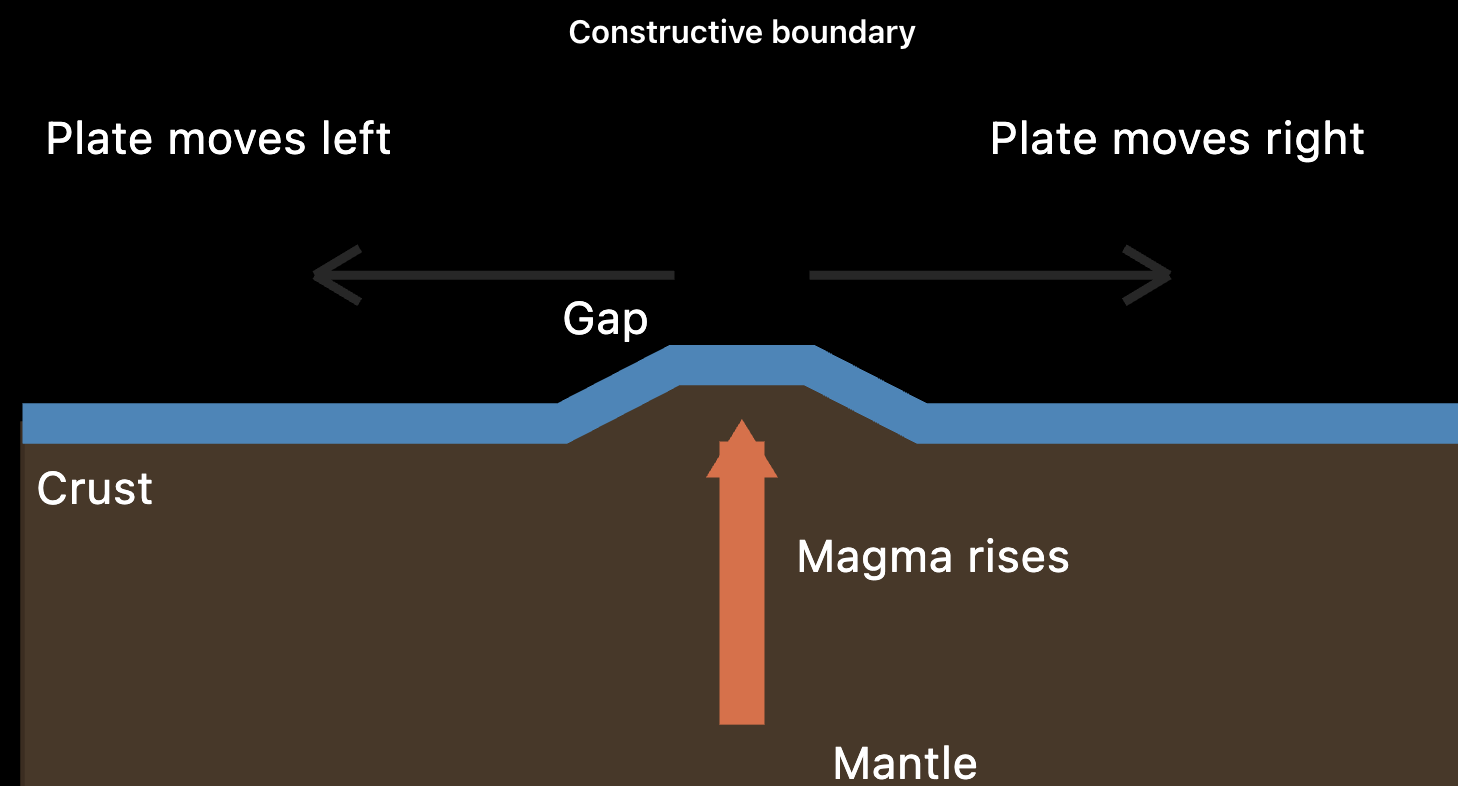
<p>The plates move away from each other due to convection currents in the mantle.</p><p>As they move apart, small cracks and weaknesses occur which can lead to earthquakes. </p><p>A gap is created between the plates. </p><p>Magma rises toward the surface and fills the gap left. </p><p>As there is less pressure, it can escape easily.</p>
2
New cards
<p>The plates have the same / similar density so one cannot be pushed under another. As they pass each other, stress and pressure build up as the plates “stick“ or grind past each other. </p><p>When this energy is released, it sends shockwaves and vibrations through the earth’s crust to the surface which are known as earthquakes.</p>

The plates have the same / similar density so one cannot be pushed under another. As they pass each other, stress and pressure build up as the plates “stick“ or grind past each other.

When this energy is released, it sends shockwaves and vibrations through the earth’s crust to the surface which are known as earthquakes.

Continental plates move towards each other.

Two plates are of equal densities.

Neither can be forced downward so they are both forced upward.

This creates fold mountains.

This builds up huge amounts of pressure which is released as powerful earthquakes.

<p>Continental plates move towards each other. </p><p>Two plates are of equal densities. </p><p>Neither can be forced downward so they are both forced upward. </p><p>This creates fold mountains. </p><p>This builds up huge amounts of pressure which is released as powerful earthquakes.</p>
3
New cards

filler

filler

4
New cards

filler

filler



