exam 3 animal taxonomy
 Call Kai
 Learn
 Practice Test
 Spaced Repetition
 Match
 Flashcards
 Knowt Play
1/74

There's no tags or description
Looks like no tags are added yet.
75 Terms
what are phylum ctenophora
comb jellies
what is the closest living relatives to animals
choanoflagellates
how do choanoflagellates form colonies
aggregation of individuals
what makes choanoflagellates different from choanocytes
flagellum of choanoflagellate is not inside its body
what do sclerocytes do
secrete spicules (needles) in poriferas
how do poriferas feed
phagocytosis performed by choanocytes
what do amoebocytes do in porifera
handle nutrient transport
what are specialized, tube-shaped cells in sponges
porocytes
what are sponges vulnerable to
sponge grazers, eukaryotes, bacteria, and viruses
how do sponges defend themselves?
secondary metabolites (biochemicals not necessary for normal development/physiology)
what is the trade off between toxicity and regeneration?
the more toxic, less regenerative
what is an animal
metazoan
what are animals with “true tissues'“ (tissue layers)
eumetazoan
diploblastic
2 tissue layers
what are the two tissue layers?
ectoderm and endoderm
what do Ctenophora use to feed
colloblast feeding structures
phylum cnidaria
other jellies, corals, hydras, anemones
what is cnidarian nematocysts
pressurized organelles inside stinging cells called cnidocytes
cnidocyte
cell body that nematocyst is housed in
how do nematocysts fire
trigger on stinger + smell or another sense is triggered
what are basic cnidarian body plans?
polyp and medusa
what is a gastrodermis
inner cell layer that lines stomach in cnidarian
what does a polyp have that medusa don’t
body stalk for attachment to rocks or floor surface
what is the difference between polyp and medusa cnidarian?
medusa - mobile
polyp - sessile
what are the 4 classes of cnidarians?
anthozoans, hydrozoans, scyphozoans, and cubozoans
anthozoan
sea anemones, corals
what exoskeleton do anthozoans have
calcium carbonate exoskeleton
what relationship do corals and zooxanthellae have
symbiotic mutualism; zooxanthellae provide corral with food through photosynthesis; coral provides shelter and carbon dioxide for photosynthesis
what is coral bleaching
when coral is stressed and expel zooxanthellae that live inside their tissue
what makes an animal
eukaryotic, heterotrophic, multicellular

what is this
choanoflagellate

what is this
porifera - sponges

what is happening
bacteria is being phagocytized in choanocytes
what do spongocytes produce
spongins

what is this
Ctenophora - comb jellies

what are these
Ctenophora - comb jellies (pelagic)

what are these
Ctenophora - comb jellies (benthic)

what are these
anthozoans - sea anemones, corals
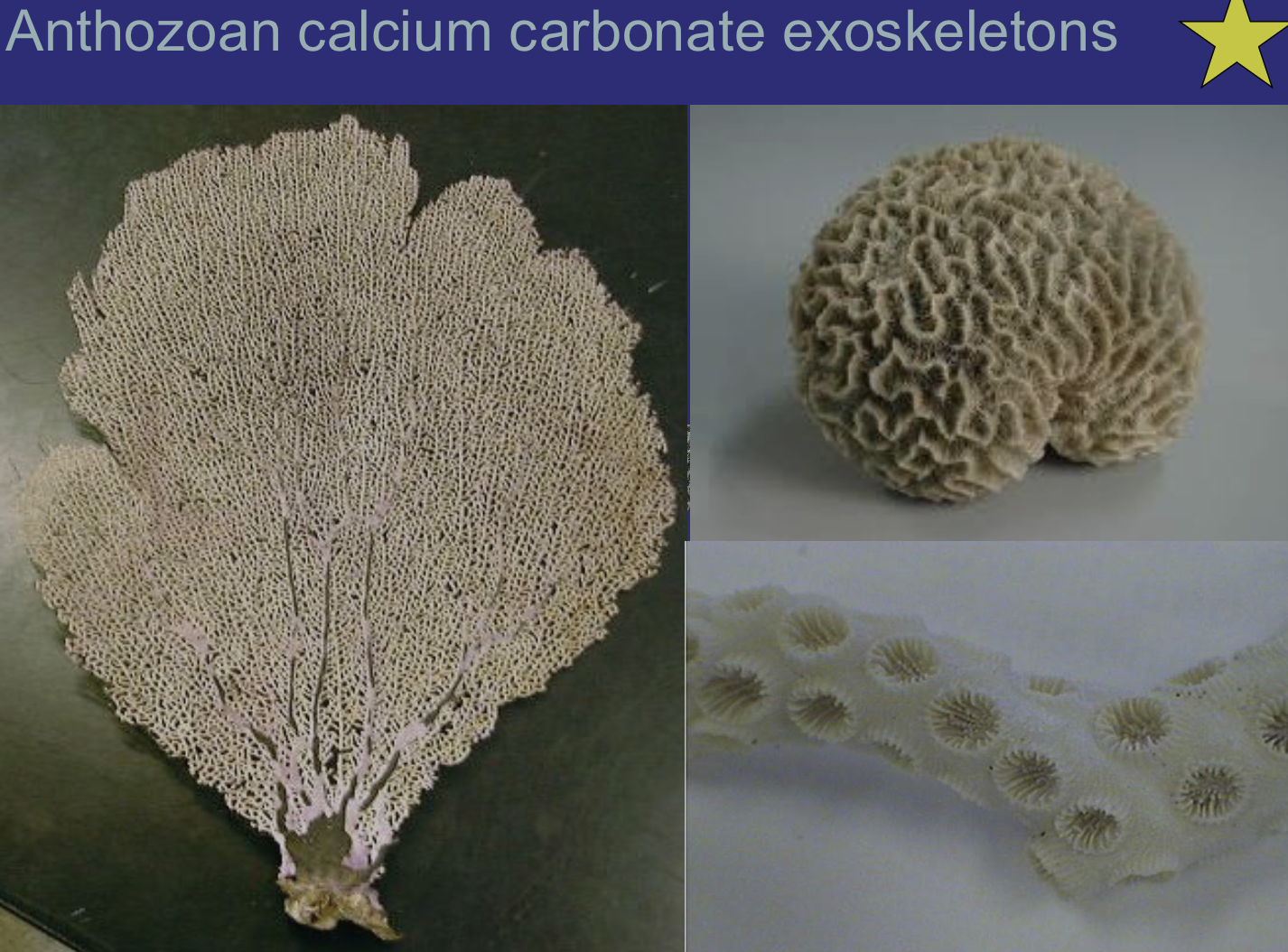
what is this
anthozoan calcium carbonate exoskeleton
hydrozoans
hydras, Portuguese man of war; polyp and medusa stage in most species
scyphozoans
medusa jellies, mostly medusa with polyp reduced

what is this
hydrozoan

what is this
scyphozoans
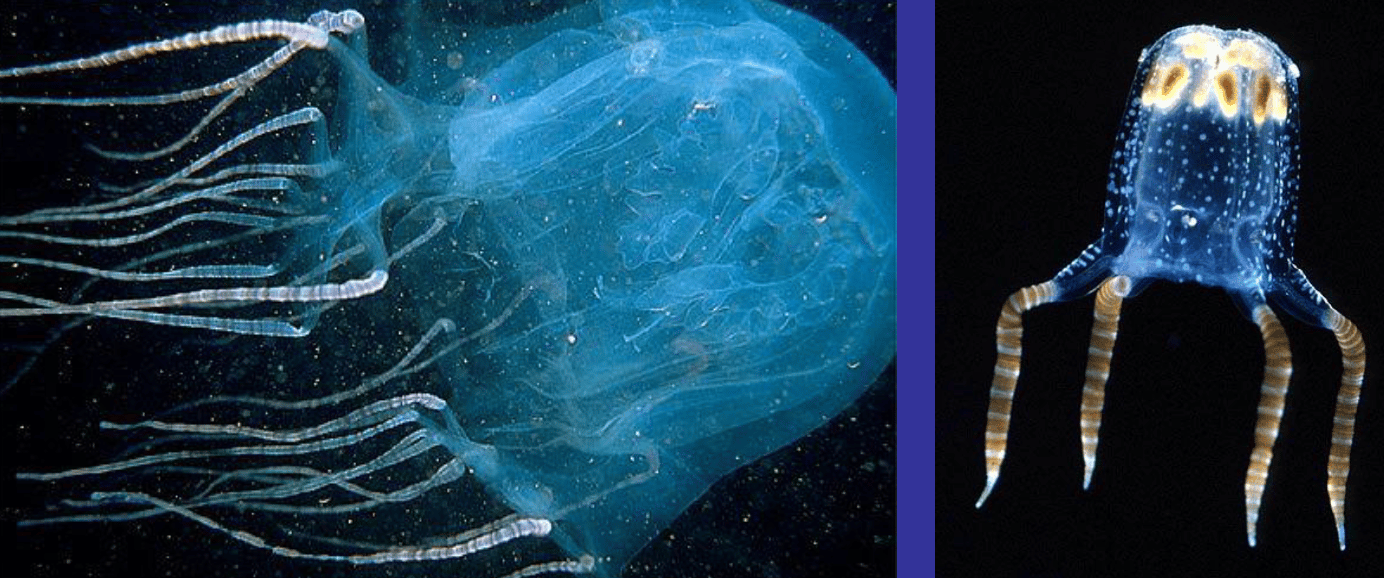
what is this
cubozoans
cubozoans
box jelly, mostly medusa with polyp reduced
which cnidarian does not become a medusa
anthozoan
what is radial symmetry
geometric arrangement where organisms can be divided into identical segments
what is bilateral symmetry
organisms that can be divided into nearly identical left and right halves
which species have radial symmetry and are diploblastic
Ctenophora and cnidarian
triploblastic
3 layers of living cells; ectoderm, mesoderm, endoderm
what is the wall of the digestive cavity?
endoderm
what is the tissue filled region?
mesoderm
what is the body covering layer?
ectoderm
phylum lophotrochozoa
Platyhelminthes, extoprocta, brachiopod, annelida, Nemertea, mollusca
phylum platyhelminthes
flatworms (4 classes)
turbellaria
flatworm that is free living, simple life cycle
monogenea
flatworm that is ectoparasitic, simple life cycle
trematoda
flatworm that is endoparasitic, complex life cycle, multiple hosts
Cestoda
flatworm that is endoparasitic, complex life cycle, multiple hosts
parts of turbellaria
pharynx, gastrovascular cavity, eyespots, ganglia, ventral verve cords
pharynx
tube like organ that connects mouth to gastrovascular cavity
ganglia
primitive brain, central control hub for nervous system
ventral nerve cord
integrates and transmits nerve signals throughout body
eyespots
detects intensity and direction of light
schistosoma
blood fluke
where do schistosomes live
blood vessel of human intestine
how do schistosomes enter humans
penetrate skin and blood vessels of animals
describe cycle of schistosomes
blood flukes reproduce sexually in human host, fertilized eggs exit as feces, eggs develop in water into larvae, larvae infect snails, asexually reproduce and become motile larva and penetrates skin and blood vessels of humans
ribeiroia
parasitic flatworm that causes limb malfunctions; deformities cause animal to be easily eaten, allowing parasite to reach final reproductive host
what is a cestoda
tapeworm

what is this
Cestoda - tapeworm
taenia solium
pork tapeworm
taenia saginata
beef tapeworm
what is the difference between solum and saginata
saginata head is bigger than solium
what is cysticerosis neurocysticercosis
larval cysts lodged in CNS