Lec 17

0.0(0)
Studied by 0 people
call kaiCall Kai
learnLearn
examPractice Test
spaced repetitionSpaced Repetition
heart puzzleMatch
flashcardsFlashcards
GameKnowt Play
Card Sorting

1/44

flashcard set

Earn XP

Description and Tags

Evolution of Sex I

45 Terms
1
New cards
term image
  • D


2
New cards
term image
  • B


3
New cards

What is sexual dimorphism?

  • a difference in form between males and females of a species

    • Differ in characteristics that is not fundamental to their survival  

  • including:

    • colo

    • body size

    • resence or absence of structures used in courtship displays (elaborate tail plumes, ornaments, pigmented skin patches)

    • or contests (antlers, tusks, spurs, horns).

  • Ex: Males have elaborate colorations and dances to attract female 


4
New cards

What happens in asexual reproduction?

  • daughters produce daughters and they produce more daughters

  • All female -> every indiv is capable of producing more indiv 

  • Does not require another indiv to produce more indiv 

  • Quickly grows  

    • Every single offspring is capable of reproducing 

  • All 100% related to you (cloning)  


<ul><li><p>daughters produce daughters and they produce more daughters</p></li><li><p><span style="background-color: inherit; line-height: 19.55px; color: windowtext;">All female -&gt; every indiv is capable of producing more indiv</span><span style="line-height: 19.55px; color: windowtext;">&nbsp;</span></p></li><li><p class="Paragraph SCXO118046822 BCX0" style="text-align: left;"><span style="background-color: inherit; line-height: 19.55px; color: windowtext;">Does not require another indiv to produce more indiv</span><span style="line-height: 19.55px; color: windowtext;">&nbsp;</span></p></li><li><p class="Paragraph SCXO118046822 BCX0" style="text-align: left;"><span style="background-color: inherit; line-height: 19.55px; color: windowtext;">Quickly grows&nbsp;</span><span style="line-height: 19.55px; color: windowtext;">&nbsp;</span></p><ul><li><p class="Paragraph SCXO118046822 BCX0" style="text-align: left;"><span style="background-color: inherit; line-height: 19.55px; color: windowtext;">Every single offspring is capable of reproducing</span><span style="line-height: 19.55px; color: windowtext;">&nbsp;</span></p></li></ul></li><li><p class="Paragraph SCXO118046822 BCX0" style="text-align: left;"><span style="background-color: inherit; line-height: 19.55px; color: windowtext;">All 100% related to you (cloning)&nbsp;</span><span style="line-height: 19.55px; color: windowtext;">&nbsp;</span></p></li></ul><p></p>
5
New cards

What happens in sexual reproduction?

  • must mate with a male to reproduce

  • half of offspring will be male

  • To make offspring -> need two indiv (not one) 

  • Every female has to find male -> couple produce one male and female avg -> rate in inc of population is much slower  

  • Offspring only 50% related to you (other 50% related to partner) 

    • Half offspring are male -> can't make own offspring ->. Need to find partner 

  • STDs 

  • Short supply of mates etc 


<ul><li><p>must mate with a male to reproduce</p></li><li><p>half of offspring will be male</p></li><li><p><span style="background-color: inherit; line-height: 19.55px; color: windowtext;">To make offspring -&gt; need two indiv (not one)</span><span style="line-height: 19.55px; color: windowtext;">&nbsp;</span></p></li><li><p class="Paragraph SCXO97388040 BCX0" style="text-align: left;"><span style="background-color: inherit; line-height: 19.55px; color: windowtext;">Every female has to find male -&gt; couple produce one male and female avg -&gt; rate in inc of population is much slower&nbsp;</span><span style="line-height: 19.55px; color: windowtext;">&nbsp;</span></p></li><li><p class="Paragraph SCXO97388040 BCX0" style="text-align: left;"><span style="background-color: inherit; line-height: 19.55px; color: windowtext;">Offspring only 50% related to you (other 50% related to partner)</span><span style="line-height: 19.55px; color: windowtext;">&nbsp;</span></p><ul><li><p class="Paragraph SCXO97388040 BCX0" style="text-align: left;"><span style="background-color: inherit; line-height: 19.55px; color: windowtext;">Half offspring are male -&gt; can't make own offspring -&gt;. Need to find partner</span><span style="line-height: 19.55px; color: windowtext;">&nbsp;</span></p></li></ul></li><li><p class="Paragraph SCXO97388040 BCX0" style="text-align: left;"><span style="background-color: inherit; line-height: 19.55px; color: windowtext;">STDs</span><span style="line-height: 19.55px; color: windowtext;">&nbsp;</span></p></li><li><p class="Paragraph SCXO160033059 BCX0" style="text-align: left;"><span style="background-color: inherit; line-height: 19.55px; color: windowtext;">Short supply of mates etc</span><span style="line-height: 19.55px; color: windowtext;">&nbsp;</span></p></li></ul><p></p>
6
New cards

What is the two-fold cost of sexual reproduction?

  • First cost of sex: cost of having males 

  • Second cost: genome dilution 

    • Meiosis 

    • Recombination 

    • Not passing on 100% of alleles 


7
New cards

Sexual vs asexual?

  • Rate of reproduction in sexual species is half of that compared with asexual

  • Asexual species should be more abundant if:

    • 1. offspring production same for sexual & asexual

    • 2. offspring from both have equal fitness

  • → why so many sexually reproducing species?


8
New cards

What is muller’s ratchet?

  • Def: describes the process by which the genomes of an asexual population accumulate deleterious mutations in an irreversible manner.

  • Ratchet: tighten bolt -> each click gets tighter but can't go back 

  • Genomes of asexual pop accumulate mutations irreversible and deleterious mutations generation over generation  -> Can only turn in one direction -> can't purge problematic mutations -> genetic load 


<ul><li><p>Def: describes the process by which the genomes of an asexual population accumulate deleterious mutations in an irreversible manner. </p></li><li><p><span style="background-color: inherit; line-height: 19.55px; color: windowtext;">Ratchet: tighten bolt -&gt; each click gets tighter but can't go back</span><span style="line-height: 19.55px; color: windowtext;">&nbsp;</span></p></li><li><p class="Paragraph SCXO112617928 BCX0" style="text-align: left;"><span style="background-color: inherit; line-height: 19.55px; color: windowtext;">Genomes of asexual pop accumulate mutations irreversible and deleterious mutations generation over generation&nbsp; -&gt; Can only turn in one direction -&gt; can't purge problematic mutations -&gt; genetic load</span><span style="line-height: 19.55px; color: windowtext;">&nbsp;</span></p></li></ul><p></p>
9
New cards

What is genetic load?

  • Genetic load: burden of accumulated deleterious mutations over time

  • Common in Asexual species (muller’s ratchet)


10
New cards

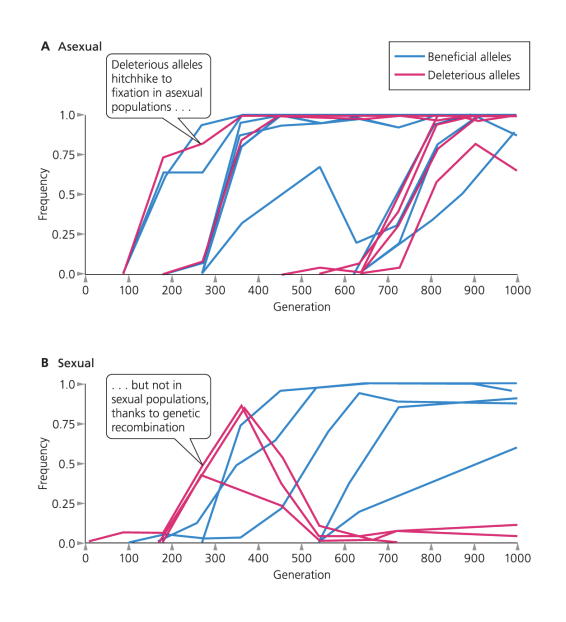
What happens to deleterious alleles in asexual populations vs sexual pops?

  • Deleterious alleles become fixed in asexual populations but are purged from sexual populations

  • Ex: Yeast can exist asexually and sexually 

    • A 

      • Mutations arise  

      • Mutations are beneficial (blue) 

      • Deleterious (reduce fitness)  

      • Over time -> mutations accumulate -> both beneficial and deleterious mutations become fixed in population 

    • Sexual 

      • Deleterious mutations quickly purged  

      • Beneficial mutations (selected for) are maintained 

      • Circumvent genetic load by being able to urge deleterious mutations  

<ul><li><p>Deleterious alleles become fixed in asexual populations but are purged from sexual populations</p></li><li><p><span style="background-color: inherit; line-height: 19.55px; color: windowtext;">Ex: Yeast can exist asexually and sexually</span><span style="line-height: 19.55px; color: windowtext;">&nbsp;</span></p><ul><li><p class="Paragraph SCXO66321989 BCX0" style="text-align: left;"><span style="background-color: inherit; line-height: 19.55px; color: windowtext;">A</span><span style="line-height: 19.55px; color: windowtext;">&nbsp;</span></p><ul><li><p class="Paragraph SCXO66321989 BCX0" style="text-align: left;"><span style="background-color: inherit; line-height: 19.55px; color: windowtext;">Mutations arise&nbsp;</span><span style="line-height: 19.55px; color: windowtext;">&nbsp;</span></p></li><li><p class="Paragraph SCXO66321989 BCX0" style="text-align: left;"><span style="background-color: inherit; line-height: 19.55px; color: windowtext;">Mutations are beneficial (blue)</span><span style="line-height: 19.55px; color: windowtext;">&nbsp;</span></p></li><li><p class="Paragraph SCXO66321989 BCX0" style="text-align: left;"><span style="background-color: inherit; line-height: 19.55px; color: windowtext;">Deleterious (reduce fitness)&nbsp;</span><span style="line-height: 19.55px; color: windowtext;">&nbsp;</span></p></li><li><p class="Paragraph SCXO66321989 BCX0" style="text-align: left;"><span style="background-color: inherit; line-height: 19.55px; color: windowtext;">Over time -&gt; mutations accumulate -&gt; both beneficial and deleterious mutations become fixed in population</span><span style="line-height: 19.55px; color: windowtext;">&nbsp;</span></p></li></ul></li><li><p class="Paragraph SCXO66321989 BCX0" style="text-align: left;"><span style="background-color: inherit; line-height: 19.55px; color: windowtext;">Sexual</span><span style="line-height: 19.55px; color: windowtext;">&nbsp;</span></p><ul><li><p class="Paragraph SCXO66321989 BCX0" style="text-align: left;"><span style="background-color: inherit; line-height: 19.55px; color: windowtext;">Deleterious mutations quickly purged&nbsp;</span><span style="line-height: 19.55px; color: windowtext;">&nbsp;</span></p></li><li><p class="Paragraph SCXO66321989 BCX0" style="text-align: left;"><span style="background-color: inherit; line-height: 19.55px; color: windowtext;">Beneficial mutations (selected for) are maintained</span><span style="line-height: 19.55px; color: windowtext;">&nbsp;</span></p></li><li><p class="Paragraph SCXO66321989 BCX0" style="text-align: left;"><span style="background-color: inherit; line-height: 19.55px; color: windowtext;">Circumvent genetic load by being able to urge deleterious mutations&nbsp;</span><span style="line-height: 19.55px; color: windowtext;">&nbsp;</span></p></li></ul></li></ul></li></ul><p></p>
11
New cards

What is the red queen effect?

  • describes a phenomenon seen in coevolving populations—to maintain relative fitness, each population must constantly adapt to the other.

  • Mutation becomes important for adaptation  

  • Host parasite arms race coevolution 

    • Host (blue) 

    • Parasite (purple) 

    • Frequency: how abundant host or parasite is in pop  

  • Host evolves beneficial mutation -> host survives better -> inc in frequency -> parasite evolves counternutation that gives parasite the benefit -> parasite inc in frequency -> pressure on host -> counter mutation  

  • Who has the advantage varies over time = red queen effect 

    • Queen running as fast as you can to stay in one place  

    • Not getting anywhere 

      • hosts constantly have to evolve defenses at a rapid rate just to “stay in the same place”—that is, to survive.


<ul><li><p>describes a phenomenon seen in coevolving populations—to maintain relative fitness, each population must constantly adapt to the other.</p></li><li><p><span style="background-color: inherit; line-height: 19.55px; color: windowtext;">Mutation becomes important for adaptation&nbsp;</span><span style="line-height: 19.55px; color: windowtext;">&nbsp;</span></p></li><li><p class="Paragraph SCXO82303667 BCX0" style="text-align: left;"><span style="background-color: inherit; line-height: 19.55px; color: windowtext;">Host parasite arms race coevolution</span><span style="line-height: 19.55px; color: windowtext;">&nbsp;</span></p><ul><li><p class="Paragraph SCXO82303667 BCX0" style="text-align: left;"><span style="background-color: inherit; line-height: 19.55px; color: windowtext;">Host (blue)</span><span style="line-height: 19.55px; color: windowtext;">&nbsp;</span></p></li><li><p class="Paragraph SCXO82303667 BCX0" style="text-align: left;"><span style="background-color: inherit; line-height: 19.55px; color: windowtext;">Parasite (purple)</span><span style="line-height: 19.55px; color: windowtext;">&nbsp;</span></p></li><li><p class="Paragraph SCXO82303667 BCX0" style="text-align: left;"><span style="background-color: inherit; line-height: 19.55px; color: windowtext;">Frequency: how abundant host or parasite is in pop&nbsp;</span><span style="line-height: 19.55px; color: windowtext;">&nbsp;</span></p></li></ul></li><li><p class="Paragraph SCXO82303667 BCX0" style="text-align: left;"><span style="background-color: inherit; line-height: 19.55px; color: windowtext;">Host evolves beneficial mutation -&gt; host survives better -&gt; inc in frequency -&gt; parasite evolves counternutation that gives parasite the benefit -&gt; parasite inc in frequency -&gt; pressure on host -&gt; counter mutation&nbsp;</span><span style="line-height: 19.55px; color: windowtext;">&nbsp;</span></p></li><li><p class="Paragraph SCXO82303667 BCX0" style="text-align: left;"><span style="background-color: inherit; line-height: 19.55px; color: windowtext;">Who has the advantage varies over time = red queen effect</span><span style="line-height: 19.55px; color: windowtext;">&nbsp;</span></p><ul><li><p class="Paragraph SCXO82303667 BCX0" style="text-align: left;"><span style="background-color: inherit; line-height: 19.55px; color: windowtext;">Queen running as fast as you can to stay in one place&nbsp;</span><span style="line-height: 19.55px; color: windowtext;">&nbsp;</span></p></li><li><p class="Paragraph SCXO82303667 BCX0" style="text-align: left;"><span style="background-color: inherit; line-height: 19.55px; color: windowtext;">Not getting anywhere</span><span style="line-height: 19.55px; color: windowtext;">&nbsp;</span></p><ul><li><p class="Paragraph SCXO82303667 BCX0" style="text-align: left;"><span>hosts constantly have to evolve defenses at a rapid rate just to “stay in the same place”—that is, to survive.</span></p></li></ul></li></ul></li></ul><p></p>
12
New cards

How is the red queen effect related to reproduction?

  • The Red Queen effect makes sex beneficial

  • Genetic variation within parasites + rapid reproduction+ short generation times, → allows them to adapt quickly to the genotypes of their hosts

  • Sexual reproduction allows for this scenario to work 

    • (TAB) sexual reproduction creates lots of genetic variation in every generation of the hosts by shuffling alleles into new combinations.

    • Among those new variations may be some that are very resistant to the dominant parasite genotype → These individuals will be favored by natural selection → their descendants will thrive.

    • Sex is beneficial because it makes the host a moving target for parasites.


13
New cards

What can snails show about reproduction?

  • Populations with a higher incidence of parasitism by trematodes tend to be sexual

  • Snails can be asexual or sexual 

  • Circles: proportion of snails are sexual vs asexual 

    • White = fully female -> asexual  

    • Dark = 100% sexual ??? 

  • Treematode that infects snails 

    • Prevalence of being sexual is tied to freq of parasites (how often they are attacked) 

    • Selection (red queen) to avoid parasite -> pays to be sexual (new genetic variation) 

      • Cost: off spring only 50% related to you 

      • Benefit: each offspring is a new version with a potential better set of alleles than you do  

  • Graph 

    • As frq of infection inc +  freq of male inc=  inc in population that is sexual ->   postive correlation  


<ul><li><p>Populations with a higher incidence of parasitism by trematodes tend to be sexual</p></li><li><p><span style="background-color: inherit; line-height: 19.55px; color: windowtext;">Snails can be asexual or sexual</span><span style="line-height: 19.55px; color: windowtext;">&nbsp;</span></p></li><li><p class="Paragraph SCXO166185685 BCX0" style="text-align: left;"><span style="background-color: inherit; line-height: 19.55px; color: windowtext;">Circles: proportion of snails are sexual vs asexual</span><span style="line-height: 19.55px; color: windowtext;">&nbsp;</span></p><ul><li><p class="Paragraph SCXO166185685 BCX0" style="text-align: left;"><span style="background-color: inherit; line-height: 19.55px; color: windowtext;">White = fully female -&gt; asexual&nbsp;</span><span style="line-height: 19.55px; color: windowtext;">&nbsp;</span></p></li><li><p class="Paragraph SCXO166185685 BCX0" style="text-align: left;"><span style="background-color: inherit; line-height: 19.55px; color: windowtext;">Dark = 100% sexual ???</span><span style="line-height: 19.55px; color: windowtext;">&nbsp;</span></p></li></ul></li><li><p class="Paragraph SCXO166185685 BCX0" style="text-align: left;"><span style="background-color: inherit; line-height: 19.55px; color: windowtext;">Treematode that infects snails</span><span style="line-height: 19.55px; color: windowtext;">&nbsp;</span></p><ul><li><p class="Paragraph SCXO166185685 BCX0" style="text-align: left;"><span style="background-color: inherit; line-height: 19.55px; color: windowtext;">Prevalence of being sexual is tied to freq of parasites (how often they are attacked)</span><span style="line-height: 19.55px; color: windowtext;">&nbsp;</span></p></li><li><p class="Paragraph SCXO166185685 BCX0" style="text-align: left;"><span style="background-color: inherit; line-height: 19.55px; color: windowtext;">Selection (red queen) to avoid parasite -&gt; pays to be sexual (new genetic variation)</span><span style="line-height: 19.55px; color: windowtext;">&nbsp;</span></p><ul><li><p class="Paragraph SCXO166185685 BCX0" style="text-align: left;"><span style="background-color: inherit; line-height: 19.55px; color: windowtext;">Cost: off spring only 50% related to you</span><span style="line-height: 19.55px; color: windowtext;">&nbsp;</span></p></li><li><p class="Paragraph SCXO166185685 BCX0" style="text-align: left;"><span style="background-color: inherit; line-height: 19.55px; color: windowtext;">Benefit: each offspring is a new version with a potential better set of alleles than you do&nbsp;</span><span style="line-height: 19.55px; color: windowtext;">&nbsp;</span></p></li></ul></li></ul></li><li><p class="Paragraph SCXO166185685 BCX0" style="text-align: left;"><span style="background-color: inherit; line-height: 19.55px; color: windowtext;">Graph</span><span style="line-height: 19.55px; color: windowtext;">&nbsp;</span></p><ul><li><p class="Paragraph SCXO166185685 BCX0" style="text-align: left;"><span style="background-color: inherit; line-height: 19.55px; color: windowtext;">As frq of infection inc +&nbsp; freq of male inc=&nbsp; inc in population that is sexual -&gt;&nbsp;&nbsp; postive correlation&nbsp;</span><span style="line-height: 19.55px; color: windowtext;">&nbsp;</span></p></li></ul></li></ul><p></p>
14
New cards

What was Darwin’s Dilema?

  • 1. Differential parental investment

    • Males and females differ in how they invest in offspring 

      • Investment in production of offspring, provisioning and defending offspring  

  • 2. Puzzling Patterns (sexual dimorphism)

    • Why do males and females look diff from each other

  • 3. Types of sexual selection

    • Intrasexual (competition) : Organisms competing against each other

    • Intersexual (mate choice) : Competing for the affection of a partner

  • 4. Why be choosy?

    • Why not just mate with the first mate you find

  • 5. Roles reversed when factors reversed?


15
New cards

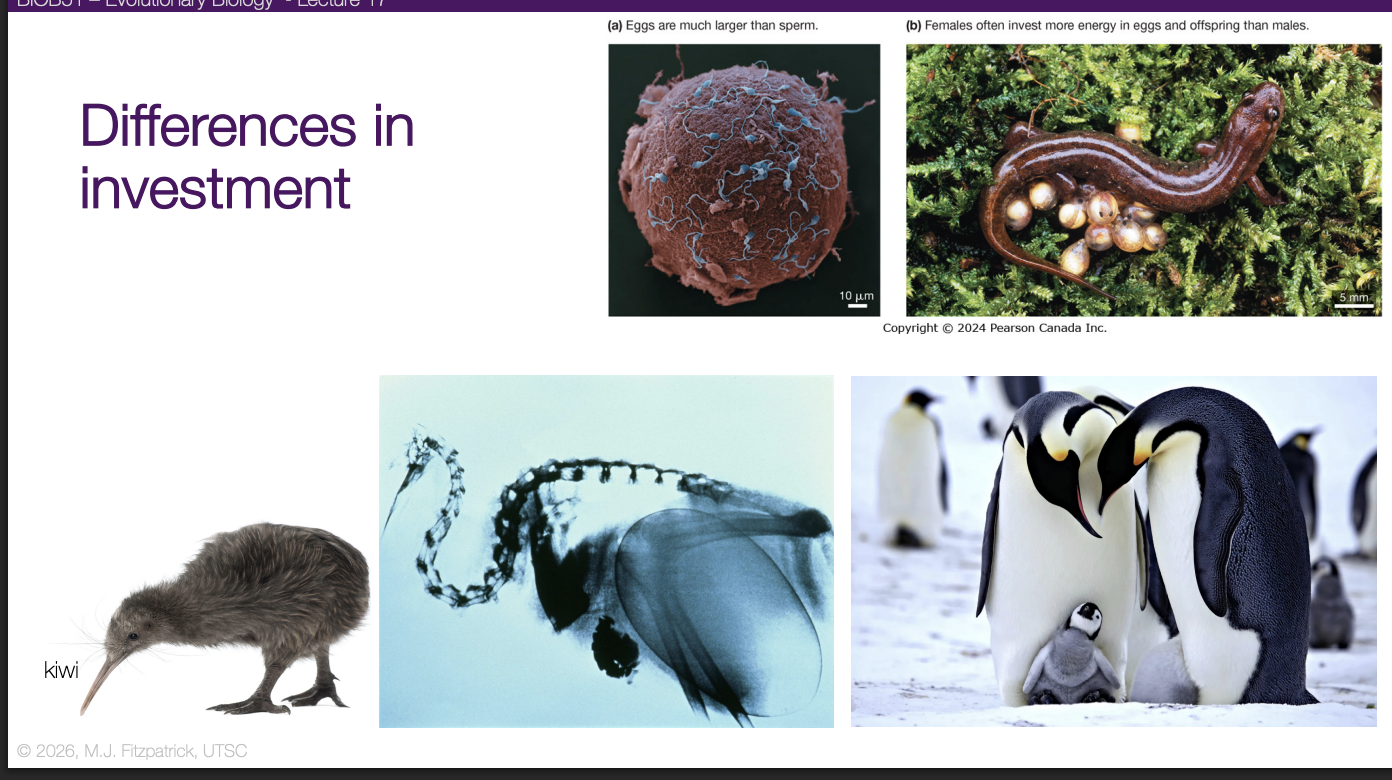
What are the differences in investment?

  • A : Human egg with sperm 

    • Eggs much larger than sperm 

    • Females invest more energy in eggs and in offspring than males 

  • Kiwi bird 

    • Egg of kiwi 40% of its body mass 

  • Females have limited supply of eggs  

  • Males have millions of sperms 

  • Females invest more in the production of the gametes + gestation + provisional internal  

  • Some organisms with parental care 


<ul><li><p><span style="background-color: inherit; line-height: 19.55px; color: windowtext;">A : Human egg with sperm</span><span style="line-height: 19.55px; color: windowtext;">&nbsp;</span></p><ul><li><p class="Paragraph SCXO196331464 BCX0" style="text-align: left;"><span style="background-color: inherit; line-height: 19.55px; color: windowtext;">Eggs much larger than sperm</span><span style="line-height: 19.55px; color: windowtext;">&nbsp;</span></p></li><li><p class="Paragraph SCXO196331464 BCX0" style="text-align: left;"><span style="background-color: inherit; line-height: 19.55px; color: windowtext;">Females invest more energy in eggs and in offspring than males</span><span style="line-height: 19.55px; color: windowtext;">&nbsp;</span></p></li></ul></li><li><p class="Paragraph SCXO196331464 BCX0" style="text-align: left;"><span style="background-color: inherit; line-height: 19.55px; color: windowtext;">Kiwi bird</span><span style="line-height: 19.55px; color: windowtext;">&nbsp;</span></p><ul><li><p class="Paragraph SCXO196331464 BCX0" style="text-align: left;"><span style="background-color: inherit; line-height: 19.55px; color: windowtext;">Egg of kiwi 40% of its body mass</span><span style="line-height: 19.55px; color: windowtext;">&nbsp;</span></p></li></ul></li><li><p class="Paragraph SCXO196331464 BCX0" style="text-align: left;"><span style="background-color: inherit; line-height: 19.55px; color: windowtext;">Females have limited supply of eggs&nbsp;</span><span style="line-height: 19.55px; color: windowtext;">&nbsp;</span></p></li><li><p class="Paragraph SCXO196331464 BCX0" style="text-align: left;"><span style="background-color: inherit; line-height: 19.55px; color: windowtext;">Males have millions of sperms</span><span style="line-height: 19.55px; color: windowtext;">&nbsp;</span></p></li><li><p class="Paragraph SCXO196331464 BCX0" style="text-align: left;"><span style="background-color: inherit; line-height: 19.55px; color: windowtext;">Females invest more in the production of the gametes + gestation + provisional internal&nbsp;</span><span style="line-height: 19.55px; color: windowtext;">&nbsp;</span></p></li><li><p class="Paragraph SCXO196331464 BCX0" style="text-align: left;"><span style="background-color: inherit; line-height: 19.55px; color: windowtext;">Some organisms with parental care</span><span style="line-height: 19.55px; color: windowtext;">&nbsp;</span></p></li></ul><p></p>
16
New cards

What are the limitations on the sexes?

  • Disparity between interests of males and females 

  • Females: limited by fecundity 

    • Only have as many offspring as they can produce eggs -> limited supply -> careful about who fertilizes eggs 

  • Males limited by the number of mates they can mate with, not sperm 

  • Males and females have diff goals in mating 

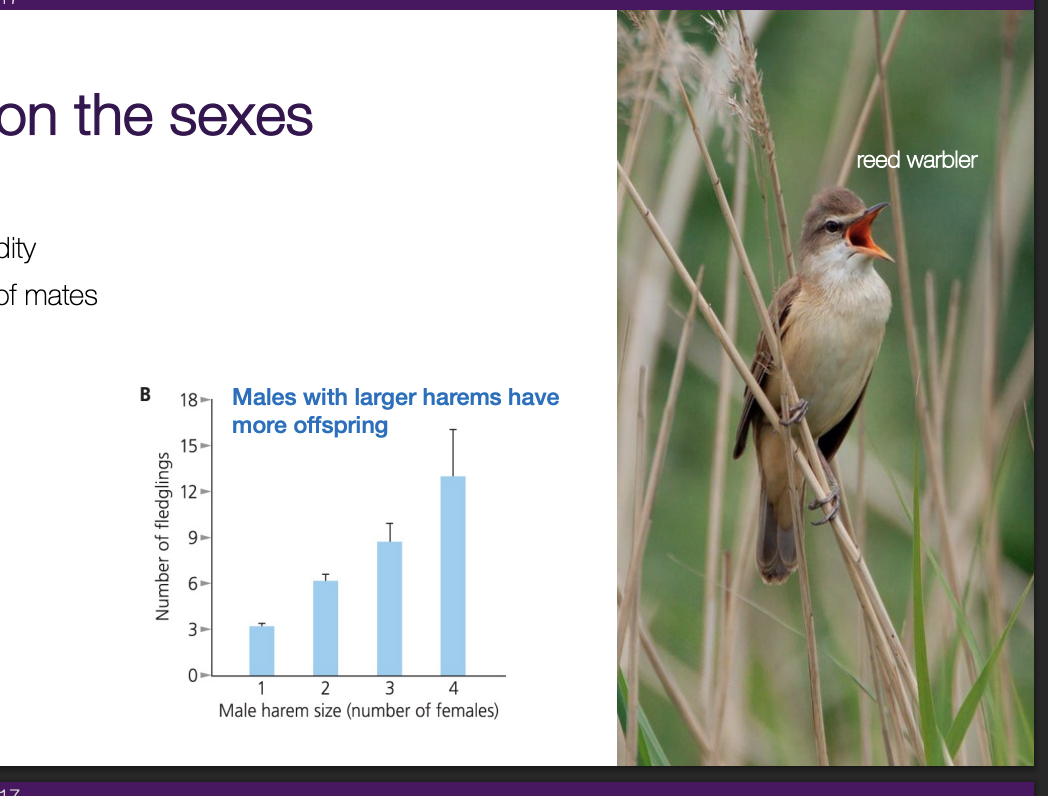
    • Reed warbler 

      • Males defend territory 

      • Female goes into territory (see if its safe and clean) -> good place to have babies 

      • Every female that has nest in male territory -> mates with the ones in territory 

    • More mates -> more offspring  


17
New cards

What does the reed warbler show?

  • Males and females have diff goals in mating 

    • Reed warbler 

      • Males defend territory 

      • Female goes into territory (see if its safe and clean) -> good place to have babies 

      • Every female that has nest in male territory -> mates with the ones in territory 

    • More mates -> more offspring  


<ul><li><p><span style="background-color: inherit; line-height: 19.55px; color: windowtext;">Males and females have diff goals in mating</span><span style="line-height: 19.55px; color: windowtext;">&nbsp;</span></p><ul><li><p class="Paragraph SCXO47780595 BCX0" style="text-align: left;"><span style="background-color: inherit; line-height: 19.55px; color: windowtext;">Reed warbler</span><span style="line-height: 19.55px; color: windowtext;">&nbsp;</span></p><ul><li><p class="Paragraph SCXO47780595 BCX0" style="text-align: left;"><span style="background-color: inherit; line-height: 19.55px; color: windowtext;">Males defend territory</span><span style="line-height: 19.55px; color: windowtext;">&nbsp;</span></p></li><li><p class="Paragraph SCXO47780595 BCX0" style="text-align: left;"><span style="background-color: inherit; line-height: 19.55px; color: windowtext;">Female goes into territory (see if its safe and clean) -&gt; good place to have babies</span><span style="line-height: 19.55px; color: windowtext;">&nbsp;</span></p></li><li><p class="Paragraph SCXO47780595 BCX0" style="text-align: left;"><span style="background-color: inherit; line-height: 19.55px; color: windowtext;">Every female that has nest in male territory -&gt; mates with the ones in territory</span><span style="line-height: 19.55px; color: windowtext;">&nbsp;</span></p></li></ul></li><li><p class="Paragraph SCXO47780595 BCX0" style="text-align: left;"><span style="background-color: inherit; line-height: 19.55px; color: windowtext;">More mates -&gt; more offspring&nbsp;</span><span style="line-height: 19.55px; color: windowtext;">&nbsp;</span></p></li></ul></li></ul><p></p>
18
New cards

How does paternity and paternal care differ between sexes?

  • Females have certain paternity

    • Female: baby comes from female + form bond 

    • Investing in offspring ->. Your offspring 

  • Males have uncertain paternity

    • Parental care/investment of resources could be directed toward offspring that is not their own


<ul><li><p>Females have certain paternity </p><ul><li><p><span style="background-color: inherit; line-height: 19.55px; color: windowtext;">Female: baby comes from female + form bond</span><span style="line-height: 19.55px; color: windowtext;">&nbsp;</span></p></li><li><p><span style="background-color: inherit; line-height: 19.55px; color: windowtext;">Investing in offspring -&gt;. Your offspring</span><span style="line-height: 19.55px; color: windowtext;">&nbsp;</span></p></li></ul></li><li><p>Males have uncertain paternity </p><ul><li><p>Parental care/investment of resources could be directed toward offspring that is not their own</p></li></ul></li></ul><p></p>
19
New cards

What is the operational sex ratio?

  • If … sexual reproduction creates different selection pressures on males & females

    • Then … males & females may have different strategies for maximizing their lifetime reproductive success (fitness

  • Def (OSR): ratio of males to females capable of reproducing at a given time

    • slower rate of reproduction by females leads to male-biased OSR


20
New cards

What are the implications of OSR?

  • Females taken out of OSR when gestating or provisioning offspring -> not available to mate 

  • Heavily male biased OSR 

    • Many more Males ready to mate than females 


21
New cards

What is fundamental about the proportion of the sexes?

  • Fundamental asymmetry of sex

  • → Females should be choosy about mates

    • anisogamy (disparity between gametes (ex: eggs larger)), offspring care

    • opposite should be true for male

  • Males should be competing for mates and as many females as possible 

  • Alleles that increase male attractiveness or ability to compete should increase in population

  • Alleles that inc attractiveness or ability compete -> inc in freq -> sexual selection act more strongly on males than on females 


22
New cards

What is sexual selection?

  • refers to differential reproductive success resulting from the competition for mates

  • Can occur through competition among:

    • individuals of the same sex (intrasexual selection)

      • competition

        • Males fight for access to females

    • or through attraction to the opposite sex (intersexual selection).

      • mate choice

      • attractiveness


23
New cards

Which sex is sexual selection commonly stronger on?

  • Sexual selection is commonly stronger on males

    • male-biased OSR

      • Sexual selection strong on males with male OSR (more males ready to mate and less females available) 

    • selection favours males that outcompete other males for access to females


24
New cards

What does sexual dimorphisms result from?

  • Sexual dimorphisms result from sexual selection

  • Competition sets up sexual dimorphisms for secondary sexual characters 

    • Primary = pieces needed for reduction 


25
New cards

What are the kinds of sexual dimorphisms?

  • Ornaments: attractive traits that increase mating success

  • Armaments: weaponry used to outcompete other individuals


<ul><li><p>Ornaments: attractive traits that increase mating success</p></li><li><p>Armaments: weaponry used to outcompete other individuals</p></li></ul><p></p>
26
New cards

What do elephanat seals show?

  • Intense sexual selection on male elephant seals

  • Fighting for stretch of beach with a harem 

    • Resident male challenged by new male 

    • Male occupy male -> mate with all female  

  • B 

    • Some males with 0 offspring, some 100 offspring 

    • Many males have no offspring at all 

  • Females 

    • Most females have between 1-10 offspring 

    • Most females are mating  

  • Range of mating successes varies considerably 

  • Many males never occupy territory -> never have offspring 

  • Female -> will have some offspring probably  


<ul><li><p>Intense sexual selection on male elephant seals</p></li><li><p><span style="background-color: inherit; line-height: 19.55px; color: windowtext;">Fighting for stretch of beach with a harem</span><span style="line-height: 19.55px; color: windowtext;">&nbsp;</span></p><ul><li><p class="Paragraph SCXO84044571 BCX0" style="text-align: left;"><span style="background-color: inherit; line-height: 19.55px; color: windowtext;">Resident male challenged by new male</span><span style="line-height: 19.55px; color: windowtext;">&nbsp;</span></p></li><li><p class="Paragraph SCXO84044571 BCX0" style="text-align: left;"><span style="background-color: inherit; line-height: 19.55px; color: windowtext;">Male occupy male -&gt; mate with all female&nbsp;</span><span style="line-height: 19.55px; color: windowtext;">&nbsp;</span></p></li></ul></li><li><p class="Paragraph SCXO84044571 BCX0" style="text-align: left;"><span style="background-color: inherit; line-height: 19.55px; color: windowtext;">B</span><span style="line-height: 19.55px; color: windowtext;">&nbsp;</span></p><ul><li><p class="Paragraph SCXO84044571 BCX0" style="text-align: left;"><span style="background-color: inherit; line-height: 19.55px; color: windowtext;">Some males with 0 offspring, some 100 offspring</span><span style="line-height: 19.55px; color: windowtext;">&nbsp;</span></p></li><li><p class="Paragraph SCXO84044571 BCX0" style="text-align: left;"><span style="background-color: inherit; line-height: 19.55px; color: windowtext;">Many males have no offspring at all</span><span style="line-height: 19.55px; color: windowtext;">&nbsp;</span></p></li></ul></li><li><p class="Paragraph SCXO84044571 BCX0" style="text-align: left;"><span style="background-color: inherit; line-height: 19.55px; color: windowtext;">Females</span><span style="line-height: 19.55px; color: windowtext;">&nbsp;</span></p><ul><li><p class="Paragraph SCXO84044571 BCX0" style="text-align: left;"><span style="background-color: inherit; line-height: 19.55px; color: windowtext;">Most females have between 1-10 offspring</span><span style="line-height: 19.55px; color: windowtext;">&nbsp;</span></p></li><li><p class="Paragraph SCXO84044571 BCX0" style="text-align: left;"><span style="background-color: inherit; line-height: 19.55px; color: windowtext;">Most females are mating&nbsp;</span><span style="line-height: 19.55px; color: windowtext;">&nbsp;</span></p></li></ul></li><li><p class="Paragraph SCXO84044571 BCX0" style="text-align: left;"><span style="background-color: inherit; line-height: 19.55px; color: windowtext;">Range of mating successes varies considerably</span><span style="line-height: 19.55px; color: windowtext;">&nbsp;</span></p></li><li><p class="Paragraph SCXO84044571 BCX0" style="text-align: left;"><span style="background-color: inherit; line-height: 19.55px; color: windowtext;">Many males never occupy territory -&gt; never have offspring</span><span style="line-height: 19.55px; color: windowtext;">&nbsp;</span></p></li><li><p class="Paragraph SCXO84044571 BCX0" style="text-align: left;"><span style="background-color: inherit; line-height: 19.55px; color: windowtext;">Female -&gt; will have some offspring probably&nbsp;</span><span style="line-height: 19.55px; color: windowtext;">&nbsp;</span></p></li></ul><p></p>
27
New cards

What is costly for males?

  • Competing for mates is costly

  • Grey bar = sexual activity at peak 

  • Females: mating is costly -> survival dec 

    • Female is sexually active -> offspring all through life 

  • Male: survival crashes with mating 

    • Fighting and occupying territory is costly 

    • Males -> burst in sexual activity -> crash after 

    • Sexual activity so costly it reduces survival  
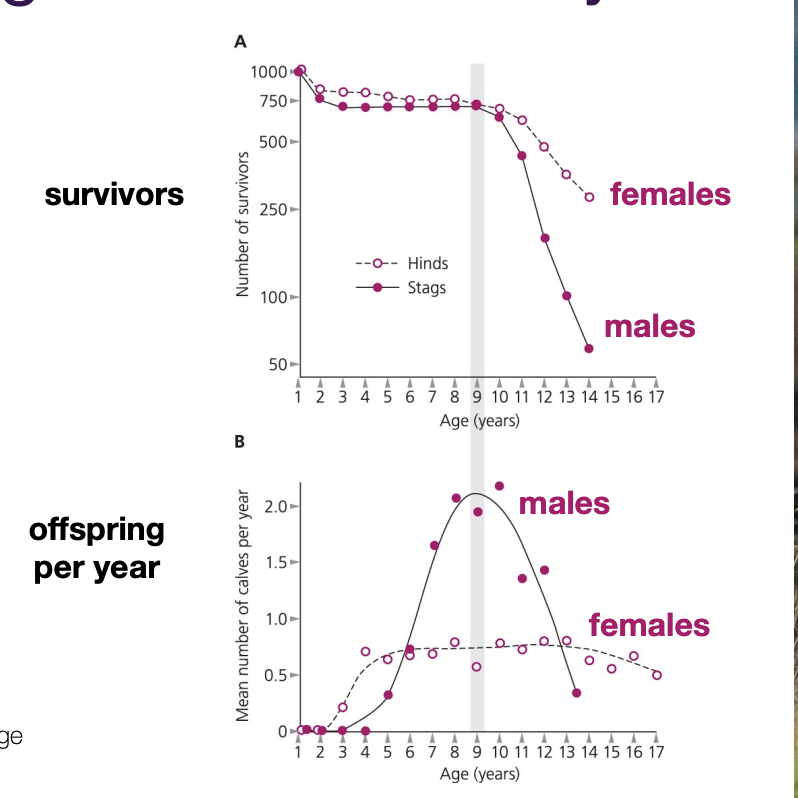

<ul><li><p>Competing for mates is costly</p></li><li><p><span style="background-color: inherit; line-height: 19.55px; color: windowtext;">Grey bar = sexual activity at peak</span><span style="line-height: 19.55px; color: windowtext;">&nbsp;</span></p></li><li><p class="Paragraph SCXO91770127 BCX0" style="text-align: left;"><span style="background-color: inherit; line-height: 19.55px; color: windowtext;">Females: mating is costly -&gt; survival dec</span><span style="line-height: 19.55px; color: windowtext;">&nbsp;</span></p><ul><li><p class="Paragraph SCXO91770127 BCX0" style="text-align: left;"><span style="background-color: inherit; line-height: 19.55px; color: windowtext;">Female is sexually active -&gt; offspring all through life</span><span style="line-height: 19.55px; color: windowtext;">&nbsp;</span></p></li></ul></li><li><p class="Paragraph SCXO91770127 BCX0" style="text-align: left;"><span style="background-color: inherit; line-height: 19.55px; color: windowtext;">Male: survival crashes with mating</span><span style="line-height: 19.55px; color: windowtext;">&nbsp;</span></p><ul><li><p class="Paragraph SCXO91770127 BCX0" style="text-align: left;"><span style="background-color: inherit; line-height: 19.55px; color: windowtext;">Fighting and occupying territory is costly</span><span style="line-height: 19.55px; color: windowtext;">&nbsp;</span></p></li><li><p class="Paragraph SCXO91770127 BCX0" style="text-align: left;"><span style="background-color: inherit; line-height: 19.55px; color: windowtext;">Males -&gt; burst in sexual activity -&gt; crash after</span><span style="line-height: 19.55px; color: windowtext;">&nbsp;</span></p></li><li><p class="Paragraph SCXO91770127 BCX0" style="text-align: left;"><span style="background-color: inherit; line-height: 19.55px; color: windowtext;">Sexual activity so costly it reduces survival&nbsp;</span><span style="line-height: 19.55px; color: windowtext;">&nbsp;</span></p></li></ul></li></ul><p></p>
28
New cards

When is sexual selection stronger in males?

  • When males experience a greater opportunity for sexual selection than females (higher variance in reproductive success) → sexual selection is likely to be stronger in males than in females

    • variance in reproductive success = there are larger extremes over how successful in reproducing a male is → sexual selection can act on variance

  • Variance in reproductive success 

    • Every female has few offspring 

      • Range of diff between female with least offspring and most is small 

    • Male: large range of # of offspring 

  • Females will be choosy  

  • Males will compete 

    • If not competing -> not having offspring 


<ul><li><p>When males experience a greater opportunity for sexual selection than females (higher variance in reproductive success) → sexual selection is likely to be stronger in males than in females</p><ul><li><p>variance in reproductive success = there are larger extremes over how successful in reproducing a male is → sexual selection can act on variance</p></li></ul></li><li><p><span style="background-color: inherit; line-height: 19.55px; color: windowtext;">Variance in reproductive success</span><span style="line-height: 19.55px; color: windowtext;">&nbsp;</span></p><ul><li><p class="Paragraph SCXO68001586 BCX0" style="text-align: left;"><span style="background-color: inherit; line-height: 19.55px; color: windowtext;">Every female has few offspring</span><span style="line-height: 19.55px; color: windowtext;">&nbsp;</span></p><ul><li><p class="Paragraph SCXO68001586 BCX0" style="text-align: left;"><span style="background-color: inherit; line-height: 19.55px; color: windowtext;">Range of diff between female with least offspring and most is small</span><span style="line-height: 19.55px; color: windowtext;">&nbsp;</span></p></li></ul></li><li><p class="Paragraph SCXO68001586 BCX0" style="text-align: left;"><span style="background-color: inherit; line-height: 19.55px; color: windowtext;">Male: large range of # of offspring</span><span style="line-height: 19.55px; color: windowtext;">&nbsp;</span></p></li></ul></li><li><p class="Paragraph SCXO68001586 BCX0" style="text-align: left;"><span style="background-color: inherit; line-height: 19.55px; color: windowtext;">Females will be choosy&nbsp;</span><span style="line-height: 19.55px; color: windowtext;">&nbsp;</span></p></li><li><p class="Paragraph SCXO68001586 BCX0" style="text-align: left;"><span style="background-color: inherit; line-height: 19.55px; color: windowtext;">Males will compete</span><span style="line-height: 19.55px; color: windowtext;">&nbsp;</span></p><ul><li><p class="Paragraph SCXO68001586 BCX0" style="text-align: left;"><span style="background-color: inherit; line-height: 19.55px; color: windowtext;">If not competing -&gt; not having offspring</span><span style="line-height: 19.55px; color: windowtext;">&nbsp;</span></p></li></ul></li></ul><p></p>
29
New cards

What are the benefits of female choice?

  • Direct benefits: benefit the female directly

    • for example, food, nest sites, protection

  • Indirect benefits: benefits that affect the genetic quality of the female’s offspring

    • Female with attractive male -> attractive offspring -> more offspring


30
New cards

What is an example of a direct benefit?

  • Male transfer sperm glob to her 

  • Ampulla contains sperm -> pumps inot female  

  • Long that spermatophore is attached to female -> more sperm transferred 

    • Male gives spermatophylax 

      • Bag of nutrients 

        • Gives energy in spermatophylax 

  • Spermatophore Inc ability to produce more offspring by having spermatophore attached to her  

  • Direct benefit from the male 

    • Nutrition also shows up in baby 

  • Produce larger eggs and more eggs when feeding on phlax 


<ul><li><p><span style="background-color: inherit; line-height: 19.55px; color: windowtext;">Male transfer sperm glob to her</span><span style="line-height: 19.55px; color: windowtext;">&nbsp;</span></p></li><li><p class="Paragraph SCXO44604645 BCX0" style="text-align: left;"><span style="background-color: inherit; line-height: 19.55px; color: windowtext;">Ampulla contains sperm -&gt; pumps inot female&nbsp;</span><span style="line-height: 19.55px; color: windowtext;">&nbsp;</span></p></li><li><p class="Paragraph SCXO44604645 BCX0" style="text-align: left;"><span style="background-color: inherit; line-height: 19.55px; color: windowtext;">Long that spermatophore is attached to female -&gt; more sperm transferred</span><span style="line-height: 19.55px; color: windowtext;">&nbsp;</span></p><ul><li><p class="Paragraph SCXO44604645 BCX0" style="text-align: left;"><span style="background-color: inherit; line-height: 19.55px; color: windowtext;">Male gives spermatophylax</span><span style="line-height: 19.55px; color: windowtext;">&nbsp;</span></p><ul><li><p class="Paragraph SCXO44604645 BCX0" style="text-align: left;"><span style="background-color: inherit; line-height: 19.55px; color: windowtext;">Bag of nutrients</span><span style="line-height: 19.55px; color: windowtext;">&nbsp;</span></p><ul><li><p class="Paragraph SCXO44604645 BCX0" style="text-align: left;"><span style="background-color: inherit; line-height: 19.55px; color: windowtext;">Gives energy in spermatophylax</span><span style="line-height: 19.55px; color: windowtext;">&nbsp;</span></p></li></ul></li></ul></li></ul></li><li><p class="Paragraph SCXO44604645 BCX0" style="text-align: left;"><span style="background-color: inherit; line-height: 19.55px; color: windowtext;">Spermatophore Inc ability to produce more offspring by having spermatophore attached to her&nbsp;</span><span style="line-height: 19.55px; color: windowtext;">&nbsp;</span></p></li><li><p class="Paragraph SCXO44604645 BCX0" style="text-align: left;"><span style="background-color: inherit; line-height: 19.55px; color: windowtext;">Direct benefit from the male</span><span style="line-height: 19.55px; color: windowtext;">&nbsp;</span></p><ul><li><p class="Paragraph SCXO44604645 BCX0" style="text-align: left;"><span style="background-color: inherit; line-height: 19.55px; color: windowtext;">Nutrition also shows up in baby</span><span style="line-height: 19.55px; color: windowtext;">&nbsp;</span></p></li></ul></li><li><p class="Paragraph SCXO44604645 BCX0" style="text-align: left;"><span style="background-color: inherit; line-height: 19.55px; color: windowtext;">Produce larger eggs and more eggs when feeding on phlax</span><span style="line-height: 19.55px; color: windowtext;">&nbsp;</span></p></li></ul><p></p>
31
New cards

What does the red black spider show?

  • Red black spider 

  • Male is the tiny one 

    • Males transfer sperm -> mate with female twice (two opening to but boxing gloves in) 

    • Ends mate -> boxing glove left in female -> can't mate anymore but other males can't mate with her either because it plugs holes 

  • Male goes up to female -> get both gloves in -> all sperm transfers to female -> presents himself to female -> female eats him 

    • Nutrition in him becomes part of the offspring  


<ul><li><p><span style="background-color: inherit; line-height: 19.55px; color: windowtext;">Red black spider</span><span style="line-height: 19.55px; color: windowtext;">&nbsp;</span></p></li><li><p class="Paragraph SCXO163026461 BCX0" style="text-align: left;"><span style="background-color: inherit; line-height: 19.55px; color: windowtext;">Male is the tiny one</span><span style="line-height: 19.55px; color: windowtext;">&nbsp;</span></p><ul><li><p class="Paragraph SCXO163026461 BCX0" style="text-align: left;"><span style="background-color: inherit; line-height: 19.55px; color: windowtext;">Males transfer sperm -&gt; mate with female twice (two opening to but boxing gloves in)</span><span style="line-height: 19.55px; color: windowtext;">&nbsp;</span></p></li><li><p class="Paragraph SCXO163026461 BCX0" style="text-align: left;"><span style="background-color: inherit; line-height: 19.55px; color: windowtext;">Ends mate -&gt; boxing glove left in female -&gt; can't mate anymore but other males can't mate with her either because it plugs holes</span><span style="line-height: 19.55px; color: windowtext;">&nbsp;</span></p></li></ul></li><li><p class="Paragraph SCXO163026461 BCX0" style="text-align: left;"><span style="background-color: inherit; line-height: 19.55px; color: windowtext;">Male goes up to female -&gt; get both gloves in -&gt; all sperm transfers to female -&gt; presents himself to female -&gt; female eats him</span><span style="line-height: 19.55px; color: windowtext;">&nbsp;</span></p><ul><li><p class="Paragraph SCXO163026461 BCX0" style="text-align: left;"><span style="background-color: inherit; line-height: 19.55px; color: windowtext;">Nutrition in him becomes part of the offspring&nbsp;</span><span style="line-height: 19.55px; color: windowtext;">&nbsp;</span></p></li></ul></li></ul><p></p>
32
New cards

What is an example of indirect benefit?

  • Females prefer longer stalks in male stalk flies

  • Indirect benefit 

    • Choosy females produce choosy daughters and attractive sons  

      • No materials, but by being choosy -> produce offspring that are either choosy or very sexy and get chosen by females 
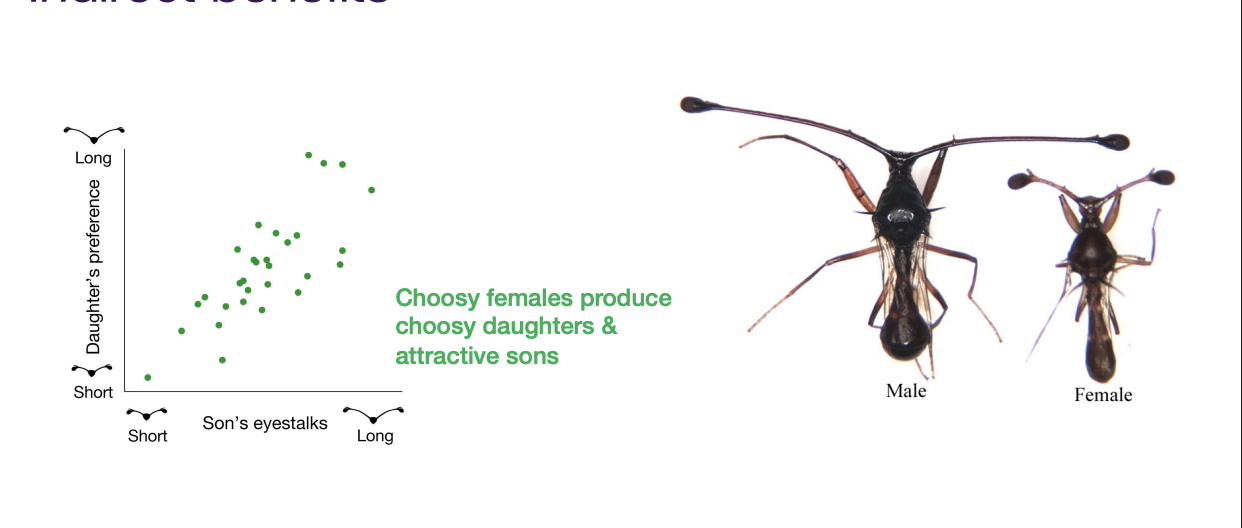

<ul><li><p>Females prefer longer stalks in male stalk flies </p></li><li><p><span style="background-color: inherit; line-height: 19.55px; color: windowtext;">Indirect benefit</span><span style="line-height: 19.55px; color: windowtext;">&nbsp;</span></p><ul><li><p class="Paragraph SCXO193916436 BCX0" style="text-align: left;"><span style="background-color: inherit; line-height: 19.55px; color: windowtext;">Choosy females produce choosy daughters and attractive sons&nbsp;</span><span style="line-height: 19.55px; color: windowtext;">&nbsp;</span></p><ul><li><p class="Paragraph SCXO193916436 BCX0" style="text-align: left;"><span style="background-color: inherit; line-height: 19.55px; color: windowtext;">No materials, but by being choosy -&gt; produce offspring that are either choosy or very sexy and get chosen by females</span><span style="line-height: 19.55px; color: windowtext;">&nbsp;</span></p></li></ul></li></ul></li></ul><p></p>
33
New cards

Where do preferences come from (in guppies)?

  • Guppies 

    • Male guppies have coloration 

      • Usually dark and orange 

    • Females like males with lots of orange 

  • Females larger than males and not ornamented 

  • Do they inherently prefer orange 

    • Pain pennies in enclosure 

    • Look at how many times they pecked at colors  

    • Loved to peck at orange colors 

      • Females that peck more at orange -> prefer males with orange color with strong correlation 

  • Pecking: one of favorite fruits is orange 

    • Hypothesis: male coloration ahs taken advantage of preference that was already there 

      • Going for food that was already orange -> actually male ready to mate  

        • Sensory exploitation : exploiting bias 


<ul><li><p><span style="background-color: inherit; line-height: 19.55px; color: windowtext;">Guppies</span><span style="line-height: 19.55px; color: windowtext;">&nbsp;</span></p><ul><li><p class="Paragraph SCXO197007701 BCX0" style="text-align: left;"><span style="background-color: inherit; line-height: 19.55px; color: windowtext;">Male guppies have coloration</span><span style="line-height: 19.55px; color: windowtext;">&nbsp;</span></p><ul><li><p class="Paragraph SCXO197007701 BCX0" style="text-align: left;"><span style="background-color: inherit; line-height: 19.55px; color: windowtext;">Usually dark and orange</span><span style="line-height: 19.55px; color: windowtext;">&nbsp;</span></p></li></ul></li><li><p class="Paragraph SCXO197007701 BCX0" style="text-align: left;"><span style="background-color: inherit; line-height: 19.55px; color: windowtext;">Females like males with lots of orange</span><span style="line-height: 19.55px; color: windowtext;">&nbsp;</span></p></li></ul></li><li><p class="Paragraph SCXO197007701 BCX0" style="text-align: left;"><span style="background-color: inherit; line-height: 19.55px; color: windowtext;">Females larger than males and not ornamented</span><span style="line-height: 19.55px; color: windowtext;">&nbsp;</span></p></li><li><p class="Paragraph SCXO197007701 BCX0" style="text-align: left;"><span style="background-color: inherit; line-height: 19.55px; color: windowtext;">Do they inherently prefer orange</span><span style="line-height: 19.55px; color: windowtext;">&nbsp;</span></p><ul><li><p class="Paragraph SCXO197007701 BCX0" style="text-align: left;"><span style="background-color: inherit; line-height: 19.55px; color: windowtext;">Pain pennies in enclosure</span><span style="line-height: 19.55px; color: windowtext;">&nbsp;</span></p></li><li><p class="Paragraph SCXO197007701 BCX0" style="text-align: left;"><span style="background-color: inherit; line-height: 19.55px; color: windowtext;">Look at how many times they pecked at colors&nbsp;</span><span style="line-height: 19.55px; color: windowtext;">&nbsp;</span></p></li><li><p class="Paragraph SCXO197007701 BCX0" style="text-align: left;"><span style="background-color: inherit; line-height: 19.55px; color: windowtext;">Loved to peck at orange colors</span><span style="line-height: 19.55px; color: windowtext;">&nbsp;</span></p><ul><li><p class="Paragraph SCXO197007701 BCX0" style="text-align: left;"><span style="background-color: inherit; line-height: 19.55px; color: windowtext;">Females that peck more at orange -&gt; prefer males with orange color with strong correlation</span><span style="line-height: 19.55px; color: windowtext;">&nbsp;</span></p></li></ul></li></ul></li><li><p class="Paragraph SCXO197007701 BCX0" style="text-align: left;"><span style="background-color: inherit; line-height: 19.55px; color: windowtext;">Pecking: one of favorite fruits is orange</span><span style="line-height: 19.55px; color: windowtext;">&nbsp;</span></p><ul><li><p class="Paragraph SCXO197007701 BCX0" style="text-align: left;"><span style="background-color: inherit; line-height: 19.55px; color: windowtext;">Hypothesis: male coloration ahs taken advantage of preference that was already there</span><span style="line-height: 19.55px; color: windowtext;">&nbsp;</span></p><ul><li><p class="Paragraph SCXO197007701 BCX0" style="text-align: left;"><span style="background-color: inherit; line-height: 19.55px; color: windowtext;">Going for food that was already orange -&gt; actually male ready to mate&nbsp;</span><span style="line-height: 19.55px; color: windowtext;">&nbsp;</span></p><ul><li><p class="Paragraph SCXO197007701 BCX0" style="text-align: left;"><span style="background-color: inherit; line-height: 19.55px; color: windowtext;">Sensory exploitation : exploiting bias</span><span style="line-height: 19.55px; color: windowtext;">&nbsp;</span></p></li></ul></li></ul></li></ul></li></ul><p></p>
34
New cards
term image
  • Female platy fish and put in play fish or male sword fish 

    • She wants the sword fish even if diff species 

  • Sword evolved in sword tail clade  

  • Preference of swords evolved before swords  

    • Origins not known  

    • Males Exploiting innate preference  


35
New cards
term image
  • Producing a mutual courtship behavior 

  • Disparity in reproductive success is not at extremes 

    • Both males and females take care of offspring and provision offspring 

  • Variance in males and females are more similar  

  • Other species where females do most offspring work  

    • Anasogamy in energy to just produce gametes + nutrients n egg + give birth -> females invest more in males -> choosy  

    • More variance 


36
New cards

What happens when females are not the limiting sex?

  • Females are the limiting sex 

    • Investing more in indiv mating 

    • Less eggs 

  • If scenario flips: male invests more than female 

    • Disparity in reproductive success  

      • Greater variation in females 

  • Male more likely to be choosy 

  • Potential examples of role reversal  


<ul><li><p><span style="background-color: inherit; line-height: 19.55px; color: windowtext;">Females are the limiting sex</span><span style="line-height: 19.55px; color: windowtext;">&nbsp;</span></p><ul><li><p class="Paragraph SCXO190490311 BCX0" style="text-align: left;"><span style="background-color: inherit; line-height: 19.55px; color: windowtext;">Investing more in indiv mating</span><span style="line-height: 19.55px; color: windowtext;">&nbsp;</span></p></li><li><p class="Paragraph SCXO190490311 BCX0" style="text-align: left;"><span style="background-color: inherit; line-height: 19.55px; color: windowtext;">Less eggs</span><span style="line-height: 19.55px; color: windowtext;">&nbsp;</span></p></li></ul></li><li><p class="Paragraph SCXO190490311 BCX0" style="text-align: left;"><span style="background-color: inherit; line-height: 19.55px; color: windowtext;">If scenario flips: male invests more than female</span><span style="line-height: 19.55px; color: windowtext;">&nbsp;</span></p><ul><li><p class="Paragraph SCXO190490311 BCX0" style="text-align: left;"><span style="background-color: inherit; line-height: 19.55px; color: windowtext;">Disparity in reproductive success&nbsp;</span><span style="line-height: 19.55px; color: windowtext;">&nbsp;</span></p><ul><li><p class="Paragraph SCXO190490311 BCX0" style="text-align: left;"><span style="background-color: inherit; line-height: 19.55px; color: windowtext;">Greater variation in females</span><span style="line-height: 19.55px; color: windowtext;">&nbsp;</span></p></li></ul></li></ul></li><li><p class="Paragraph SCXO190490311 BCX0" style="text-align: left;"><span style="background-color: inherit; line-height: 19.55px; color: windowtext;">Male more likely to be choosy</span><span style="line-height: 19.55px; color: windowtext;">&nbsp;</span></p></li><li><p class="Paragraph SCXO190490311 BCX0" style="text-align: left;"><span style="background-color: inherit; line-height: 19.55px; color: windowtext;">Potential examples of role reversal&nbsp;</span><span style="line-height: 19.55px; color: windowtext;">&nbsp;</span></p></li></ul><p></p>
37
New cards

What is often the more choosy sex?

  • Sex that ‘invests’ more into reproduction is often the choosy sex


38
New cards

What do Dance fly males do?

  • Dance flies 

  • Male dance fly capture prey that is brought to female  

    • Male is investing considerably more than female because of prey item  

      • Can only capture so many 

    • Prey item --> be choosy about who he mates with  
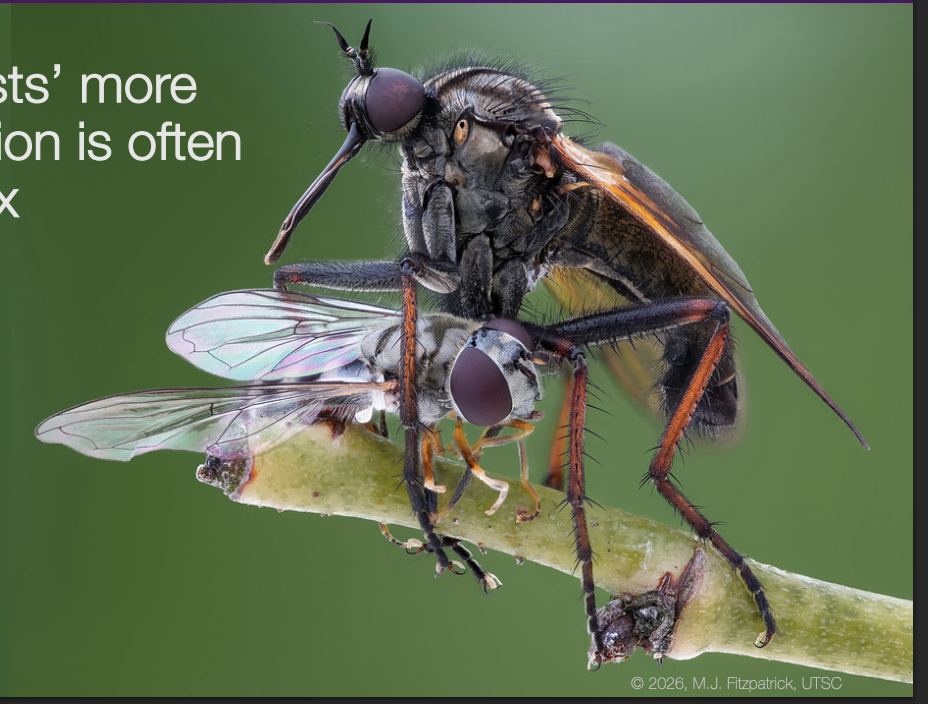

<ul><li><p><span style="background-color: inherit; line-height: 19.55px; color: windowtext;">Dance flies</span><span style="line-height: 19.55px; color: windowtext;">&nbsp;</span></p></li><li><p class="Paragraph SCXO218658209 BCX0" style="text-align: left;"><span style="background-color: inherit; line-height: 19.55px; color: windowtext;">Male dance fly capture prey that is brought to female&nbsp;</span><span style="line-height: 19.55px; color: windowtext;">&nbsp;</span></p><ul><li><p class="Paragraph SCXO218658209 BCX0" style="text-align: left;"><span style="background-color: inherit; line-height: 19.55px; color: windowtext;">Male is investing considerably more than female because of prey item&nbsp;</span><span style="line-height: 19.55px; color: windowtext;">&nbsp;</span></p><ul><li><p class="Paragraph SCXO218658209 BCX0" style="text-align: left;"><span style="background-color: inherit; line-height: 19.55px; color: windowtext;">Can only capture so many</span><span style="line-height: 19.55px; color: windowtext;">&nbsp;</span></p></li></ul></li><li><p class="Paragraph SCXO218658209 BCX0" style="text-align: left;"><span style="background-color: inherit; line-height: 19.55px; color: windowtext;">Prey item --&gt; be choosy about who he mates with&nbsp;</span><span style="line-height: 19.55px; color: windowtext;">&nbsp;</span></p></li></ul></li></ul><p></p>
39
New cards

What does dance fly reproduction show?

  • Female dance flies displaying for males 

  • Males come with prey item -> swoop down and as they fly up -> look at females and gauge how big they are 

    • Mate with largest female -> more eggs + larger eggs 

  • Male dance flies are choosy, females are ‘showy

    • Females are the ornamented sex 

      • Pocket they can inflate 

      • Legs covered in hair -> puff them up to look bigger 


<ul><li><p><span style="background-color: inherit; line-height: 19.55px; color: windowtext;">Female dance flies displaying for males</span><span style="line-height: 19.55px; color: windowtext;">&nbsp;</span></p></li><li><p class="Paragraph SCXO111981216 BCX0" style="text-align: left;"><span style="background-color: inherit; line-height: 19.55px; color: windowtext;">Males come with prey item -&gt; swoop down and as they fly up -&gt; look at females and gauge how big they are</span><span style="line-height: 19.55px; color: windowtext;">&nbsp;</span></p><ul><li><p class="Paragraph SCXO111981216 BCX0" style="text-align: left;"><span style="background-color: inherit; line-height: 19.55px; color: windowtext;">Mate with largest female -&gt; more eggs + larger eggs</span><span style="line-height: 19.55px; color: windowtext;">&nbsp;</span></p></li></ul></li><li><p class="Paragraph SCXO111981216 BCX0" style="text-align: left;">Male dance flies are choosy, females are ‘showy</p><ul><li><p class="Paragraph SCXO111981216 BCX0" style="text-align: left;"><span style="background-color: inherit; line-height: 19.55px; color: windowtext;">Females are the ornamented sex</span><span style="line-height: 19.55px; color: windowtext;">&nbsp;</span></p><ul><li><p class="Paragraph SCXO75503342 BCX0" style="text-align: left;"><span style="background-color: inherit; line-height: 19.55px; color: windowtext;">Pocket they can inflate</span><span style="line-height: 19.55px; color: windowtext;">&nbsp;</span></p></li><li><p class="Paragraph SCXO75503342 BCX0" style="text-align: left;"><span style="background-color: inherit; line-height: 19.55px; color: windowtext;">Legs covered in hair -&gt; puff them up to look bigger</span><span style="line-height: 19.55px; color: windowtext;">&nbsp;</span></p></li></ul></li></ul></li></ul><p></p>
40
New cards

What pattern is shown in female dance flies?

  • Female fecundity inc with female mass 

  • Two females with the same size, but one female able to puff up bigger 

    • Larger = more eggs 

  • Male choosing larger female -> larger female have more eggs than smaller female 
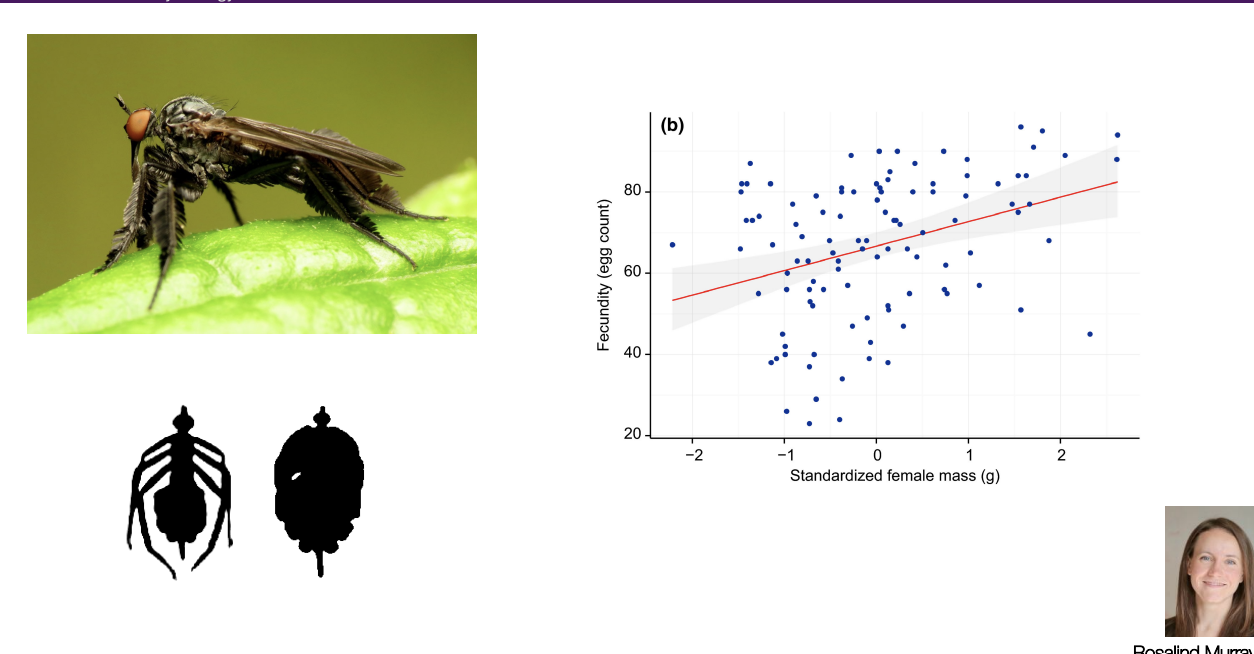

<ul><li><p><span style="background-color: inherit; line-height: 19.55px; color: windowtext;">Female fecundity inc with female mass</span><span style="line-height: 19.55px; color: windowtext;">&nbsp;</span></p></li><li><p class="Paragraph SCXO46963675 BCX0" style="text-align: left;"><span style="background-color: inherit; line-height: 19.55px; color: windowtext;">Two females with the same size, but one female able to puff up bigger</span><span style="line-height: 19.55px; color: windowtext;">&nbsp;</span></p><ul><li><p class="Paragraph SCXO46963675 BCX0" style="text-align: left;"><span style="background-color: inherit; line-height: 19.55px; color: windowtext;">Larger = more eggs</span><span style="line-height: 19.55px; color: windowtext;">&nbsp;</span></p></li></ul></li><li><p class="Paragraph SCXO46963675 BCX0" style="text-align: left;"><span style="background-color: inherit; line-height: 19.55px; color: windowtext;">Male choosing larger female -&gt; larger female have more eggs than smaller female</span><span style="line-height: 19.55px; color: windowtext;">&nbsp;</span></p></li></ul><p></p>
41
New cards

What can predict the system of mating?

  • Variance can predict the system of mating 

  • Who invests more and who has more to lose 

    • One sex as limited resource (ex: number eggs) -> mor choosy especially if higher variance in other sex 


<ul><li><p><span style="background-color: inherit; line-height: 19.55px; color: windowtext;">Variance can predict the system of mating</span><span style="line-height: 19.55px; color: windowtext;">&nbsp;</span></p></li><li><p class="Paragraph SCXO44428740 BCX0" style="text-align: left;"><span style="background-color: inherit; line-height: 19.55px; color: windowtext;">Who invests more and who has more to lose</span><span style="line-height: 19.55px; color: windowtext;">&nbsp;</span></p><ul><li><p class="Paragraph SCXO44428740 BCX0" style="text-align: left;"><span style="background-color: inherit; line-height: 19.55px; color: windowtext;">One sex as limited resource (ex: number eggs) -&gt; mor choosy especially if higher variance in other sex</span><span style="line-height: 19.55px; color: windowtext;">&nbsp;</span></p></li></ul></li></ul><p></p>
42
New cards

What happens when variance in reproductive successes is higher in males?

  • High variability in male than female 

    • Male showy 

    • Female choosy 

    • When males experience a greater opportunity for sexual selection than females (higher variance in reproductive success) → sexual selection is likely to be stronger in males than in females.

      • Ex: Peacocks, for example, do not help peahens with parental care, and some of the males have much more reproductive success than others. In such a case, elaborate male traits may evolve.


<ul><li><p><span style="background-color: inherit; line-height: 19.55px; color: windowtext;">High variability in male than female</span><span style="line-height: 19.55px; color: windowtext;">&nbsp;</span></p><ul><li><p class="Paragraph SCXO44428740 BCX0" style="text-align: left;"><span style="background-color: inherit; line-height: 19.55px; color: windowtext;">Male showy</span><span style="line-height: 19.55px; color: windowtext;">&nbsp;</span></p></li><li><p class="Paragraph SCXO44428740 BCX0" style="text-align: left;"><span style="background-color: inherit; line-height: 19.55px; color: windowtext;">Female choosy</span><span style="line-height: 19.55px; color: windowtext;">&nbsp;</span></p></li><li><p class="Paragraph SCXO44428740 BCX0" style="text-align: left;">When males experience a greater opportunity for sexual selection than females (higher variance in reproductive success) → sexual selection is likely to be stronger in males than in females. </p><ul><li><p class="Paragraph SCXO44428740 BCX0" style="text-align: left;">Ex: Peacocks, for example, do not help peahens with parental care, and some of the males have much more reproductive success than others. In such a case, elaborate male traits may evolve.</p></li></ul></li></ul></li></ul><p></p>
43
New cards

What happens when variance in reproductive successes is the same?

  • Variance is same 

    • Both investing  

    • Extreme sexual dimorphism dec ad working together inc 

    • When males contribute to offspring care → the variance in reproductive success will be more similar for males and females → extreme sexual dimorphism is not expected.

    • Ex: In many seabird species, such as this pair of blue-footed boobies, males and females are monogamous and raise their chicks together → the males and females of many of these species are practically indistinguishable.


<ul><li><p><span style="background-color: inherit; line-height: 19.55px; color: windowtext;">Variance is same</span><span style="line-height: 19.55px; color: windowtext;">&nbsp;</span></p><ul><li><p class="Paragraph SCXO44428740 BCX0" style="text-align: left;"><span style="background-color: inherit; line-height: 19.55px; color: windowtext;">Both investing&nbsp;</span><span style="line-height: 19.55px; color: windowtext;">&nbsp;</span></p></li><li><p class="Paragraph SCXO44428740 BCX0" style="text-align: left;"><span style="background-color: inherit; line-height: 19.55px; color: windowtext;">Extreme sexual dimorphism dec ad working together inc</span><span style="line-height: 19.55px; color: windowtext;">&nbsp;</span></p></li><li><p class="Paragraph SCXO44428740 BCX0" style="text-align: left;">When males contribute to offspring care → the variance in reproductive success will be more similar for males and females → extreme sexual dimorphism is not expected.</p></li><li><p class="Paragraph SCXO44428740 BCX0" style="text-align: left;">Ex: In many seabird species, such as this pair of blue-footed boobies, males and females are monogamous and raise their chicks together → the males and females of many of these species are practically indistinguishable.</p></li></ul></li></ul><p></p>
44
New cards

What happens when variance in reproductive successes is higher in females?

  • Variance higher in female and less in male -> reversal 

    • When males provide all the parental care → the variance in reproductive success will be higher in females.

    • As a result, sexual selection can be stronger in females than in males, and females may evolve ornaments or weapons.

    • Ex: Red-necked phalarope females compete for access to males who provide all the parental care. Females are larger, brighter, and more aggressive than males, as shown here.


<ul><li><p><span style="background-color: inherit; line-height: 19.55px; color: windowtext;">Variance higher in female and less in male -&gt; reversal</span><span style="line-height: 19.55px; color: windowtext;">&nbsp;</span></p><ul><li><p class="Paragraph SCXO44428740 BCX0" style="text-align: left;">When males provide all the parental care → the variance in reproductive success will be higher in females.</p></li><li><p class="Paragraph SCXO44428740 BCX0" style="text-align: left;">As a result, sexual selection can be stronger in females than in males, and females may evolve ornaments or weapons.</p></li><li><p class="Paragraph SCXO44428740 BCX0" style="text-align: left;">Ex: Red-necked phalarope females compete for access to males who provide all the parental care. Females are larger, brighter, and more aggressive than males, as shown here.</p></li></ul></li></ul><p></p>
45
New cards

How is Darwin’s dilema explained?

  • 1. Differential parental investment

  • 2. Puzzling Patterns (sexual dimorphism)

    • Why do males and females look diff from each other

      • Selection for males to be showy when competing for access in females 

        • Inter through armament 

        • Or access (showy)  

  • 3. Types of sexual selection

    • Intrasexual (competition) : Organisms competing against each other

    • Intersexual (mate choice) : Competing for the affection of a partner

  • 4. Why be choosy?

    • More to lose (investing more) -.> more choosy

  • 5. Roles reversed when factors reversed?