FW 444 Taxonomy
 Call Kai
 Learn
 Practice Test
 Spaced Repetition
 Match
 Flashcards
 Knowt Play
1/105

There's no tags or description
Looks like no tags are added yet.
106 Terms

Subclass: Prototheria (infraclass = Australosphenida)
Order: Monotremata
Family: Ornithorhynchidae
Common: Platypus
IUCN = Near Threatened & Decreasing
Distribution = Eastern Australia / freshwater creeks, rivers, lakes, streams
Diet = small aquatic animals, insects, shrimp/crayfish
biofluorescent / males have venomous ankle spurs

Subclass: Prototheria (infraclass = Australosphenida)
Order: Monotremata
Family: Tachyglossidae
Common: Echidna
Long-beaked/short-beaked species
IUCN = endangered
distribution = New Guinea, Australia, Tasmania (deserts, montane forests, land dominated by shrubs
diet = insects
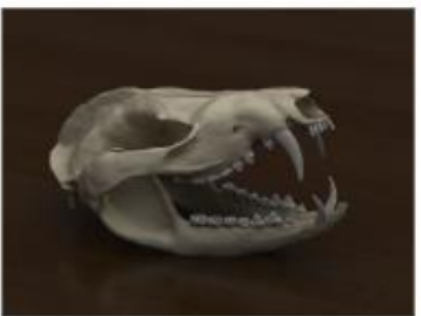
Subclass: Theria (Infraclass: Marsupialia)
Order: Didelphimorphia
Family: Didelphidae
Genus/Species: Didelphis virginiana
Common: Virginia Opossum
IUCN = LC
Habitat = forests, urban areas (Eastern North America/central America)
Diet = omnivorous (insects, fruits)
feign death as an escape method
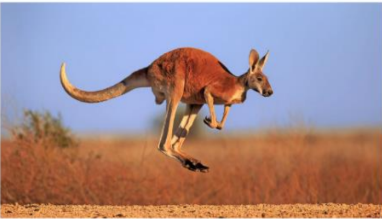
Subclass: Theria (Infraclass: Marsupialia)
Order: Diprotodontia (Superorder: Australidelphia)
Family: Macropodidae
Common: Kangaroos
distribution: new Guinea, Australia, Tasmania (tropical rainforests, deserts, woodlands, savannahs, grasslands)
diet = herbivores
polyphyodonts: continuously lose and replace teeth

Subclass: Theria (Infraclass: Marsupialia)
Order: Diprotodontia
Family: Vombatidae
Common: Wombats (common, northern, southern)
IUCN = LC, CR, NT
distribution: endemic to australia and surrounding islands (forested, mountains, heathland, adaptable)
diet: herbivores
backwards facing pouch, sturdy butts, cube-shaped poop

Subclass: Theria
Superorder: Xenarthra
Order: cingulata
Family: Dasypodidae
Genus/Species: Dasypus mexicanus
Common: Nine-Banded Armadillo
IUCN = LC
distribution/habitats: SE US, Mexico, Central America, South America / bottomland hardwood forests, scrub and brushlands
diet: insects and small invertebrates
hold breath underwater for 6 mins

Subclass: Theria
Superorder: Xenarthra
Order: Pilosa
Family: Bradypodidae
Common: Three-Toed Sloth
distribution/habitat: central and south america / forest canopy
diet: leaves
abdominal organs anchored to lower ribs to prevent pressing on lungs while hanging upside down

Subclass: Theria
Order: Pilosa
Family: Choloepidae
Genus: Choloepus
Common: Two-Toed Sloth
Distribution/habitat: Central America and Northern South America / canopy of tropical rainforests/cloud forests
diet: leaves, stems, buds, fruit
4 chamber stomach
efficient swimmers

Subclass: Theria
Superorder: Xenarthra
Order: Pilosa
Family: Cyclopedidae
Common: Silky Anteater
arboreal
tropical forests, silk cotton trees, mangrove forests
ants (termites, insects)
no teeth, only long/sticky tongue

Subclass: Theria
Superorder: Afrotheria
Order: Proboscidea
Family: Elephantidae
Genus: Loxodonta
Common: Elephant
african bush, african forest, asian
IUCN = endangered/critically endangered
africa, south asia / savannas, rainforests
roots, grasses, bark
create watering holes with their tusks

Subclass: Theria
Superorder: Afrotheria
Order: Macroscelidea
Family: Macroscelididae
Common: Elephant Shrew
IUCN = LC or DD
sub saharan africa / varied (desert to forests)
insectivores
one of fastest small mammals

Subclass: Theria
Superorder: Afrotheria
Order: Hyracoidea
Family: Procaviidae
Common: Rock Hyrax
IUCN = LC
africa, coast of arabian peninsula / savanna, shrubland, desert, boulders/rock formations
varies, grass during wet season and fruits/leaves during dry season
adults are inactive 95% of the time

Subclass: Theria
Infraclass: Placentalia
Superorder: Afrotheria
Order: Sirenia
Family: Trichechidae
Common: West Indian Manatee
US atlantic and gulf of mexico coasts, caribbean, south of brazil’s atlantic coast / shallow rivers, canals, saltwater bays, estuaries, coastal areas
mostly sea grasses, aquatic plant roots, leave
IUCN = vulnerable
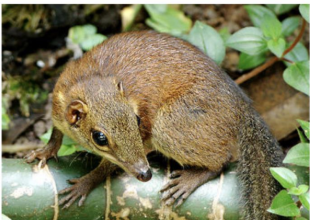
Subclass: Theria
Superorder: Euarchontoglires
Order: Scandentia
Family: Tupaiidae
Common: Treeshrews
IUCN = LC or DD
south and southeast asia / tropical forests
opportunistic eaters (insects, eggs, fruits, seeds)
greater brain to body mass ration (even humans)

Subclass: Theria
Infraclass: Placentalia
Suborder: Euarchontoglires
Order: Dermoptera
Family: Cynocephalidae
Common: Colugo
IUCN = LC
southeast asia, Indochina / strictly arboreal
nocturnal
strict herbivores
closest living relatives of primates
gliding/climbing
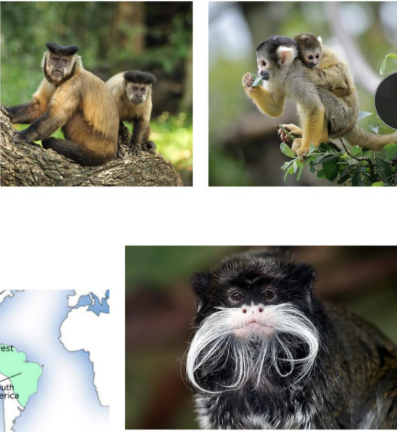
Subclass: Theria
Infraclass: Placentalia
Superorder: Euarchontoglires
Order: Primates
Family: Cebidae
Common: New World Monkeys
IUCN = EN, LC, VU, CR, NT
tropical and subtropical south and central america / most forests
arboreal
frugivores and insectivores (occassionally meat)

Subclass: Theria
Infraclass: Placentalia
Superorder: Euarchontoglires
Order: Primates
Family: Cercopithecidae
Common: Old Word Monkeys
baboon, mandrill, gelada
IUCN = CE, E, VU, NT
quadrupedal
africa / shrublands, savannas, tropical rainforests, mountain terrains
leaves, fruits, flowers, insects, snails, small vertebrate
typically matriarchal societies with one male, litter sizes of one, daughters stay with mothers
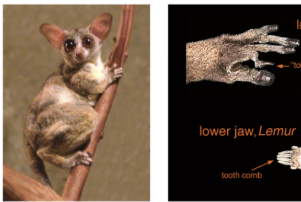
Subclass: Theria
Infraclass: Placentalia
Superorder: Euarchontoglires
Order: Primates
Family: Galagidae
Common: Galagos / Bushbabies
IUCN = LC / EN
forested regions of sub-saharan africa / thick understory cover or tree cavities
nocturnal
omnivorous (insects, fruits)
toilet claw modified for grooming (hind feet)

Subclass: Theria
Infraclass: Placentalia
Superorder: Euarchontoglires
Order: Primates
Family: Tarsiidae
Common: Tarsiers
islands of SE Asia / canopy of tropical forests
only insects
largest eyes of any mammal in relation to body size
IUCN = near threatened

Subclass: Theria
Infraclass: Placentalia
Superorder: Euarchontoglires
Order: Primates
Family: Homonidae
Common: Great Apes
everywhere / jungles, mountainous forests/areas, savannas
omnivores
bonobos/orangutans known for peaceful society / chimpanzees participate in warfare

Subclass: Theria
Infraclass: Placentalia
Superorder: Euarchontoglires
Order: Primates
Family: Hylobatidae
Common: Gibbons
southeast asia / rainforest
frugivores (insects and vegetation too)
brachiation/walking
arms are 1.5x longer than legs (swinging)
sing to each other

Superorder: Euarchontoglires
Order: Rodentia
Family: Aplodontiidae
Genus: Aplodontia
Common: Mountain Beaver
western united states / burrow systems near streams, forested areas at sea level, high mountain peaks in deciduous forests
herbivorous animals (forbs, grasses, ferns)
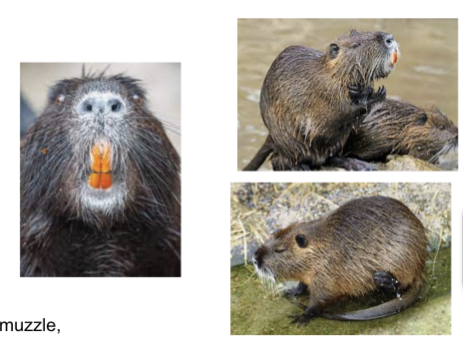
Family: Echimyidae
Genus/Species: Myocastor coypus
Common: Coypu / nutria
south america / near bodies of water
herbivorous (stems, leaves, roots)
skinny/hairless tail, white patch on muzzle, webbed hind feet

Order: rodentia
Family: Castoridae
Genus/Species: Castor canadensis
Common: North American Beaver
north america / ponds, lakes, rivers, streams
semi-aquatic herbivores (bark, leaves, roots, plants)
transparent eyelids that act as goggles
iron-rich orange teeth are self sharpening

Order: Rodentia
Family: Caviidae
Genus: Hydrochoerus
Common: Capybara
IUCN = LC
south america / tropical forest, bodies of water nearby
grasses, fruits, roots
largest rodent in world

Order: Rodentia
Family: Cricetidae
Genus/Species: Microtus pennsylvanicus
Common: Eastern Meadow Vole
moist grassland with lots of leaf litter (northern north america, canada)
mostly vegetation and fungi (occasionally insects)
spreaders of mycorrhizal fung

Superorder: Euarchontoglires
Order: Rodentia
Family: Cricetidae
Genus: Clethrionomys
Common: Red-backed Vole
north america / cool, mossy coniferous forests, stumps, logs, brush piles
insects, nuts, grains, seeds, fungi, flowers, leaves, roots, lichens
chestnut brown stripe from head to tail
underparts dark slate gray to almost white
offspring bald and blind, 2-3 litters a year, store root bulbs and nuts for later

Order: Rodentia
Family: Cricetidae
Genus: Ondatra
Common: Common Muskrat
IUCN = LC
marshes, swamps, sloughs, ponds, rivers, lakes
aquatic vegetation
half size of beaver, hairless/rat-like tail, webbed feet,
domed shaped houses up to 8ft tall
mild musk

Order: Rodentia
Family: Cricetidae
Genus: Dicrostonyx
Common: Collared Lemming
northernmost latitudes of north america, europe, asia / tundra or taiga, digging burrowa
herbivorous
fur turns completely white in winter
dark lines along back of summer coat
double digging claw

Order: Rodentia
Family: Cricetidae
Genus: Synaptomys
Common: Bog Lemming
IUCN = LC
canada, northeast US (not east coast) / bogs, grasslanfs, forests, marshes, meadows (lower quality habitats)
grasses, sedges, some species small invertebrates

Order: Rodentia
Family: Cricetidae
Genus: Sigmodon
Common: Hispid Cotton Rat
areas that are dense and grassy (crop fields, meadows, roadsides
south united states
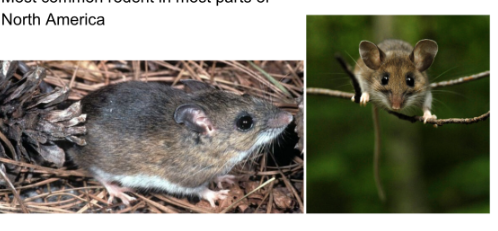
Order: Rodentia
Family: Cricetidae
Genus: Peromyscus
Common: Deermouse
north america, mesoamerica / everywhere
invertebrates, seeds, flowers, fruits/nits (coprophagic)
most common rodent in most parts of NA
large eyes, big ears, dark top, light bottom/limbs, long tails, prominent whiskers

Superorder: Euarchontoglires
Order: Rodentia
Family: Cricetidae
Genus: Neotoma
Common: Eastern woodrat
medium-sized rodent, grayish-brown dorsal, white central, tail has fur
opportunisitc (nuts, seeds, foliage, fungi, buds)
“pack rats”
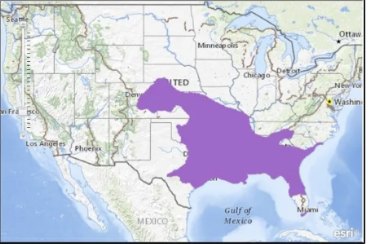

Order: Rodentia
Family: Cricetidae
Genus: Reithrodontomys
Common: Fulvous Harvest Mouse
seeds, grasses
very small, bicolored long tail, white belly
north america
build spherical nests on ground or several feet off ground

Order: Rodentia
Family: Cricetidae
Genus: Ochrotomys
Common: Golden Mouse
SE United States / thick woodlands and swampy areas
mostly seeds, sometimes berries or insects
IUCN = LC
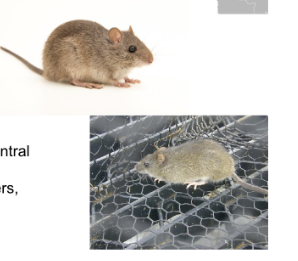
Order: Rodentia
Family: Cricetidae
Genus: Oryzomys
Common: Rice Race
Eastern/midwestern US, southern mexico, central america / wetlands, coastal marshes, subtropical/tropical foests, farmlands
opportunistics feeder (seeds, grasses, carrion, invertebrate, small vertebrates

Order: Rodentia
Family: Dasyproctidae
Common: Agouti
central and south america / tropical forests
nuts, berries, roots, fruits, leaves
mutualistic relationship with brazil nut tree

Subclass: Theria
Superorder: Euarchontoglires
Order: Rodentia
Family: Erethizontidae
Genus: Erethizon
Common: North American Porcupine
wetsern US, canada, northern mexico / coniferous and mixed-forest habitats
IUCN = LC
generalist herbivores (diet changes)

Order: Rodentia
Family: Geomyidae
Genus Geomys
Common: Pocket Gopher
IUCN = LC, NT, EN
north and central america / prefer grasslands and shrublands
roots, grasses, shrubs, bulbs
fur lined pockets to carry food
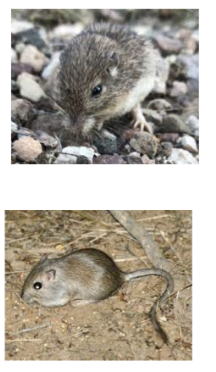
Order: Rodentia
Family: Heteromyidae
Genus: Chaetodipus
Common: Pocket Mouse
north america / arid habitats
seeds, insects, vegetation
fur-lined storage pouches on outside of their cheeks

Superorder: Euarchontoglires
Order: Rodentia
Family: Heteromyidae
Genus: Dipodomys
Common: Kangaroo Rat
southwestern to midwest US, mexico / deserts and grasslands, burrows
omnivorous (grasses, seeds, insects)
long hind legs, long tail with white tuft at end, four toes
go entire life without drinking water (concentrate urine)

Family: Zapodidae
Genus: Napaeozapus
Common: Woodland Jumping Mouse
reddish
long legs, long tail for jumping
north eaterns US
hibernate
IUCN = not threatened
omnivores (seeds, berries, insects, fungus)
hibernate

Family: Zapodidae
Genus: Zapus
Common: Meadow Jumping Mouse
yellowish
northern US to canada
IUCN = not threatened
hibernate
long legs long tail for jumping

Superorder: Euarchontoglires
Order: Rodentia
Family: Muridae
Genus/Species: Mus musculus
Common: House Mouse
no white underside, smaller, small beady black eyes, big ears, scaly tail
highly adaptable, found where people are
omnivores and coprophages
produce up to 14 litters in a year

Superorder: Euarchontoglires
Order: Rodentia
Family: Muridae
Genus: Rattus
Common: Brown Rat and Roof Rat
brown: brown dorsal, grey ventral, scaly and skin colored tail,
roof: uniform black, black and scaly tail and very long, smaller than brown rat
worldwide / wide variety habitat
omnivores
invasive species and disease vectors (brown rats outcompete roof rats)

Order: Rodentia
Family: Sciuridae
Genus: Cynomys
Common: Prairie Dog

Order: Rodentia
Family: Sciuridae
Genus: Glaucomys
Common: Flying Squirrel

Order: Rodentia:
Family: Sciuridae
Genus: Ictidomys
Common: Thirteen-lined Ground Squirrel

Order: Rodentia
Family: Sciuridae
Genus/Species: Marmota monax
Common: Woodchuck/Groundhog

Order: Rodentia
Family: Sciuridae
Genus: Neotamias
Common: Western Chipmunks

Order: Rodentia
Family: Sciuridae
Genus/Species: Sciurus carolinensis
Common: Eastern Gray Squirrel

Order: Rodentia
Family: Sciruidae
Genus/Species: Sciurus niger
Common: Eastern Fox Squirrel

Order: Rodentia
Family: Sciuridae
Genus/Species: Tamias striatus
Common: Eastern Chipmunk
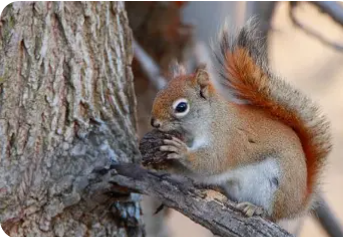
Order: Rodentia
Family: Sciuridae
Genus: Tamiasciurus
Common: North American Red Squirrel

Order: Chiroptera
Family: Molossidae
Genus: Tadarida brasiliensis
Common: Brazilian Free-Tailed Bat
IUCN = LC
tails extend beyond two hind legs
ears rounded and large
deep upper lip wrinkles
southern US and south america / forest, rocky areas, caves, artificial structures
highest recorded flight altitude
insectivorous
large colonies of individual

Order: Chiroptera
Family: Phyllostomidae
Common: Leaf-Nosed Bats
fruit-eating bats, flower bats, vampire bats
vampire bats can walk/jump
south america, central america, southwestern us / dense rainforests, deserts, caves, roost in forest during day
carnivorous, insectivorous, fruigivorous, nectarivorous, hematophagy
noseleaf structure, large eyes, tragus present
IUCN = EN, VU

Order: Chiroptera
Family: Pteropodidae
Common: Megabats (fruit bats)
tropical and subtropical regions of africa, asia, australia / forested habitats and savannas
herbivorous (fruit, nectar, pollen)
males can produce milk

Order: Chiroptera
Family: Vespertillionidae
Genus/Species: Lasiurus cinereus
Common: Northern Hoary Bat
IUCN = LC
insectivore
north america, columbian basin / temperate, tropical, forest habitats with mix of forest/open areas with edge
very strong flier
migrates
only land mammal of hawaii
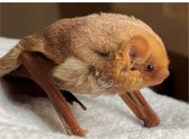
Order: Chiroptera
Family: Vespertillonidae
Genus/Species: Lasiurus borealis
Common: Eastern Red Bat
IUCN = LC
north america / forests, urban areas
insectivores
migratory
males and females look different

Order: Chiroptera
Family: Vespertilionidae
Genus/Species: Lasiurus ega
Common: Northern Yellow Bat
southwestern US some of south america / thick vegetated forests, natural groves of palm trees
IUCN = LC
insectivore
dull, sooty yellow fur
tail is entirely furred with no white marks on wrists and shoulders
favorite are palm trees
does not migrate

Order: Chiroptera
Family: Vespertilionidae
Genus: Corynorhinus
Common: Rafinesque’s Big-eared Bat
IUCN = LC
endemic to south-central, SE US / roosting: caves, tree cavities
insectivore (lepidoptera specialist)
extended ears
chemoreception to identify newborn pups

Order: Chiroptera
Family: Vespertilionidae
Genus/Species: Eptesicus fuscus
Common: Big Brown Bat
IUCN = LC
southern canada, US, central america / suburban, rural or urban
insectivorous (single bat can eat up to 1,000 insects a day)
relatively large
long, reddish brown to dark brown fur (light underneath)
small eyes
broad mouth/snout
live in large colonies

Order: Chiroptera
Family: Vespertilionidae
Genus: Myotis
Common: Little Brown Bat (Myotis)
IUCN = EN
north america (dying from WNS) / mostly roost in caves and mines in winter, trees and other structures in summer
variety of flying insects

Order: Chiroptera
Family: Vespertilionidae
Genus: Perimyotis
Common: Tricolored Bat
IUCN = VU
eastern north america / tree foliage and builfings in summer, hibernate in caves/mines in winter
insectivore
smallest bats in eastern/midwestern NA
blond fur thats gray at bottom, yellowish in middle, red/brown at tip
reddish forearms, black wings
one of two bat species most frequently associated with rabies in humans

Order: Pholidota
Family: Manidae
Common: Pangolin
africa, india, southeast asia / rainforest, forests, grasslands
insectivores
most trafficked mammal on earth (scales, meat)
IUCN = VU, EN, CR

Order: Carnivora
Family: Canidae
Genus/Species: Canis familiaris
Common: Domestic Dog
anywhere humans live
kibble
research suggest dogs evolved from two differnt wolf populations
research also suggests dogs likely the first animals that humans domesticated 30-40,000 years ago

Order: Carnivora
Family: Canidae
Genus/Species: Canis latrans
Common: Coyote
IUCN = LC
forests, desserts, grasslands, swamps, suburban landscapes
coyotes and badgers will sometimes hunt together
coyotes found in northeast are larger than those in historical range
highly adaptable to urban landscapes

Order: Carnivora
Family: Canidae
Genus/Species: Canis rufus
Common: Red Wolf
IUCN = CE
formerly Texas-NY, now eastern NC
large and small mammals (opportunistic)

Order: Carnivora
Family: Canidae
Genus/Species: Urocyon cinereoargenteus
Common: Northern Gray Fox
IUCN = LC
black stripe down tail and neck
black fur around eyes, lips, and nose
shorter limbs than red fox
can climb trees
northeast, south, and central america / wooded areas, forest edges
small rodents, cottontails, fruit
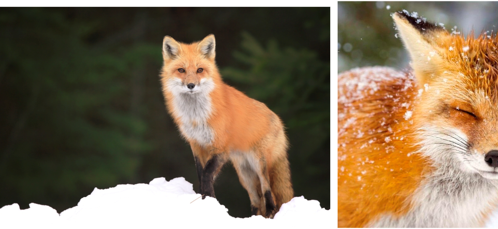
Order: Carnivora
Family: Canidae
Genus/Species: Vulpes vulpes
Common: Red Fox
reddish colored coat, black legs and ears, bushy tail with white tip
north america, europe / wide range of habitats including dense forests, grasslands, prairies, mountains, deserts (good in urban areas)
omnivorous (rabbits, mice, birds, insects, fruit)
really good hearing and can hear rodents digging

Order: Carnivora
Family: Canidae
Genus/Species: Vulpes lagopus
Common: Arctic fox
artic and tundra habitats, edges of forests, burrows
omnivorous and opportunistic feeders (prefer rodents)
only mammal native to iceland
IUCN = LC


Order: Carnivora
Family: Mephitidae
Genus/Species: Mephitis mephitis
Common: Striped Skunk
north america / woodlands, open fields, and agricultural areas
omnivore and opportunistic
polygamous
vector for rabies
spray from 15ft away

Order: Carnivora
Family: Mephitidae
Genus: Spilogale
Common: Spotted Skunk
insectivorous (fruits, small animals)
perform handstand when threatened
US, central america

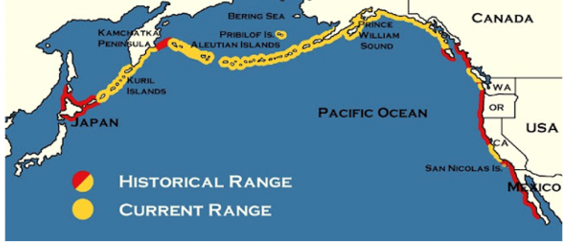
Order: Carnivora
Family: Mustelidae
Genus/Species: Enhydra lutris
Common: Sea Otters
IUCN = EN
strong social bonds, very playful
coastal marine areas (kelp beds)
marine invertebrates
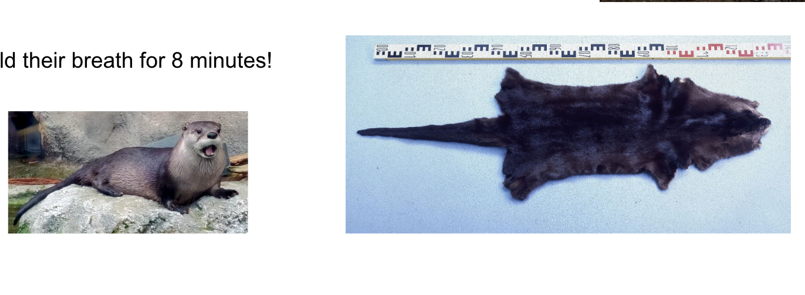
Order: Carnivora
Family: Mustelidae
Genus/Species: Lontra canadensis
Common: North American River Otter
aquatic areas (lakes, rivers, shorelines), minimal pollution and good access to water
strongly piscivorous (occasionally birds)
can hold breath for 8 minutes
IUCN = LC


Order: Carnivora
Family: Mustelidae
Genus/Species: Martes americana
Common: American Marten
IUCN = LC
north north america / mature, northen hardwood forests, den in hollow trees or vacant ground burrows
small mammals, birds, insects
orange fur on throat and chest, dark brown fur on back and legs, smaller than fishers

Order: Carnivora
Family: Mustelidae
Genus/Species: Pekania pennanti
Common: Fisher
IUCN = LC
northern north america / various forest habitats, avoids open areas
mainly snowshoe hares, porcupines, red squirrels, red-backed vole
size of domestic cat, long bodies with short legs, retractable claws, thick dark brown coat, bushy tail
sexually dimorphic
hiss and growl when upset

Order: Carnivora
Family: Mustelidae
Genus/Species: Neogale vison
Common: American Mink
brown/black fur and white chin, long body, long neck, long thick tail
forested areas near rivers, streams, lakes, ponds, marshes
carnivore (mice, fish, frogs, birds)


Order: Carnivora
Family: Mustelidae
Genus/Species: Neogale frenata
Common: Long-tailed Weasel
largest weasel in NA
long body, long neck, long tail, black tip on tail
brown on top, yellowish-white on sides in summer, white coat in winter
NA, some SA / anywhere near water with abundant prey
small mammals, birds, other animals, herps, insects
IUCN = LC
often prey on animals larger than themselves
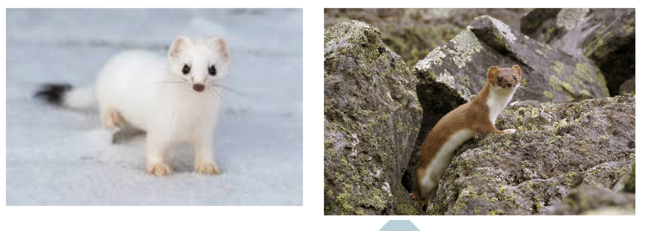
Order: Carnivora
Family: Mustelidae
Genus/Species: Mustela richardsonii
Common: American Ermine
long body, long tail but shorter than LT weasel
fur color changed based on season
brown or white
black tipped tail, black eyes

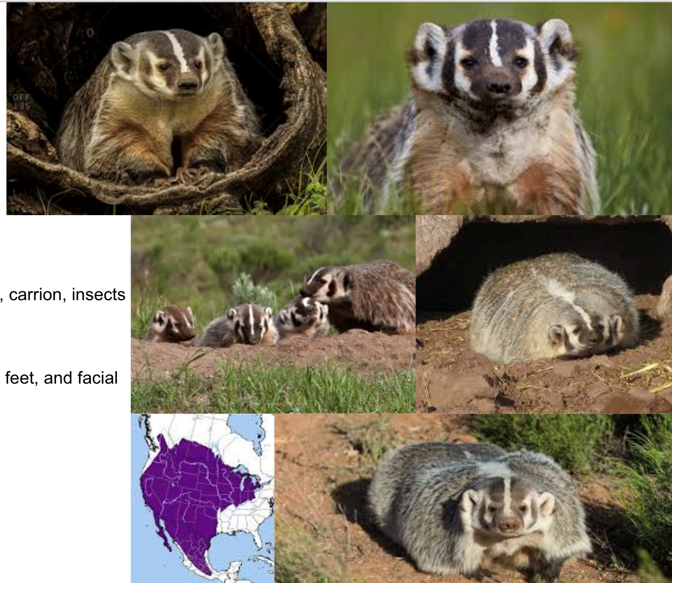
Order: Carnivora
Family: Mustelidae
Genus/Species: Taxidea taxus
Common: American Badger
grasslands, dry forests, farmland
opportunistic (snakes, mammals, carrion, insects)
overall tan with black on ventral side, feet, facial markings
males slightly larger
massic claws for digging
IUCN = LC


Order: Carnivora
Family: Odobenidae
Genus/Species: Odobenus rosmarus
Common: Walrus
coastal areas and northern oceans /Northeastern canada to greenland and northern seas off russia and alaska
IUCN = VU
carnivores (shellfish, sea cucumbers, molluscs)
can survive temperatures as low as -31 farenheit


Order: Carnivora
Family: Otaridae
Genus/Species: Zalophus californianus
Common: Califronia Sea Lion
carnivores (squid, octopus, lake, steelhead salmon, northern anchovy, herring)
broad front flipper, long narrow snouts, 5 claws on hind flippers
IUCN = LC
shallow waters of eastern North Pacific Ocean, rocky coves, sandy beaches, marina docks, jetties
one of msot gregarious marine mammals
noisy sounds/bark
external ear flaps
can use rear flippers to walk on land

Order: Carnivora
Family: Phocidae
Genus/Species: Phoca vitulina
Common: Harbor Seal
IUCN = LC
coastlines of northern hemisphere / coastal waters, shores
carnivorous
slow heart rate down while underwater to conserve oxygen
no external ear flaps
five digits on flippers
hind flippers point away from body

Order: Carnivora
Family: Phocidae
Genus/Species: Neomonachus tropicalis
Common: Caribbean Monk Seal
IUCN = EXTINCT
caribbean, guld of mexico, western atlantic / warm, temperate subtropical and tropical waters
carnivorous (fish, crustaceans, octopus, squid)
extinct due to over hunting for oil and overfishing of reefs

Order: Carnivora
Family: Procyonidae
Genus/Species: Procyon lotor
Common: Northern Racoon
woodland and urban areas / North America
omnivore (fruits, seeds, crayfish, eggs, frogs)
IUCN = LC

Order: Carnivora
Family: Procyonidae
Genus/Species: Bassariscus astutus
Common: Ringtail
central and south america / desert, canyons, riparian areas, oak woodlands
omnivore (mostly insects but also small birds, mammals, reptiles)
IUCN = LC

Order: Carnivora
Family: Procyonidae
Genus/Species: Potos flavus
Common: Kinkajou
elongated body, short legs, long prehensile tail, reversible hind feet, rounded head and ears, small muzzle, big eyes, thick and woolly fur, honey-brown color
honey bears
arboreal and frugivorous
central and south america / variety of forest habitats

Order: Carnivora
Family: Ailuridae
Common: Red Panda
temperate asian forests / southwest asia
mostly leaves and bamboo
fewer than 10,000 in wild
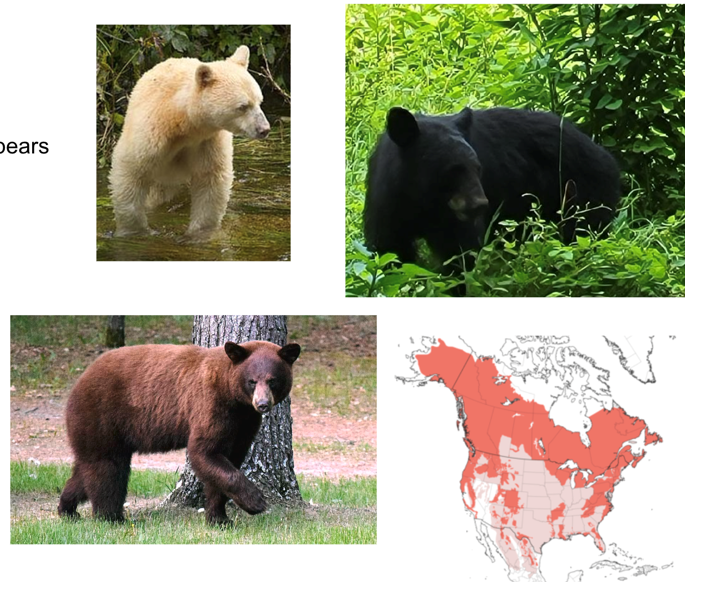
Order: Carnivora
Family: Ursidae
Genus/Species: Ursus americanus
Common: American Black Bears
IUCN = LC
fur can range from white to black, cinnamon, brown and other colors
opportunistic omnivores

Order: Carnivora
Family: Felidae
Genus/Species: Felis catus
Common: Domestic Cat
carnivores (birds, reptiles, amphibians, fish)
areas with humans / worldwide
group is called a clowder

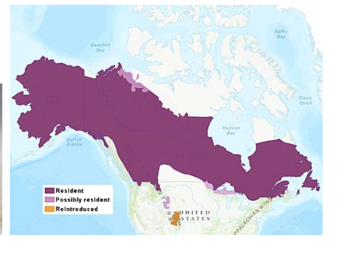
Order: Carnivora:
Family: Felidae
Genus/Species: lynx canadensisan
Common: Canadi Lynx
IUCN = LC
carnivores (snowshoe hare, ducks, moles)
triangular ears with black tufts, long hair on lower cheek, BIG FEET
population numbers coincide with that of snowshoe hare
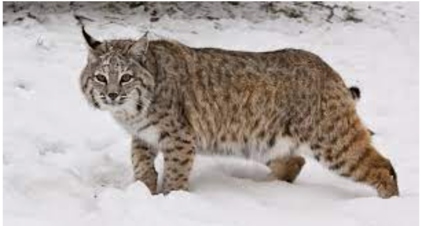
Order: Carnivora
Family: Felidae
Genus/Species: lynx rufus
Common: Bobcat
IUCN = LC
forests, deserts, mountains, swamps, farmland, rock dens or tree crevice
small mammals (woodchucks, rabbits, skunks, racoons, moles, squirrels, birds, reptiles)
most common wildcat in NA


Order: Carnivora
Family: Felidae
Genus/Species: Panthera Onca
Common: Jaguar
IUCN = Near Threatened
largest cat of americas, large round head, short legs, whiter underside
tropical areas
any larger prey (peccaries)


Order: Carnivora
Family: Felidae
Genus/Species: Puma concolor
Common: Puma, Cougar, Mountain Lion, Florida Panther, etc.
IUCN = LC
all habitats
large prey but especially deer
4th largest cat in the world (purrs)


Order: Carnivora
Family: Herpestidae
Common: Mongoose
meerkat, banded mongoose, yellow mongoos, indian grey mongoose
small animals (rodents, birds, reptiles, frogs, insects)
some species supplement with fruits, nuts, eggs, seeds
indian grey mongoose and others are known for ability to fight and kill venemous snakes (cobras)

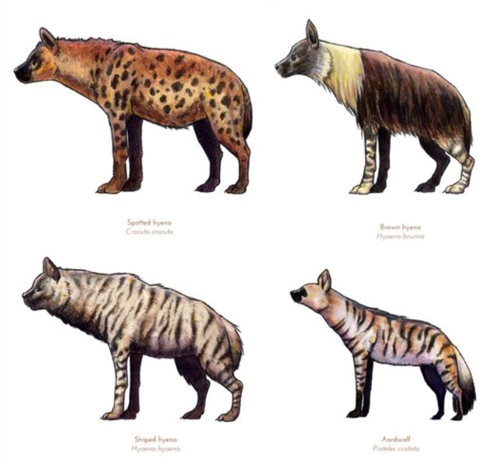
Order: Carnivora
Family: Hyaenidae
Common: Hyenas
striped hyena, spotted hyena, aardwolf, brown hyena
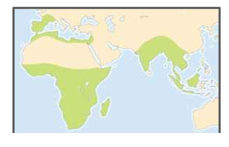
deserts, woodlands, scrublands, savannahs, mountains
strict carnivores (bone crushes, one termite eater)
low butt, long thick neck, wolfish face, laugh
can bite through 2.5 inch bone


Order: Carnivora
Family: Viverridae
Common: Civets and Genets
Africa: woodlands, savannas, mountains
Asia and SEA: tropical forests, plantations
cat and ferret like (long bodies, short legs)
spots, striped or bands
multiples black rings on tails
round, erect ears
mostly nocturnal hunters
strongly arboreal
family includes the binturong (prehensile tail)

Order: Eulipotyphyla
Family: Erinaceidae
Common: Hedgehog
deserts, grasslands/meadows, forests, suburban areas
omnivorous (insects, berries, frogs, mushrooms, snakes, grass)
some species have a natural immunity to snake venmos


Order: Eulipotyphyla
Family: Soricidae
Genus: Blarina
Common: Short-tailed Shrew
rudimentary cholocation
toxic saliva
relatively large and robust, inconspicuous ears and minute eyes, snout is pointed, short tail
insects, annelids, hypogeous fungi, slugs and snails, centipedes, spiders