functional anatomy
 Call Kai
 Learn
 Practice Test
 Spaced Repetition
 Match
 Flashcards
 Knowt Play
1/42

There's no tags or description
Looks like no tags are added yet.
43 Terms
five (5) main functions of bones
1. protect vital organs: individual bones protect specific vital organs
2. framework: gives the body its shape
3. support & attachment: allows bones to act as levers to produce movement
4. produce red blood cells: comes from bone marrow in long bones
5. stores essential minerals: such as calcium, giving bones its strength
functions of different shapes of bones
1. long bones: produce red blood cells
2. short bones: provide stability
3. flat bones: protect vital organs
4. irregular bones: provide strength in complex areas
examples of different shapes of bones
1. long bones: femur, humerus, radius
2. short bones: carpals, tarsals
3. flat bones: scapula, cranium
4. irregular bones: vertebrae
axial skeleton
- central structure to support the skeleton, protects vital organs
- cranium, ribs, vertebral column, sacrum, sternum
appendicular skeleton
- assists with movement & includes all major limbs
- clavicle, scapula, humerus, ulna, radius, pelvis, femur, tibia, fibula
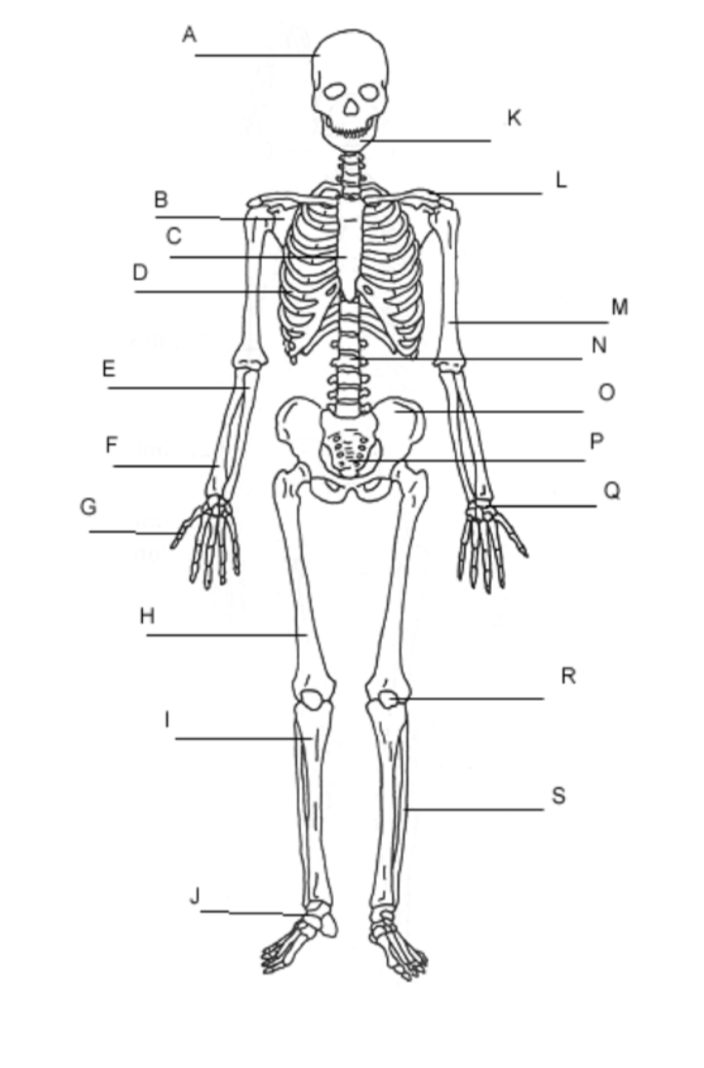
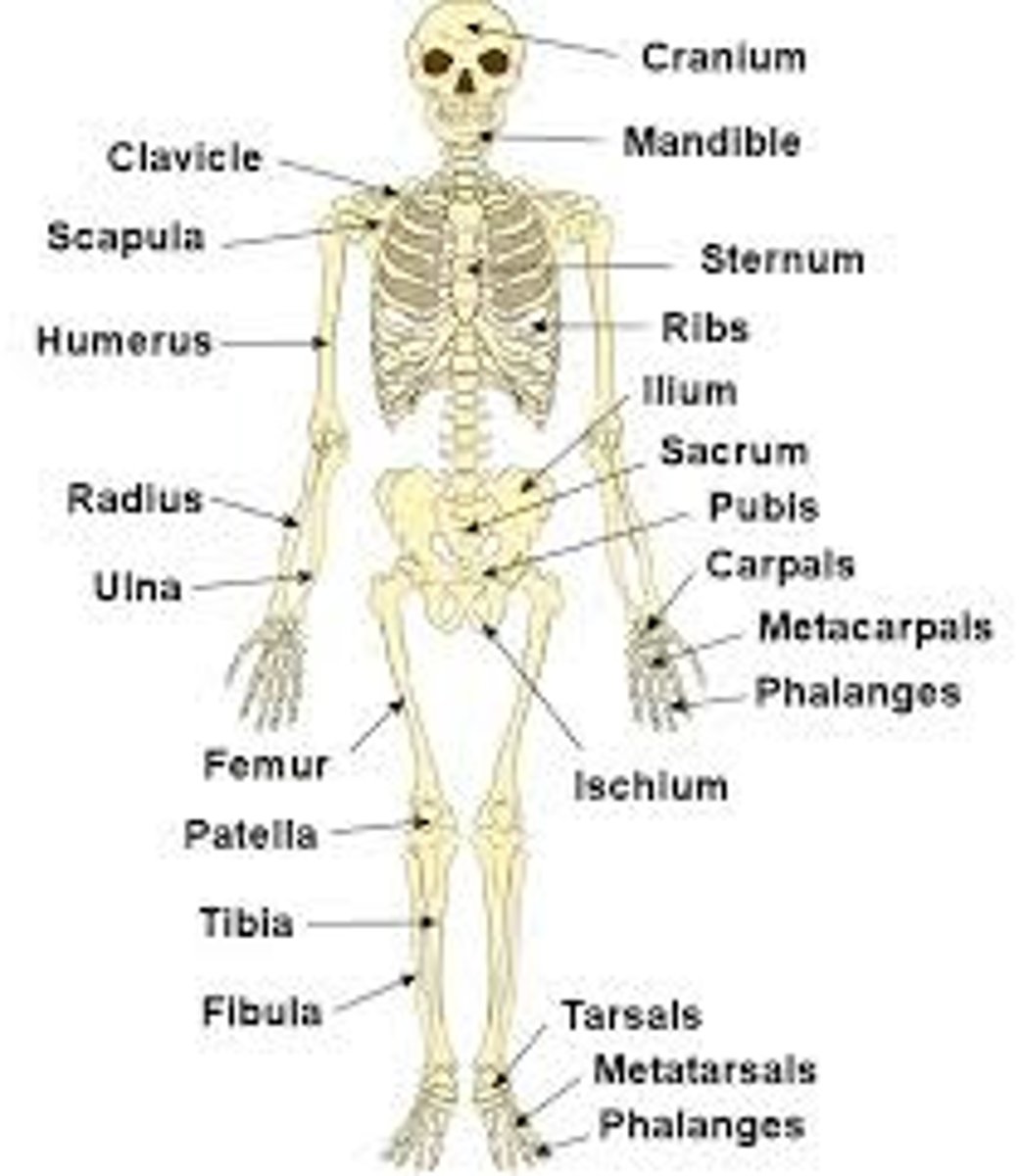
name the bones
flexion/extension
flexion: decreasing the angle between two body parts
e.g. curling your biceps
extension: increasing the angle between two body parts
e.g. straightening the elbow
abduction/adduction
abduction: moving a body part away from the midline of the body
e.g. lifting arms out to the sides
adduction: moving a body part closer to the midline of the body
e.g. lowering your arms back down to touch your side
supination/pronation
supination: moving the bones of a forearm so the palm is facing up
e.g. holding a bowl of soup
pronation: moving the bones of a forearm so the palm is facing down
e.g. pouring out a drink
rotation
turning a body part towards your body
e.g. turning your head
circumduction
where a limb moves in a circular motion
e.g. windmilling your arm
dorsi-flexion/plantar-flexion
dorsi-flexion: lifting the top of your foot upwards
e.g. your foot pushing off the ground
plantar-flexion: pointing your foot downwards
e.g. your foot landing on the ground
anterior/posterior
anterior: closer to the front of the body
e.g. your toes are anterior to your heels
posterior: closer to the back of the body
e.g. your heels are posterior to your toes
medial/lateral
medial: closer to the midline of the body
e.g. the nose is medial to the eyes
lateral: farther away from the midline of the body
e.g. the eyes are lateral to the nose
superior/inferior
superior: closer to the head or above
e.g. the nose is superior to the mouth
inferior: closer to the feet or below
e.g. the knee is inferior to the hip
proximal/distal
proximal: closer to the trunk of the body
e.g. the knee is proximal to the toes
distal: farther away from the trunk of the body
e.g. your eyes are distal to your chin
superficial/deep
superficial: closer to the surface of the body
e.g. the skin is superficial to the muscles
deep: farther away from the surface of the body
e.g. the bones are deep to the muscles
sagittal plane
divides the body into: left and right sections
e.g. doing a lunge
frontal plane
divides the body into: front and back sections
e.g. jumping jacks
transverse plane
divides the body into: upper and lower sections
e.g. spinning in a circle
what are muscles?
vital tissues in our bodies that enable movement by contracting (shortening) and relaxing (lengthening)
four (4) main functions of muscles
movement: create movement as skeletal muscles pull on bones
posture: through contraction of appropriate muscles
maintain bodily functions: e.g. heart muscle = blood circulation
joint stability: muscle tendons stretch over joints
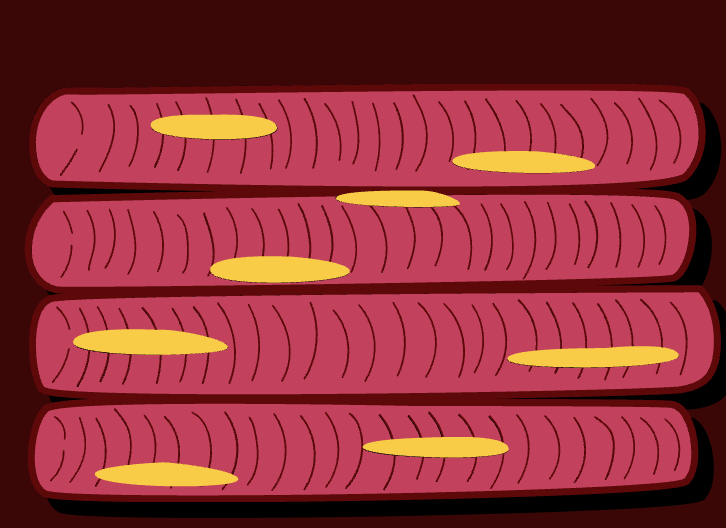
skeletal muscle
striated
voluntary - can consciously control them
these muscles attach to bones in the body, enabling us to move
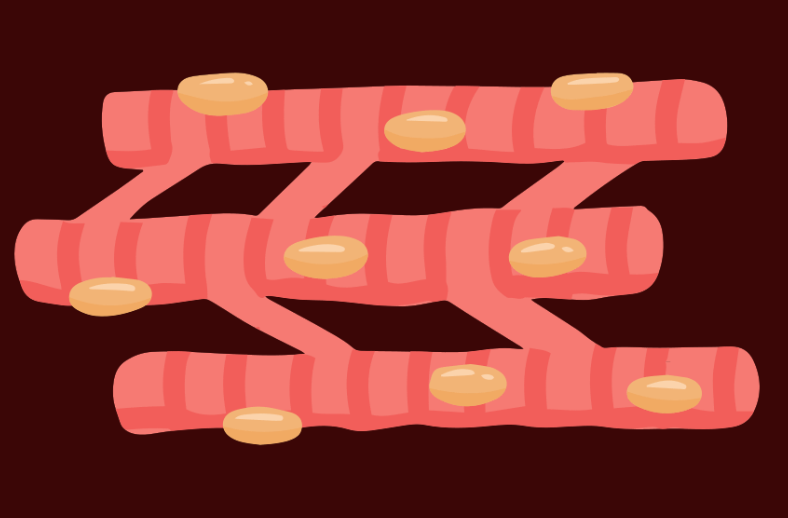
cardiac muscle
striated, branched & interconnected
involuntary - work on their own
these muscles continuously contract to pump blood through the heart
smooth muscle
not striated
involuntary - work on their own
these muscles help move substances through hollow organs (stomach)
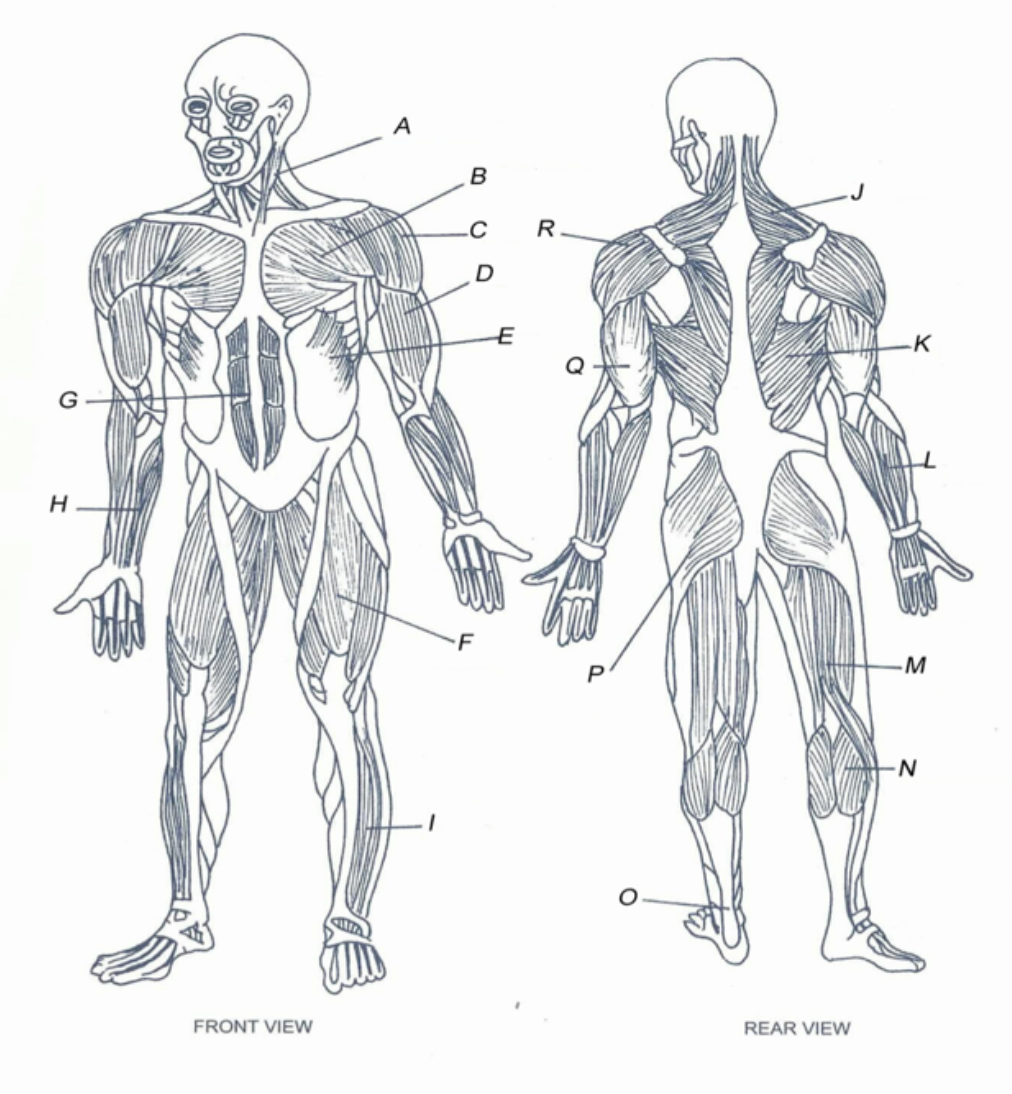
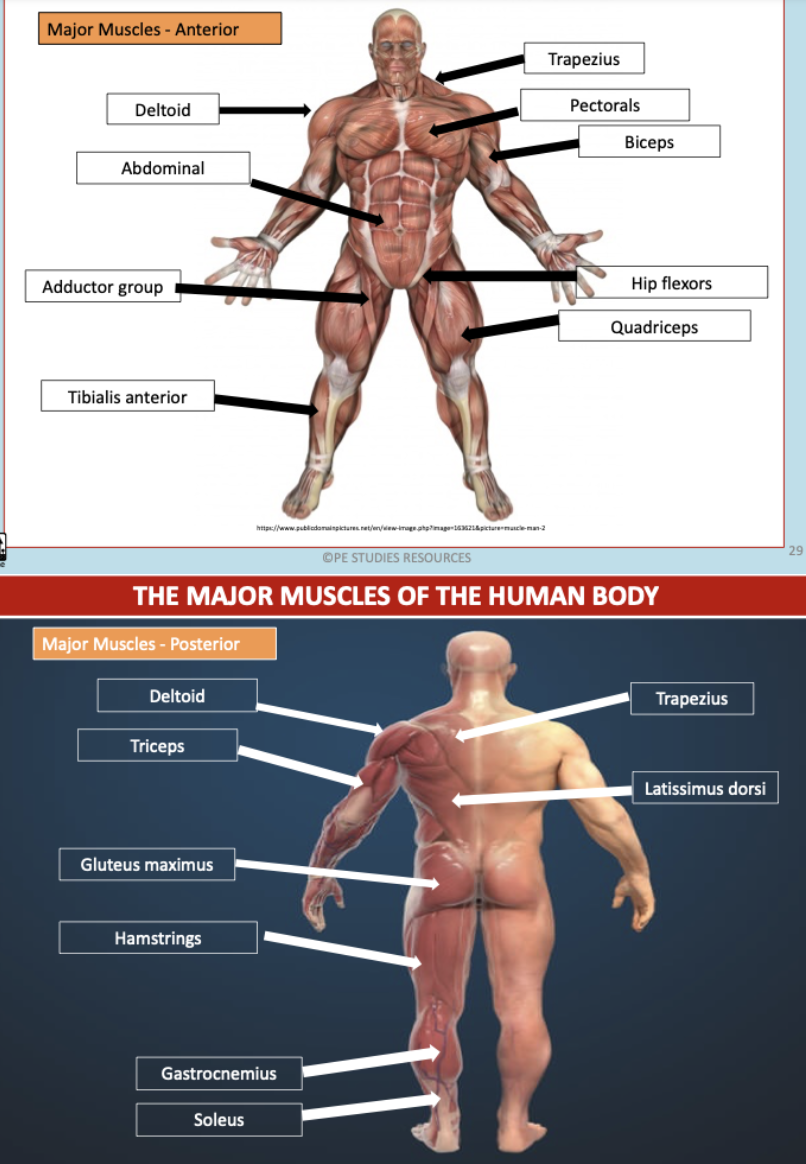
name the muscles
antagonistic pairs
pairs of muscles which work together by one contracting (shortening) and one relaxing (lengthening).
contracting muscle = agonist
relaxing muscle = antagonist
attachment points
origin: doesn’t move during contraction, located on the stationary bone
insertion: does move during contraction, located on the moving bone
joints
any place where adjacent bones and cartilage come together to form a connection
allow for movement and stability
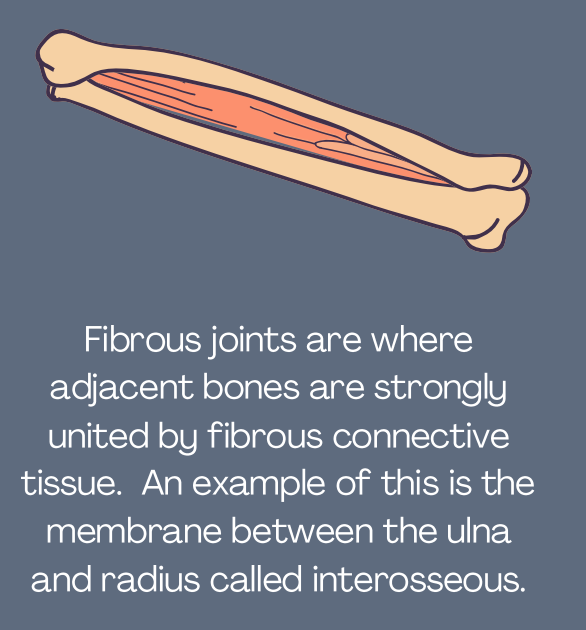
fibrous joints
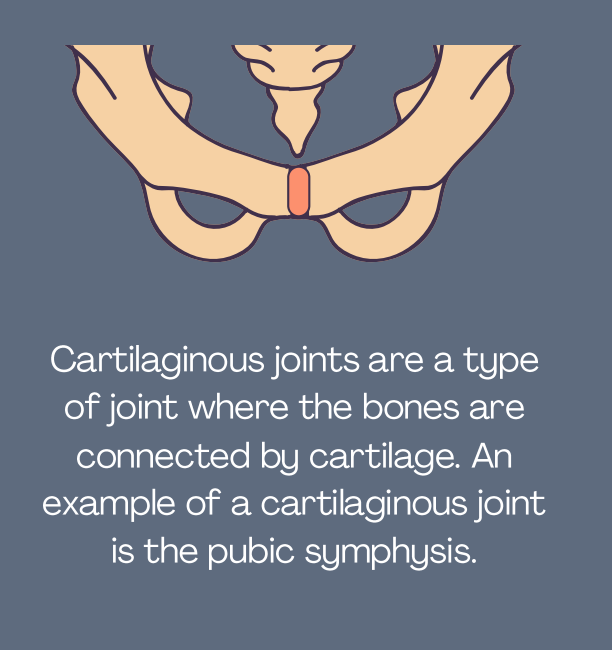
cartilaginous joints
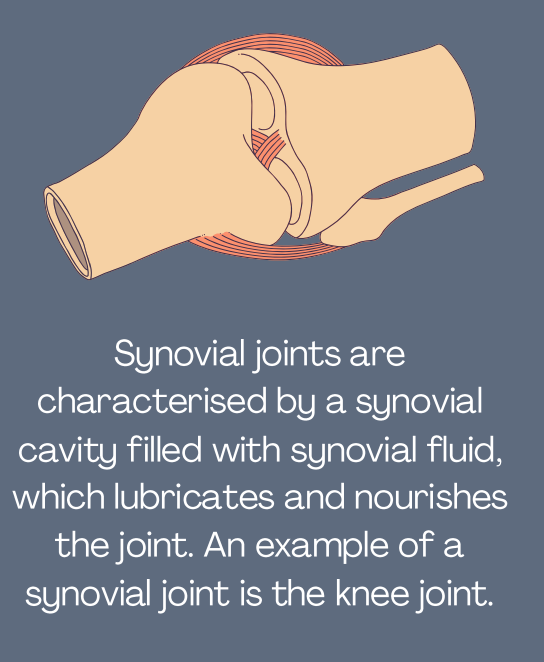
synovial joints
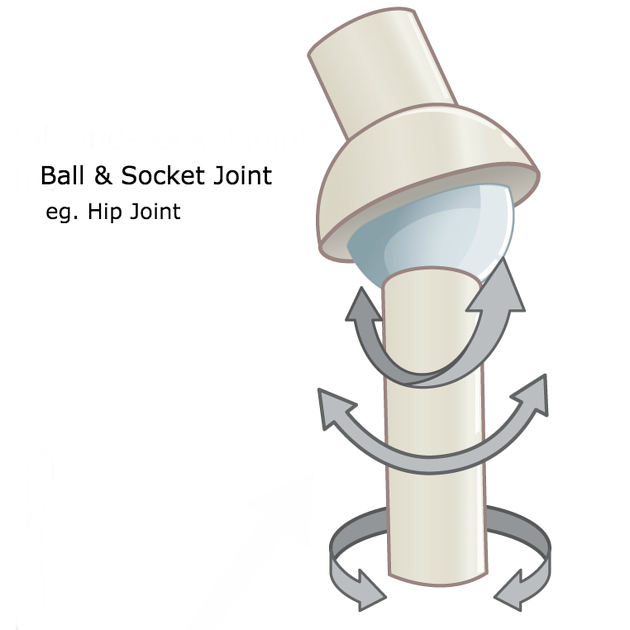
ball and socket joints
Allows movement in all directions, including rotation
Most mobile type of joint
e.g. shoulder, hip
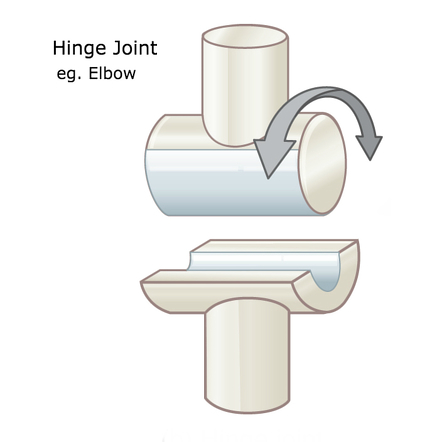
hinge joints
Allows flexion and extension only
Movement in one plane
e.g. elbow, knee
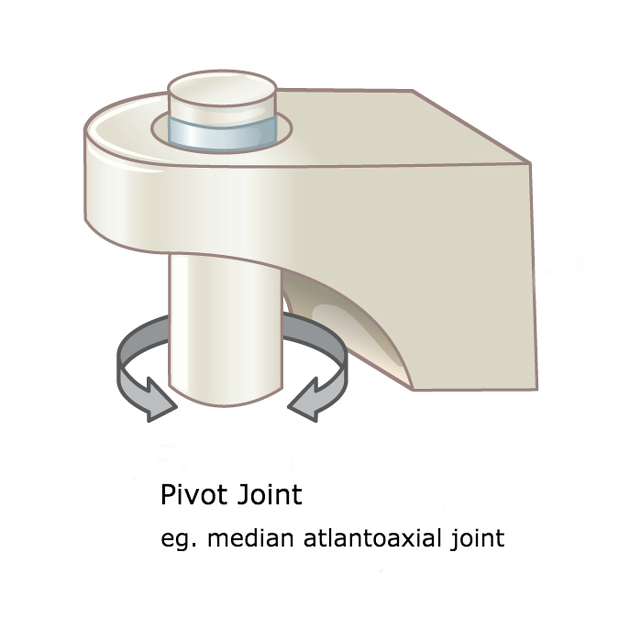
pivot joints
Allows rotation
One bone rotates around another
e.g. neck, forearm
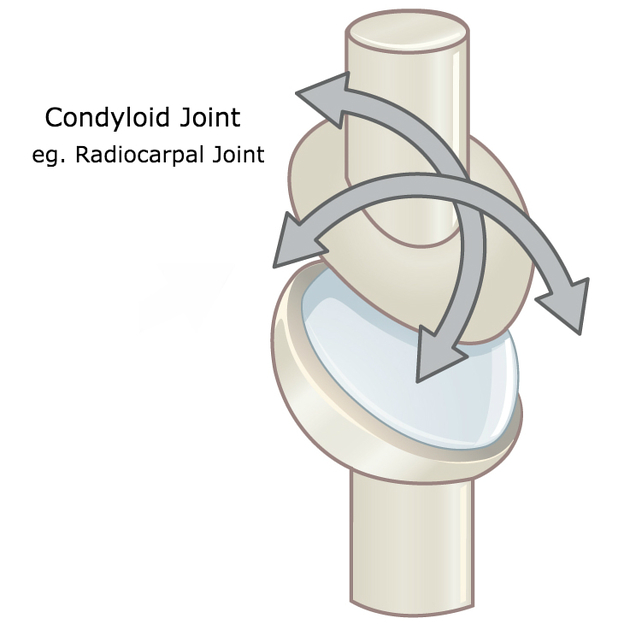
condyloid joints
Allows movement in two directions
Movements: flexion, extension, abduction, adduction
e.g. wrist
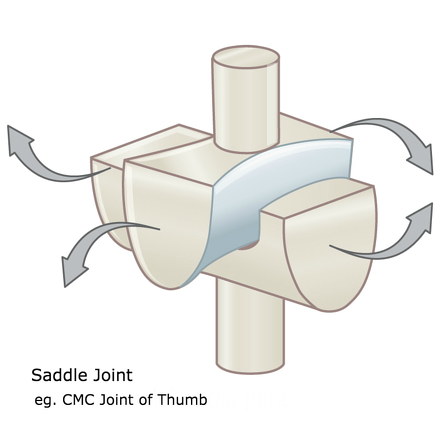
saddle joints
Allows movement in two directions
Movements: flexion, extension, abduction, adduction
Allows greater movement than condyloid
e.g. thumb
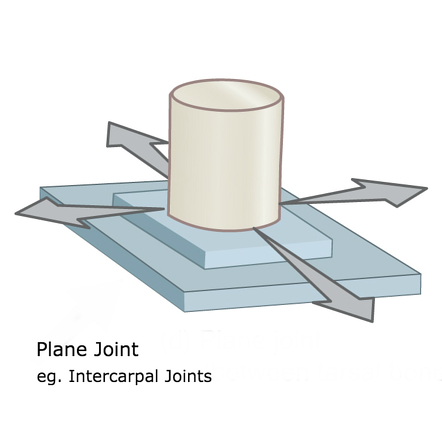
gliding joints
Allows small sliding movements
Bones slide past each other
e.g. wrist, ankle
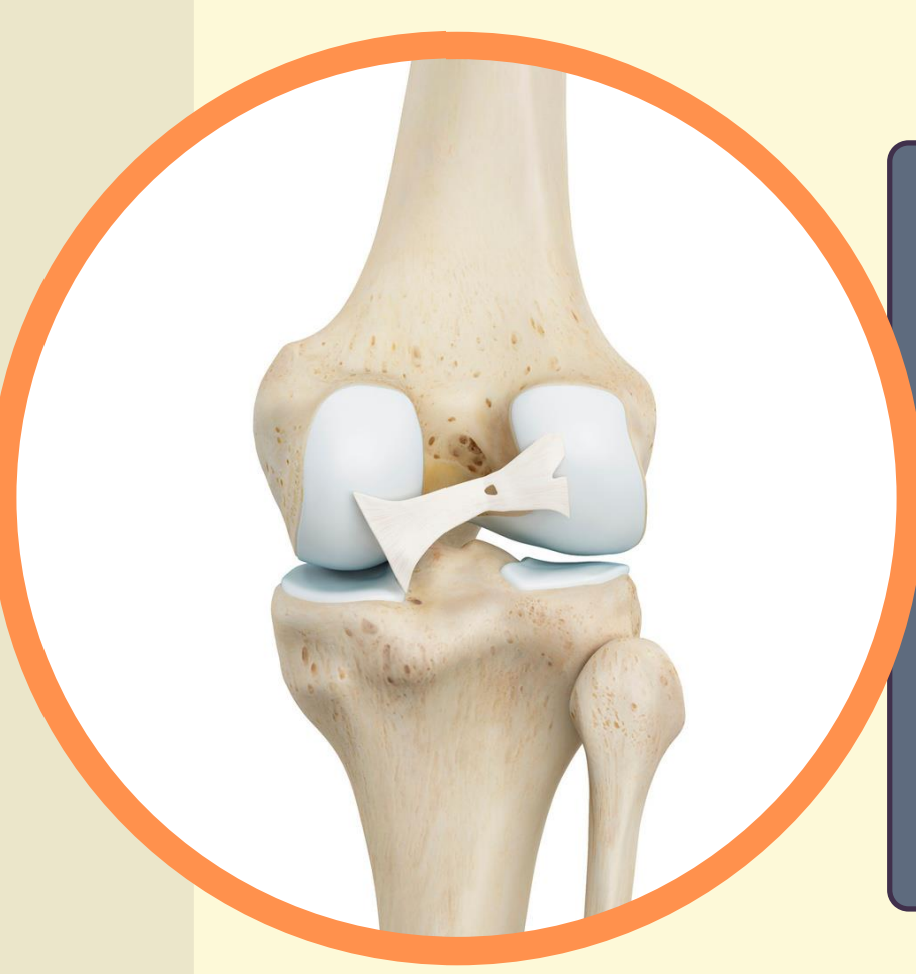
ligaments
strong bands of tissue that connect bones to other bones
help stabilise joints and prevent excessive movement
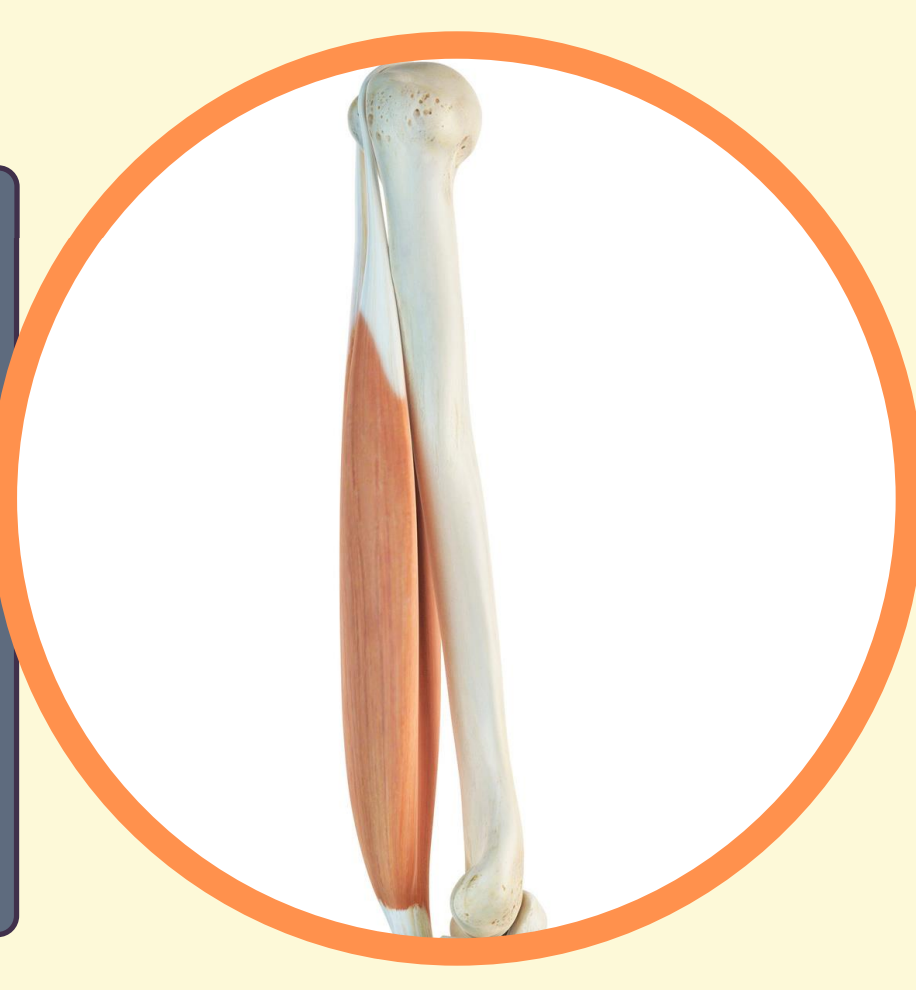
tendons
strong bands of tissue that connect muscles to bones
when muscles contract, they pull on the tendons, causing movement
ectomorph
naturally thin and narrow shoulders and hips
fast metabolism - finds it hard to gain weight/muscle
mesomorph
naturally muscular with broad shoulders and V shape body
gains muscle and strength easily
endomorph
wider hips and a rounder body shape
finds it harder to lose weight but can build muscle well