#1 DOORKNOB STUDY GUIDE (copy)
 Call Kai
 Learn
Learn Practice Test
 Spaced Repetition
 Match
Match Flashcards
 Knowt Play
1/126

Earn XP
Name | Mastery | Learn | Test | Matching | Spaced | Call with Kai | Chat |
|---|
No analytics yet
Send a link to your students to track their progress
127 Terms
Voltage definition
The difference in electrical potential (i.e. pressure/push)
Current Definition
The flow of electrons in a circuit (In Amperes)
What is 1 Ampere?
1 Coulomb (6.242 × 10^18 electrons) per second
Resistance definition
the opposition of flow (impedance)
What is power measured in
Watts (1 joule per second)
How many watts is one horsepower?
about 746 watts
What is the formula for power? (Third favorite formula)
Power = Voltage x Current (P=VI)
What is Ohm’s Law? (Favorite formula?
Voltage = Current x Resistance (V=IR)
What is the difference between conventional flow and electron flow?
Conventional assumes flow from +positive to -negative while electron (the correct way) is from -negative to +positive.
KNOW THE RULES FOR PARALLEL VS SERIES CIRCUITS!!!!!!

How would you properly use a DVOM to measure resistance?
Put it in ohms mode and measure the part with the power to the circuit OFF.
Proper way to measure Voltage with a DVOM
Chose the proper setting (AC/DC) and measure with the DVOM leads in PARALLEL with the circuit.
Proper way to measure Current with a DVOM
Select amps mode with proper setting (AC/DC and mA/A) and measure with DVOM leads in SERIES with the load.
PRACTICE YOUR DAMN CIRCUIT CALCULATIONS CAUSE ITS GONNA BE 20% OF THE EXAM!!!
In general, what is the rule for wiring sizing as it relates to amperage carrying capacity?
The smaller the gauge number of the wire, the more amperage it can safely carry.
Do you need to size up in wiring size if you would like to carry the same amount of amperage over a larger distance?
Yes, depends on how far though.

In general, what are the increments of wire sizing?
2 gauge increments until you get to the ought sizes ( 1/0, 2/0, 4/0, etc…)
What are the different types of shorts?
-Short to power
-Short to ground
-dead short (very little resistance)
-False load (excess resistance)
What is an open circuit?
an incomplete path
Why do manufacturers recommend measuring voltage drop over ohming it out for diagnostic?
Because this wire will read low resistance like normal, indicating no issues. BUT, it will drop a lot of voltage, indicating an issue.

Know your basic wiring diagram symbols
don’t be a doorknob lol

What is the wiring diagram symbol for a fuse?

What are the four different types of blade fuses?
-Mega (Biggest)
-Maxi (big)
-ATO/ATC (medium)
-ATM (mini)
What is the wiring diagram symbol for a fusible link and how does it work?
It is a piece of wire that is 2 gauges smaller than the wire it is fusing. (Ex. 10 ga normal would have 14 ga wire) When the current exceeds the rating, the wire heats up and melts, opening the circuit.

What is the advantage of using a fusible link over a fuse?
A fusible link can handle short spikes where a normal fuse would pop.
What is the wiring diagram symbol for a circuit breaker?

How does a traditional circuit breaker work?
The contacts are connected via a bimetal arm that is made up of two different metals. These metals expand at different times when they heat up. When they get hot, the arm breaks the contacts and opens the circuit. After the arm cools down, it re-engages the contacts and the circuit is closed again.
Why might someone choose to use a circuit breaker over a fuse?
When there is a commonly overloaded circuit since the breaker has no replacement cost. However, they do cost more initially than a fuse.
What is an ECB/PTC?
Electronic circuit breaker / Positive temperature coefficient.
How does an ECB/PTC work and what is the advantage over a mechanical circuit breaker?
Essentially, as temperature rises, so does the resistance. The high resistance blocks the current from flowing. The advantage this has over a traditional circuit breaker is that there are no moving parts (i.e. it is a solid state component)

Switch terminology
NC = normally closed
NO = normally open
Poles = input
Throw = output
SPST = single pole single throw
SPDT = single pole double throw
What is the wiring diagram symbol for a relay?
Know which side is the coil and the contacts.

How does a relay work?
When electricity is run through the coil side, it creates a magnetic field that closes the armature (which closes the contacts).

Why might relays be used over a switch?
When you need to control a large amount of current, a relay is better since a small current can be used to switch the contacts that flow the large current. It is also cheaper than buying a high amperage rated switch.
What are relays commonly used to control?
Horns, cooling fans, and the O2 sensor heater.
What is the wiring diagram symbol for a solenoid?

How does a solenoid work?
When current is applied to the coil, the movable iron core actuates and moves the plunger in or out.
What is a solenoid commonly used for?
Fuel injectors, starter gear engagement.
What is the wiring diagram symbol for diodes?

How does a diode work?
It allows flow in one direction, but blocks flow in the other direction. You would see these commonly used in the rectifier bridge of an alternator.
How do you test a diode with a DVOM and what should a good one read?
Put the DVOM on the diode setting. Place one lead on each side of the diode. Test, then flip the leads the other way around. One way should read OL, and the other way should read 0.1v to 1v.
What is the wiring diagram symbol for a zener diode and how is it different from a normal diode?
It allows current to flow in both directions after a certain threshold has been met.

What is the wiring diagram symbol for an LED?
Light Emitting Diode

What is the wiring diagram symbol for a transistor?

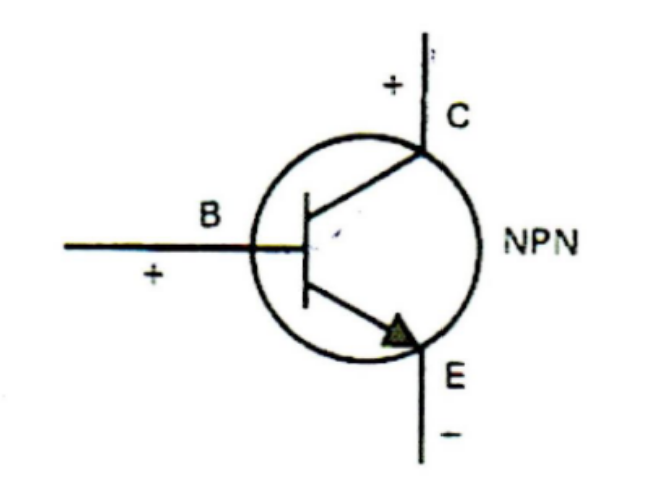
What are the three parts of a transistor?
The base, collector, and emitter.
How does an NPN transistor work?
When current is added to the base (+), current is allowed to flow from the collector (+) to the emitter(-).
How does an PNP transistor work?
When the base (-) is grounded, current is allowed to flow from the emitter (+) to the collector (-).

What is a common use of transistors in your vehicle?
Used as an electronic switch inside the ECU.
What is the wiring diagram symbol for a capacitor?

What does a capacitor do and why might it be used over a traditional battery pack?
It stores electricity like a battery, but it has a much faster charge and discharge cycle than a battery would. Might be used in auto start/stop systems to help the battery.

What is capacitance measured in?
Farads (I coulomb at 1 volt) but you will more commonly see it in mF (microfarads)
What is the wiring diagram symbol for a transformer?

How does a transformer work?
It is typically used to step up/down voltage. It changes the voltage and current of an AC supply using electromagnetic induction. IT HAS NO MOVING PARTS. This is how your house takes the thousands of volts in transmission lines and steps it down to the 120v in your outlets.
-As current flows into the primary windings, it creates a changing magnetic field around the wire.
-The ferromagnetic core strengthens and channels the magnetic flux
-The magnetic field passes through the secondary windings, which induces the new voltage in it through mutual induction.
*Whether it steps up or down depends on the number of turns in the primary and secondary windings.

What is the wiring diagram symbol for a rheostat?

How does a rheostat work?
It is a variable resistor with two terminals. As the wiper moves along the rheostat, the resistance changes, which allows more/less current to flow (Our favorite formula V=IR!!!!). Commonly used to control the brightness of headlights.

What is the wiring diagram symbol for a stepped resistor?

What is the difference between a rheostat and a stepped resistor?
They essentially serve the same function of using resistance to modify current. But, the stepped resistor has set positions. Commonly used to controlling the vehicle’s HVAC settings.
What is the wiring diagram symbol for a potentiometer?
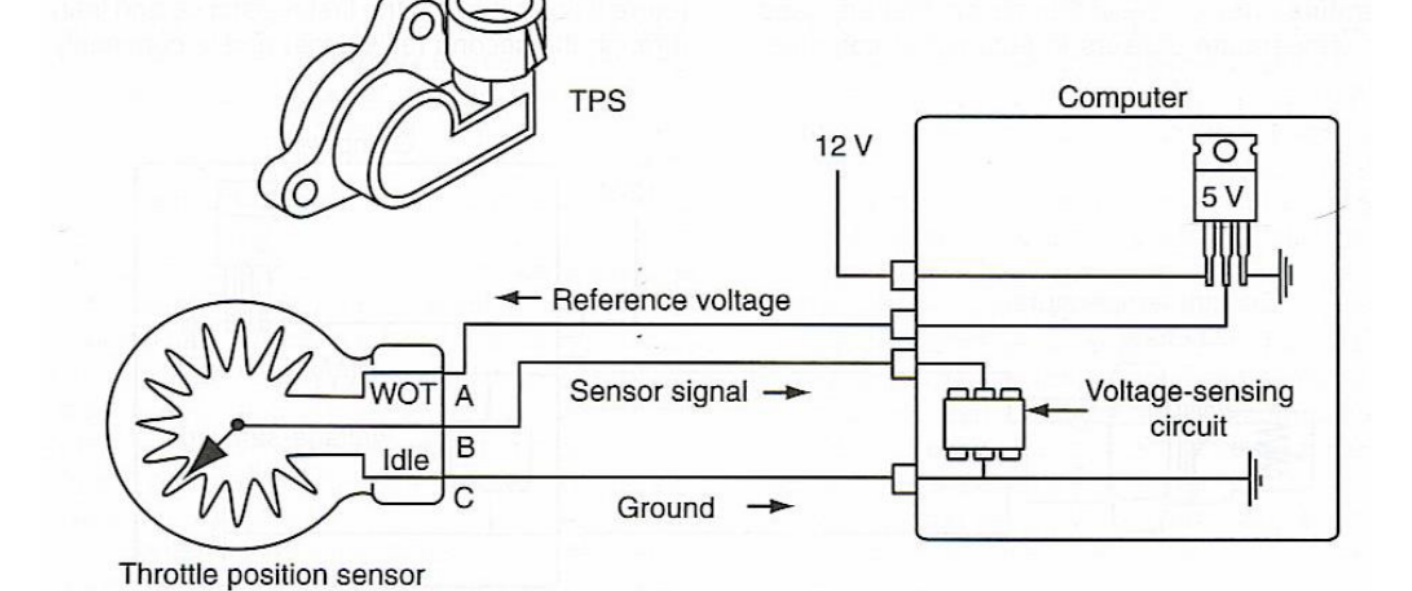
How does a potentiometer work?
It is essentially a variable resistor with three terminals. BUT, it is used to control VOLTAGE instead of CURRENT. Commonly used in sensors such as a Throttle Position Sensor.

How are electrical connectors named?
By their casing and pins.
What is our favorite waterproof electrical connector?
DEUTSCH CONNECTOR!!!!!!

What is the formula for the number of electrons in a shell?
2N² where N is the shell #.
What are the letter representations for the 4 subshells and how many electrons can each subshell hold?
1st - S = 2 electrons
2nd - P = 6 electrons
3rd - D = 10 electrons
4th - F = 14 electrons
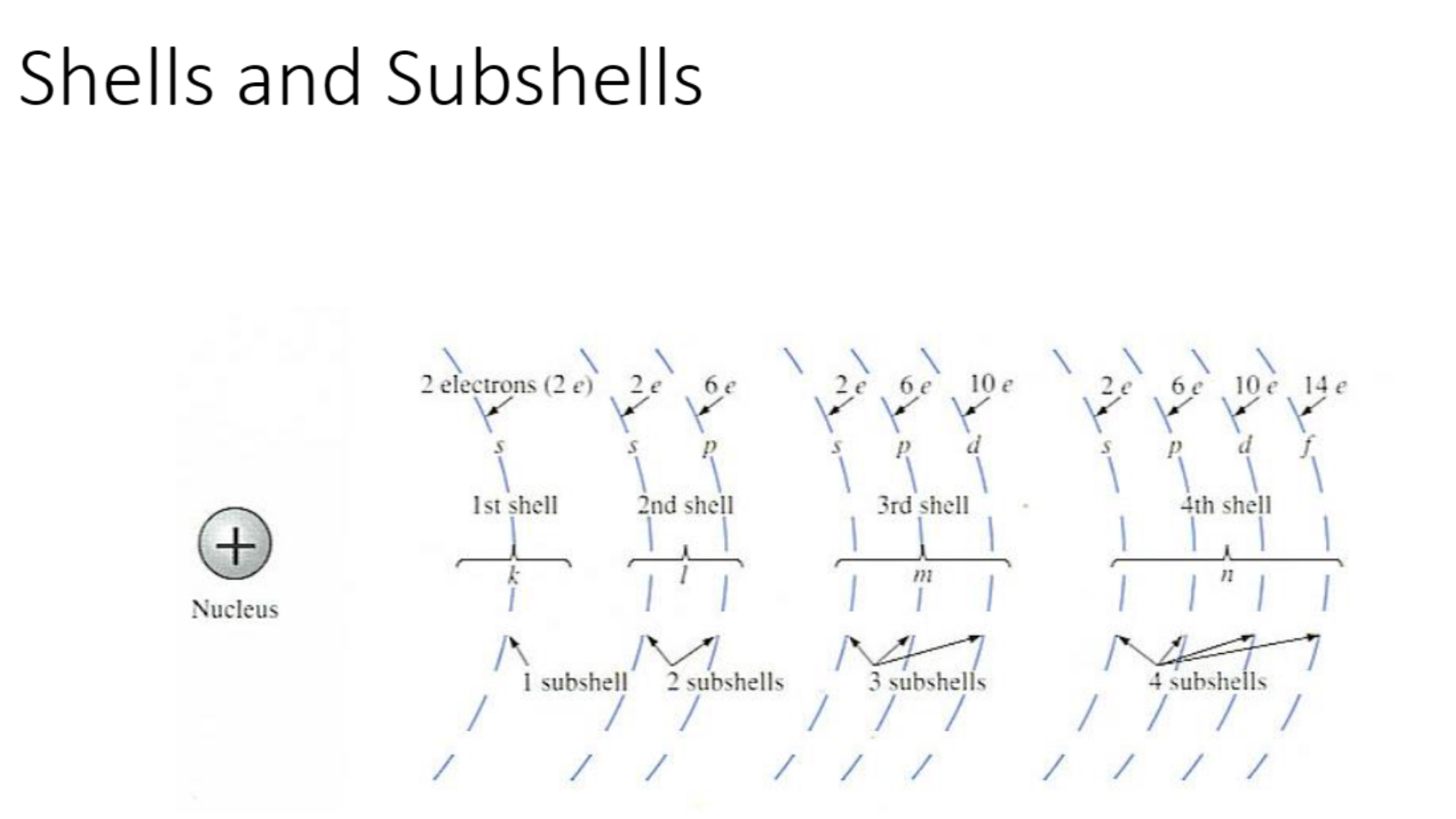
What shell determines the number of valence electrons? How many electrons can it hold at maximum?
The outermost shell.
It can only hold 8 electrons at maximum.
How many valence electrons does a conductor have?
1-3 valence electrons
How many valence electrons does a semi-conductor have?
Exactly 4 valence electrons
How many electrons does an insulator have?
5-8 valence electrons.
What is the electron configuration for oxygen (has 8 electrons)?
1s2, 2s2, 2p4
-Notice how the total adds to 8 (2+2+4)
-The first number is the shell number
-The letter is the subshell
(Yes, THIS WILL BE ON THE EXAM)
What is the electron configuration for titanium (has 22 electrons)?
1s2, 2s2, 2p6, 3s2, 3p6, 3d2, 4s2
-Notice how the total adds to 22 (2+2+6+2+6+2+2)
What temperature is the specific gravity of a battery measured at using a hydrometer?
What is the correction factor for temperature?
EVERY CELL is measured at 80 degrees F.
-Add 0.004 per 10 F over 80 F
-Subtract 0.004 per 10 F under 80 F
What should the specific gravity of every cell in a charged and discharged battery be?
1.260 is 100% charged.
Anything less than 1.120 is discharged

If you can’t access the electrolyte to do a specific gravity test, how would you determine the state of charge using a DVOM?
-AFTER THE SURFACE CHARGE IS REMOVED (by turning the headlights on for 3-5 mins with the engine off), place the DVOM leads across the battery terminals in volt mode.
-12.6v = FULL
-11.7 or less = DISCHARGED

How is the Cold Cranking Amps rating found?
AT 0 DEGREES F, it is the # of amps of continuous current that it can supply for 30 seconds without dropping below 7.2v
How is the Reserve Capacity rating found?
AT 80 DEGREES F, it is the # of mins the battery can last with a 25 amp load until the voltage drops to 10.5v
What is the general rule for the amount of CCA per cubic inch a battery needs in a hot and cold climate?
HOT= 1 CCA per ci
Cold= 2+ CCA per ci
How is the amp/hour rating found?
AT 80 DEGREES F, a constant load (target capacity/20) is applied over 20 hours until the battery hits 10.5v.
What tool do we use to measure the capacity of a battery in a load test?
A VAT (Voltage Amperage Tester). The minuteman in the autolab is a VAT.

How do you perform a load test?
With the battery at 75% minimum charge, apply a load for 15 seconds. If the capacity is good, the voltage should not drop below 9.6v.
How do you determine the load in a load test?
CCA/2
What is the proper way to remove battery cables?
ALWAYS disconnect the negative first to break the ground of the circuit.
What is the proper way to reconnect battery cables?
ALWAYS attach the positive cable first.
In general, what is the maximum allowable voltage drop per connection?
0.1v. Measured with the circuit loaded.
Know the 16 minutes voltage drop test procedures and specifications.
What is the cell voltage of a NiMH battery?
1.2v
What is the advantages and disadvantages of a NiMH battery?
Advantages
-Long life
-High specific energy
Disadvantages
-Cost
-High self discharge
-Bad memory issues
What is the cell voltage of a Li battery?
3.6 v
What are the advantages and disadvantages of a Li battery?
Advantages
Light
High specific energy
low self discharge
no memory
Disadvantages
cost
thermal events (they literally blow up!)
What is the cell voltage of a Lead Acid battery?
2.1v
What is the primary jobs of a battery in a vehicle?
Starting/power with the engine off
absorb voltage spikes
What is a maintenance free battery?
The typical battery that you will find in your vehicle.
Can supply a high load for only a short amount of time (for starting)
Loses little to no water as long as the charging system is working correctly
Has a high shelf life with little to no self discharge
What is a deep cycle battery?
Has a high depth of discharge
They tend to gas, which is why most have a relief valve
What is an AGM battery?
(Absorbent Glass Mat) The electrolyte is absorbed in the separator like a sponge
It will gas if overcharged
Can be mounted in any position
Good vibration resistance
NEEDS TO BE CHARGED AT LESS THAN 14.4v
What are the most common causes of battery deaths?
Sulfation (stays discharged for too long and the chemical reaction cannot be reversed)
Overcharging
Plates get worn and become too thin
Freezing when discharged

What are the two primary jobs of an alternator?
Maintain battery charge
Provide ALL of the electrical power to the vehicle while the engine is running
What type of current does the alternator put out at the stator windings?
3 phase AC current
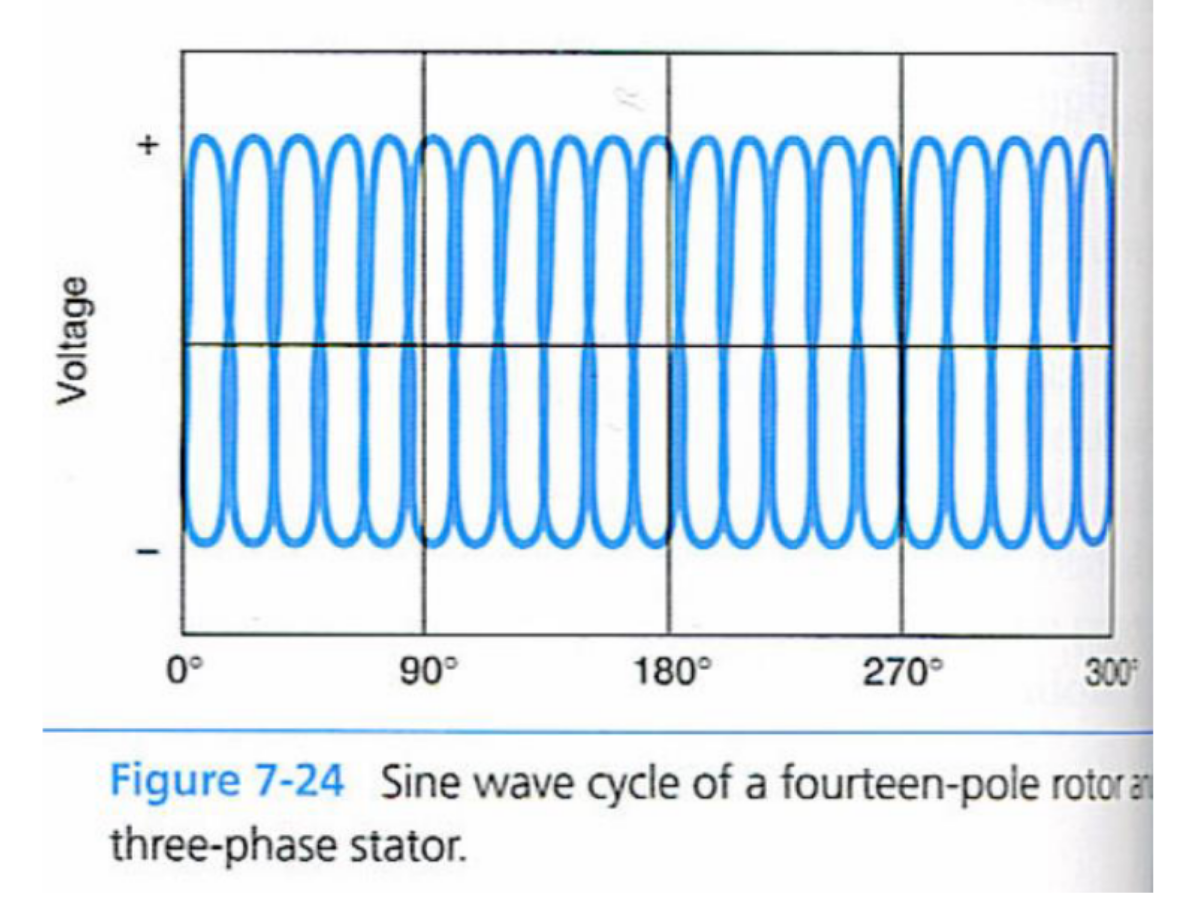
What type of current does the alternator put out at the battery terminals
DC current

Where is the magnetic field generated in the alternator?
Inside of the rotor

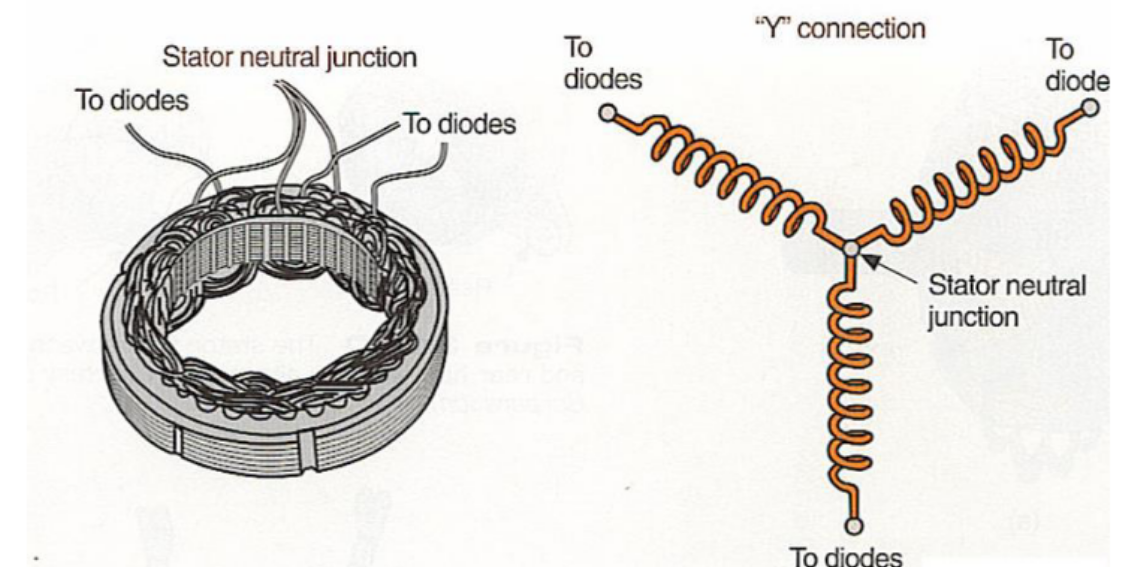
How many windings are in the stator of an alternator?
3 windings

What are the two rotor winding configurations?
WYE and Delta
What is the advantage of having a WYE winding configuration?
Provides more power at lower RPM’s (where your car is most commonly running at)
Most common type