CAE Exam 1 Extra terms
 Call Kai
 Learn
 Practice Test
 Spaced Repetition
 Match
 Flashcards
 Knowt Play
1/54

There's no tags or description
Looks like no tags are added yet.
55 Terms
clearance fit
hole larger than the shaft
transition fit
depending on dimensions, teh fit can have either clearance or interference
interference fit
the shaft is larger than the hole
RC fits
running and sliding clearance fits
tighter to looser clearance fits from RC2 to RC8
FN fits
force and shrink fits, used when a more secure fit is needed
higher FN means a tighter fit
form control
shape of an indivdual feature
orientation control
angle or alignment relative to a reference
location control
position of a feature
runout control
variation as a part rotates around an axis
how to designate purchased part
using original equipment manufacturer (OEM) designation in BOM
R_a
averages absolute deviations
R_q
squares deviations before averaging and taking the square root, so extreme peaks and valleys have a stronger influence
R_z
a measure based on surface peak-to-peak valley heights
skewness
describes asymmetry, not peakedness
kurtosis
describes the peakedness and the distribution’s tails
waviness
more widely spaced surface variations than roughness
cutoff length
length used to evaluate the surface profile
lapping
usues abrasive particles suspended in a fluid or slurry to produce very fine surfaces

honing
finishes internal cylindrical surfaces and often creates a cross-hatched texture

grinding
uses an abrasice wheel to remove material

broaching
uses a multi-tooth cutting tool to produce a profile, often an internal keyway or spline

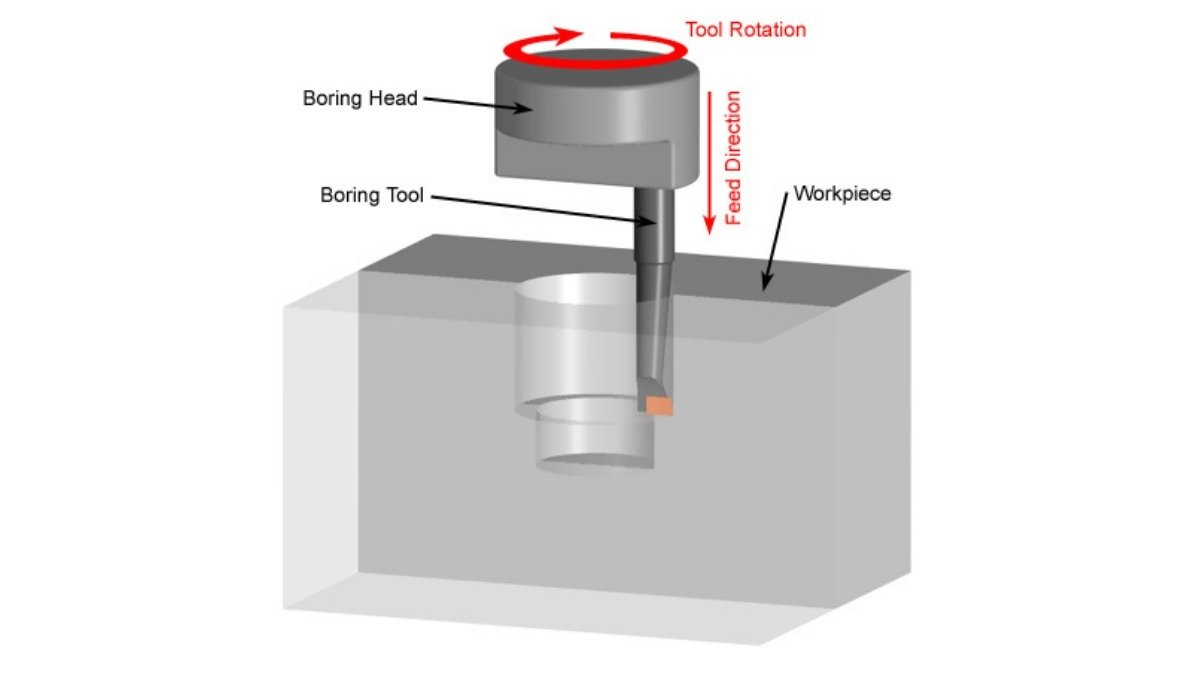
boring
enlarges or finishes an existing hole using a cutting tool
drilling
creates a new hole
reaming
finishes an sizes an existing hole

milling
uses a rotating multi-tooth cutter to remove material

turning
uses a cutting tool and rotating workpiece, commonly to produce cylindrical shapes

drilling vs. boring
drilling creates a hole, boring enlarges or finishes an existing hole
reaming vs boring
reaming sizes and finishes a hole, boring uses a cutting tool to enlarge or modify the hole
honing vs. lapping
both finishing processes, but honing commonly produces a cross-hatched internal surface
broaching vs. milling
broaching uses a succession of cutting teeth, often to make a specific profile in one pass; milling uses a rotating cutter
abrasive vs. nonabrasive
lapping, honing, and grinding are abrasives. broaching uses cutting teeth rathr than abrasice particles as its primary cutting mechanicsm
planing
the workpiece moves linearly relative to the cutting tool
shaping
the tool moves linearly relative to a stationary workpiece
extrusion
forces a billet through a die to make a long product with a nearly constant cross-section
rolling
passes material between rolls to reduce thickness or change cross-section
close-die forging
compresses metal within shapes dies to create a component
sand casting
pours molten metal into a sand mold to form a part
cope (sand casting)
upper half of the mold
Connecting rods and other complex automotive parts are commonly associated with what metal forming process
Connecting rods and other complex automotive parts are commonly associated with closed-die forging
drag (sand casting)
lower half of the mold
core (sand casting)
creates an internal cavity or hollow feature in the final casting
riser (sand casting)
reservoir of molten metal that helps compensate for shrinkage during solidification
UNC, UNF, UNEF
UNC has fewer threads per inch than UNF.
UNF has fewer threads per inch than UNEF.
More threads per inch means a smaller pitch.
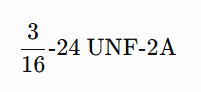
reading unified thread designations
3/16 = nominal diameter in inches
24 = 24 threads per inch
UNF = Unified National Fine
2 = thread fit/tolerance class
A = external thread (B = internal thread)
diameter used to calculate transverse shear
minimum minor diameter
tensile stress area
represents an effective cross-sectional area for tensile loading of a threaded fastener. It is smaller than the area calculated using the nominal major diameter
tap
cuts or forms internal threads inside a hole
die
cuts or forms external threads on a rod or shaft
taper tap
has a long lead-in and starts threads gradually
plug tap
general purpose tap
bottoming tap
has a short lead-in and is used to cut threads close to the bottom of a blind hole, usually after threads have been started

metric thread designations
M means metric thread.
14 means the nominal diameter is 14 mm.
2.0 means the thread pitch is 2.0 mm.
bolt preload
the initial tension applied to a bolt when tightening it
bolt proof load
the load fastener is designated to withstand without permanent deformation under ther specific proof-load test conditions

open die forging
metal-forming process where a heated metal billet is shaped between flat or simple dies that do not fully enclose the material