12.1-12.2- Genes and fertilization
 Call Kai
 Learn
 Practice Test
 Spaced Repetition
 Match
 Flashcards
 Knowt Play
1/59

There's no tags or description
Looks like no tags are added yet.
60 Terms
Genetics
the scientific study of heredity and variation
Heredity
is the transmission of traits from one generation to the next
Variation
the difference (in appearance) that offspring show from their parents and their siblings.
Children do not inherit particular physical traits they inherit
genes from their parents
Genome
all the DNA in a cell
with humans the genome
is considered to be all the genetic materials, which includes a complete set of human genes found in the nucleus of every human cell
Genome does not include
DNA found in the mitochondria
Genes
are the units of heredity and are made up of segments of DNA
Most genes program cells
to synthesize proteins
the cumulative action and interaction of all proteins produces an organisms
inherited traits
DNA is packaged into
Chromosomes
Locus is
the specific location of a gene on a chromosome
Gametes
(sperm and eggs) reproductive cells
asexual reproduction
a single individual passes on 100% of its genes to its offspring
there are no gametes in
asexual reproduction
clones
the genetically identical offspring of asexual reproduction
sexual reproduction
two individuals pass on 50% of their genes to their offspring
Gametes fuse to form offspring
in sexual reproduction
Offspring is not genetically identical
sexual reproduction
Human somatic (body cells contain)
46 total chromosomes
Somatic cells inherit ___ pairs
23 pairs of chromosomes, 22 autosomes and 1 pair of sex cells
Karyotype
is an ordered display of the pairs of chromosomes from a single cell
the two chromosomes in each pair are called
homologous chromosomes
Homologous chromosomes have the same
length and centromere position. they also have the same staining pattern and location of genes controlling the same traits
Karyotype preparation
Prepared from somatic cells, stimulated into mitosis but paused at metaphase. a stain is applied and then they are viewed under the microscope.
Karyotyping is used for
screening for defective or abnormal numbers of chromosomes
Sex chromosomes
contain genes that help determine the sex of the individual called X and Y
Other genes are found on the X chromosome such as
genes for color vision
Human females have
(XX)
Human Males have
(XY)
Most genes carried on the X do not
have counterparts on the Y and the Y has genes lacking on the X
Autosomes
non sex cells
Each pair of homologous chromosomes
includes one from each parent. 46 total, 23 from each parent bonded to the other
Diploid cell (2n)
2 sets of chromosomes, 46 for humans. the 2 sets part means the 2 sets of 23 (mother is duplicated)
after the S phase of the cell cycle
each chromosome is replicated
Each replicated chromosome consists of
two identical sister chromatids

what is going on
The cell is depicted after chromosome duplication. Each homologous is composed of one chromosome from the maternal set and one from the paternal.
a haploid cell (n) has
one set of chromosomes, n= 23
each set of 23 chromosomes
22 autosomes and 1 sex chromosome
in an unfertilized egg the sex chromosome is
always an X
in a sperm cell
the sex chromosome can be either X or Y
the fertilized egg
zygote
a zygote is
diploid (full 46 with 23 from each parent), and it develops into multiple cells through mitosis
the three major types of sexual life cycles differ in
the timing of meiosis and fertilization
In the life cycle of animals the gametes
are the only haploid cells
In the life cycle of plants and some algae
an alteration of generations occurs
In the life cycle of plants and some algae there is both
a diploid and a haploid multicellular stage
In the life cycle of plants and some algae the multicellular diploid organism
is called the sporophyte that makes haploid spores
In the life cycle of plants and some algae each haploid spore
grows into a muticellular hapoid organism called a gametophyte
In the life cycle of plants and some algae the gametophyte
makes haploid gametes by mitosis
In the life cycle of plants and some algae when the haploid gamete is fertilized
a diploid sporophyte is produced that can begin the cycle over again, the sporophyte produces the gametophyte that produces the sporophyte
life cycle of most fungi and some protists a single celled diploid zygote
never divides into a muliticellular organism
life cycle of most fungi and some protists the diploid zygote produces
haploid cells by meiosiss
life cycle of most fungi and some protists each haploid cell
grows by mitosis into a multicellular organism that is still haploid
life cycle of most fungi and some protists the multicellular haploid organism
produces haploid gametes by mitosis
life cycle of most fungi and some protists fertalization of haploid gametes results
in a diploid zygote
in all three life cycles
only diploid cells can undergo meiosis, haploid cannot because they only have one set of chromosomes that cannot be further reduced
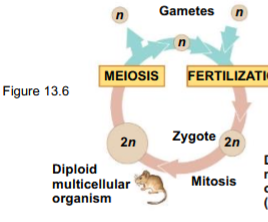
what type of life cycle is this
animal

what type of life cycle is this
plants and some algae

what type of life cycle is this
most fungi and some protists