Pathology - Unit 4, Wk 13 Urinary Pathology
 Call Kai
 Learn
 Practice Test
 Spaced Repetition
 Match
 Flashcards
 Knowt Play
1/44

Earn XP
45 Terms
Where do urinary Calculi (kidney stones) most commonly form?
most commonly form in the kidneys
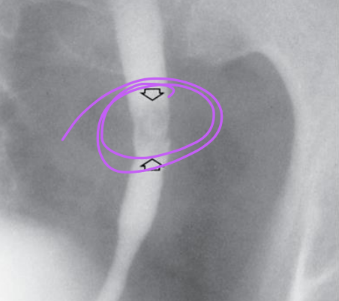
Urinary calculi are often ___________ until they lodge in the ureter and cause partial obstruction (extreme pain)
Asymptomatic
Hydronephrosis:
Distention of the renal pelvis and calyces of the kidneys that results from some obstruction of the ureters or renal pelvis.

What causes hydronephrosis?
Calculi
Tumors
Structural abnormalities
Hydronephrosis can occur along with ____.
Hydroureter

Renal Cyst:
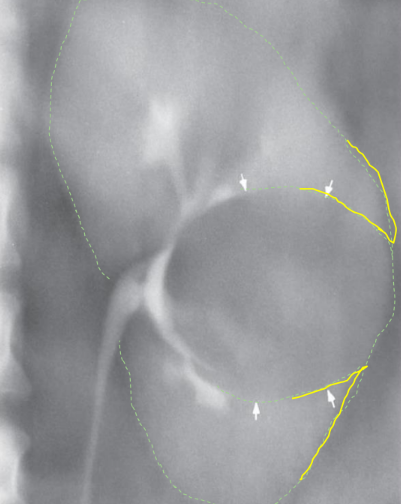
Most common unifocal mass of the kidney; fluid-filled.
“beak sign” on radiograph
What does unifocal mean?
Occurring in a single location
Polycystic Kidney Disease:
Hereditary disorder marked by multiple cysts of varying size scattered throughout one or both kidneys
“Bunch of grapes” scattered throughout the kidney
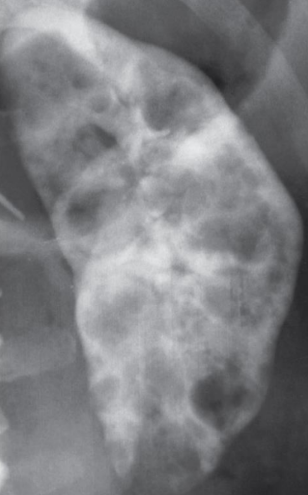
What is the most common cause of enlarged kidneys?
Polycystic kidney disease
Acute Renal Failure:
Rapid deterioration in kidney function
(Kidneys are full & have not drained into the bladder)
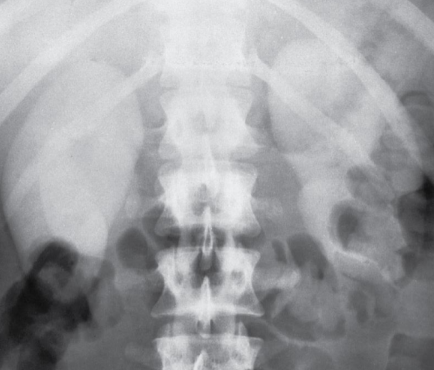
What does acute renal failure result in?
Results in the accumulation of nitrogen-containing wastes in the blood
What can cause Acute Renal Failure (4)?
Impaired blood flow
Infection to kidneys
Ureteral obstruction
Tylenol overdose
What kind of exam is contraindicated with acute renal failure?
IVU (cannot filter out the contrast)
Treatment for acute renal failure includes:
medication and dialysis
Malrotation:
Abnormal position of the kidney in relationship to the psoas muscle or longitudinal or horizontal axis.

Ectopic Kidney:
Abnormal position, such as in the pelvis (pelvic kidney), or high near the diaphragm (intrathoracic kidney).

Horseshoe Kidney:
Congenital fusion of the kidneys during the development of the fetus, usually at the lower poles.
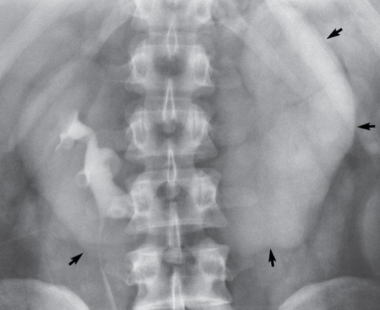
Does horseshoe kidney affect function?
Usually not
True or False:
Kidneys typically ascend to their normal position in the abdomen when baby is born
False. They do not ascend.
Duplication:
Involves two ureters and/or the renal pelvis originating from the same kidney.

What is the most common type of congenital kidney anomaly?
Duplication
True or false:
Duplication usually does not cause health concerns for the patient
True.
Cystitis:
Inflammation of the urinary bladder caused by a bacterial or fungal infection.

Cystitis is more common in _____ due to their _____ urethras.
Females
Shorter
What are some symptoms of cystitis (3)?
Urinary frequency
Urgency
Burning sensation
A cystogram or IVU may show_________, __________________, and __________
mucosal edema
irregular bladder wall
diminished size
Glomerulonephritis:
Inflammation of the capillary loops of the glomeruli of the kidneys.
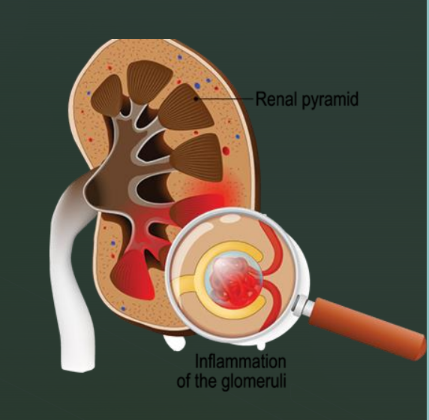
Which modalities best demonstrate glomerulonephritis?
Sonography or Nud Med
What does Glomerulonephritis cause?
Oliguria (smaller than normal amount of urine)
What does Acute Glomerulonephritis look like?
Enlarged, darkened (echolucent) kidney.
What does Chronic Glomerulonephritis look like?
Small kidney size caused by fibrosis and cortex destruction from long-standing inflammation.
______________ involves the glomeruli and tubules themselves.
Glomerulonephritis
Pyelonephritis:
Inflammation of the kidney and renal pelvis caused by pyogenic bacteria.
Primarily affects the interstitial tissue between the nephron tubules

Characteristics of pyelonephritis include:
patchy and rounded calyces with atrophy
Renal Carcinoma (aka Hypernephroma) :
The most frequent type of malignant tumor of the kidney.
best seen on a CT
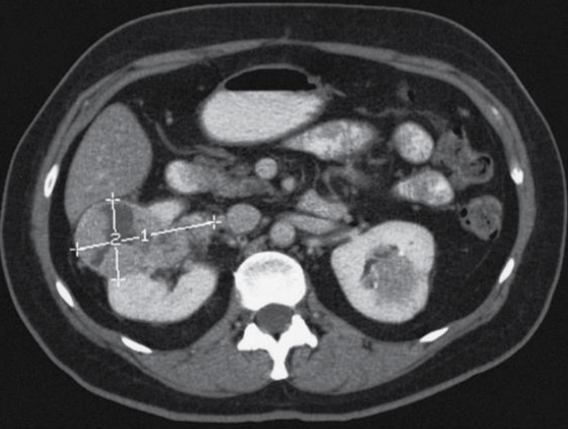
________ is 3x more frequent in males
Renal cell carcinoma
Symptoms of renal carcinoma:
flank pain and hematuria
Describe renal carcinoma.
typically a large irregular mass with internal areas of necrosis and hemorrhage
Carcinoma of the Bladder is a tumor that’s usually diagnosed after the age of ___ and usually in ___
50
men
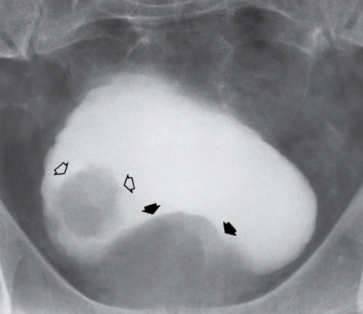
What is the single biggest risk factor for bladder cancer?
smoking (kidneys try to filter out the tobacco toxins)
Vesicorectal (vesicocolonic) Fistula:
Abnormal communication between the bladder and rectum/aspects of colon.

Vesicorectal fistulas may result from (4):
diverticulitis
colitis
trauma
invading carcinoma
Vesicorectal fistulas typically form at an area of ____ or inflammation where _____ can occur.
Infection
Lesions/abscesses
Which condition may demonstrate a "beak sign" on the radiograph?
renal cyst
True or False:
Acute renal failure results in the accumulation of calcium-containing wastes in the blood
False.
nitrogen-containing wastes