Early 1800s U.S. History Review
 Call Kai
 Learn
 Practice Test
 Spaced Repetition
 Match
 Flashcards
1/34

Earn XP
Description and Tags
A set of vocabulary flashcards reviewing key political figures, landmark Supreme Court cases, policies, and events in early nineteenth-century American history.
35 Terms
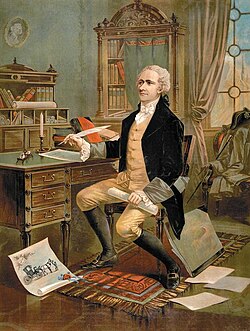
Alexander Hamilton
The first Secretary of the Treasury who established the Bank of the United States to pay off state debts.

Bank of the United States
The financial institution established by Alexander Hamilton to handle and pay off state debts.

Compromise of 1790 (Capital Location)
The agreement made by Alexander Hamilton promising that the new capital of the United States would be situated in the South in exchange for support of his debt plan.

Thomas Jefferson
The first Secretary of State and 3rd President of the United States, who advocated for the common man, led the Democratic-Republicans, and oversaw the Louisiana Purchase.
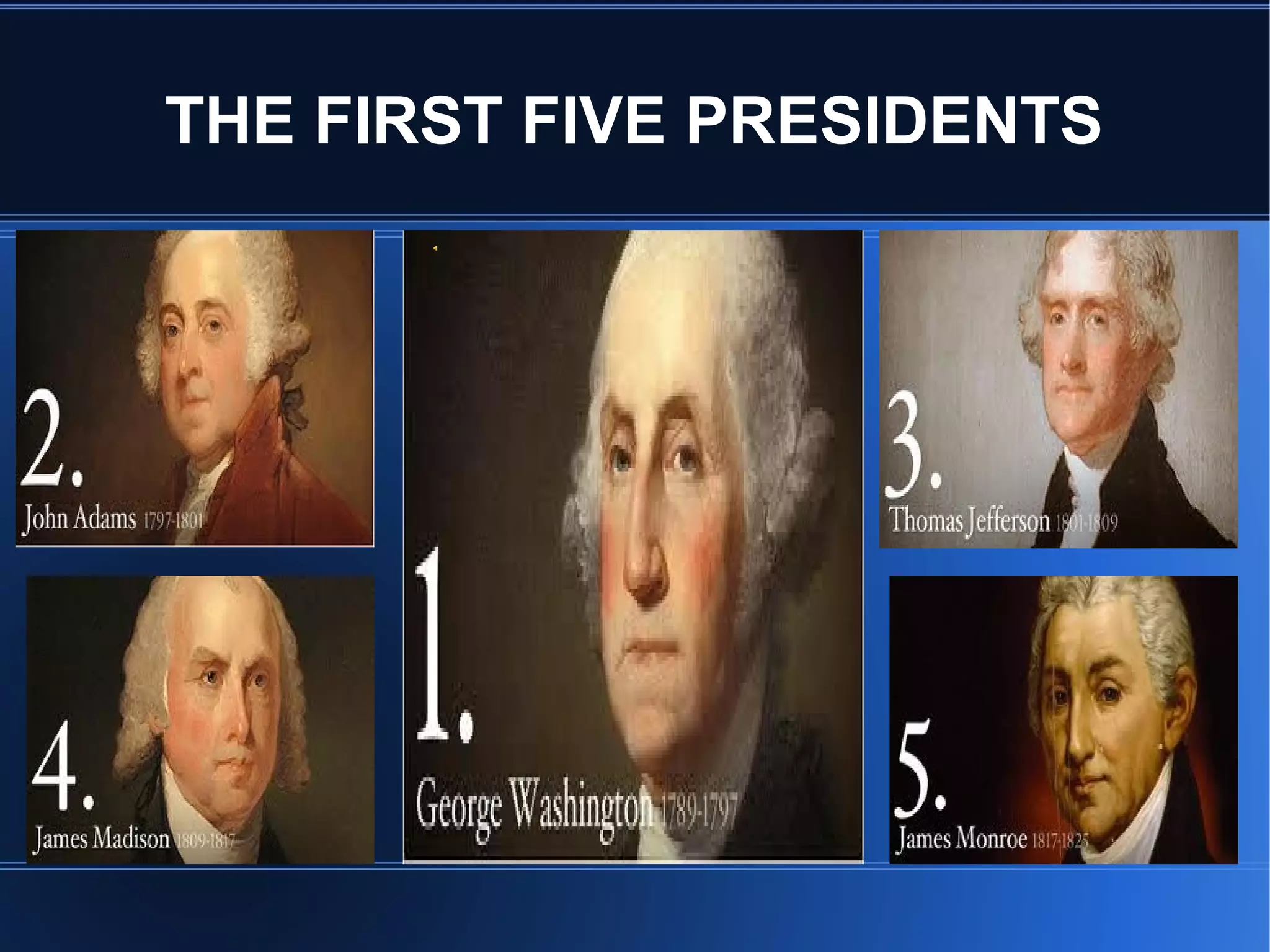
First 5 presidents
George Washington
John Adams
Thomas Jefferson
James Madison
James Monroe

Whiskey Tax
A federal tax created by Secretary of the Treasury Alexander Hamilton that provoked anger

Quasi-War
An undeclared naval conflict between the United States and France triggered after French officials demanded a bribe from an American delegation sent by John Adams.

Federalist Party
A political party led by Alexander Hamilton and John Adams that supported a strong federal government, governance by the elite, and drew support primarily from businessmen and bankers.

Democratic-Republican Party
A political party led by Thomas Jefferson and James Madison that supported strong state governments, a weak federal government, and drew support primarily from farmers.

John Marshall
The Chief Justice of the Supreme Court during the early 1800s whose major rulings strengthened the powers of the federal government and the judiciary.

Judicial Review
The principle established in Marbury v. Madison giving federal courts the power to declare laws constitutional or unconstitutional.

Marbury v. Madison
The landmark Supreme Court ruling establishing that federal courts have the authority to declare acts of law constitutional or unconstitutional.

McCulloch v. Maryland
The Supreme Court decision establishing that individual states are prohibited from levying taxes on agencies of the federal government.

Gibbons v. Ogden
The Supreme Court ruling confirming that Congress has the power to regulate interstate trade through implied powers.

Election of 1800
A watershed presidential election that represented the first peaceful transfer of governing power from one political party to another in U.S. history.

Louisiana Purchase
The territory acquired from France under President Thomas Jefferson that doubled the physical size of the United States.

Lewis and Clark Expedition
The exploratory mission commissioned by President Thomas Jefferson to investigate and map the newly acquired Louisiana territory.

Fort McHenry
The defensive fortification in Baltimore Harbor that withstood attack during the War of 1812, inspiring the writing of the defense of Baltimore.
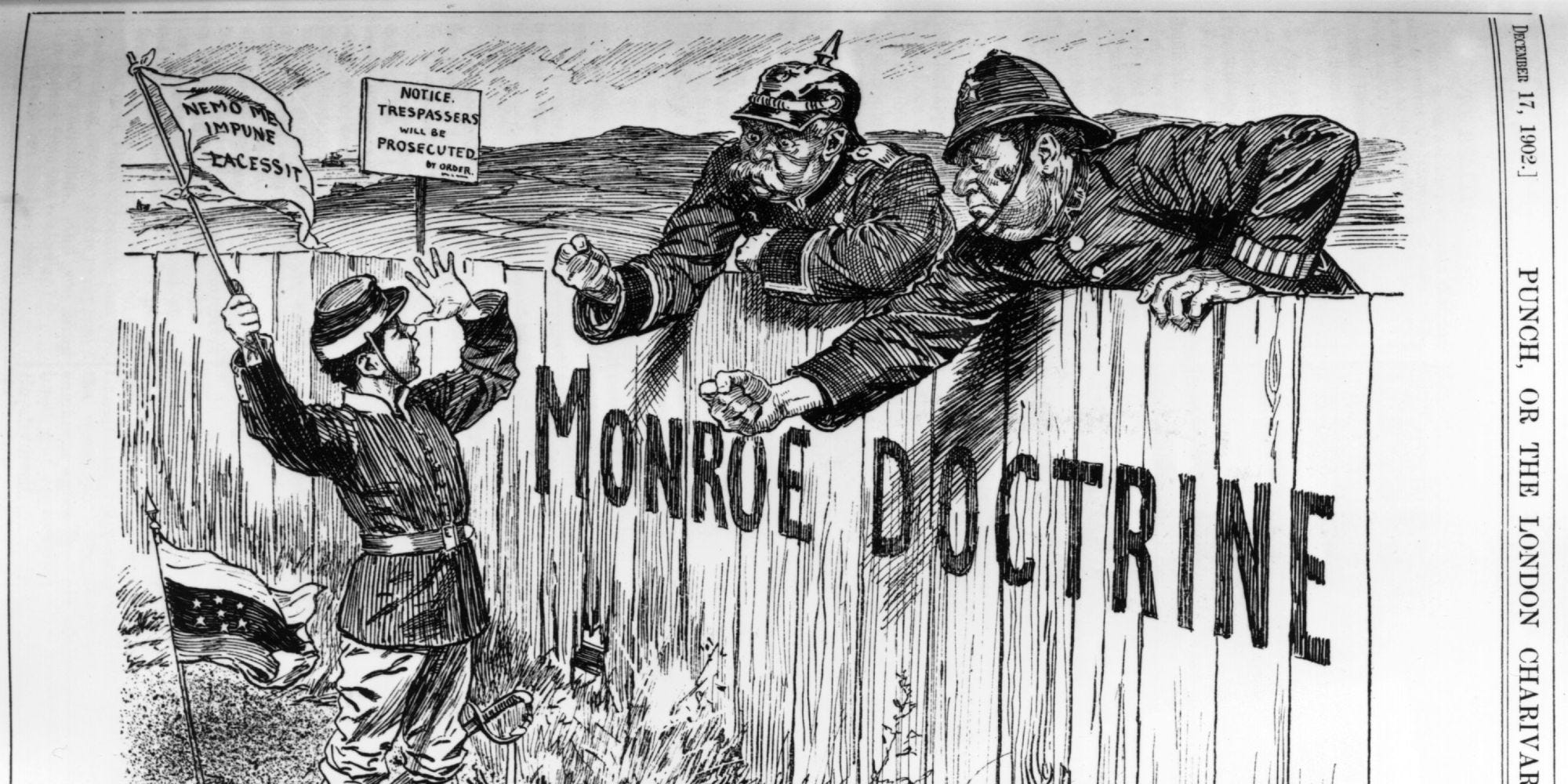
Monroe Doctrine
The foreign policy assertion stating that no European power could colonize the Western Hemisphere or the United States would retaliate.
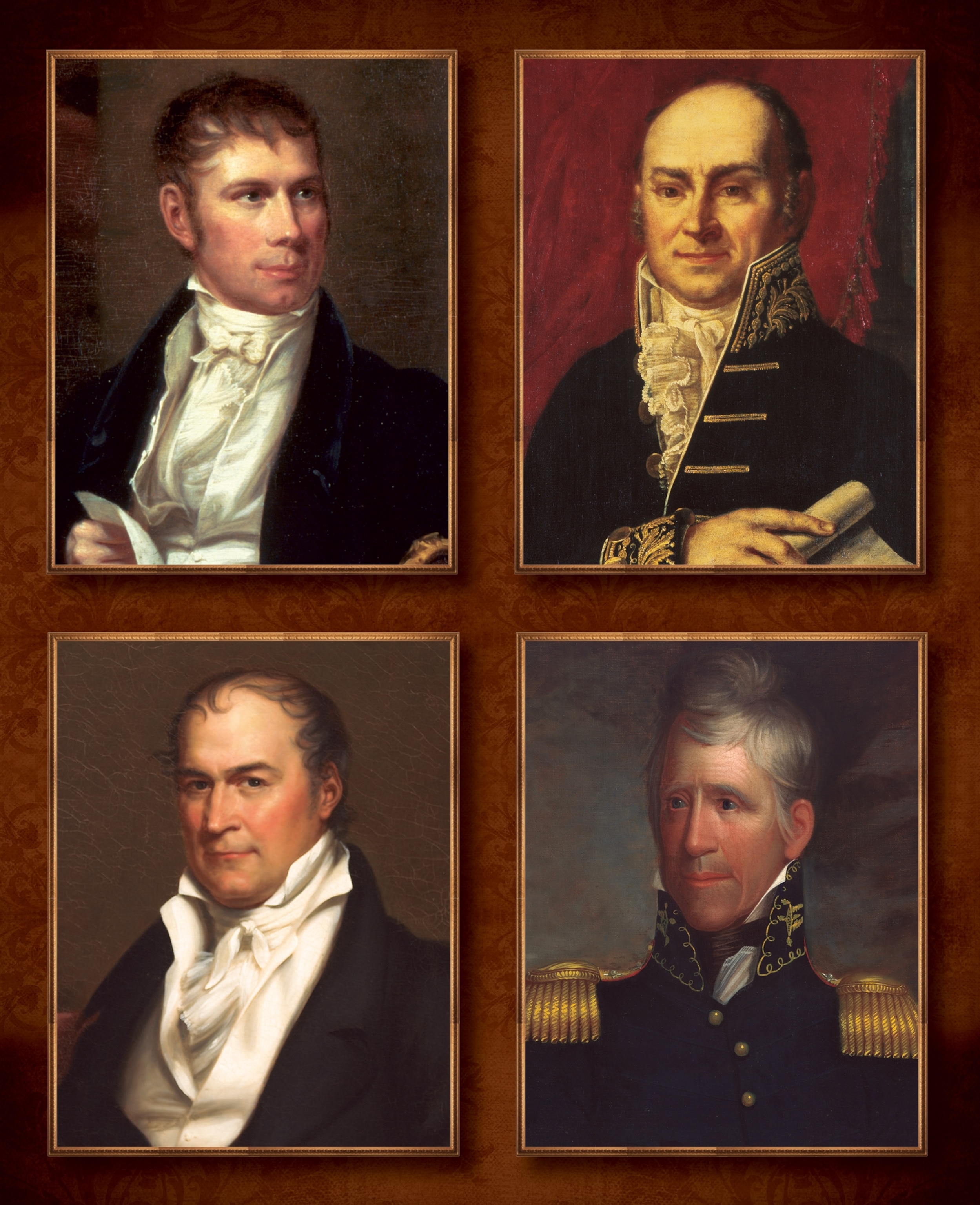
Corrupt Bargain
The alleged agreement during the election of 1824 in which John Quincy Adams appointed Henry Clay as Secretary of State in exchange for Clay securing his victory in the House of Representatives.

Worcester v. Georgia
The Supreme Court case deciding that the United States had entered treaties with Indian Tribes and therefore lacked the authority to seize their land.

Trail of Tears
The forced relocation march Native Americans were compelled to make following their eviction from ancestral lands to designated Indian Territory.
Nullification
The doctrine asserting that individual states have the authority to declare a federal law unconstitutional, as attempted by South Carolina regarding tariffs.
Spoils System
The practice of using public appointments and government offices to reward supporters and loyal members of the victorious political party.
Washington put down whiskey rebellion by
Sending 12,000 troops to quell the uprising against the federal tax on whiskey.

France and Britain
Two countries at war; the US did not take a side. Remained neutral but supported both through trade.
Sedition Act
A controversial law passed in 1798 that made it a crime to publish false, scandalous, or malicious writings against the government or its officials, threatening free speech.
Know political parties of : James Madison
Thomas Jefferson
John Adams
George Washington
Andrew Jackson
Alexander Hamilton
James Madison-Democratic Republican
Thomas Jefferson- Democratic Republican
John Adams-Federalist
George Washington- No party affiliation
Andrew Jackson- Democratic Party
Alexander Hamilton- Federalist
Embargo Act
A law passed in 1807 that prohibited American ships from trading in foreign ports, intended to protect American interests but led to economic hardship.
Two causes of the War of 1812
The impressment of American sailors by the British navy and trade restrictions imposed by Britain on American shipping.
1824 Election
A pivotal presidential election in which John Quincy Adams was elected over Andrew Jackson, despite Jackson receiving more popular votes. This election is known for the controversial House of Representatives decision that followed.
what did south carolina try to nullify
the Tariff of Abominations
Secede
South Carolina threatened to leave
How did Jackson respond to South Carolina threatening to secede
He issued a strong statement and prepared federal troops to enforce the law. Additionally, he implemented the Force Bill, allowing him to use the military to ensure compliance.
Label: Washington DC, Oklahoma, New Orleans, Louisiana Purchase, South Carolina, Whiskey Rebellion, Baltimore