Unit 3 AP Psych = Biology/Neuroscience
 Call Kai
 Learn
 Practice Test
 Spaced Repetition
 Match
 Flashcards
 Knowt Play
1/37

There's no tags or description
Looks like no tags are added yet.
38 Terms
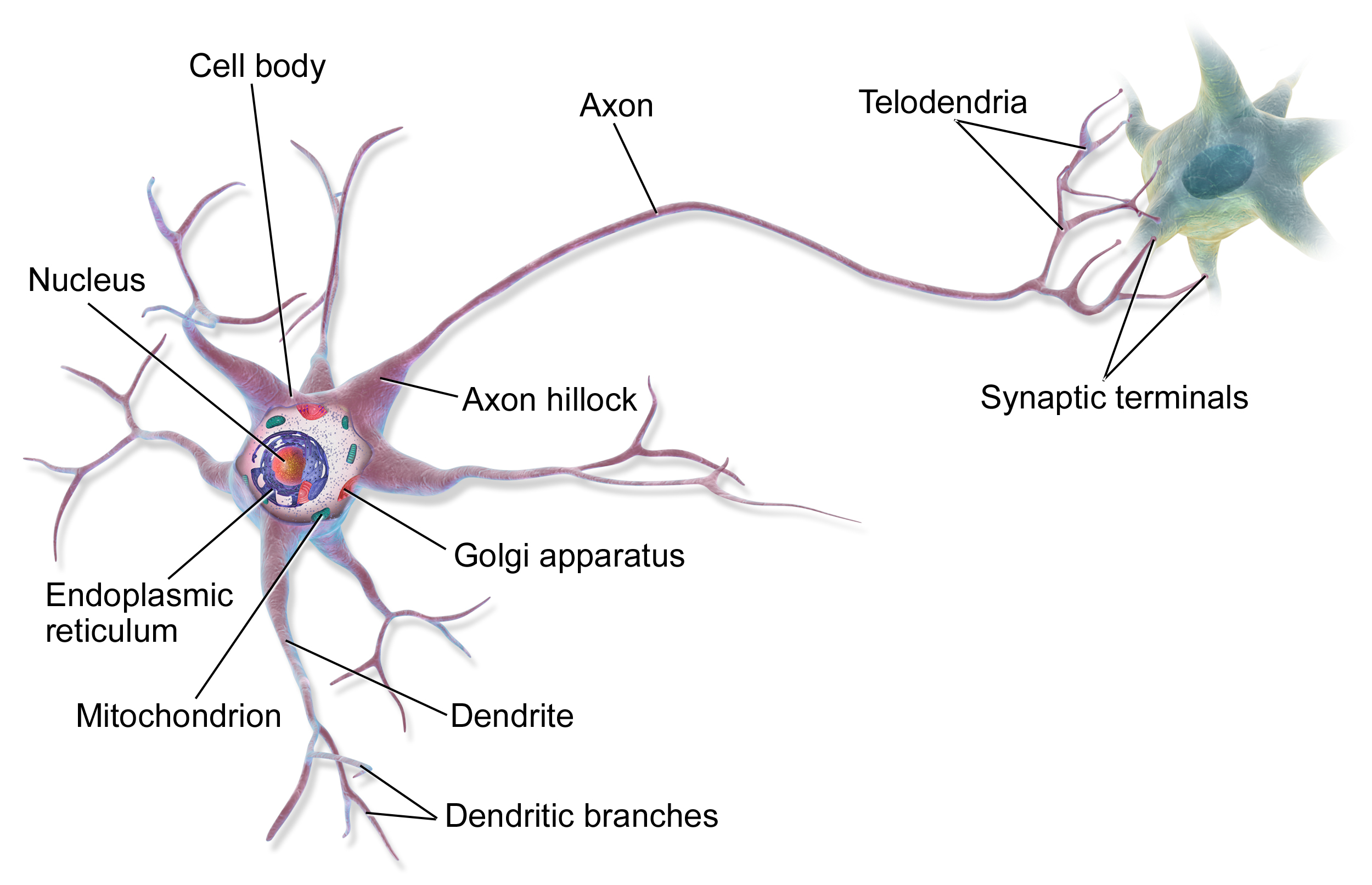
Neuron
A nerve cell that sends and receives information, nervous system messenger.
Dendrites
Branch-like parts that receive messages and bring them toward the cell body, Detect.

Axon
The long part of a neuron that carries messages away from the cell body, Away.

Myelin Sheath
Fatty covering around the axon that protects it and makes messages travel faster, like insulation around a wire.

Synapse
The place where one neuron communicates with another neuron.

Neurotransmitters
Chemical messengers that carry signals from one neuron to another across a synapse, transmit messages.
Reuptake
When the sending neuron takes leftover neurotransmitters back in, take back up.
Synaptic Gap
The tiny space between two neurons that neurotransmitters travel across. space between neurons.

Acetylcholine (ACh)
Muscle & memory. Low ..linked to Alzheimer’s.
Dopamine
ovement, learning, attention, and emotion. Too much is linked to schizophrenia; too little to Parkinson’s. movement + attention.
Serotonin
Helps control mood, hunger, sleep . Low levels are linked to depression. mood + sleep.
Norepinephrine
alertness and arousal. Low levels can be linked to depressed mood. alert.
GABA (gamma-aminobutyric acid)
Slows/calms down brain Too little is linked to seizures, tremors, and insomnia. brake.
Glutamate
Excites the brain and memoryToo much can cause migraines or seizures. gas pedal.
Endorphins
paint relief and pleasure natural painkillers / runner’s high.
Endocrine System
A system of glands that releases hormones into the bloodstream. hormone system.
Hormones
Chemical messengers that travel through the bloodstream and affect the body and brain.
Adrenal Glands
Glands above the kidneys that release stress hormones like adrenaline. Memory: adrenaline = emergency.

Pituitary Gland
The “master gland” that controls many other endocrine glands. It is controlled by the hypothalamus. master gland.

Hypothalamus
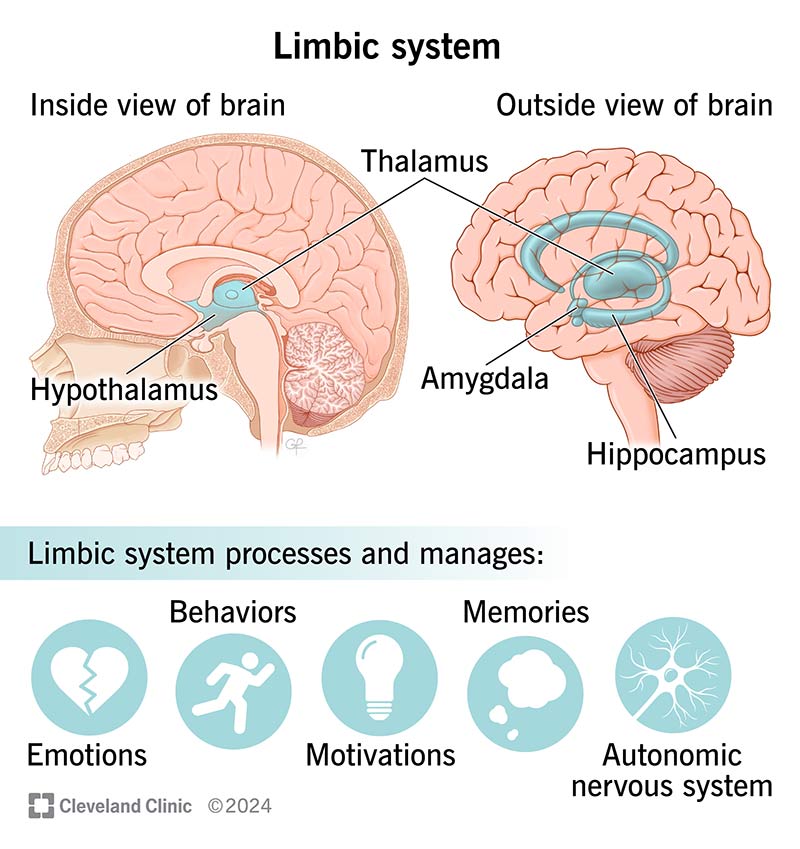
Helps control hunger, thirst, body temperature, and the endocrine system. body’s thermostat and survival manager.
Brainstem
The oldest part of the brain that controls basic survival functions and connects the brain to the spinal cord. keeps you alive.

Medulla
Controls automatic functions like breathing and heart rate. Memory: medical emergency → check breathing and heart rate.

Thalamus
Directs most sensory information to the correct part of the brain. traffic cop.

Reticular Formation
A network in the brainstem that helps control alertness and wakefulness. = keeps you awake and alert.
Cerebellum
Helps with balance, coordination, and smooth movement. = balance.

Pons
Helps control sleep, arousal, and movement and connects parts of the brain. bridge.
Limbic System
A group of brain structures involved in emotion, motivation, and memory. limbic = emotions + memories.
Amygdala
Helps process fear, aggression, and other emotions. Auntie Amy saw a bee and got scared.

Hippocampus
Helps form and store new memories. camping backpack full of memories.

Cerebral Cortex
The brain’s outer layer involved in thinking, language, memory, perception, and voluntary movement. complex thinking.

Glial Cells
Cells that support, protect, feed, and insulate neurons. = support crew for neurons.
Frontal Lobes
Help with planning, decision-making, personality, judgment, and voluntary movement. brain’s planner/driver.

Parietal Lobes
Process touch and other body sensations and help with spatial awareness. l = pressure/touch.

Occipital Lobes
Process visual information. l = vision.

Temporal Lobes
Process sound and help with language and memory. tempo = music/sound.

Motor Cortex
Controls voluntary body movements.= movement.

Sensory Cortex
Receives and processes touch and body sensations such as pressure, pain, and temperature. = senses from your body.

Association Areas
Areas of the cerebral cortex that combine information and help with thinking, learning, remembering, and speaking. connects information together.