Financial accounting - chapter 9 - Double entry and the general ledger
 Call Kai
 Learn
 Practice Test
 Spaced Repetition
 Match
 Flashcards
 Knowt Play
1/25

Earn XP
Description and Tags
Double entry bookkeeping and the general ledger
26 Terms
Double entry bookkeeping
Double-entry bookkeeping follows the accounting equation (assets = owners’ capital + liabilities)
Duality concept
This is where each transaction has two entries. One entry is positive (inflow of value) and the other is negative an outflow of value. Overall the positive entries equal the negative entries. With these transactions being entered through the day books.
General ledger / Nominal ledger
It is divided into different sections called accounts. There are often different accounts for every class of expenditure such as expenditure, income, asset, liability and capital. The accounts can be traced back to the financial statements.
General ledger / Nominal ledger
More information is provided in the general ledger than the statements of financial position and statement of financial performance. This is due to the purpose of the statements of financial position and statement of financial performance being to inform the reader in an easily understandable way.
Double entry bookkeeping
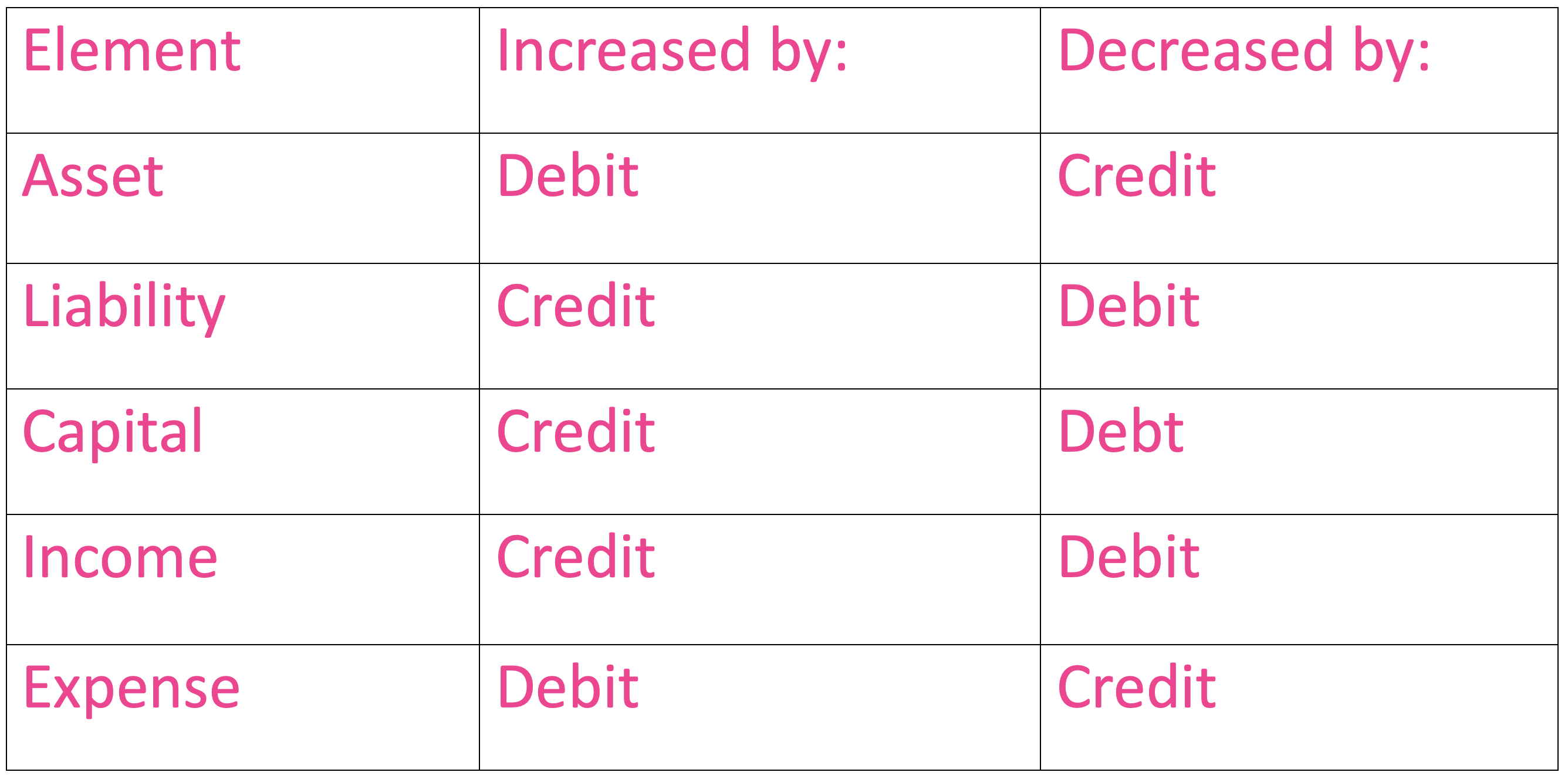
Money measurement concept
The money measurement concept is a fundamental accounting principle that states a business only records transactions and events that can be expressed in terms of a monetary unit of measure
General ledger
Consistent of the money value concept the money value of each transaction is entered once on each side of the general ledger in different accounts. With the actual process of placing the entry in each account is called posting the transaction.
Posting the transaction 1
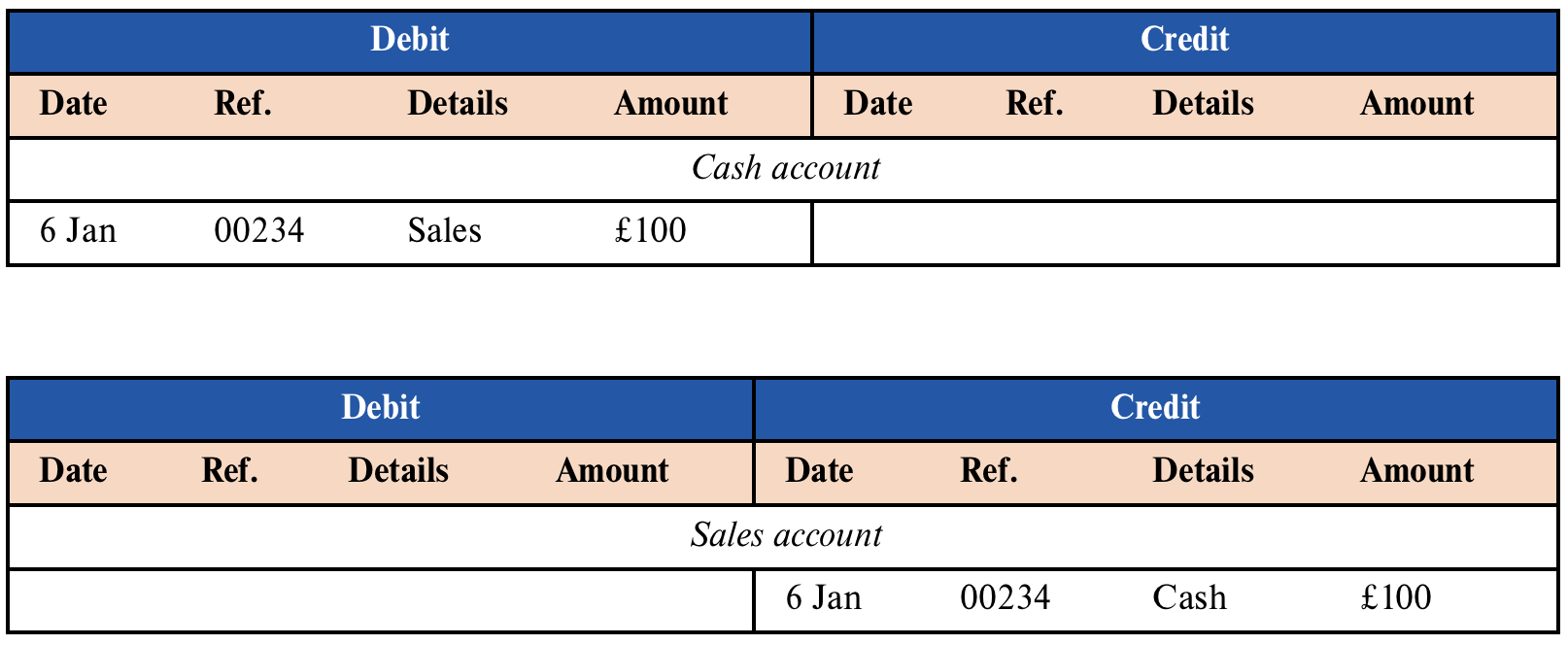
For example, taking one transaction such as the sale of goods for cash of £100 on 6th January this would be posted as follows:
Posting the transaction 2
The two accounts affected by this transaction are the sales account and the cash account. Cash comes in therefore the value leaves the sales account (- credit) and flows to the cash account (+ debit). This makes sense as the sales account increases the capital account which from the prospect to the business is the value owed to the owner.
Cash and bank transactions
When cash is received, it is entered on the debit side of the cash account (as the flow of value is to cash +) and credited to the account which the transaction relates.
Cash and bank transactions
When cash is paid out it is entered on the credit side of the cash account (an outflow of value from cash -) and on the debit side of the account which the transaction relates.
Debits / Credits
Debits = what is positively affected by a transaction e.g. buying stationary would equal a debit of stationary acquired
Credits = what is negatively affected by a transaction e.g. buying stationary would produce a credit of cash at bank (cash at bank being reduced)
General ledger entries for credit transactions
General ledger entries for credit transactions are complicated due to involving at least two and sometimes three events which will be recorded in double entry form.
General ledger entries for credit transactions
Movements in inventory are not recorded in an inventory account due to the credit entry for purchase of goods and the debit entry for sales being different. This would be an example of netting or off setting which is not allowed under company law.
Gross profit
The difference between the purchases and the sales is the gross profit which will be displayed within the statement of financial performance.
Credit sales
The accounts affected by credit sales: sales account (credit) and the trade receivables account.
The value will flow from the sales account to the other businesses account.
Credit purchases
The accounts affected by a credit purchase: the purchases account and the trade payable account. The purchases account is debited.
The purchase account will be debited and the other businesses account will be credited as the value is flowing from one to the other.
Trade payable
The amount owed to a business or person from whom goods are purchased on credit.
Trade receivable
The amount owed to the business when goods are sold on credit to a business or individual.
Purchase returns
The accounts affected by purchase returns: the returns outward account (credit) and the trade payable account.
The money will move from the returns outward account to the other businesses account.
Receiving funds from a credit customer
The accounts affected in this transaction: The cash account (debit) and the trade receivable account.
The money will flow from the cash account to the other businesses account.
Paying credit suppliers
The accounts affected by paying credit suppliers: cash account (credit) and the trade payables account.
The money will flow from the cash account to the other businesses account.
Debit balance
When the total amount of money on the debit side of an account is greater than that on the credit side, the account is said to have a debit balance. An account that contains a debit balance represents either an asset (such as cash) or an expense or loss.
Credit balance
When the total amount of money on the credit side of an account is greater than that on the debit side, the account is said to have a credit balance. An account with a credit balance represents capital, a liability, income (such as sales) or a gain.
Profit / Loss
The income and expense general ledger account balances do not carry forward into the next year but are all transferred to the statement of financial performance account where they are netted against each other to form either a ‘profit’ or a ‘loss’. If the total income exceeds the total expenditure, a credit balance results. This is known as ‘profit’. When total expenditure exceeds total income, a debit balance results. This is known as ‘loss’. This profit is then transferred to the owners’ capital account in the statement of financial position.
Capital account
The capital account is the owners investment in the business or in other words the businesses liability to the owner. Hence the capital account usually has a credit balance.
The movements in the owners capital account are deemed to be useful for stakeholders so they are recorded in three accounts – drawings, capital introduced and the statement of financial performance account.