Geometry 2
 Call Kai
 Learn
 Practice Test
 Spaced Repetition
 Match
 Flashcards
 Knowt Play
1/14

There's no tags or description
Looks like no tags are added yet.
15 Terms
conditional statements
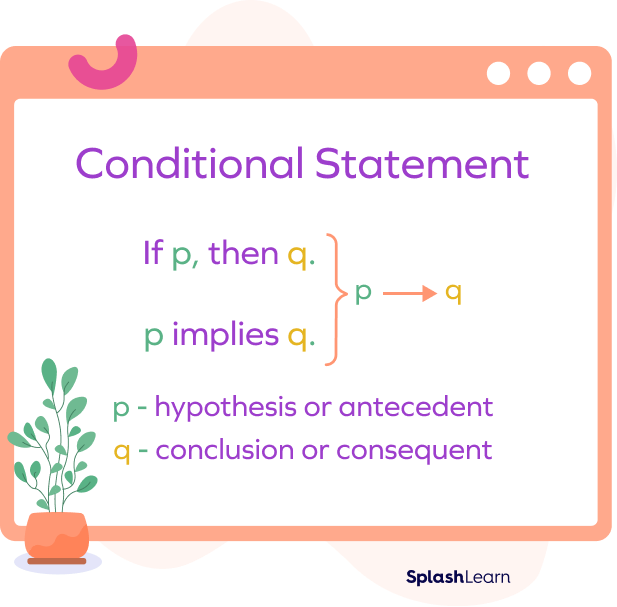
Statement, consists of 2 clauses, one of which begins with the word “if” or “when” or some equivalent word. “If a, then b”. a represents the if clause, or hypothesis, and b represents the then clause, or conclusion
Euler diagram
Circle diagrams that represent how conditional statements relate to each other, ( by Swiss mathematician, Leonhard Euler)

converse
converse of a conditional statement is found by interchanging its hypothesis and conclusion

syllogism
an argument in the form:
if a then b
if b then c
Therefore, if a then c
direct proof
if a then b
if b then c
if c then d
if d the e
if e then f
Therefore, if a then f
The startements, if a then b, if b then c, are called the premises of the argument and the statement if a then f is called the conclusion of the argument. The conclusion might be considered a theorem
Theorem
Statement that is proved by reasoning deductively from already accepted statements
indirect proof
In an indirect proof, an assumption is made at the beginning that leads to a contradiction. The contradiction indicated that the assumption is false and the desired conclusion is true.
Suppose not d is true
If not d, then e.
If e, then f,
and so on, until we come to a contradiction.
Therefore, not d is false; so, d is true
Postulate
statement that is assumed to be true without proof
Postulate 1
Two points determine a line (meaning if we draw a line 2 points are sufficient to locate its position)
Postulate 2
Three noncollinear points determine a place
Pythagorean Theorem
The square of the hypotenuse of a right triangle is equal to the sum of the squares of the other two sides.
The Triangle Angle Sum Theorem
The sum of the angles of a triangle is 180 degrees
Two Circle Theorems
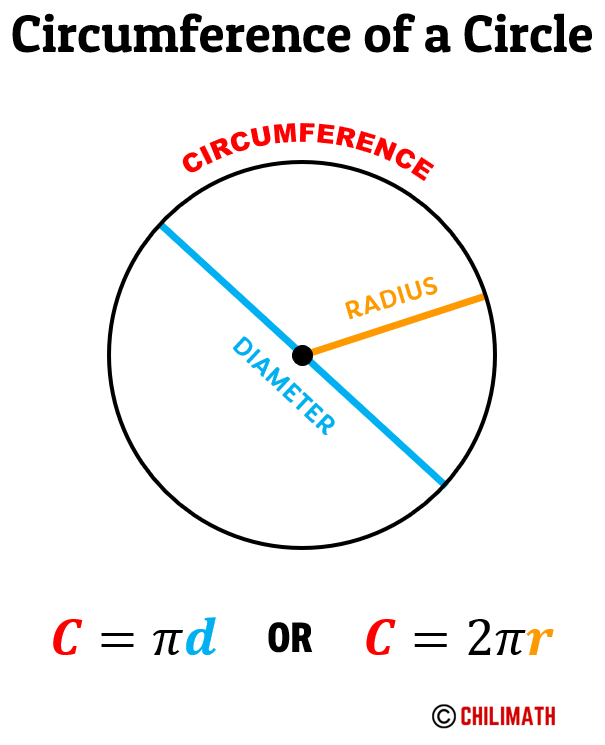
If the diameter of a circle is d, its circumference is pie times d
If the radius of a circle is r, its area is pie x r squared
iff
if and only if
If both a statement and its converse are true we can write “a if b” and “ a only if b”
undefined term
To avoid the problem of the dictionary maker, that is coming back to the point from which we begin- we must have a starting point: some words that we leave undefined. Among these words, the undefined terms are “point”, “line”, and “plane”