Sleep and Conciousness
 Call Kai
 Learn
Learn Practice Test
 Spaced Repetition
 Match
Match Flashcards
 Knowt Play
1/22

There's no tags or description
Looks like no tags are added yet.
Name | Mastery | Learn | Test | Matching | Spaced | Call with Kai | Chat |
|---|
No analytics yet
Send a link to your students to track their progress
23 Terms
neuroplasticity
the ability within the brain to constantly change both the structure and function of many cells in response to experience or learning.

consciousness
Awareness of ourselves and our environment
cognitive neuroscience
A field that attempts to understand the links between cognitive processes and brain activity.

dual processing
the principle that information is often simultaneously processed on separate conscious and unconscious tracks

parallel processing
the processing of many aspects of a problem simultaneously

sequential processing
processing one aspect of a problem at a time; generally used to process new information or to solve difficult problems

sleep
periodic, natural loss of consciousness--as distinct from unconsciousness resulting from a coma, general anesthesia, or hibernation

circadian rhythm
A physiological cycle of about 24 hours that is present in all eukaryotic organisms and that persists even in the absence of external cues.

REM sleep
the stage of sleep marked by rapid eye movements, dreaming, and paralysis of motor systems

alpha waves
brain waves that indicate a state of relaxation or light sleep

NREM sleep
Quiet, typically dreamless sleep in which rapid eye movements are absent; divided into four stages; also called quiet sleep.

hallucinations
perceptions that have no direct external cause

hypnagogic sensations
bizarre experiences, such as jerking or a feeling of falling or floating weightlessly, while transitioning to sleep

delta waves
long, slow waves that indicate the deepest stage of sleep

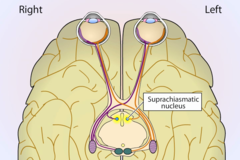
suprachiasmatic nucleus (SCN)
a pair of cell clusters in the hypothalamus that controls circadian rhythm and causes the pineal gland to adjust melatonin production, thus modifying our feelings of sleepiness
insomnia
recurring problems in falling or staying asleep

narcolepsy
uncontrollable sleep attacks

sleep apnea
a disorder in which the person stops breathing for brief periods while asleep

REM sleep behavior disorder
A sleep disturbance in which the mechanism responsible for paralyzing the body during REM sleep is not functioning, resulting in the acting out of dreams.

dream
a sequence of images, emotions, and thoughts passing through a sleeping person's mind.

Sigmund Freud Dream Theory
Dreams are wish fulfillment
Dreams uncover the repressed information in the unconscious mind because we act out our unconscious desires (our wishes) in our dreams
These repressed desires in our dreams are symbolic

REM rebound
increased amounts of REM sleep after being deprived of REM sleep on earlier nights

Psychoactive Drugs
a chemical substance that alters perceptions and moods