International Business in Agriculture - HW 2
 Call Kai
 Learn
Learn Practice Test
 Spaced Repetition
 Match
Match Flashcards
 Knowt Play
1/26

There's no tags or description
Looks like no tags are added yet.
Name | Mastery | Learn | Test | Matching | Spaced | Call with Kai | Chat |
|---|
No analytics yet
Send a link to your students to track their progress
27 Terms
List the six major types of import barriers that we discussed in class.
There are 6 major types of import barriers: specific import tariff (or tax), ad valorem import tariff (or tax), import quota, tariff-rate quota, variable levy, and state trading.
Explain specific import tariff (or tax)
A specific import tariff ( or tax) is a tax charged as a fixed amount per unit of imported product, levied by governments on the value including freight and insurance of imported products.
Explain ad valorem import tariff (or tax)
Ad valorem import tariff ( or tax) tariff is set based on a fixed percentage of imported good's price.
Explain import quota
Import quota restricts the quantity of a product that can enter the county.
Explain tariff-rate quota
Tariff rate quota is a combination of the import quota and import tariff.
Explain variable levy
Variable levy is a policy that a government can choose to follow if it wants to keep some agricultural prices fixed in its country. A variable levy system is where the import tariff is the difference between the fixed domestic price and the world price.
Explain state trading
State trading is a policy where the government can control importing by importing at the world price and selling at the fixed domestic price.
List five reasons that a government might want to impose barriers on import
The reasons for trade barriers include government budget, national security, protecting new businesses, protection from import competition, and a country being large.
Explain why a government budget might be a reason to impose a tariff
Governments often rely on import tariffs and other income from trade barriers to provide a substantial portion of the government budget.
Explain why national security might be a reason to impose a tariff
Some countries feel that certain products must be protected from international competition for national security reasons, and food is sometimes mentioned as important for national security.
Explain why protecting new business might be a reason impose a tariff
A similar argument for trade barriers is to protect newly established businesses during a critical phase in their development (the infant industry argument).
Explain why protection from import competition might be a reason to impose a tariff
Another important reason for import barriers is that businesses and farmers feel that they must be protected from import competition, and the government acquiesces because of their political power. It is in the interest of producers and farmers to lobby hard for import protectionbecause of the tremendous difference it can make in their income.
Explain why a country being large might be a reason to impose a tariff
The only legitimate economic reason for import barriers is if the importing country is large enough that it can use its market power to extract welfare from the rest of the world.
The effective demand curve includes:
Both international and domestic demanders
What does the effective supply curve represent ?
Both international and domestic suppliers
Which of the following is NOT typically a result of implementing trade barriers compared to free trade?
Increased efficiency
The analysis of specific import policies typically starts from the free trade case because free trade is generally considered the policy that maximizes a country’s welfare.
True
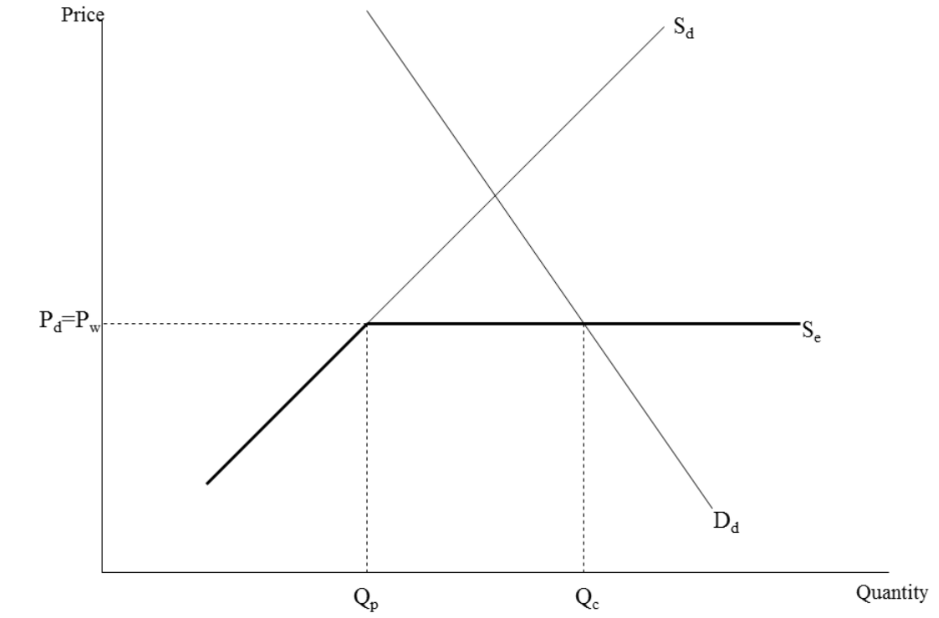
Figure 1 shows an Importing Country with Free Trade. Answer the following question based on Figure 1. In equilibrium (assuming that the autarkic price is above PW), the country produces at:
Qp

Figure 1 shows an Importing Country with Free Trade. Answer the following question based on Figure 1. In equilibrium (assuming that the autarkic price is above PW), the country consumes at:
Qc
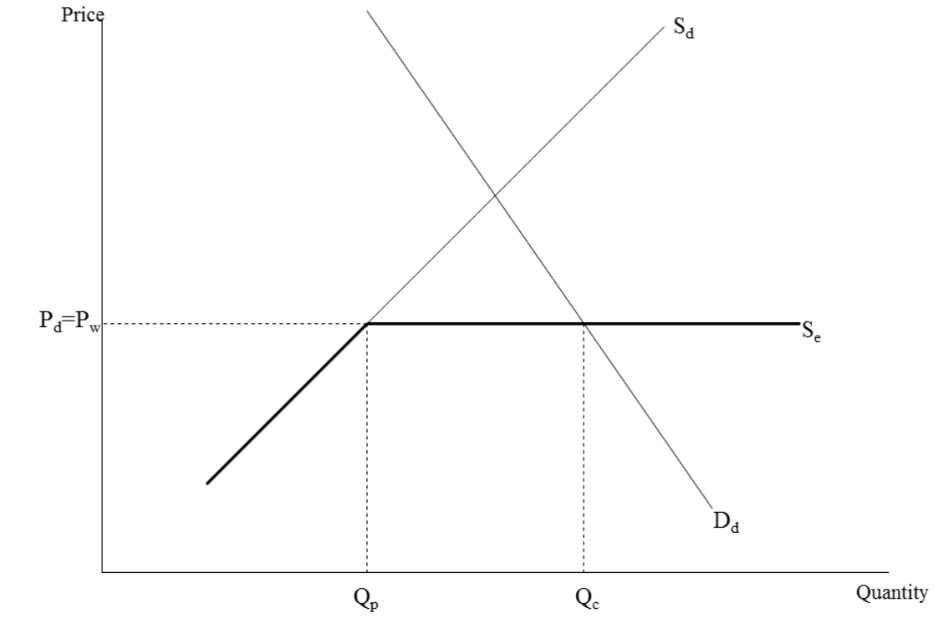
Figure 1 shows an Importing Country with Free Trade. Answer the following question based on Figure 1. In equilibrium (assuming that the autarkic price is above PW). How much does the country import?
Qc-Qp

Figure 1 shows an Importing Country with Free Trade. Answer the following question based on Figure 1. The effective supply curve is Sd.
False

Figure 1 shows an Importing Country with Free Trade. Answer the following question based on Figure 1. The effective supply curve is perfectly inelastic.
False
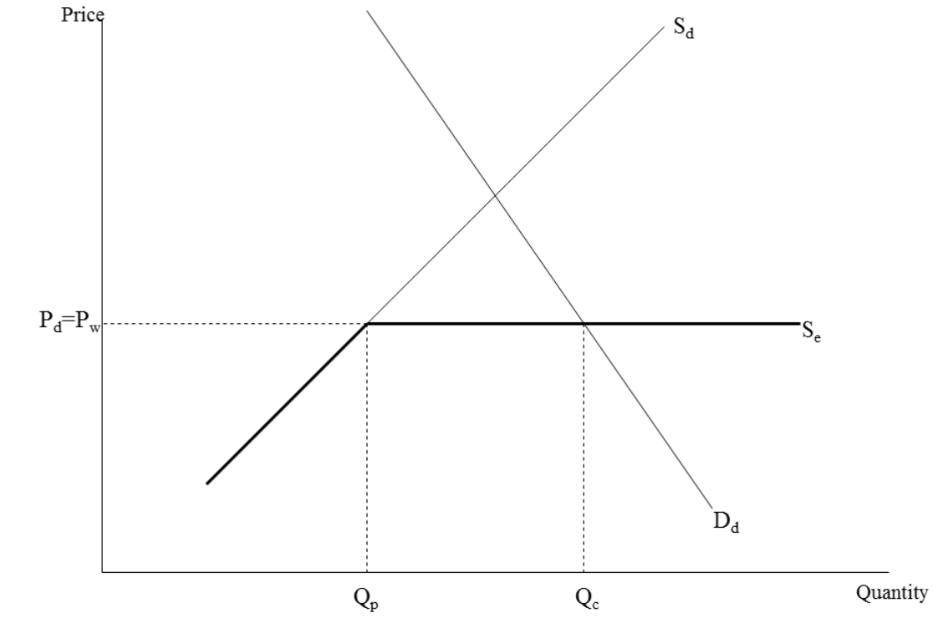
Figure 1 shows an Importing Country with Free Trade. Answer the following question based on Figure 1. The importing country price is Pd, which is identical to the world price.
True
Who is responsible for collecting tariffs on imported goods?
The customs authority of the importing country
A tariff is imposed by the government of the country that is exporting the goods.
False
Which of the following is an example of a specific import tariff?
A 1.5 cents per kilogram tax on imported squash
Consumers are the losers when a specific import tariff is implemented because they suffer an increase in price for the good, which also encourages them to consume less.
True