TEAS Skeletal System Overview SE
 Call Kai
 Learn
 Practice Test
 Spaced Repetition
 Match
 Flashcards
 Knowt Play
1/51

There's no tags or description
Looks like no tags are added yet.
52 Terms
🦴 Skeletal System
1. Why do babies have more bones?
A baby is born with about 270 bones.
An adult has about 206 bones.
Why does the number go DOWN?
👉 Some bones fuse (join together) as you grow.
🧠 Memory trick:
👶 Baby = BONES APART
🧑 Adult = BONES JOINED
So:
270 → fuse → 206
You don't lose bones—you have multiple bones join to become one bone.
🦴 Example: Hipbone
At birth, part of the pelvis has 3 separate bones:
Ilium
Ischium
Pubis
As you grow:
Ilium + Ischium + Pubis → ONE hipbone
🧠 Easy trick:
"I-I-P become ONE hip."

2. Two major divisions of the skeleton
The skeleton is divided into:
🧍 AXIAL🦵 APPENDICULAR
Think:
AXIAL = AXIS = CENTER of your body
APPENDICULAR = APPENDAGES = ARMS & LEGS
🧍 AXIAL SKELETON
The axial skeleton is your body's central framework.
It includes:
🧠 Skull
🫀 Rib cage
🦴 Vertebral column (spine)
🫁 Sternum (breastbone)
🧠 Memory trick:
"Axial = Head + Chest + Spine"
Or:
AXIAL = your BODY'S AXIS

🦵 APPENDICULAR SKELETON
Think:
APPENDAGES = things attached to your body
Includes:
💪 Arms
🦵 Legs
Girdles that attach them to your skeleton
The two major girdles are:
Shoulder/pectoral girdle → attaches arms
Pelvic girdle → attaches legs
🧠 Memory:
APPENDICULAR = ARMS + LEGS + THEIR ATTACHMENTS

⭐ SUPER EASY COMPARISON
AXIAL 🧍 | APPENDICULAR 🦵 |
|---|---|
Center of body | Limbs |
Skull | Arms |
Spine | Legs |
Ribs | Shoulder girdle |
Sternum | Pelvic girdle |
"AXIS = CENTER" | "APPENDAGES = LIMBS" |
AXIAL
➡ Center → skull, spine, ribs, sternum
APPENDICULAR
➡ Limbs → arms, legs, girdles
"Which is part of the axial skeleton?"
🧠 HEAD + CHEST + SPINE
"Which is part of the appendicular skeleton?"
💪 ARMS + LEGS + GIRDLES

🦴 1. Vertebral Column
There are 24 pre-sacral vertebrae.
Break them into:
7 Cervical
➡ Neck
12 Thoracic
➡ Chest/back where ribs attach
5 Lumbar
➡ Lower back
So:
7 + 12 + 5 = 24
🧠 BEST TRICK: 7–12–5
Think:
"Breakfast at 7, lunch at 12, home at 5." 😂
7 cervical → 12 thoracic → 5 lumbar
Then come:
Sacrum + Coccyx
So the whole spine is:
7 + 12 + 5 + sacrum + coccyx

🧍 2. AXIAL =
80 bones
Remember:
AXIAL = CENTER of your body
The table breaks the 80 into:
Part | Bones | Easy idea |
|---|---|---|
Inner ear ossicles | 6 | Tiny ear bones 👂 |
Skull + hyoid | 23 | Head/neck 🧠 |
Sternum + ribs | 25 | Chest 🫁 |
Vertebral column | 26 | Spine 🦴 |
TOTAL | 80 |
🧠 Don't panic about the numbers!
For TEAS, the big concept is more important:
AXIAL = skull + spine + ribs + sternum
And:
80 = axial

🦵 3. APPENDICULAR =
126 bones
Remember:
APPENDICULAR = ARMS + LEGS + GIRDLES
Part | Bones |
|---|---|
Pectoral girdle | 4 |
Upper extremities | 60 |
Pelvic girdle | 2 |
Lower extremities | 60 |
TOTAL | 126 |
⭐ EASY NUMBER TRICK
Notice:
Upper extremities = 60
Lower extremities = 60
So:
ARMS = 60 🖐
LEGS = 60 🦵
Then:
4 + 60 + 2 + 60 = 126
🔥 THE NUMBERS YOU REALLY WANT
Spine:
7 – 12 – 5 = 24
Cervical – Thoracic – Lumbar
Skeleton:
Axial = 80
Appendicular = 126
80 + 126 = 206 total adult bones
🎯 This is a BIG number to know:
🦴 80 + 126 = 206
🧠 SUPER FAST MEMORY CARD
AXIAL = CENTER = 80
APPENDICULAR = LIMBS = 126
80 + 126 = 206
Spine:
C = 7 → Cervical = neck
T = 12 → Thoracic = chest
L = 5 → Lumbar = lower back
7 → 12 → 5 → 24
🔥 One sentence:
"Axial is my center (80), appendicular is my limbs (126), together they make 206."
🦴 Skeletal System = 1-2
5 MAIN JOBS
Think:
Skeletal system = SUPPORT + MOVE + PROTECT + STORE + MAKE
That's your big memory trick. ⭐
1. 🧍 SUPPORT
Bones give your body structure and shape .
Without your skeleton, your body couldn't stay upright.
🧠 Think:
Bones = body's FRAME
Like the frame of a house 🏠.
2. 🏃 MOVEMENT
Bones work with muscles to help you move.
Important:
❌ Bones don't move themselves.
Instead:
Muscles pull on bones → bones move
🧠 Think:
Muscles = pull
Bones = move
🦴 Skeletal System = 3-4
3. 🛡 PROTECTION
Bones act like armor around important organs.
Bone | Protects |
|---|---|
🧠 Skull | Brain |
🦴 Vertebral column | Spinal cord |
🫁 Ribs + sternum | Heart & lungs |
🧠 Easy phrase:
"Skull protects brain, spine protects spinal cord, ribs protect chest organs."
4. 🧂 MINERAL STORAGE
Bones store important minerals, especially:
Calcium + Phosphorus
Your body can use these minerals when needed.
🧠 Memory:
Bones = mineral bank 🏦
Calcium + phosphorus = stored in bones
5. 🩸 HEMATOPOIESIS
making blood cells
This happens in bone marrow .
🩸 Bone marrow makes:
Red blood cells
Other blood cells from stem cells
🧠 Break the word apart:
HEMATO = blood
POIESIS = making
SW:
HEMATOPOIESIS = BLOOD MAKING
🧠 BONUS: What is bone actually made of?
The skeletal system includes:
🦴 Bones + cartilage + ligaments
And bone is a type of:
CONNECTIVE TISSUE
Easy meaning:
Connective tissue = tissue that supports/connects things.
🔥 TEAS CHEAT SHEET
Memorize these 5 words:
🦴 Skeletal System = SMPMH
S → Support
M → Movement
P → Protection
M → Mineral storage
H → Hematopoiesis
Even easier:
"Bones SUPPORT, MOVE, PROTECT, STORE, and MAKE blood."
FRAME → MOVE → ARMOR → BANK → BLOOD
Support → Movement → Protection → Minerals → Hematopoiesis
What mineral is stored in bones?
➡ Calcium + phosphorus
What is hematopoiesis?
➡Blood cell production
What protects the spinal cord?
➡ Vertebral column
What do bones work with to create movement?
➡ Muscles
What type of tissue is bone?
➡ Connective tissue
Where does hematopoiesis occur?
➡ Bone marrow
🦴 Bone Structure
Think of a bone like a house 🏠:
Outside = hard wall
Inside = lighter/spongy area
Outside covering = protective coat
1. 🧱 Compact Bone = HARD OUTSIDE
Compact bone is the hard, dense outer layer of the bone.
Think:
COMPACT = HARD + DENSE
It gives the bone strength.
🧠 Memory:
"Compact = Concrete" 🧱
Both are hard!
2. 🧽 Spongy Bone = LIGHT INSIDE
Spongy bone is less dense and has lots of open spaces.
Think of an actual kitchen sponge 🧽.
SPONGY = HOLES + LIGHT
It is usually found inside the bone.
🧠 Memory:
"Spongy = Sponge."


3-4
🦴 3. Osteons = UNITS inside compact bone
Compact bone is organized into little cylinder-shaped units called:
OSTEONS
Think:
Osteons = building blocks of compact bone
🧠 TRICK:
OSTEON = compact bone's unit
You don't need to overcomplicate this.
4. 🩸 Haversian Canal
Inside each osteon is a:
Haversian canal
It contains:
🩸 Blood vessels
⚡ Nerves
So the canal is basically the bone's supply line.
🧠 Memory:
HAVERSIAN = HIGHWAY 🚗
Blood vessels and nerves travel through it.

5. 🧥 Periosteum =
OUTER COVERING
The periosteum is a fibrous membrane that covers the outside of the bone.
It contains:
🩸 Blood vessels
⚡ Nerves
💧 Lymphatic vessels
🧠 BIG TRICK:
PERI = around
So:
PERIOSTEUM = around the bone
Think of it like a jacket around the bone 🧥

⭐ Put it all together
Imagine cutting a bone in half:
🧥 PERIOSTEUM
⬇
🧱 COMPACT BONE
⬇
🧽 SPONGY BONE
Inside the compact bone:
OSTEONS → HAVERSIAN CANALS → blood vessels + nerves
🔥 Super-fast memory:
PERIOSTEUM = COVER
COMPACT = HARD
SPONGY = HOLES
OSTEON = UNIT
HAVERSIAN = BLOOD + NERVE HIGHWAY

🦴 6. Five Types of Bones
There are 5 types:
Long
Short
Flat
Irregular
Sesamoid
🧠 Initials:
L S F I S
You can remember:
"Long Short Flat Irregular Sesamoid"
The shape/name usually gives you a clue about the bone.
Examples worth knowing:
Type | Easy example |
|---|---|
Long | Femur, humerus |
Short | Wrist/ankle bones |
Flat | Skull, sternum, ribs |
Irregular | Vertebrae |
Sesamoid | Patella (kneecap) |
🧠 BEST TRICK:
LONG → limbs 💪
SHORT → wrist/ankle ✋🦶
FLAT → protection 🛡
IRREGULAR → weird shapes 😂
SESAMOID → inside tendons → patella
🎯 TEAS QUICK REVIEW
Know these 7 things:
Compact → hard outer bone 🧱
Spongy → lighter, porous bone 🧽
Osteon → basic unit of compact bone
Haversian canal → blood vessels + nerves 🩸⚡
Periosteum → outer covering of bone 🧥
Long/Short/Flat/Irregular/Sesamoid → 5 bone types
Patella → sesamoid bone
🔥 ONE-LINE MEMORY:
"Cover → Hard → Sponge → Units → Highway."
Periosteum → Compact → Spongy → Osteons → Haversian canals

🦴 LONG BONE
Picture a femur (thigh bone):
END 🟢 — MIDDLE 🟡 — END 🟢
That's basically the whole thing!
1. 🟢 EPIPHYSIS = THE ENDS
There are 2 epiphyses:
Proximal epiphysis = end closer to the body
Distal epiphysis = end farther from the body
What's inside?
Mostly spongy bone 🧽
What happens here?
Bone growth occurs here (more precisely, at the growth plate associated with the epiphysis).
🧠 TRICK:
EPIPHYSIS = ENDS
E = Ends ⭐
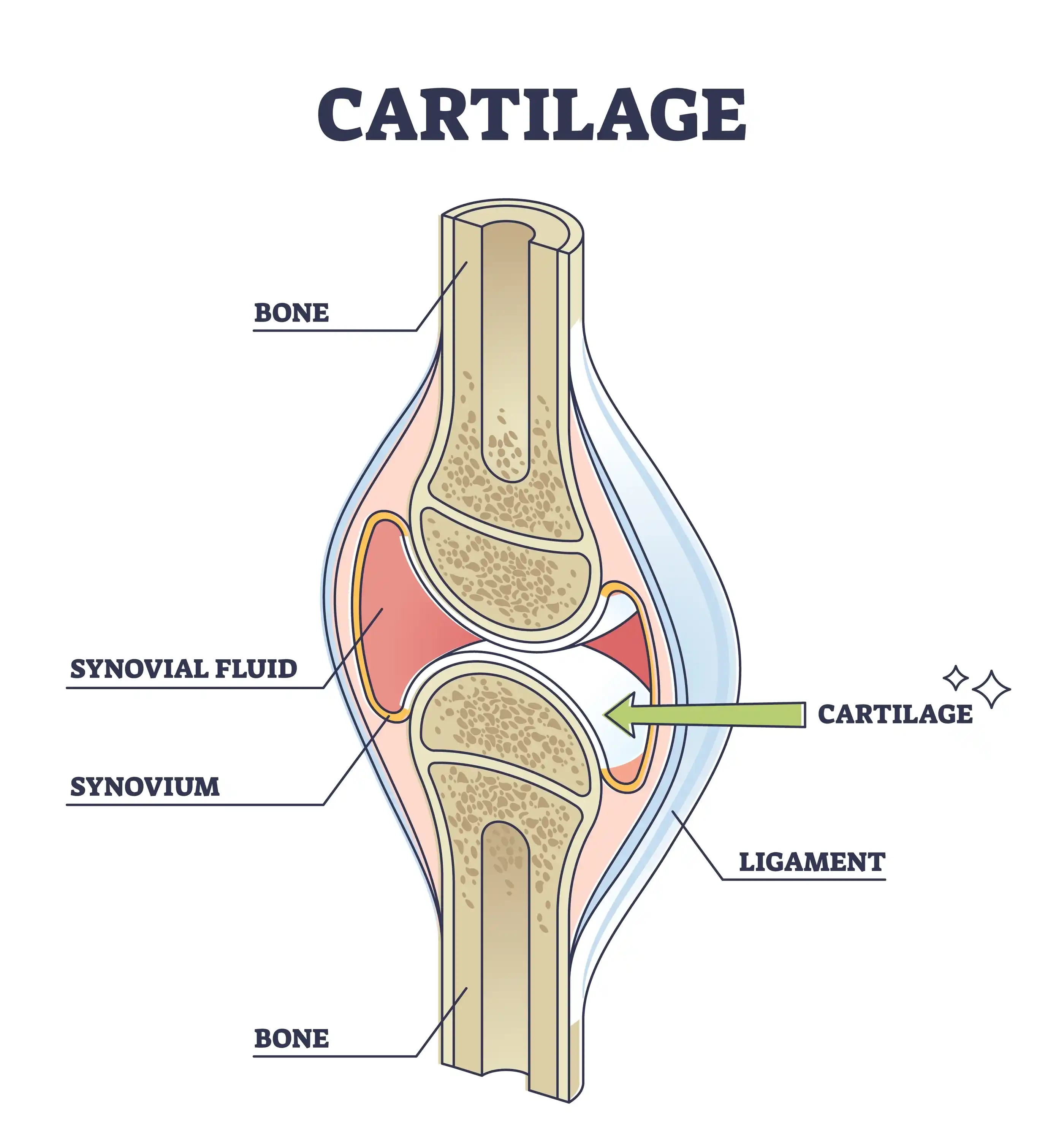
2. 🧊 ARTICULAR CARTILAGE = SMOOTH COVER
This covers the ends of the bone where it forms a joint.
Its main job:
REDUCE FRICTION
Think:
🦴 ↔ 🦴
Instead of bones rubbing directly against each other, cartilage helps them move smoothly.
🧠 TRICK:
ARTICULAR = ANTI-FRICTION

long bone pt.2
3. 🟡 DIAPHYSIS = THE LONG MIDDLE
This is the long shaft/middle part of the bone.
It is mostly:
COMPACT BONE 🧱
🧠 TRICK:
DIA = LONG SHAFT
Think "diaphysis = diameter-long middle".
4. 🕳 MEDULLARY CAVITY = THE INSIDE SPACE
Inside the diaphysis is a hollow space called the:
Medullary cavity
It contains bone marrow.
There are two important types:
🔴 Red marrow
➡ Makes blood cells
This is hematopoiesis.
🧠 RED = BLOOD
🟡 Yellow marrow
➡ Mostly fat cells
🧠 YELLOW = FAT

⭐ PUT THE WHOLE BONE TOGETHER
Think:
🟢 END — 🟡 LONG MIDDLE — 🟢 END
EPIPHYSIS → DIAPHYSIS → EPIPHYSIS
Then remember:
Ends → mostly spongy
Middle → mostly compact
Inside middle → medullary cavity
Red marrow → blood cells
Yellow marrow → fat
Articular cartilage → reduces friction
🧠🔥 BEST MEMORY TRICK E-D-E
Epiphysis = Ends
Diaphysis = Diaphysis = long middle
Epiphysis = End
And:
🔴 RED = BLOOD
🟡 YELLOW = FAT
🧊 CARTILAGE = LESS FRICTION
Where is the long shaft of a bone?
➡ Diaphysis
What are the ends called?
➡ Epiphyses
What reduces friction at joints?
➡ Articular cartilage
Where does hematopoiesis occur?
➡ Red bone marrow
What is yellow marrow mostly made of?
➡ Fat cells
Which part is mostly compact bone?
➡ Diaphysis
Which part is mostly spongy bone?
➡ Epiphysis
⭐ Memorize this:
“ENDS are EPI,
MIDDLE is DIA,
RED makes BLOOD,
YELLOW stores FAT, CARTILAGE stops FRICTION.”

🦴 LONG BONE
Has the classic:
EPIPHYSIS → DIAPHYSIS → EPIPHYSIS
Epiphysis = ends
Diaphysis = long shaft/middle
Medullary cavity = inside the shaft
Articular cartilage = covers joint surfaces
Examples: femur, humerus
What about other bones?
Other bone types don't have this same long-bone layout.
For example:
Short bones → wrist/ankle bones
Flat bones → skull, ribs, sternum
Irregular bones → vertebrae
Sesamoid bones → patella
⭐ TEAS trick
If you see:
Epiphysis + diaphysis + medullary cavity
Think:
LONG BONE ONLY 🦴
But things like compact bone, spongy bone, periosteum, and bone marrow can be found in other bones too.
So don't memorize the epiphysis/diaphysis layout for every bone type.

🦴 OSSIFICATION =
MAKING BONE
First, what does ossification mean?
Ossification = the process of making bone.
Your body takes soft cartilage and gradually turns it into hard bone.
🧠 Memory trick:
OSSI = BONE
Ossification = Bone formation
🧸 How does it happen?
Think of it like this:
🧽 Soft cartilage
⬇
🧂 Calcium + phosphorus are deposited
⬇
🦴 Hard bone
So:
CARTILAGE → MINERALS → BONE
The important minerals are:
Calcium + phosphorus ⭐
👶 What happens when you're a baby?
Babies have more cartilage in their skeleton than adults.
Especially in their long bones.
As the child grows, cartilage is gradually replaced by bone.

📏 Growth plates =
HOW LONG BONES GROW
This is the BIG TEAS point.
At the ends of long bones are areas called:
Growth plates
They are made of cartilage.
As you grow:
Growth plate cartilage → ossification → more bone → longer bone
That's how your long bones get longer, helping you grow taller.
🧠 BEST MEMORY:
Growth plate = Growth! 📏
If you see growth plate, immediately think:
LONG BONE GETTING LONGER
🔥 SUPER EASY PICTURE
Imagine a long bone:
🦴 ← end | middle | end → 🦴
At the ends:
Growth plate = cartilage
As you grow:
cartilage → bone
➡ Bone gets longer
➡ You get taller
⭐ ONE BIG THING TO REMEMBER
Ossification
= cartilage becomes bone
Growth plate
= cartilage at the end of a growing long bone
Calcium + phosphorus
= minerals deposited to make the bone hard
🧠 TEAS MEMORY TRICK
Remember:
“GROW → PLATE → CALCIUM → BONE”
Growth plate
⬇
Cartilage
⬇
Calcium + phosphorus
⬇
Ossification
⬇
Longer bone
🎯 If TEAS asks:
What is ossification?
➡ Bone formation.
What happens to cartilage during ossification?
➡ It is replaced by hard bone/mineralized tissue.
What is the growth plate?
➡ A cartilage region where a growing long bone lengthens.
What minerals are important?
➡ Calcium + phosphorus.
Why are growth plates important?
➡ They allow long bones to grow longer.
🔥 FINAL CHEAT:
OSSIFICATION = CARTILAGE → BONE
GROWTH PLATE = LONG BONE GROWTH
CALCIUM + PHOSPHORUS = HARD BONE
🦴 1. Does cartilage turn into bone?
Yes, during bone development and growth, cartilage is gradually replaced by bone through ossification.
Think:
🧽 Cartilage → 🦴 Bone
But not all cartilage in your body turns into bone . For example, cartilage remains in places like your joints because it helps provide smooth movement.
📏 2. Do adults still have growth plates?
No — not open growth plates.
When you're growing up:
Growth plate = cartilage → allows long bones to get longer
When growth is finished:
Growth plate closes → becomes bone
SW:
👶 Child: growth plate = cartilage + active growth
🧑 Adult: growth plate = closed/fused bone
🧠 TEAS trick:
GROWING = growth plate OPEN
ADULT = growth plate CLOSED
🧂 3. What is phosphorus?
… is a mineral that your body needs.
For your TEAS, think of it as one of the building materials for strong bones and teeth.
🦴 Calcium + Phosphorus = strong/mineralized bone
Think of them like a construction team :
🧱 Calcium + phosphorus → help build/harden bone
You get phosphorus from foods such as meat, dairy, eggs, beans, nuts, and whole grains.
🧠 Super easy memory:
CALCIUM + PHOSPHORUS = BONE BUILDERS 🦴
⭐ Remember these 3 things:
Ossification = cartilage is replaced by bone
Growth plate = cartilage area that lets long bones grow longer
Phosphorus = mineral that works with calcium for bone formation/mineralization
TEAS one-liner:
🦴 “Growing bones use growth plates; calcium + phosphorus help make them strong.”
🦴 Bone Remodeling =
CONSTANT REPAIR
Your bones aren't just sitting there forever. Your body is constantly:
🧹 removing old bone → 🏗 making new bone
This is called bone remodeling.
Think of a house:
🧹 Old bone gets removed
⬇
🏗 New bone gets built
This helps keep bones healthy and also releases minerals like calcium when your body needs them.
⭐ The 3 Bone Cells
This is the MOST IMPORTANT part.
🏗 1. Osteoblast = BUILDS
OsteoBLAST = BUILD
Osteoblasts make new bone.
🧠 Memory:
BLAST = BUILD 💥🏗
🧹 2. Osteoclast = BREAKS DOWN
OsteoCLAST = CLEARS/CUTS bone
Osteoclasts break down/resorb old bone.
This is called:
Bone resorption
🧠 Memory:
CLAST = CRASH/CRUSH 🧹
So:
Osteoclast → breaks down bone
🦴 3. Osteocyte = MATURE BONE CELL
An osteocyte is a mature bone cell that lives in bone tissue and helps maintain it.
Think:
CYTE = CELL
🧠 Memory:
OsteoCYTE = bone CELL
🔥 THE BEST TRICK EVER
Just memorize:
BLAST = BUILD
CLAST = CRASH
CYTE = CELL
Cell | Job |
|---|---|
🏗 Osteoblast | Builds new bone |
🧹 Osteoclast | Breaks down old bone |
🦴 Osteocyte | Mature bone cell / maintains bone |
🦴 What is bone resorption?
Don't let the word scare you.
Bone resorption = breaking down old bone
The osteoclast does it.
When bone is broken down, calcium and other minerals can be released into the blood for the body to use.
🧠 Think:
RESORPTION = REMOVE
🔄 BONE REMODELING
Put it all together:
Osteoclast 🧹
⬇
Breaks down old bone
⬇
Osteoblast 🏗
⬇
Builds new bone
That's bone remodeling.
🧠 SUPER EASY PHRASE:
“CLAST cleans, BLAST builds.”
And:
“Bone is constantly being broken down and rebuilt.”
🎯 TEAS QUICK CHECK
Which cell builds bone?
➡ Osteoblast
Which cell breaks down bone?
➡ Osteoclast
What is bone resorption?
➡ Breaking down/removing old bone
What is bone remodeling?
➡ Old bone is removed and new bone is built
Which cell is a mature bone cell?
➡ Osteocyte
What can bone resorption release?
➡ Calcium and other minerals
⭐ Memorize this:BLAST = BUILD
🏗CLAST = CRASH 🧹
CYTE = CELL 🦴

🦴 1. First: What is an osteon?
OSTEON = basic unit of COMPACT bone
Think of an osteon like a tiny bone cylinder/building block.
The first picture is basically showing you one osteon cut in half.
🟠 2. What are all those orange rings?
Those rings are called lamellae.
They're layers of bone matrix arranged in circles around the center.
Think:
🧅 Osteon = like an onion
The rings = lamellae
You don't need to stress over this one for the TEAS. Just recognize:
Lamellae = layers/rings of an osteon.
🦴 4. Where are the osteocytes?
Look at the little cells between the rings.
Those are:
OSTEOCYTES
Remember from before:
OSTEOCYTE = mature bone cell
They live inside the bone matrix of the osteon.
🧠 Think:
🏠 Osteocytes LIVE inside the bone.

🏗 5. What about osteoblasts?
Look at the surface of the bone in the picture.
The cells sitting along the outside are osteoblasts.
Remember:
OSTEOBLAST = BUILDS bone 🏗
They're on the surface because they're involved in making new bone.
🧹 6. What about osteoclasts?
Also found on the bone surface.
Remember:
OSTEOCLAST = BREAKS DOWN bone 🧹
So:
OSTEOBLAST → buildsOSTEOCLAST → breaks down
🔥 BLAST = BUILD
🔥 CLAST = CRASH

🖼 NOW LOOK AT THE SECOND PICTURE
This picture is zoomed out.
You're looking at a long bone.
🧥 Periosteum
The outside covering.
PERI = around
🧱 Compact bone
The hard outer bone.
COMPACT = HARD
🧽 Spongy bone
The lighter, porous bone inside the ends.
SPONGY = SPONGE
🟡 Yellow bone marrow
Inside the medullary cavity.
YELLOW = FAT
🦴 Osteon
A tiny structural unit inside the compact bone.

🔬 THE LAST PICTURES = THE 3 CELLS
🏗 Osteoblast
BUILDING bone
🦴 Osteocyte
MATURE bone cell living in bone
🧹 Osteoclast
BREAKING DOWN bone
⭐ THE MOST IMPORTANT THING
Don't mix up WHERE they are:
Osteocytes
➡ INSIDE the bone matrix/osteon
Osteoblasts
➡ SURFACE of bone
➡ BUILD
Osteoclasts
➡ SURFACE of bone
➡ BREAK DOWN
🧠 Easy phrase:
“CYTES live INSIDE; BLASTS build; CLASTS clear.”

🔥 SUPER FAST TEAS CHEAT SHEET
osteon
Term | Think |
|---|---|
Osteon | Unit of compact bone |
Lamellae | Rings/layers |
Central canal | Blood vessels + nerves + lymphatic vessels |
Osteocyte | Mature cell inside bone |
Osteoblast | BUILD bone |
Osteoclast | BREAK DOWN bone |
Periosteum | Covering around bone |
Compact bone | Hard/dense |
Spongy bone | Porous/light |
“Osteon is the house. Osteocytes LIVE inside. Osteoblasts BUILD. Osteoclasts BREAK.”
🦴 SKELETAL SYSTEM — SUPER EASY1.
🦴 What does the skeletal system DO?
Remember S-M-P-M-B:
S = Support
Keeps your body upright and gives it shape.
M = Movement
Works with muscles to help you move.
P = Protection
Protects organs.
M = Minerals
Stores calcium + phosphorus.
B = Blood
Bone marrow helps make blood cells.
🧠 Easy phrase:
“Bones Support, Move, Protect, Store, and Make.”
2. 🧍 AXIAL vs 🦵 APPENDICULAR
🧍 AXIAL = CENTER
Includes:
Skull 🧠
Sternum
Ribs
Vertebral column/spine
🧠 Trick:
AXIAL = AXIS = CENTER
🦵 APPENDICULAR = LIMBS
Includes:
Arms 💪
Legs 🦵
Their girdles/attachments
🧠 Trick:
APPENDICULAR = APPENDAGES = ARMS + LEGS
3. 🦴 Five bone types
L S F I S
Long → femur, humerus
Short → wrist/ankle
Flat → skull, ribs, sternum
Irregular → vertebrae
Sesamoid → patella
🧠 Quick trick:
Long limbs, Short wrists/ankles, Flat protection, Irregular shapes, Sesamoid = kneecap
4. 🏗 Ossification
This big word simply means:
OSSIFICATION = BONE FORMATION
Cartilage is gradually replaced by harder, mineralized bone during development.
🧠 Think:
Cartilage → minerals → 🦴 BONE
5. 🔄 Bone remodeling and more
Your bones are constantly being repaired and renewed.
Old bone 🧹
⬇
removed
⬇
New bone 🏗
replaces it
That's bone remodeling.
🧠 Trick:
REMODELING = RENOVATING your bones 🏠
6. 🔬 Osteon
This sentence in your notes needs a small correction:
❌ Osteon is NOT a bone cell.
✅ Osteon = structural unit of compact bone.
Think of an osteon as a tiny cylinder/building block of compact bone.
Inside it is the:
Haversian (central) canal
It contains:
🩸 Blood vessels
⚡ Nerves
💧 Lymphatic vessels
🧠 Trick:
OSTEON = compact bone UNIT
CENTRAL CANAL = supply HIGHWAY
7. 🏗 Osteoblast
OSTEOBLAST = BUILDS bone
🧠 BLAST = BUILD
🏗 Osteoblast → new bone
8. 🧹 Osteoclast
OSTEOCLAST = BREAKS DOWN bone
This is called bone resorption.
🧠 CLAST = CRASH
🧹 Osteoclast → removes old bone
9. 🦴 Osteocyte
OSTEOCYTE = mature bone cell
These are found within the bone tissue and help maintain it.
🧠 CYTE = CELL
So:
OsteoCYTE = bone CELL
🔥 THE 5-SECOND BONE CELL TRICK
This is the one I'd REALLY memorize:
🏗 BLAST = BUILD🧹 CLAST = CRASH
🦴 CYTE = CELL
And:
“CYTES live inside, BLASTS build, CLASTS clear.”
🎯 FINAL TEAS CHEAT SHEET
Topic | Remember |
|---|---|
Skeletal system | Support, Movement, Protection, Minerals, Blood |
Axial | Center |
Appendicular | Arms + legs |
5 bone types | Long, Short, Flat, Irregular, Sesamoid |
Ossification | Bone formation |
Remodeling | Old bone → new bone |
Osteon | Unit of compact bone |
Haversian canal | Blood vessels + nerves |
Osteoblast | BUILD 🏗 |
Osteoclast | BREAK DOWN 🧹 |
Osteocyte | Mature bone cell 🦴 |
⭐ If you only memorize 6 things:
AXIAL = CENTER
APPENDICULAR = LIMBS
OSSIFICATION = BONE FORMATION
OSTEON = COMPACT BONE UNIT
BLAST = BUILD
CLAST = CRASH
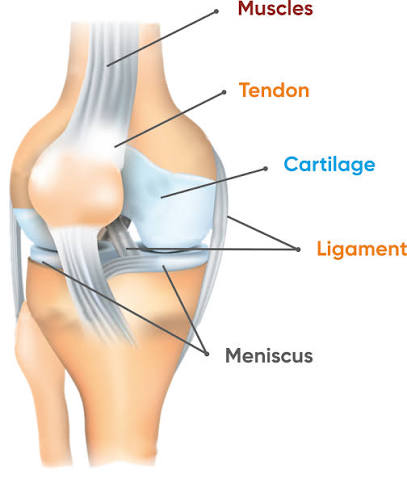
What makes up the framework of the skeletal system?
Bones, cartilage, and ligaments

Medullary Cavity
Found inside the long bone and contains both red and yellow marrow
Hollow space inside a long bone
Think of a long bone like a hollow tube:
🦴 Bone wall → 🕳 Medullary cavity → 🦴 Bone wall
The medullary cavity is the space inside the shaft (diaphysis) of a long bone.
What's inside? 🩸
It contains bone marrow:
🔴 Red marrow → makes blood cells
🟡 Yellow marrow → mostly stores fat
“Bone has a hollow middle filled with marrow.”
🎯 TEAS one-liner:
Medullary cavity = hollow space inside the diaphysis of a long bone that contains bone marrow.
⭐ DIAPHYSIS = shaft
⭐ MEDULLARY CAVITY = hollow inside the shaft
⭐ RED MARROW = blood
⭐ YELLOW MARROW = fat
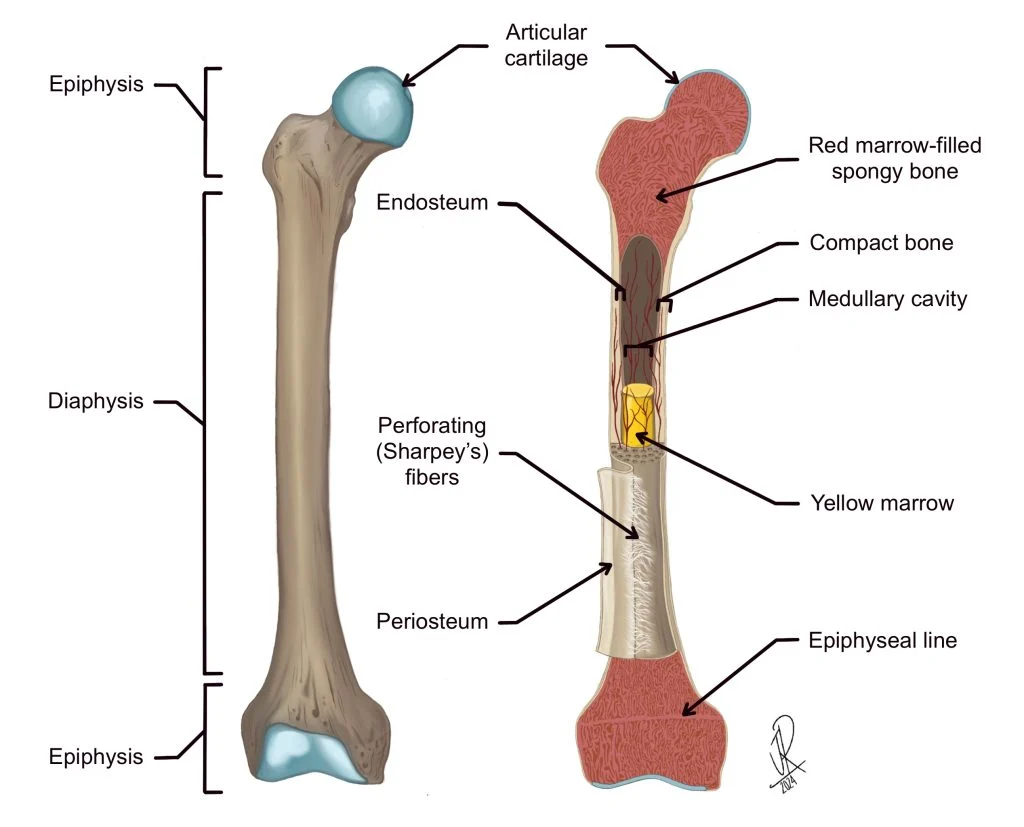
Describe the general structure of a bone
Compact bone surrounds spongy bone