Bio2108L final exam + practical
 Call Kai
 Learn
Learn Practice Test
 Spaced Repetition
 Match
Match Flashcards
 Knowt Play
1/36

There's no tags or description
Looks like no tags are added yet.
Name | Mastery | Learn | Test | Matching | Spaced | Call with Kai | Chat |
|---|
No analytics yet
Send a link to your students to track their progress
37 Terms
What two forces describe how water is transported from the roots to the rest of a tree?
- Cohesion (hydrogen bonds)
- Adhesion (polar water molecules stick to the dead cells of the xylem)
The phloem carries water and minerals ——-(unidirectionally/bidirectionally),
bidirectionally (up and down)
The xylem carries water and nutrients ——— (unidirectionally/bidirectionally).
Unidirectionally (strictly upward)
What is the sticky part of the pistil called where pollen germinates?
Stigma (stig = sticky)
What might cause a leaf to have more open stomata?
→ High light conditions
→ High humidity
→ High wind
→ Heat
→ Low internal CO2 levels
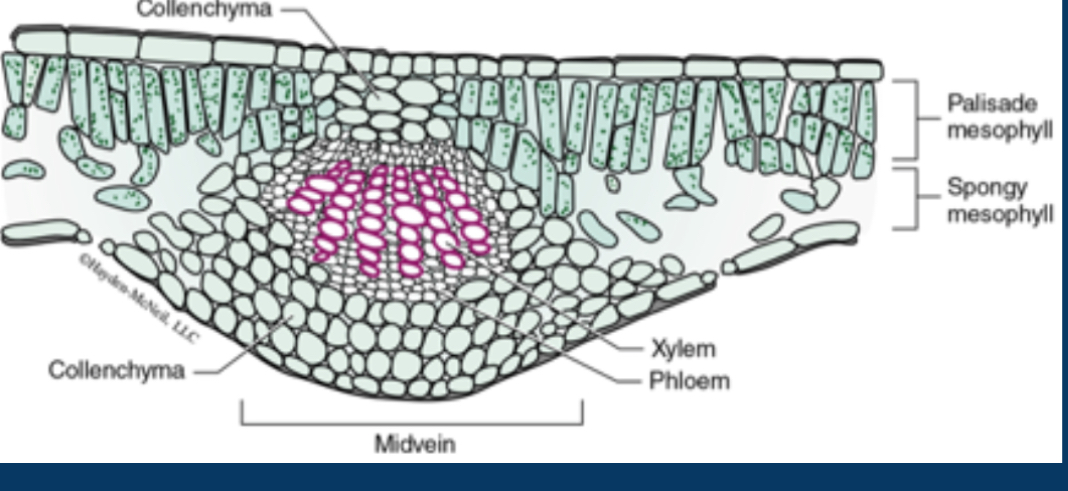
What is this an image of?
Eudicot leaf
What is the natural phenomenon that keeps the Earth warm enough to support light?
Greenhouse effect
What would you add to raise the pH of a solution from 5 to 8?
A base
Why might we see more lichen growing outside the city than in the city?
The city has more pollution than areas outside the city (Lichen = Bioindicators)
In lichen, what are 2 of the 3 functions that the fungus symbiont serves for the algae?
→ Protection from intense sunlight
→ A reservoir for water
→ A reservoir for minerals
If there’s more carbon dioxide in the atmosphere, how will that affect the:
Ocean’s Hydrogen Ion Concentration?
Ocean’s pH?
Because there are MORE HYDROGENS in the air from carbon, the pH will LOWER and become more ACIDIC
What gas is a waste product of respiration?
Co2
What does Tidal Volume (TV) measure?
Volume of air inhaled and exhaled during a normal breath
What is the function of spiracles for the grasshopper?
Breathing tubes for respiratory/gas exchange
Which two body systems are involved in human gas exchange?
●Digestive System
●Circulatory System
●Nervous System
●Endocrine System
●Respiratory System
Respiratory (intakes O2 and expels CO2) and circulatory system (oxygenation of blood, muscle & tissue, removes waste)
What is the name of the structure that allows oxygen to diffuse from the lungs to the pulmonary capillaries?
Alveoli
A speciation event is best represented by what characteristic on a phylogenetic tree?
A node
A dog has what type of symmetry?
Bilateral symmetry
How many atriums does the human heart have?
2 (left and right)
List 2 reasons why Daphnia magna are an ideal model organism to study the effect of caffeine on heart rate.
→ short culture period
→ transparency makes their organs easier to see
→ high reproductive rate
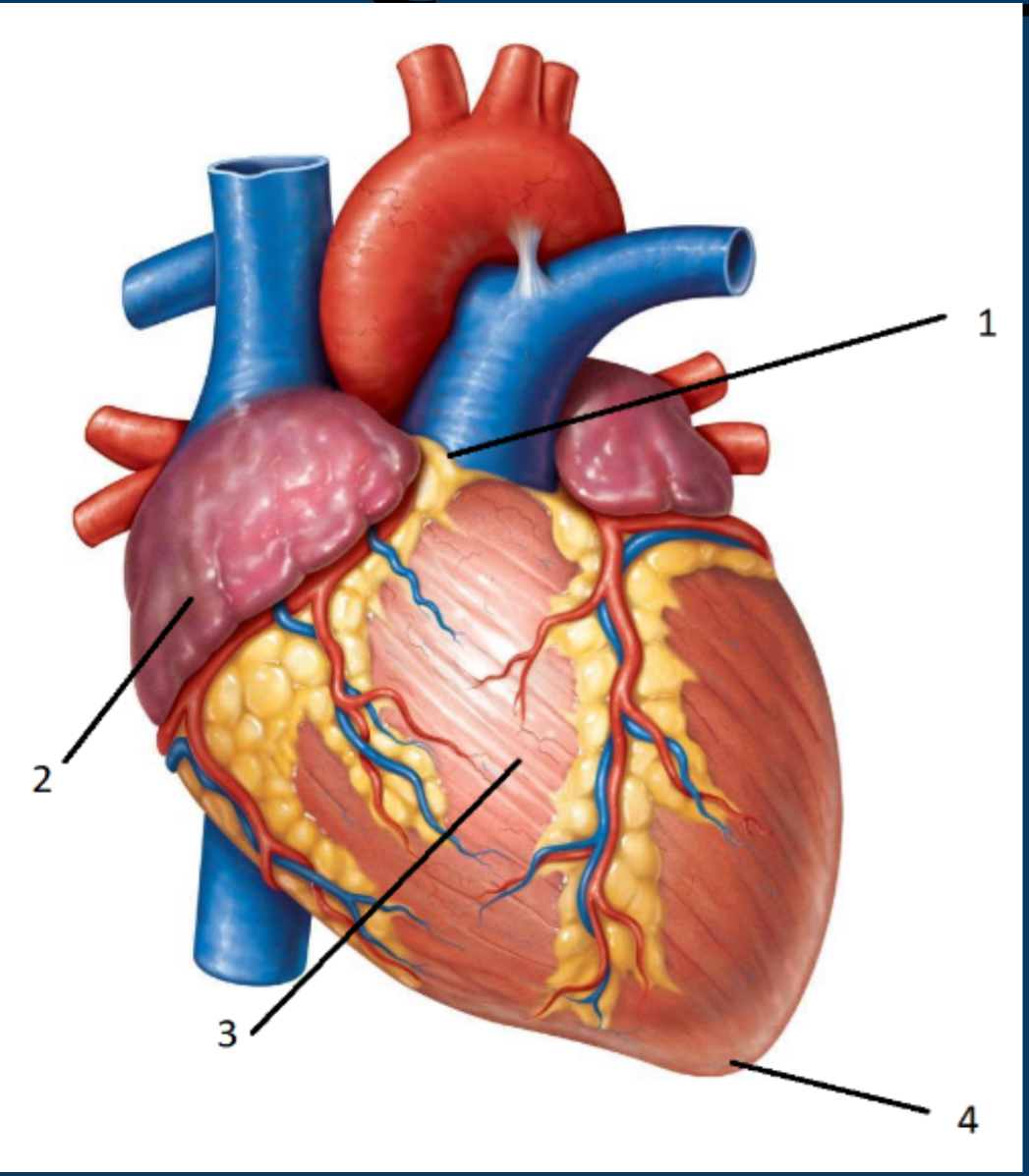
Where is the pulmonary artery located?
At #1
Which valve prevents backflow from the right atrium to the right ventricle?
Tricuspid valve
Name one association with the ‘lub’ sound of the cardiac cycle?
→ AV valves closing
→ semilunar valves opening
→ pumping blood out of the ventricles
→ systole
What’s the difference between systole and diastole in simple terms.
Systole is the phase when your heart muscle contracts and pumps blood out to your body. Diastole is the phase when the heart muscle relaxes and the chambers refill with blood
How is heart rate read? Ex: 120/80
Systole is the top number, diastole is the bottom
When blood flows from the vena cava through the heart, in what order will it pass the following valves:
-bicuspid
-aortic semilunar
-tricuspid
-pulmonary semilunar
write the answer in correct order
Aortic semilunar → bicuspid → pulmonary semilunar → tricuspid
Which objective lens should you start with to focus a specimen on a slide? And what is the total magnification of that lense?
Screening (red lense) - 4x
4x • 10 = 40x total magnification
Practice focusing the prepared slide at the 10x objective lens.
What color is this objective lens?
What is the total magnification?
Yellow
10x • 10 = 100x total magnification
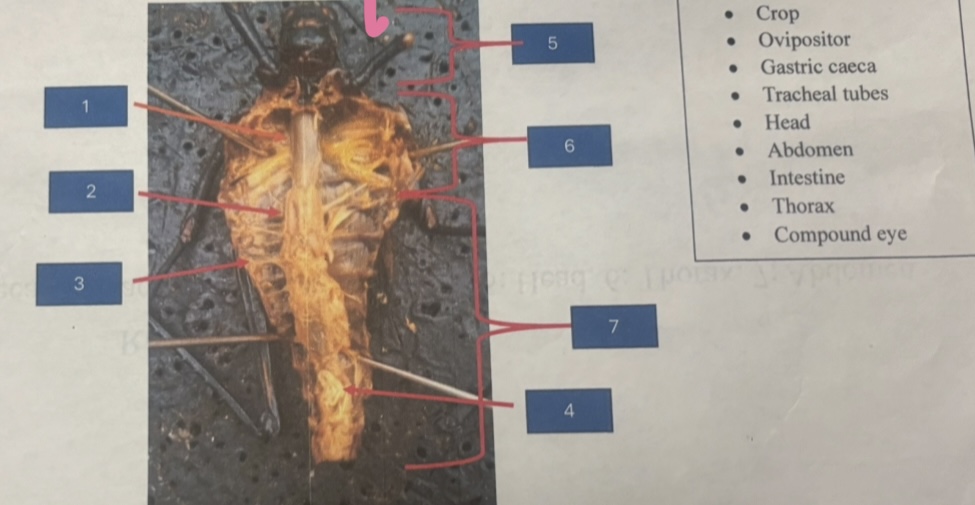
Identify the grasshopper internal structures labeled 1-7.
Crop
Gastric Caeca
Tracheal tubes
Intestines
Head
Thorax
Abdomen
What are the holes located on the abdomen of the grasshopper that enable gas exchange?
Spiracles
What internal structure of a grasshopper enables the direct pathway of oxygen delivery to tissues and the removal of CO2?
Tracheal tubes
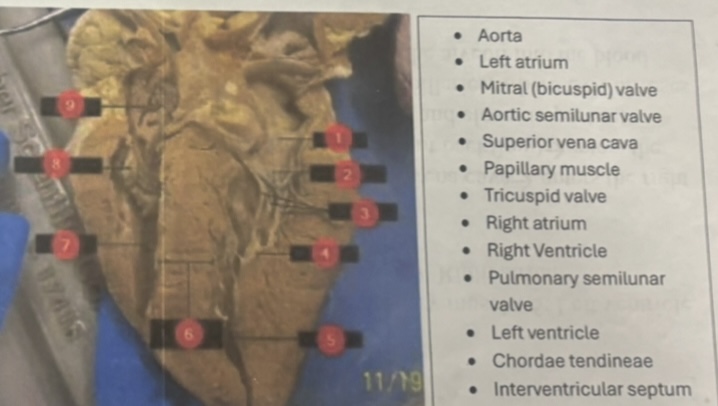
Identify the sheep heart structures labeled 1-9. Use the table bank to guide your answers.
Left atrium
Bicuspid valve
Chordae tendineae
Papillary muscle
Left ventricle
Interventricular septum
Right ventricle
Tricuspid valve
Right atrium
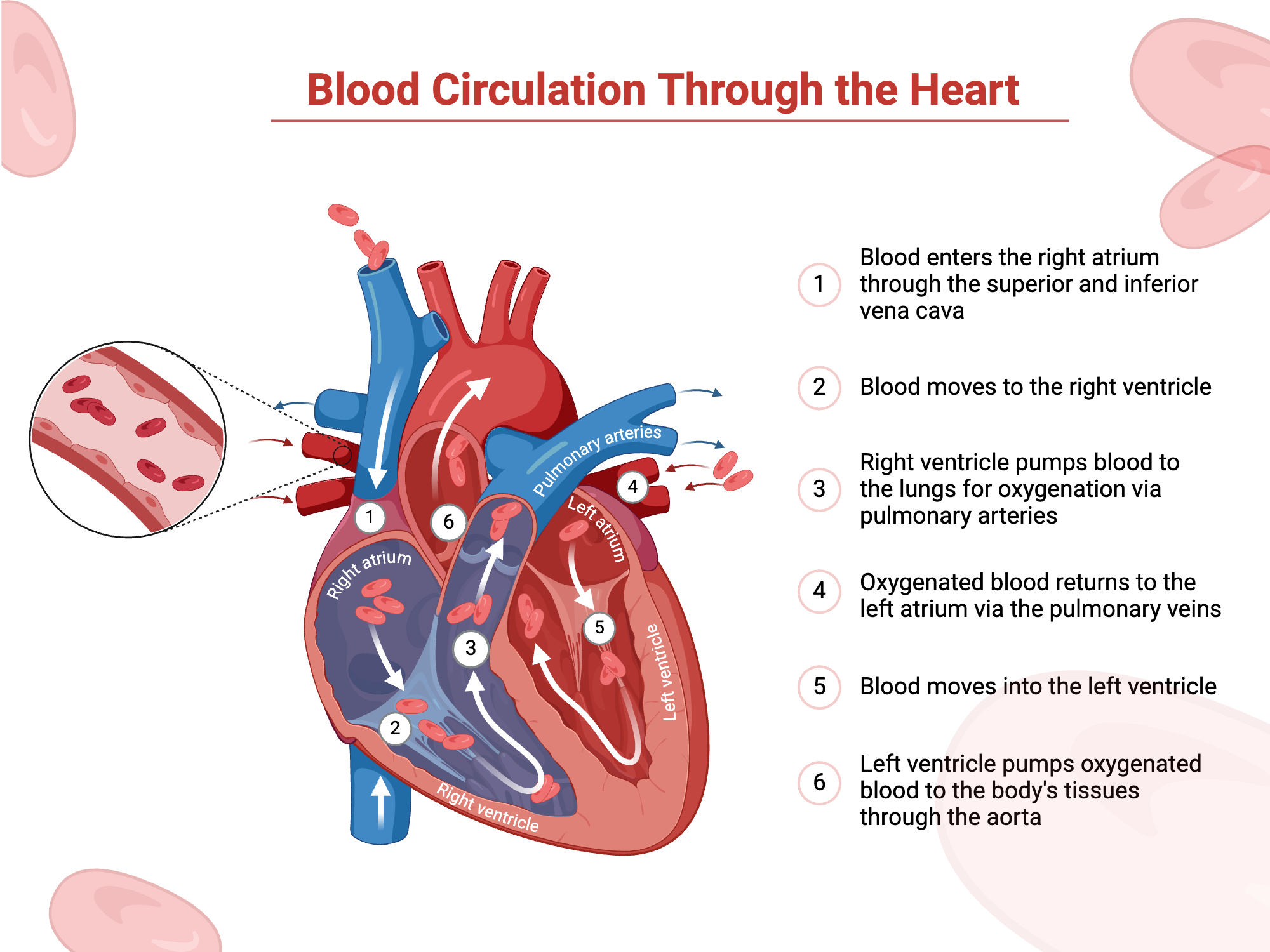
Using the table bank and the image below, describe the flow of deoxygenated blood and the flow of oxygenated blood.
Deoxygenated Blood:
1. The Entrance
Deoxygenated blood enters the heart
through the inferior and superior vena cava
enters the right atrium
The First Chamber & Valve
passes through the tricuspid valve
(opens and closes to prevent backflow)
enters the right ventricle
3. The Exit Route
passes through the pulmonary semilunar valve
(opens and closes to prevent backflow)
enters the pulmonary artery
The Lung Exchange
travels to the pulmonary capillaries
where CO2 diffuses from the deoxygenated blood
to the lung alveoli
and O2 diffuses from the alveoli into the blood
(oxygenation)
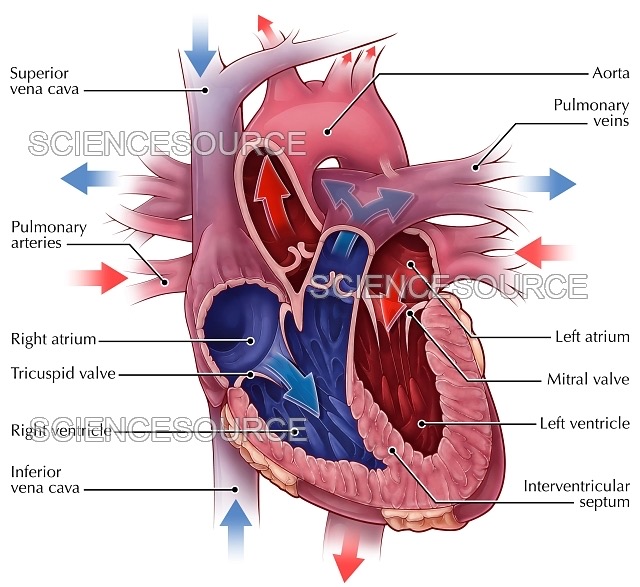
Using the table bank and the image below, describe the flow of deoxygenated blood and the flow of oxygenated blood.
B. Oxygenated blood:
Oxygenated blood enters the heart.
It goes through the pulmonary vein.
It enters the left atrium.
It passes through the bicuspid valve.
This valve opens and closes to prevent backflow.
It enters the left ventricle.
It passes through the aortic semilunar valve.
This valve opens and closes to prevent backflow.
It enters the aorta.
Oxygenated blood gets pumped through the systemic system.
This process oxygenates tissues and muscles throughout the body.
Acidic solutions have a _____ concentration of H+ ions. Basic have lesser
Higher
Cellular respiration ___Co2, which results in an ___ in concentration of H+ ions leading to ____ in water pH.
Produces; increase; decrease
Carbonic acid from CO2 produces _____ that ____ the pH.
H+ ions; lower