Anatomy Day 2 Summer Anatomical planes, laterality, movement
 Call Kai
 Learn
Learn Practice Test
 Spaced Repetition
 Match
Match Flashcards
 Knowt Play
1/28

There's no tags or description
Looks like no tags are added yet.
Name | Mastery | Learn | Test | Matching | Spaced | Call with Kai | Chat |
|---|
No analytics yet
Send a link to your students to track their progress
29 Terms
axial plane, transverse, transaxial plane
horizontal plane perpendicular to the long axis of the body

sagittal plane
vertical plane parallel to the median plane(or midsagittal plane which divides the body into two halves)

coronal, frontal plane
vertical plane perpendicular to the median plane

midsagittal/median plane
divides the body right down the midline into equal left and right halves down

anatomical planes
expressed in relation to the anatomical position when standing. The 3 standard(orthogonal) planes are perpendicular to each other.

unilateral
one side of the body (EX: one right leg)

bilateral
both sides of the body (EX: right leg & left leg)

ipsilateral
on the same side of the body (EX: right arm & right leg)

contralateral
on the opposite side of the body (EX: left arm & right leg)

model perspective
Left and right are always determined from the perspective of the
flexion
decrease the angle of the joint

extension
increase the angle of the joint
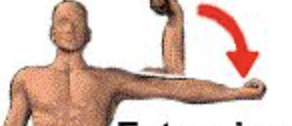
abduction
movement (of limb away) from the midline

adduction
movement (of limb) toward the midline

pronation
rotation of hand and forearm to bring the palm facing posterior

supination
rotation of hand and forearm to bring the palm facing anterior

circumduction
circular movement of a joint using a combination of flexion, abduction, extension, and adduction such that the distal limb decsribes a circle. cone-shaped movement of a limb

medial/internal rotation
rotation toward the midline
lateral/external rotation
rotation away from the midline
inversion
sole of foot turns inward or towards the median plane(not flexion)

eversion
sole of foot turns outward or away from the median plane(not flexion)

protrusion
movement of the mandible, lips or tongue anteriorly

retrusion
movement of the mandible, lips or tongue posteriorly

elevation
movement of the scapula or mandible superiorly

depression
movement of the scapula or mandible inferiorly

ulnar deviation
medial movement of the wrist towards the midline, fingers bend and drift toward the pinky finger or ulna bone

radial deviation
lateral movement of the wrist away from the midline, bends the hand toward the thumb side of the forearm or raidus bone

dorsiflexion
toes/foot move up toward your shin(flexion)

plantarflexion
toes/foot point down away from your shin(flexion)
