worms in horses and why they are important
 Call Kai
 Learn
 Practice Test
 Spaced Repetition
 Match
 Flashcards
 Knowt Play
1/14

There's no tags or description
Looks like no tags are added yet.
15 Terms
equine strongyles - introduction
• Common
• Cause of intestinal disease
• World-wide distribution
• Complex infections
• Control strategies confusing
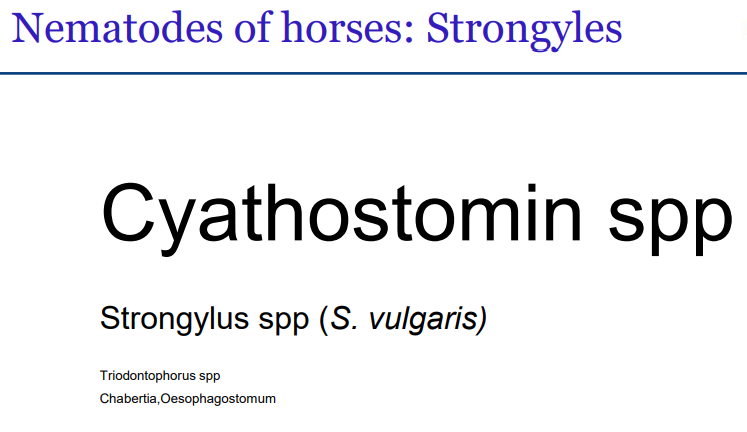
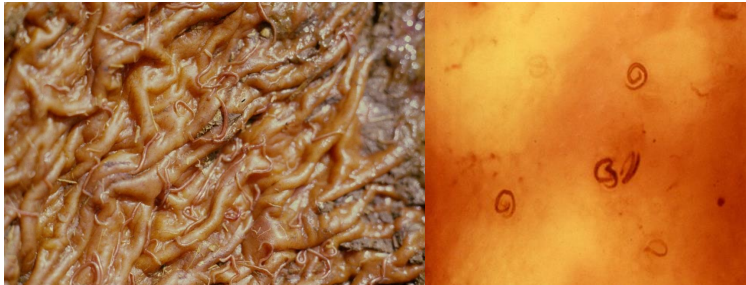
cyathostomins
commonest parasites
infections complex
• 51 different species
mixed burden of 5-10 common species
• with a few rarer species


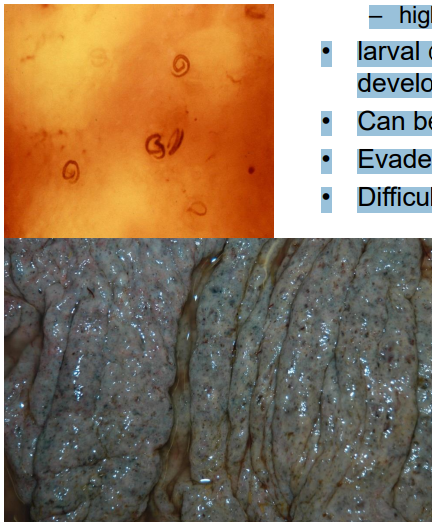
Cyathostominae mucosal larvae
• mucosa (submucosa) of caecum and colon
– higher numbers more proximally
• larval chilling and trickle infection slow development to maturity
• Can be 95% of burden
• Evade anthelmintic treatments
• Difficult to diagnose

relevance of lifecycle?
• Targeting control measures
• Understanding anthelmintic resistance
• Understanding patterns of disease
Cyathostomins
Important epidemiological features:
• Widespread development of anthelmintic
resistance
• Encysted life-cycle stages evade
anthelmintic treatment
• High levels of infection intensity in some
horses
• Young animals (<4yrs) at greatest risk

diagnosis
• Difficult due to non-patent infection
• New small redworm blood test can evaluate probability
of a significant total worm burden
• Useful for treatment decision making

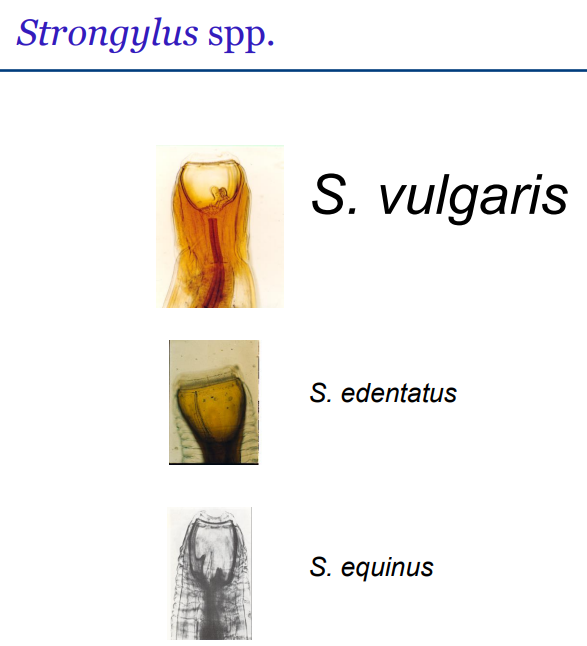
Strongylus vulgaris
• Uncommon
• Highly susceptible to anthelmintics
• Not encountered in populations exposed to
thorough anthelmintic regimes
• Large numbers associated with
unthriftiness and anaemia
• Larval migration associated with colic

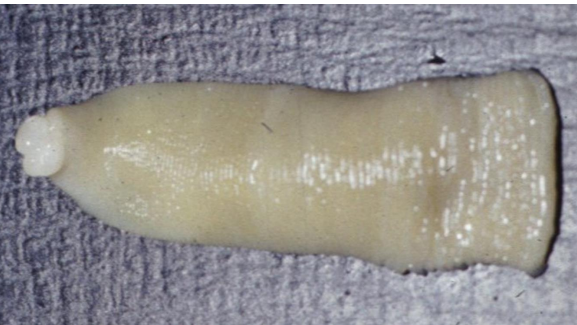
tapeworms (Anoplocephala perfoliata)
• Adults 5 – 8cm long
• Segmented
• Live in caecum (ileo-caecal junction)
• ? Significance


orbatid mites


Coprological diagnosis
diagnostics

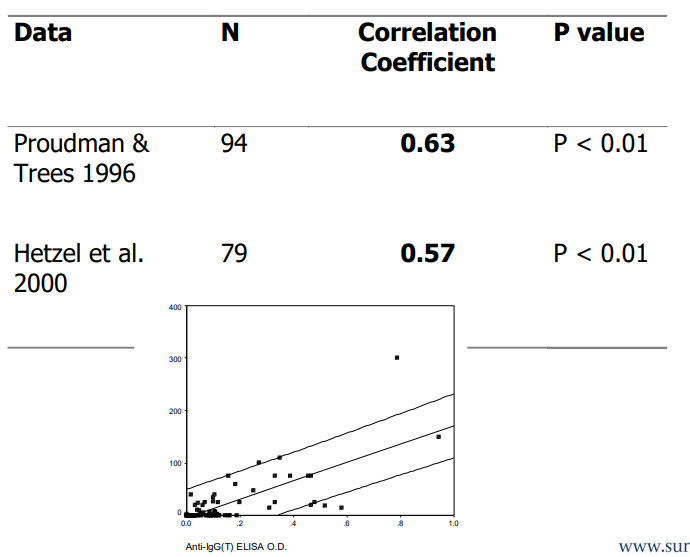
Correlation with infection intensity


Equisal: salivary IgG(T) assay
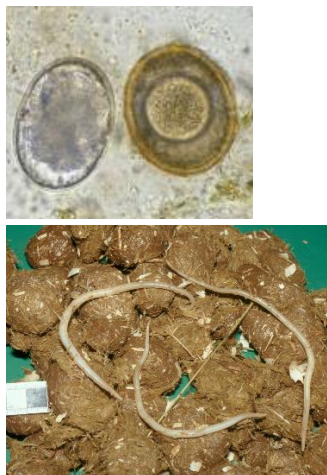
ascarid-Parascaris equorum
• Spaghetti-like
• Young horses (<4 yrs)
• Prolific egg production
• Hardy eggs, survive in
environment
• Resistant to ivermectin!


Bots: Gasterophilus intestinalis
Pinworms: Oxyuris equi
• Minor cause of perineal
irritation
• Can be difficult to treat
• Not fatal!

