L22 - Leukocyte V
 Call Kai
 Learn
 Practice Test
 Spaced Repetition
 Match
 Flashcards
 Knowt Play
1/44

Earn XP
Description and Tags
L22 - Leukocyte V
45 Terms
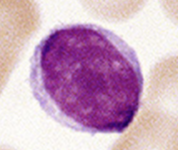
What Type of Leukocyte is this?
Lymphocytes
What are the Main Morphologic Features of a Small Lymphocyte?
Small, round to slightly indented nucleus
Clumped chromatin
High N:C ratio
Thin rim of variably blue cytoplasm

Which Species Normally Have Lymphocyte-Predominant Blood?
Ruminants: healthy cattle, sheep, and goats may have more lymphocytes than neutrophils
How do Small Lymphocytes differ from Monocytes?
Lymphocytes:
Smaller, rounder nuclei
Scant cytoplasm
Monocytes:
Irregular nuclei
Abundant blue-gray, often vacuolated cytoplasm
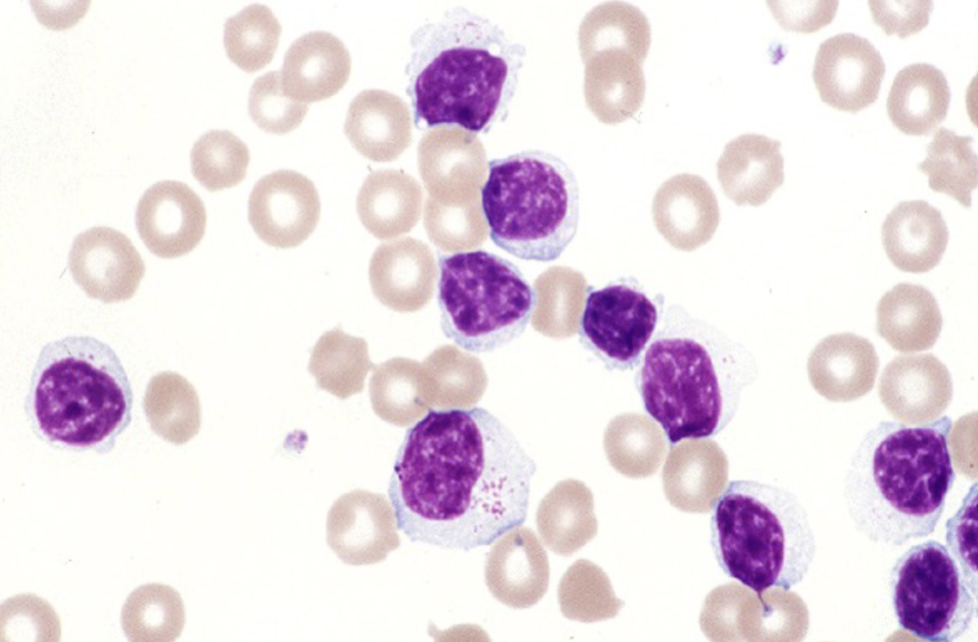
What Type of Leukocyte is this, and What Species does it come from?
Granular lymphocytes (GLs / LGLs)
Dog

What Type of Leukocyte is this, and What Species does it come from?
Granular lymphocytes (GLs)
Cat
What Characterizes a Granular Lymphocyte?
Pink-purple azurophilic granules containing perforin and granzymes
May be a cytotoxic T cell or NK cell
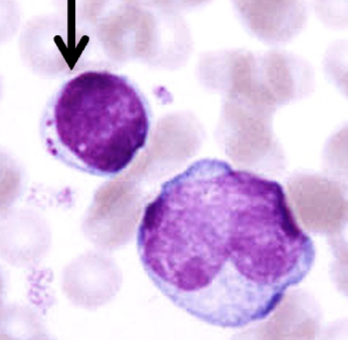
What is Distinctive about Feline Granular Lymphocytes?
They may have especially large, conspicuous cytoplasmic granules
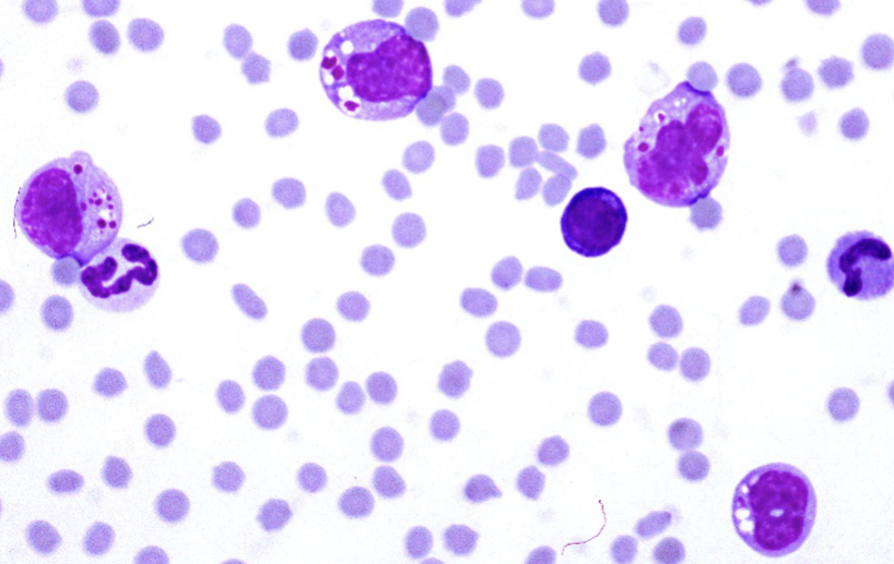

What Type of Leukocyte is this, and What Species does it come from?
Monocyte, Neutrophil and Two Large Lymphocytes
Cow

Can Morphology Distinguish B Cells, T Cells, and NK Cells?
Usually not
Granular lymphocytes suggest cytotoxic T or NK cells, but markers are needed to distinguish them

What is Immunophenotyping, and Why is It Used?
Antibodies detect CD (cluster of differentiation) markers to identify lymphocyte lineage and maturation stage
Where do T Cells and B Cells Mature?
T cells: thymus
B cells: mainly bone marrow
Bursa in birds
Terminal ileal Peyer's patch contributes in ruminants
Which CD Markers are Important for T-Cell Identification?
CD3 identifies T cells
CD4 and CD8 distinguish major T-cell subsets and developmental stage

What are the Morphologic Features and Function of Plasma Cells?
Morphologic:
Eccentric nucleus
Deeply blue cytoplasm
Pale perinuclear Golgi zone
Function:
Terminally differentiated antibody-secreting B cells

What is Unique about Lymphocyte Recirculation?
Many lymphocytes return from tissues → blood
Approximately 70% of those entering tissues re-enter circulation
Which Structures and Molecules Support Lymphocyte Recirculation?
HEVs, lymphatics, selectins, integrins, ICAMs, and chemokines guide lymphocyte trafficking
Why is Lymphocyte Recirculation Important?
It distributes antigen-specific lymphocytes throughout the body and enables immune surveillance
What are the Three Major Functions of Lymphocytes?
B cells/plasma cells: immunoglobulin production
CD4+ T cells: cytokines
CD8+ T cells/NK cells: cytotoxicity
What are the Main Kinetic Features of Lymphocytes?
Long-lived (some years–decades)
Extensive tissue–blood recirculation
Morphology changes with immune stimulation
What Proportions of Circulating Lymphocytes are T, B, and NK Cells?
Varies among species
~ 70% T cells
~ 20% B cells
~ 10% NK cells
How does Age Affect Blood Lymphocyte Counts?
Young animals have higher counts and more reactive cells
Counts generally decline with age
Use age-appropriate reference intervals.
What is Lymphopenia, and How Common is It?
Decreased absolute blood lymphocyte count
More common than lymphocytosis in sick animals
How do Corticosteroids Cause Lymphopenia?
Induce apoptosis in susceptible lymphocytes and alter trafficking, reducing their return from tissues to blood

What Leukogram Pattern was Seen in the Dog Hit by a Car?
Leukocytosis
Mature neutrophilia without left shift
Lymphopenia
Monocytosis
→ Classic canine corticosteroid response

What are the Major Causes of Lymphopenia?
Corticosteroids
Lymph loss
Lymphoid hypoplasia/aplasia
Immunosuppression
Systemic infections
Disrupted lymph node architecture
How can Chylothorax or Intestinal Disease Cause Lymphopenia?
Loss of lymphocyte-rich lymph through thoracic or intestinal lymphatics reduces circulating lymphocytes
Which Infections and Immune Disorders can Cause Lymphopenia?
Canine distemper
Canine parvovirus
FIP
Congenital immunodeficiencies
Other disorders impairing lymphocyte production or survival
Why can Lymphoma Cause Lymphopenia?
Abnormal lymph node architecture disrupts normal lymphocyte trafficking and recirculation
What are the Major Causes of Lymphocytosis?
Young age
Epinephrine response
Persistent antigenic stimulation
Lymphoid neoplasia
BLV-associated persistent lymphocytosis
How does Epinephrine Cause Physiologic Lymphocytosis?
Fight-or-flight stimulation promotes lymphocyte entry into blood, including through thoracic duct contraction
Especially notable in cats
How do Epinephrine and Corticosteroid Responses differ?
Epinephrine: mature neutrophilia with possible lymphocytosis
Corticosteroids: mature neutrophilia with lymphopenia

What Leukogram Pattern was Seen in the Excited Cat?
Mature neutrophilia
Lymphocytosis
→ Consistent with an epinephrine-mediated physiologic leukogram.

Does Immune Stimulation Always Cause Lymphocytosis?
No
Counts may increase but remain within reference limits
Reactive lymphocyte morphology may still be present
How can Persistent Inflammation Cause Lymphocytosis?
Prolonged antigenic stimulation increases lymphopoiesis and may cause reactive lymphocytosis, neutrophilia, and monocytosis

What Did the Cat with Sporotrichosis Demonstrate?
Lymphocytosis with occasional reactive lymphocytes from prolonged fungal antigenic stimulation

How do Lymphocytic Leukemia and Lymphoma differ in Blood Findings?
Leukemia may cause marked lymphocytosis and atypical cells
Most lymphomas do not cause peripheral lymphocytosis
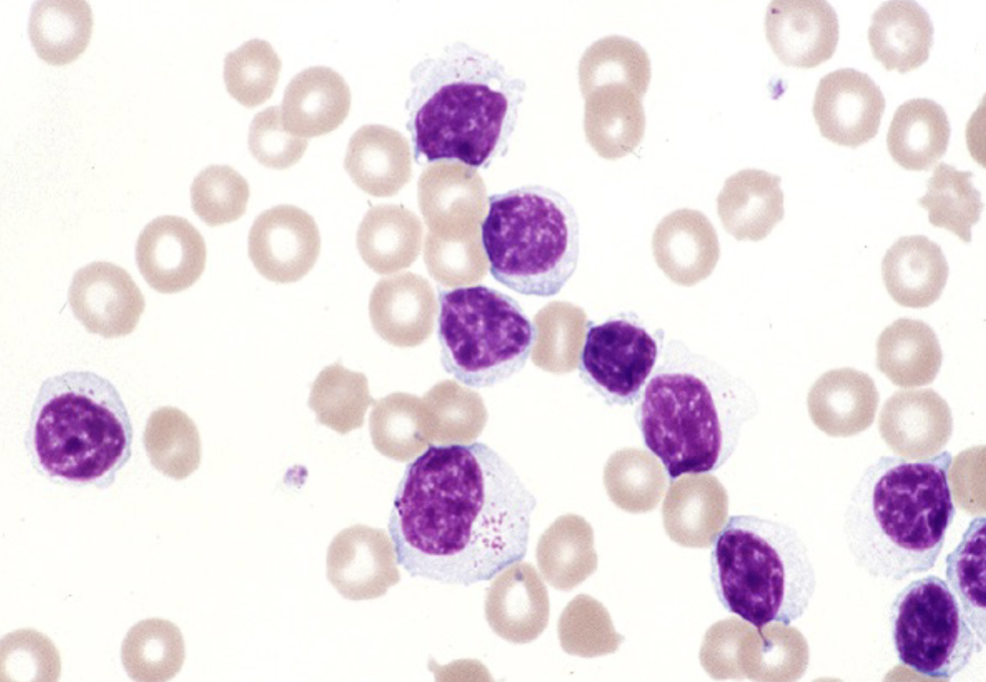
What is Persistent Lymphocytosis in BLV-Infected Cattle?
A subclinical, non-neoplastic proliferation of B cells associated with bovine leukemia virus infection
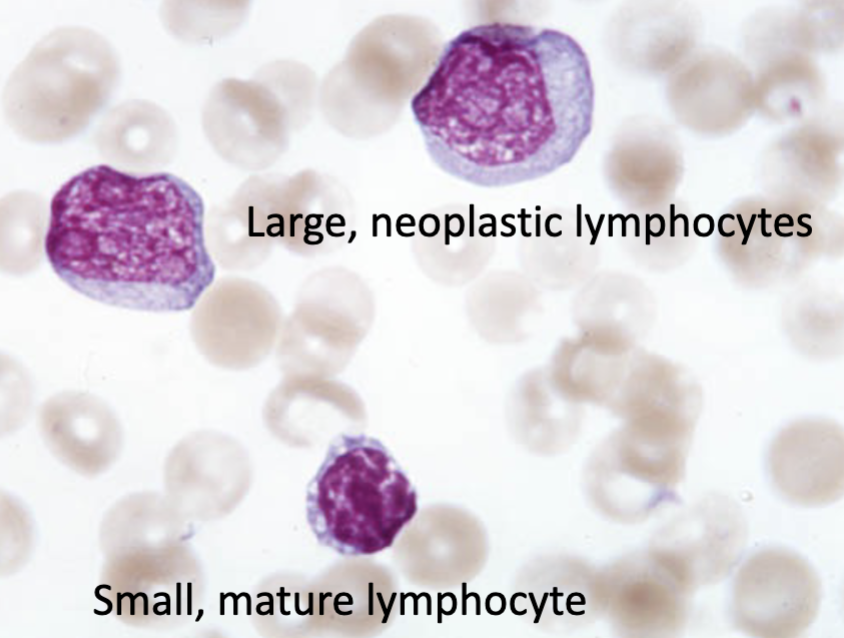
How do Reactive and Atypical Lymphocytes differ?
Reactive: larger, more deeply blue cytoplasm after stimulation
Atypical: abnormal features, such as prominent nucleoli, raising concern for neoplasia
What is the Significance of Plasma Cells in Peripheral Blood?
Abnormal in mammals → evaluate inflammation or plasma-cell neoplasia
In birds and reptiles, they may accompany inflammation
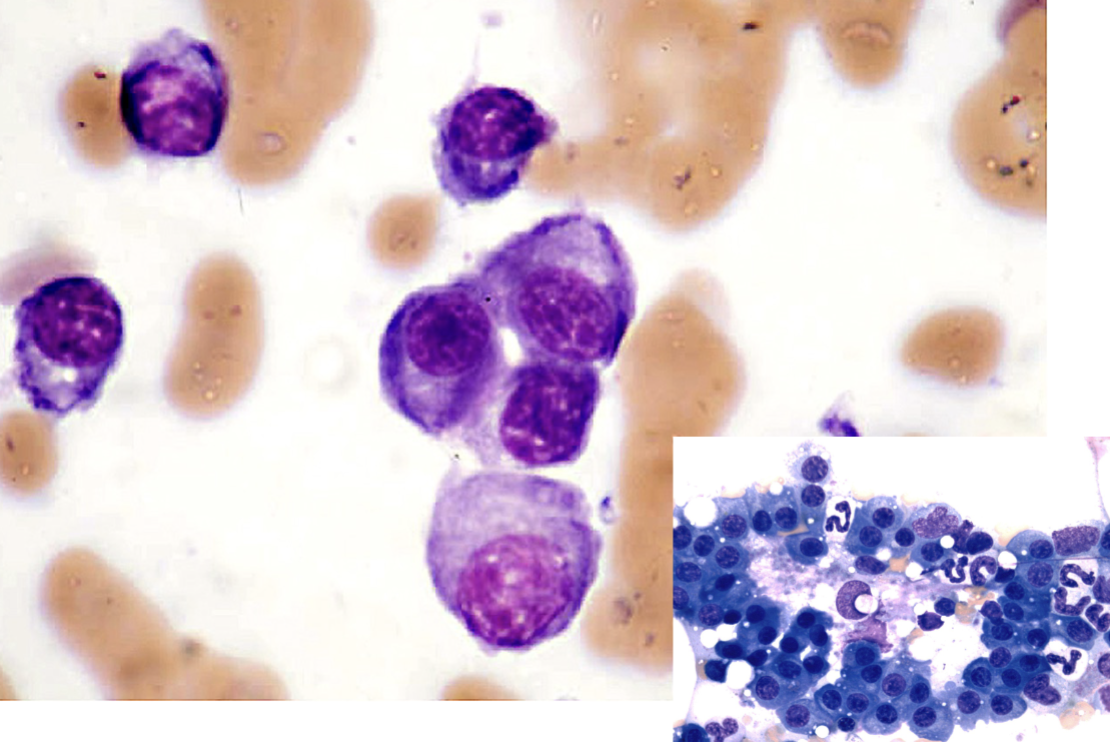
TABLE 1. Lymphocyte Types: Morphology and Function
Cell Type | Main Function | Important Features |
B lymphocyte | Humoral immunity | Produces antibodies after differentiation into plasma cells |
CD4+ T lymphocyte | Cytokine production | Coordinates immune responses |
CD8+ T lymphocyte | Cytotoxicity | Kills target cells using perforin and granzymes |
NK cell | Cytotoxicity | Also uses perforin and granzymes |
Plasma cell | Antibody secretion | Eccentric nucleus, deeply blue cytoplasm, pale Golgi zone |
Remember: You generally cannot distinguish B cells, T cells, and NK cells based on morphology alone. Immunophenotyping is needed.
TABLE 2. Lymphocyte Kinetics and Recirculation
Feature | Main Characteristics |
Origin/maturation | T cells mature in thymus; B cells mainly in bone marrow |
Recirculation | Blood ←→ lymphoid tissues via lymphatics and specialized vasculature |
Return to blood | Approximately 70% of lymphocytes entering tissues re-enter circulation |
Important molecules | Selectins, integrins, ICAMs, chemokines |
Specialized vessels | High endothelial venules (HEVs) |
Lifespan | Some lymphocytes survive years to decades |
Main purpose | Immune surveillance and distribution of antigen-specific lymphocytes |
Age effects | Higher circulating counts in young animals; decrease with age |
Approximate populations | 70% T cells, 20% B cells, 10% NK cells (species-dependent) |
Key distinction from L21: Unlike eosinophils and monocytes, many lymphocytes recirculate from tissues back into blood.
TABLE 3. Major Causes of Lymphopenia vs. Lymphocytosis
Lymphopenia (↓) | Lymphocytosis (↑) |
Corticosteroid effects (most common in sick animals) | Epinephrine response (especially cats) |
Lymph loss: chylothorax, lymphangiectasia | Young age |
Lymphoid hypoplasia/aplasia | Persistent antigenic stimulation |
Immunosuppressive therapy, radiation | Chronic infections |
Acute systemic infections (distemper, parvovirus, FIP) | Lymphocytic leukemia |
Disrupted lymph node architecture | BLV-associated persistent lymphocytosis in cattle |
Important: Lymphopenia is more common than lymphocytosis in sick animals.
TABLE 4. Corticosteroid vs. Epinephrine vs. Persistent Inflammation
Feature | Corticosteroid Response | Epinephrine Response | Persistent Inflammation |
Typical situation | Sick/stressed dog | Excited cat | Chronic infection |
Neutrophils | ↑ Mature neutrophilia | ↑ Mature neutrophilia | May ↑ |
Lymphocytes | ↓ Lymphopenia | ↑Lymphocytosis | May ↑ |
Monocytes | May ↑ in dogs | Not defining | May ↑ |
Left shift | Usually absent | Usually absent | Variable |
Main mechanism | Cortisol effects | Fight-or-flight redistribution | Persistent antigenic stimulation |
Lecture Examples
Patient | Findings | Interpretation |
Dog hit by a car |
| Corticosteroid stress leukogram |
Young excited cat |
| Epinephrine-mediated physiologic leukogram |
Cat with sporotrichosis |
| Persistent antigenic stimulation |
Exam tip: Both corticosteroids and epinephrine can cause mature neutrophilia. The lymphocyte response is a major clue for distinguishing them.
TABLE 5. Lymphocyte Morphologic Abnormalities
Cell Appearance | Morphologic Features | Clinical Significance |
Small mature lymphocyte | Round nucleus, clumped chromatin, scant cytoplasm | Normal resting lymphocyte |
Reactive lymphocyte | Larger cell, abundant deeply blue cytoplasm | Antigenic or cytokine stimulation |
Granular lymphocyte | Pink-purple azurophilic granules | Cytotoxic T cell or NK cell |
Atypical/neoplastic lymphocyte | Abnormal morphology, sometimes prominent nucleoli | Concern for lymphoid neoplasia |
Plasma cell | Eccentric nucleus, deeply blue cytoplasm, pale Golgi zone | Unusual in mammalian peripheral blood |
Important distinction: Reactive lymphocytes are not automatically neoplastic. Interpret morphology alongside the CBC and clinical findings.