7.Bed Bugs
 Call Kai
 Learn
Learn Practice Test
 Spaced Repetition
 Match
Match Flashcards
 Knowt Play
1/119

There's no tags or description
Looks like no tags are added yet.
Name | Mastery | Learn | Test | Matching | Spaced | Call with Kai | Chat |
|---|
No analytics yet
Send a link to your students to track their progress
120 Terms
What is the classification of bed bugs?
Kingdom: Animalia
↓
Phylum: Arthropoda
↓
Class: Insecta
↓
Order: Hemiptera
↓
Family: Cimicidae
What are the two bed bug species to know in Australia?
Common Bed Bug — Cimex lectularius
Tropical Bed Bug — Cimex hemipterus
Both are introduced species in Australia.
Which bed bug species is associated more with temperate regions?
Common Bed Bug — Cimex lectularius
Widespread worldwide and more associated with temperate regions.
Which bed bug species is associated more with tropical/subtropical regions?
Tropical Bed Bug — Cimex hemipterus
More associated with warm tropical/subtropical regions.
Where are Common vs Tropical Bed Bugs mainly found in Australia?
Common Bed Bug — mainly further south
Tropical Bed Bug — mainly further north
Overlap occurs, especially northern NSW/southern QLD
Either species can occur outside its usual range.
What is the basic ID of an adult bed bug?
Small -5-6mm (apple seed size)
flat (dorsoventrally flattened)
oval
wingless
reddish-brown
What does dorsoventrally flattened mean?
Flattened from top to bottom.
This lets bed bugs hide inside very narrow cracks/crevices.
What size is an unfed adult bed bug?
About 5–6 mm
Roughly apple-seed sized.
What colour are adult bed bugs?
Reddish-brown
After feeding → darker/redder
What type of mouthparts do bed bugs have?
Piercing-sucking mouthparts
Used to pierce skin + suck blood.
How many legs do bed bugs have?
6 legs
They are insects.
Can bed bugs fly?
No
They are wingless.
Can bed bugs jump?
No
They move by crawling/running.
What does a bed bug nymph look like?
Smaller + paler version of the adult
Young nymphs are translucent/cream, becoming darker as they develop.
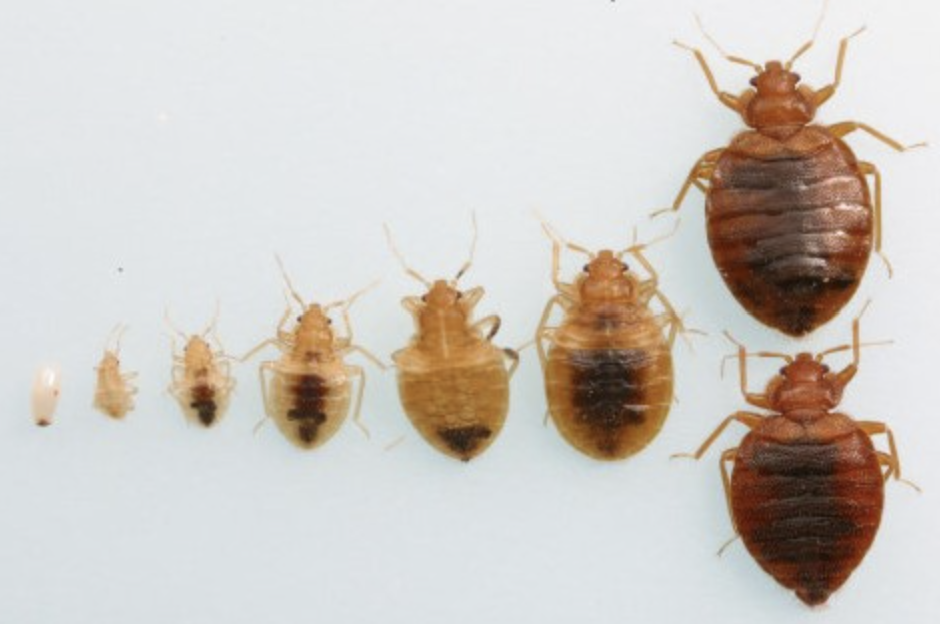
How many nymphal stages do bed bugs have?
5 nymphal stages
What does a bed bug nymph need before each moult?
A blood meal
Each of the 5 nymphal stages normally blood-feeds before moulting to the next stage.
What do bed bug eggs look like?
Tiny + whitish
About 1 mm long.
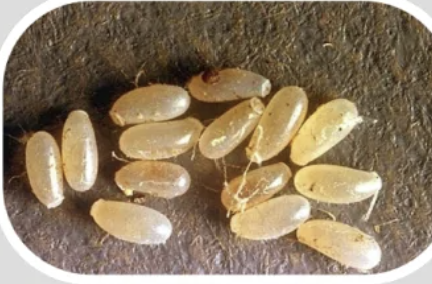
Where are bed bug eggs laid?
Hidden harbourages + cracks/crevices
The eggs are glued to the surface.
This is important because they can resist simple vacuum removal.
What is the bed bug life cycle?
Egg → Nymph → Adult
Incomplete metamorphosis
What are the full bed bug life stages?
Egg → Nymph 1 → Nymph 2 → Nymph 3 → Nymph 4 → Nymph 5 → Adult
Do bed bugs have a larval or pupal stage?
No
They undergo incomplete metamorphosis.
Approximately how quickly can bed bugs complete development under favourable conditions?
About 5-6 weeks
Conditions strongly affect development.
What do bed bugs eat?
Blood
Which bed bug stages blood-feed?
Nymphs + adults
What is the main host of bed bugs?
Humans
But they can also feed on other mammals + birds.
How long does a bed bug usually take to blood-feed?
About 3–12 minutes
Then it returns to a harbourage.
How often do bed bugs typically feed?
Roughly every 5–10 days when hosts are available
They can survive much longer between meals.
Can bed bugs survive for long periods without feeding?
Yes
Adults can survive months without a blood meal, depending on temperature and conditions.
What is the main behaviour of bed bugs?
Nocturnal + cryptic + hitchhiker
How small a hiding space can a bed bug use?
Very narrow cracks — roughly the thickness of a credit card.
Memory:
If the edge of a credit card fits → inspect it.
When do bed bugs usually feed?
Mainly at night while the host is resting
But hungry bed bugs can also feed during the day.
Do bed bugs normally live on the person?
No
They feed on the host → return to a nearby harbourage.
Why can bed bugs hide in extremely small cracks?
Because their bodies are very flat.
roughly the thickness of a credit card.
Do bed bugs usually stay close to the sleeping host?
Yes
Especially in lighter infestations.
Heavier infestations may spread farther through the room/building.
What is the simplest bed bug inspection rule?
Start where the person sleeps/rests → work outward
What type of harbourage do bed bugs prefer?
Tight cracks/crevices near sleeping/resting hosts
What are the main bed inspection spots?
Mattress seams/piping
Bedhead
Bed-frame joints
Screw holes
Ensemble/base
Bedside furniture
Skirting gaps

Where should you inspect if the infestation is heavier?
Expand outward to:
Lounges/upholstery
Curtains
Picture frames
Wardrobes
Wall fittings
Luggage areas
Wall/ceiling cracks
Which adjoining areas should be inspected when bed bugs are found?
Rooms/spaces:
Either side
Above
Below
Especially important in apartments, hotels + multi-room accommodation.
What are the main signs of bed bug activity? (6)
Live adults/nymphs
Dark faecal spotting
Cast skins
Whitish eggs
Blood spots/smears
Harbourage clusters
What is bed bug faecal spotting?
Digested blood excreted by bed bugs
Often seen as small dark spots clustered around harbourages.
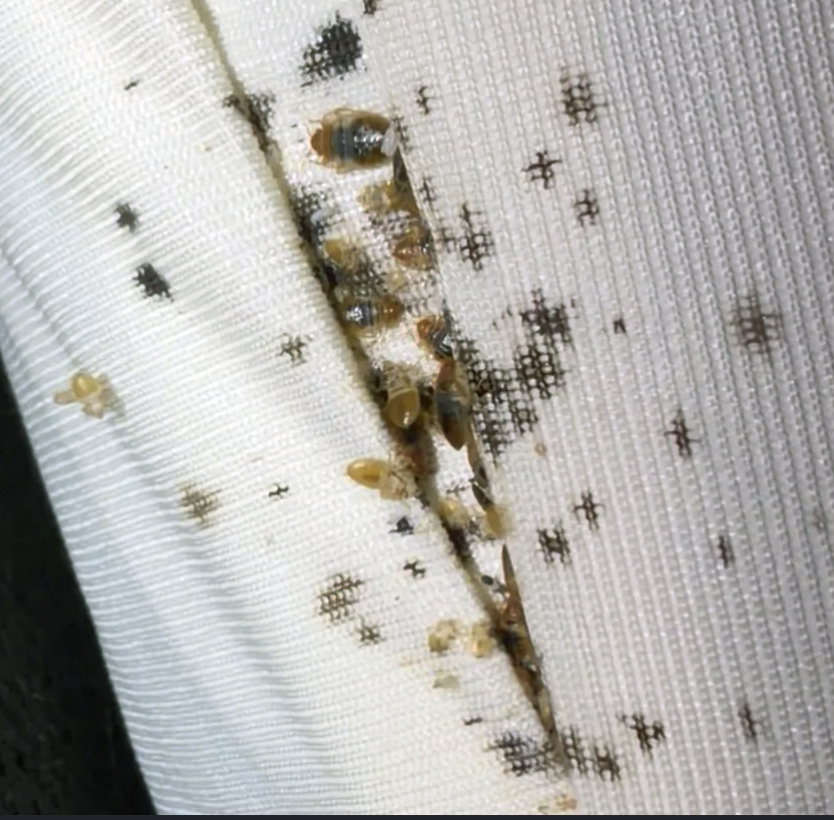
What are bed bug cast skins?
Shed nymphal skins left after moulting
They indicate bed bug development/activity.
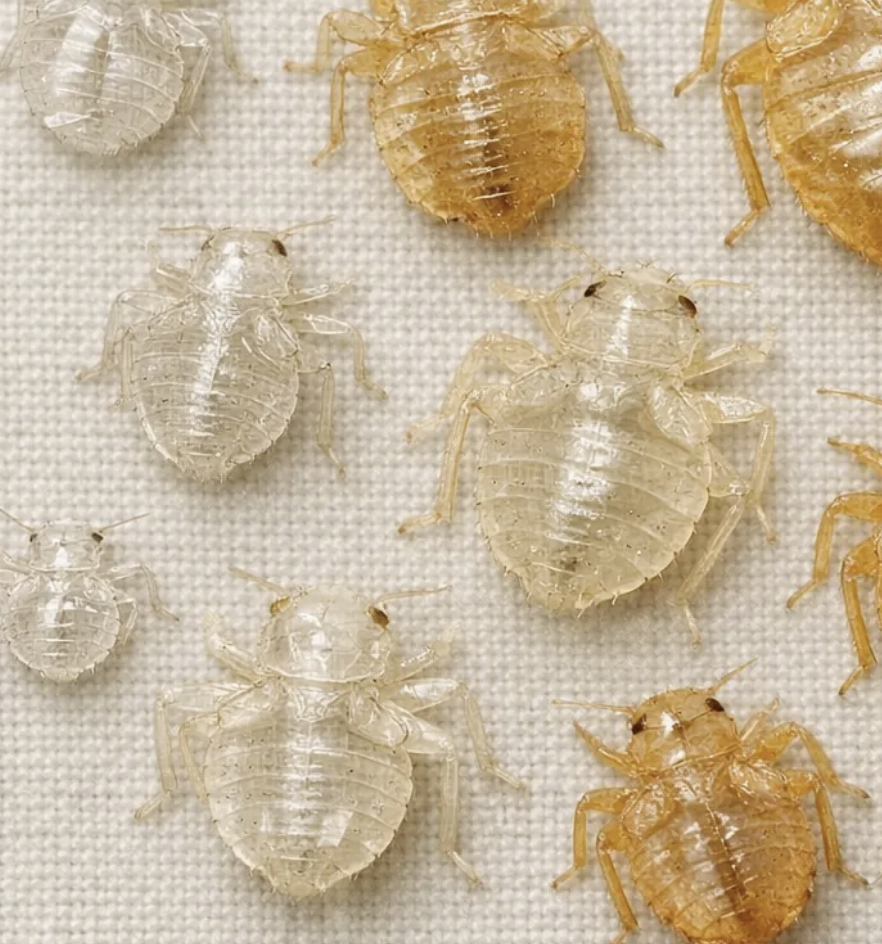
What odour can occur in a heavy bed bug infestation?
Musty / sweet odour
Not a reliable sign by itself.
Do bed bug bites alone confirm an infestation?
No
Bites can resemble other insect bites, skin conditions or allergic reactions.
Confirm with physical evidence
What physical evidence best confirms an active bed bug infestation?
Live bed bugs
Other signs support the diagnosis, but live bugs confirm current activity.
Do bed bugs transmit human diseases?
No known disease transmission to humans
Their main health effects are bites, itching, sleep loss and psychological stress.
Do all people react to bed bug bites?
No
Responses range from:
No visible reaction → itchy lesions → rarely severe allergic reaction.
Why are bites a poor identification tool?
Because:
People react differently
Bites resemble other causes
Some people show no reaction
How do bed bugs mainly spread between properties?
Hitchhiking
Especially in:
Luggage
Furniture
Bedding
Clothing
Bags
Personal belongings
Do bed bugs usually spread because a property is dirty?
No
Bed bugs can occur in clean or dirty properties.
They need hosts + harbourage, not poor hygiene
What is the easiest structural difference between Common and Tropical Bed Bugs?
Pronotum shape
Common Bed Bug — pronotum wider + more laterally expanded
Tropical Bed Bug — pronotum narrower / less expanded
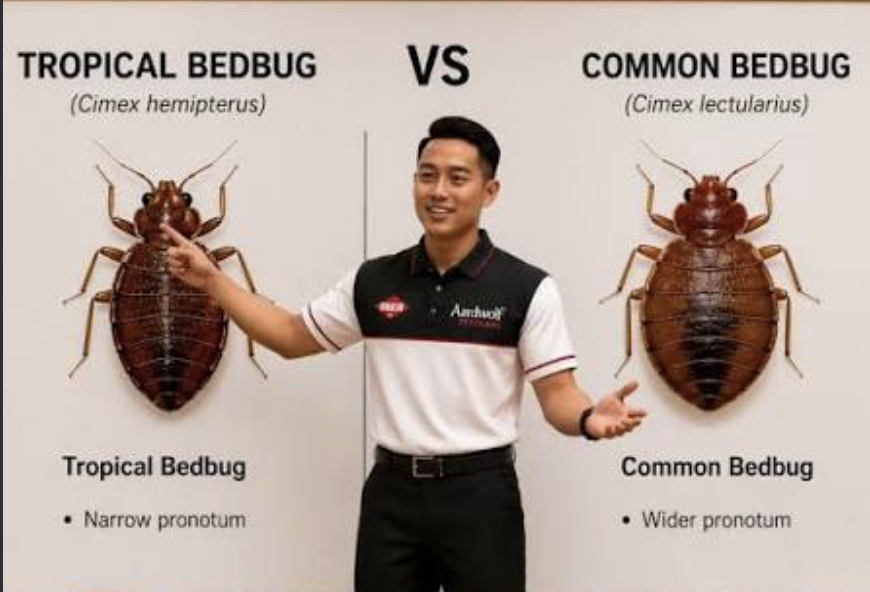
Common vs Tropical Bed Bug — geographic association?
Common — temperate
Tropical — tropical/subtropical
Do Common and Tropical Bed Bugs need completely separate pest-control strategies?
No — the core IPM approach is broadly the same.
But species can differ in biology, monitoring performance and insecticide-resistance profiles
Is insecticide resistance important in bed bugs?
Yes — major issue
Resistance has been documented across multiple insecticide groups, including Australian populations
Should bed bugs be controlled using one insecticide alone?
No
Use Integrated Pest Management (IPM):
inspection + physical control + heat/steam + suitable labelled insecticides + monitoring + follow-up
What is the basic bed bug control sequence?
Confirm → determine extent → find harbourages → prepare → treat → monitor → follow-up
Why is follow-up especially important for bed bugs?
Because:
Hidden bugs may survive
Eggs may survive some insecticides
Resistance is common
Reinfestation/spread may occur
Can vacuuming alone eliminate bed bugs?
No
Vacuuming can remove visible bugs + debris, but hidden bugs remain and eggs are glued to surfaces
What should happen to vacuum contents after bed bug treatment?
Seal securely + dispose of safely away from the treated area
Do not allow captured bed bugs to escape/reinfest.
Does steam kill bed bug eggs as well as adults/nymphs?
Yes — when correctly applied
Steam can kill all life stages including eggs.
What is the main limitation of steam?
Only kills where sufficient heat reaches
No residual control
Do not steam electrical fittings
Steam = direct treatment, not complete control by itself.
Are mattress encasements useful?
Yes — as a management aid
They:
Reduce harbourage
Trap bugs already inside
Make future activity easier to see
They are not a complete treatment by themselves
Why is clutter a major problem in bed bug control?
More clutter = more harbourages + harder inspection/treatment
AEPMA describes significant clutter as a major barrier to successful control.
Should infested belongings be moved into clean rooms?
No
Moving infested items can spread the infestation.
Bag/isolate items before moving when required.
Why is customer cooperation especially important for bed bug control?
Because success depends on:
Access
Preparation
Laundry/bagging
Avoiding spread
Follow-up
What is the main inspection clue for bed bugs?
Tight crack near sleeping/resting host = inspect it
What should you think if bed bugs are found far from the bed?
Infestation may be heavier / more dispersed
Why can total-release insecticide “bombs” make bed bug control harder?
They can disperse bed bugs into more locations, making the infestation harder to control.
What is the single pest-control memory line for bed bugs?
CONFIRM + FIND HARBOURAGES + TREAT ALL STAGES + FOLLOW UP
What unusual mating behaviour do bed bugs use?
Traumatic insemination
The male pierces the female's abdominal wall and transfers sperm into the body cavity.

Can a bed bug infestation occur in a five-star hotel?
Yes
Cleanliness does not determine whether bed bugs occur.
How small a hiding space can a bed bug use?
Extremely small cracks.
Memory:
If a credit-card edge fits, a bed bug may fit.
Why are bed bugs so difficult to eradicate?
Combination of:
Cryptic hiding
Tiny eggs
Hitchhiking
Long survival without feeding
Insecticide resistance
Many harbourages
What is the master memory line for bed bugs?
FLAT + WINGLESS + BLOOD-FEEDER + NIGHT + BED CRACKS + HITCHHIKER
How do bed bugs move, and what movement abilities do they lack?
Crawl/run
They do not fly or jump.
How do bed bugs survive when a host is temporarily unavailable?
They can survive long periods without feeding.
Adults may survive months without a blood meal, depending on conditions.
Where do bed bugs normally live relative to the person they feed on?
Near the host — not normally on the host
They:
Hide → feed on host → return to harbourage
How does infestation size affect how far bed bugs spread from the bed?
Light infestation → usually close to sleeping/resting area
Heavy infestation → may spread farther into the room + adjoining areas
What evidence should be used to confirm bed bugs rather than relying on bites?
Look for physical evidence:
Live adults/nymphs
Faecal spotting
Cast skins
Eggs
Harbourage activity
Bites alone do not confirm bed bugs.
What is known about bed bugs and human disease transmission?
Bed bugs are not known to transmit human diseases.
What are the main health effects bed bugs can cause?
Bites
itching
sleep disturbance
psychological stress
How can people's reactions to bed bug bites differ?
Responses range from:
No visible reaction → itchy/red lesions → occasionally stronger allergic reactions
What relationship does cleanliness have with bed bug infestations?
Bed bugs can infest clean or dirty properties.
They need:
Host + harbourage
—not poor hygiene.
How similar is the control approach for Common and Tropical Bed Bugs?
The core IPM approach is broadly the same.
Why should bed bug control not rely on one insecticide alone?
Because of:
Insecticide resistance
Hidden harbourages
Eggs
Missed bugs
Use Integrated Pest Management (IPM).
What bed bug life stages can steam kill?
Correctly applied steam can kill:
Eggs + nymphs + adults
But only where sufficient heat reaches the bug.
What should be done before moving potentially infested belongings?
Bag/isolate them first
Avoid moving untreated infested items into clean rooms, because this can spread bed bugs.
What types of accommodation can develop bed bug infestations?
Any accommodation
Including:
Homes
Hotels
Hostels
Apartments
High-end accommodation
Bed bugs are not a cleanliness indicator.
Name the main methods used to control/manage bed bugs. (11)
Vacuuming
Steam
Whole-room / structural heat treatment
Hot laundering / tumble drying
Mattress/base encasements
Bed bug interceptors / monitors
Bagging + isolating cleaned items
Reduce clutter / improve access
Targeted residual/crack-and-crevice treatment
Desiccant/silica dusts
Follow-up inspection/treatment
How does vacuuming help control bed bugs?
Physically removes visible bed bugs + debris
Especially from:
Seams + cracks + harbourages
Then seal/dispose of vacuum contents safely.
Does not reliably remove hidden
hidden bugs
glued eggs
bugs deep in cracks
How does steam help control bed bugs?
Direct heat kills bed bugs on contact
Can kill:
Eggs + nymphs + adults
Best for accessible seams, joints, cracks and upholstery where appropriate.
What are the key rules when steaming for bed bugs?
Treat slowly + directly
Focus on seams/cracks/harbourages
Avoid blowing bugs around
Do not steam electrical fittings
How does whole-room heat treatment control bed bugs?
Raises the infested area to lethal temperatures so heat reaches hidden harbourages.
Can kill:
Eggs + nymphs + adults
Requires correct temperature + exposure throughout the treatment area.
How does hot laundering/drying control bed bugs?
Heat kills all bed bug life stages on suitable fabrics.
Hot wash around 60°C, or
Hot tumble dry
Bag items before moving them
How should potentially infested linen/clothing be moved?
Bag + seal it inside the infested room BEFORE moving it.
Then:
Heat-treat/launder → keep clean items isolated.
How do mattress/base encasements help control bed bugs?
Trap bugs already inside
Reduce mattress harbourages
make inspection easier
Make new activity easier to detect
How do bed bug interceptors help, and what is their main limitation?
Help:
Trap + monitor bugs moving to/from the bed.
Limitation:
Pitfall interceptors can be less effective for Tropical Bed Bugs because it has more tibial hairs allowing it to climb out easier
Useful for detection + monitoring + evaluating control.
How does bagging/isolation help with bed bug control?
Prevents spread + protects cleaned items from reinfestation
Keep treated/clean items separate from infested items.
Why is reducing clutter useful for bed bug control?
Less clutter means:
Fewer harbourages
Better inspection
Better treatment access
Easier monitoring
What is the role of residual/crack-and-crevice insecticides?
Target bed bugs in harbourages + travel areas
Apply only where label-approved.
Do not rely on residual insecticide alone.