PBSI 311 Final Exam Flashcards
 Call Kai
 Learn
 Practice Test
 Spaced Repetition
 Match
 Flashcards
 Knowt Play
1/74

There's no tags or description
Looks like no tags are added yet.
75 Terms
Mating System
Pattern of male-female pairings includes monogamy, polygyny, polyandry
Gametes
Reproductive cells, male/female defined by the relative size of gamete they produce
Male
The sex that produces small motile gametes (sperm), large number, invests little in each gamete
Female
The sex that produces large gametes (eggs), relatively small number of gametes, invests heavily in each gamete
Hermaphrodites
Animals can produce both eggs and sperm, simultaneous hermaphrodites (male and female at the same time, sea slugs), sequential hermaphrodites (first one sex and then the other, clownfish are males in early adult development then females later, wrasse fish females when smaller and males when larger)
Sexual Reproduction: Sexual Reproduction
Process of combining genetic material from two parents through the fusion of gametes, offspring are novel combination of parents’ genes
Sexual Reproduction: Genetic Recombination from meoisis
Process of removing half of genes after mixing chromosome pairs (diploid → haploid), genetic diversity stems from the unique mixing of genes in each gametes
Sexual Reproduction: Fertilization
Gametes fuse to create a zygote (haploid → diploid), genetic diversity stems from the mixing of two unique gametes
Asexual Reproduction
Producing offspring without fertilization, more common in invertebrates than vertebrates, in some species offspring are genetic clones of the parent (or near clone), in this case offspring are diploid (budding, hydra sponges, anemones) (fragmentation, sponges, sea stars) (parthenogenesis without meiosis, some lizards, sharks, insects), in some species offspring come from unfertilized gamete (post-meiosis) where offspring are haploid
Sexual reproduction: Costs and Benefits
High evolutionary cost: The cost of meiosis is that half of the genome is “lost”
Sexual Reproduction: Animals pass only half of their genes to each offspring
Benefit of sex: Advantages from genetic recombination and genetic diversity among offspring, benefits outweighs cost
Sexual reproduction: Common in vertebrates and vast majority of birds and mammals
Asexual Reproduction: Benefits
Animals pass along all of the genes to each offspring, useful in environments that change little between generations, sometimes occur in pioneering species where a single animal migrates to a habitat
Switching Between Sexual and Asexual Reproduction
Some species can switch between strategies (e.g. Sea anemones maintain genetic combinations via asexual reproduction in stable environment, they use recombination via sexual reproduction when colonizing new habitats)
Mating System Theory: “Choosy” Females
Egg is more costly to produce than a sperm, evolutionary argument that females should protect their investment by caring for offspring while males should be less likely to care for sperm or offspring, common prediction is that females should be choosy about mate, whereas males should be less choosy
Mating System Theory: Choosy Males
Occasionally the males are the choosier sex, often this implies other forces are at work such as:
If there are limited male options for mating, the male is equally choosy as the female
If males invest more than females in offspring, they are often choosier than females (male Mormon crickets make sperm containers that are nutrient rich and left with female after mating)
Mating System Theory: Bateman’s Rule (Bateman’s Hypothesis)
Males generally have higher variation in reproductive success than females- reproductive success of males increases with number of mates, reproductive success for female primarily limited by number and success of offspring; male limited not by sperm production but by number of mates, having many mates is not easy for male: intensity of sexual selection higher in males due to male-male competition
Sexual Selection
A type of natural selection based on preference by one sex for certain traits
Sexual Selection: Intersexual selection
Mate choice, how mating preferences of one sex affect characteristics of the other sex, runaway sexual selection refers to extreme forms
Sexual Selection: Intrasexual Selection
Mate competition, how competition within a sex for mates affects characteristics, both act on the same trait, both can result in sexual dimorphism
Sexually Selected Traits: Handicap Principle
If sexually selected trait is actually a handicap for the animal, it is an honest advertisement of the animal’s ability to carry the handicap e.g. Huge antlers, enlarged claw in fiddler crab
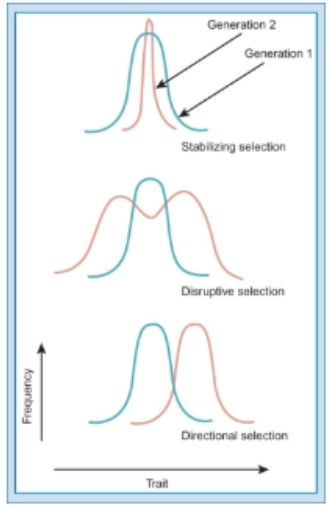
Sexual Selection: Influence on trait heritability
A strong directional selection for a trait could reduce genetic variation (heritability) to zero, however sexual selection does not eliminate genetic variance for traits involved in mate choice, possible reasons: interactions with other traits limit sexual selection, mate choice relies on more just one trait, trade offs for factors like protection from predators
Parental Investment Theory
Predicts that the sex that pays higher cost of parental investment (gestation, incubation, defense, food provisions) should be choosier when it comes to mates; predicts the other sex will experience stronger sexual selection
Parental Investment Theory: Direct Material Benefits
Food gifts, access to territory with food, enhanced parental care
Parental Investment Theory: Indirect Genetic Benefit
Genetic quality of potential mate; “Good genes”
Female Mate Choice
Any trait that is preferred by females will be strongly favored, females should choose male mate based on likelihood of enhancing survival of female’s offspring (Male possesses resources, male has good genes) or females choose based on other factors (mate is attractive, mate will be good fathers) or females copy other female choices
Female Mate Choice: Based on Good Genes
Female pronghorn antelope seek out males that are good harem defenders
Female Mate Choice: S*xy Son Principle
Another prediction is that females should prefer to mate with males that will father sons that will be more attractive to females in the next generation, “Bad boy phenomenon”, Data suggests sexy son principle is more of a driving factor in mate choice than good genes
Female Mate Choice: Good Fathers
Selections favors females that can attract social mates that are good fathers (Direct benefit), some species are sensitive to females spending too long outside the nest, e.g. blue footed booby males pushes eggs out of the nest if the female is gone for too long
Female Mate Choice: Courtship
Signals ensure the animals are of the same species, may help prevent mating with closely related animals, gives animals the chance to demonstrate their quality as a potential mate, e.g. bowerbirds build elaborate bowers with brightly colored objects

Courtship example: Great Bowerbird
Bird creates avenue type bower with two display courts
Male Mate Choice
Less studied, likely to appear when: Male has a substantial role in parental care, females vary greatly in their quality as a mate, if males of a species are choosy then females should experience sexual selection and develop secondary sexual characteristics (ornamentation), female baboon ornamentation showing fertility
Male Mate Choice: Pipefish
Pipefish males invest heavily in parental care, females transfer eggs to the male’s egg-brooding structural male then fertilizes eggs and cares for them, males are choosier and secondary sex characteristics emerge and females do courtship dances
Mating System Dishonesty in Males
Strong selection for two types of dishonesty in males:
1. Misrepresentation of quality in mate choice
In species in which male participants in parental care, misrepresentation about whether they already have a mate and young to spend time caring for
E.g. Pied Flycatcher males may possess more than one territory
Mating System Dishonesty in Females
Females may be uncertain about mate choice or unsure which mate is best for unpredictable conditions, thus they mate with other males but hid this to protect offspring from loss of male interest in caring for young and from infanticide
Mating System
A pattern of male-female pairings, tends to be similar within a species but sometimes there are differences within species
Mating Systems: Monogamy
Pairing of single male with single female, most common mating system in birds, but rare in most other animals (though seen in beavers, prairie voles, some seahorses) e.g. wood duck males stay with mate, male presence increases production of second brood
Monogamy: Benefits
Monogamy may evolve when:
Cost of acquiring mates is very high, females have ability to restrict male behavior, offspring survival requires intensive care by two parents
Benefits:
Female gains protection from other males, forced copulation is a common reproductive behavior in ducks and geese
Monogamy: Costs
Entire reproductive investment of an individual depends on the fitness of chosen mate
May be why monogamous animals are often not completely monogamous, serial monogamy: choosing a new mate each season (emperor penguins)
Mating Systems: Polygyny
Association of one male with many females, the most common mating system in mammals (wild horses in herds with one stallion and many mares)
Resource defense Polygyny
Groups of females centered around resources or a male that holds resources (territory), mate choice: females may sample and make choices among potential mates based on mate quality, male-male competition: females may cluster around a resource then males compete for the group, polygyny doesn’t arise due to excess of females, territorial males have more than one mate while others have none
Polygyny Threshold Model
Makes predictions about when females should choose to be a secondary mate in one territory rather than be the sole female in another, above a certain threshold sharing a male’s resources provides a greater benefit (as compared to lower-resource males) despite the cost of sharing
Female Defense Polygyny
Membership in a harem or defended group of females, females might form a herd or group based on defense against predators, rather than around a resource, males compete for the group, females may also compete for dominance (pecking order)
Elephant Seal Harem
1 dominant male and 20-50 females, only about 8% of males get to mate, males much larger than females and fight for access to females during breeding season, males interfere with other males during a mating attempt
Lek Polygyny
Aggregation of males that seek to attract a mate by performing competitive courtship displays for visiting females , the lek attracts more females than an individual male, only a few dominant males will end up mating with the majority of females, lekking males are typically not involved in parenting (peacock, greater sage grouse)
hotshots- particularly attractive male
hotspot- location females are more likely to visit
Scramble Polygyny
Males compete to find and mate with as many females as possible, caused by small groups of females being distributed throughout environment, males travel and search extensively to maximize mating opportunities (Scramble competition) (Thirteen lined ground squirrel, white tailed deer)
Bachelor Herd
Group of males that travel together, made up of either males that are not chosen for mating in polygynous systems, males that come together outside the mating season, benefitting from mutual protection and food discover
Mating Systems: Polyandry
Association of one female with many males
Resource Defense Polyandry
In some species where female is territorial and males live on territory (American jacanas, spotted sandpipers where female leaves eggs with male to incubate while she moves to next mate)
Cooperative Polyandry
Female has several mates and cooperates with them to raise brood (Galapagos hawk, honeybee queen mates with many males)
Mating Systems: Polygynandry
Association of many females with many males, often caring for the young of several females(Bonobods and chimps, brown rats, acorn woodpeckers)
Promiscuity
No pair bonds; males and females seem to mate randomly with multiple partners, mating system theory suggests this should be rare occuring in species that live in very unpredictable environments (Snowshoe hare possibly a promiscuous mating system but some males fathered more young than others), social promiscuity may not indicate genetic promiscuity
Social Mating Systems vs. Genetic Mating Systems
In many species the social father may not be the biological father of young, EPC, are frequent, most bird species are socially monogamous: male and female spend much of their time together, collaborate to build nest and care for nestlings however social father may not be genetic father
Lutenizing Hormone (LH) and Follicle stimulating hormones (FSH)
Produced by pituitary and act on the gonads (ovaries and testicles) to cause release of steroid hormones, part of the hypothalamic-pituitary-gonadal axis
Testosterone, estrogen, progesterone
Steroid hormones, both males and females make all three but at different levels
Oxytocin and vasopressin
Also released from pituitary, plays a role in pair-bonding
Hormones in Females: Hormones are Cyclic
Rodents: 4-5 days, cats: 14-21 days, Cattle: 21 days, Dogs: 6-7 months
Hormones in Females: LH
LH peak increases sexual receptivity prior to ovulation, when probability of fertilization is high (Lordosis posture for mating in rats)
Hormones in Females: Estrogen
Estradiol provides negative feedback to pituitary about LH and FSH. Estrogen returns to low levels after ovulation
Hormones in Females: Progesterone
Coordinates behavioral and physiological changes for pregnancy in animals, progesterone also has inhibitory role for sexual behavior, hormones related to milk production/release (oxytocin, prolactin) further inhibit
Hormones in Males
Testosterone levels increase with sexual maturity, then remain constant or cycle seasonally, testosterone also involved in aggression, testosterone injections increase aggression and territoriality (Rock-pool blenny fish are more sensitive to intruders after testosterone injections)
Male-Male Competition: Precopulatory competition
Male male competition prior to mating (including aggression)
Male-Male Competition: Postcopulatory competition
Male male competition after mating, sperm competition; copulatory plug; mate guarding, prolonged copulation is a form of mate guarding used by arthropods
Internal fertilization (Most terrestrial animals)
Sperm competition if female mates more than once within a short time period
External fertilization (Marine animals in aquatic environments)
Sperm competition during spawning when sperm swim to eggs, ways of competing: Quantity, quality, distance of release, timing of release
Sperm Competition: Mating Strategies in bluegills
Male bluegill sunfish differ in morphology and behavior, “parental” males are territorial and use courtship, building a nest on the bottom of lake to court females (lek), who spawn in nest and male guards the eggs
“sneaker” males can dash in and release sperm near the nest
“Satellite” males mimic females and come close to eggs
Choosing Good Genes: Olfactory Cues
Helps avoid genetically related animals, helps choose complementary immunotypes (increased genetic diversity in offspring)
Choosing Good Genes: Visual Cues
Color as honest indicator of fitness (good genes)
Choosing Good Genes: Avoid Closely Related Animals
Animal inbreeding decreases survival and reproductive success, (In ants, bees and wasps inbreeding is lethal), natural selection has favored mechanisms to avoid mating with relatives: learning identities of family members in early development, using sensory cues to avoid genetic matching (even if never met) related animals smell alike
Major Histocompatibility complex (MHC)
Immune genes detects disease organisms, immune systems rely on hypervariable genes to meet the challenges posed by evolution of disease organisms, immunocompetence and immunocompatibility hypothesis: mate choice should favor non-matching or complementary MHC immunotypes to increase offspring immune diversity and disease resistance
Good Genes: Visual Cues/Hamilton-Zuk hypothesis
Plumage color in some birds may be brightest in animals with a low parasite load, in many birds and fish color may be honest indicator of fitness
Parental Care
Can range from choosing a safe place to lay eggs to caring for young for months or years as they mature, involves parent trade-off, parent offspring conflict and sibling sibling conflict
Nest purpose and function
Parental care includes where to live and how to care for young, often includes a den or nest, a site for laying eggs, rearing offspring and/or providing shelter (keeps young safe from harm and keeps young in the appropriate microclimate)

Simple Nests: Sheltered places
The simplest nest is a naturally occurring sheltered or protected place, includes caves, hollow trees, crevices between rocks, vegetation leaf cover, minimal or no labor needed
bats, frogs/toads, rodents, reptiles

Burrows and Underground Nests
Excavated tunnel systems that include chambers for sleeping, food storage, and raising young, predator protection, microclimate regulation (temperature and humidity)
prarie dogs, moles, meerkats, burrowing owls, armadillos, ants
Burrows: Above Ground
Prairie dogs make a mound of excavated soil and clear the surrounding grass, provides a good vantage point for watching for predators (vigilance), prevents rainwater from entering burrow
Burrows: Below Ground
Prairie dogs build a tunnel that leads to a chamber in which young are reared: connected to other tunnels in colony, tunnels provide escape route from many predators