AP Art History Content Area 2: Ancient Mediterranean
 Call Kai
 Learn
Learn Practice Test
 Spaced Repetition
 Match
Match Flashcards
 Knowt Play
1/35

There's no tags or description
Looks like no tags are added yet.
Name | Mastery | Learn | Test | Matching | Spaced | Call with Kai | Chat |
|---|
No analytics yet
Send a link to your students to track their progress
36 Terms
12. White Temple and its Ziggurat (Uruk)
Artist / Culture: Sumerian / Uruk (Warka, Iraq)
Date / Period: 3500-3000 B.C.E. / Sumerian
Material / Technique: Mud brick
Function / Purpose: Religious; temple honoring the sky god Anu and asserting political authority
Content / Visual Description: Elevated rectangular temple atop a massive stepped ziggurat; sloped ramps; bent-axis approach; designed to elevate the temple physically and symbolically closer to the gods
13. Palette of King Narmer
Artist / Culture: Predynastic Egyptian / Hierakonpolis, Egypt
Date / Period: c. 3000-2920 B.C.E. / Predynastic/Early Dynastic
Material / Technique: Greywacke
Function / Purpose: Commemorative ceremonial palette; possibly used for grinding cosmetics and to record Narmer's unification of Upper and Lower Egypt
Content / Visual Description: Hierarchical scale with Narmer depicted larger than others; Narmer wearing both crowns; registers showing soldiers, animals, and defeated enemies; symbolic imagery including a bull and intertwined serpopards

14. Statues of Votive Figures (Temple at Eshnunna)
Artist / Culture: Sumerian / Tell Asmar, Iraq
Date / Period: c. 2700 B.C.E. / Sumerian
Material / Technique: Gypsum with inlaid shell and black limestone
Function / Purpose: Religious; offered prayers on behalf of donors, acting as intermediaries between worshippers and the gods
Content / Visual Description: Small standing figures with exaggerated wide eyes symbolizing attentiveness; hands clasped in prayer; simple stylized forms; arranged in temple to represent continual devotion

15. Seated Scribe
Artist / Culture: Egyptian / Saqqara, Egypt
Date / Period: c. 2620-2500 B.C.E. / Old Kingdom, Fourth Dynasty
Material / Technique: Painted limestone
Function / Purpose: Funerary; commemorated and honored the scribe's role in administration and literacy, possibly placed in a tomb
Content / Visual Description: Seated cross-legged with a papyrus scroll on lap; attentive expression; realistic, individualized face with slight aging features; contrasts with idealized rigid forms of pharaohs

16. Standard of Ur
Artist / Culture: Sumerian / Royal Cemetery, Ur (modern Tell el-Muqayyar, Iraq)
Date / Period: c. 2600-2400 B.C.E. / Sumerian
Material / Technique: Wood inlaid with shell, lapis lazuli, and red limestone
Function / Purpose: Likely ceremonial; possibly a musical instrument or storage box representing political and military power
Content / Visual Description: Two main registers: "War" side shows chariots trampling enemies and soldiers capturing prisoners; "Peace" side depicts banquet scenes and offerings; hierarchical scale; narrative storytelling using registers

17. Great Pyramids & Sphinx
Artist / Culture: Egyptian / Giza, Egypt
Date / Period: c. 2550-2490 B.C.E. / Old Kingdom, Fourth Dynasty
Material / Technique: Limestone
Function / Purpose: Funerary; tombs for pharaohs to ensure immortality; Sphinx as protective symbol
Content / Visual Description: Massive geometric pyramids aligned with cardinal points; Sphinx with lion's body and pharaoh's head symbolizing royal power and divine protection; monumental scale emphasizes eternal kingship

18. King Menkaura and Queen
Artist / Culture: Egyptian / Giza, Egypt
Date / Period: c. 2490-2472 B.C.E. / Old Kingdom, Fourth Dynasty
Material / Technique: Greywacke
Function / Purpose: Funerary; represents pharaoh and queen to reinforce divine kingship and eternal partnership in the afterlife
Content / Visual Description: Standing figures in rigid frontal pose; Menkaura slightly larger than queen (hierarchical scale); idealized features; close, connected stance emphasizes marital and royal unity

19. The Code of Hammurabi
Artist / Culture: Susian / Babylon (modern Iran)
Date / Period: c. 1792-1750 B.C.E. / Babylonian
Material / Technique: Basalt
Function / Purpose: Legal; publicly displayed law code to regulate society and demonstrate king's authority
Content / Visual Description: Stele with cuneiform text of laws; top relief shows Hammurabi receiving laws from Shamash, the sun god; hierarchical scale; symbolic gesture of divine approval

20. Temple of Amun-Re & Hypostyle Hall
Artist / Culture: Egyptian / Karnak, Egypt
Date / Period: 1550-1250 B.C.E. / New Kingdom, 18th-19th Dynasties
Material / Technique: Sandstone and mud brick
Function / Purpose: Religious; temple complex dedicated to Amun-Re for worship, processions, and state rituals
Content / Visual Description: Massive columned hall (hypostyle) with clerestory lighting; monumental pylons; axial layout; walls covered in carved reliefs depicting pharaohs and gods; columns with papyrus and lotus capitals

21. Mortuary Temple of Hatshepsut
Artist / Culture: Egyptian / Deir el-Bahri, Egypt
Date / Period: 1473-1458 B.C.E. / New Kingdom, 18th Dynasty
Material / Technique: Sandstone
Function / Purpose: Funerary and commemorative; temple for rituals honoring Pharaoh Hatshepsut and the god Amun
Content / Visual Description: Terraced structure built into cliffs; colonnaded terraces; ramps connecting levels; statues of Hatshepsut and reliefs depicting her divine birth and trading expedition to Punt

22. Akhenaton, Nefertiti, & 3 Daughters
Artist / Culture: Egyptian / Amarna, Egypt
Date / Period: 1353-1335 B.C.E. / New Kingdom, 18th Dynasty
Material / Technique: Limestone
Function / Purpose: Religious and domestic; celebrates pharaoh's family and Akhenaton's monotheistic worship of Atens
Content / Visual Description: Sunken relief showing Akhenaton, Nefertiti, and daughters under Aten's rays; elongated and exaggerated body proportions; intimate, affectionate domestic scene unusual for Egyptian art

23. Tutankhamun's Tomb, Innermost Coffin
Artist / Culture: Egyptian / Valley of the Kings, Egypt
Date / Period: 1323 B.C.E. / New Kingdom, 18th Dynasty
Material / Technique: Gold with inlaid gems
Function / Purpose: Funerary; protected pharaoh in the afterlife and displayed his wealth and divine status
Content / Visual Description: Gold coffin shaped in stylized body of Tutankhamun; intricate inlays of semi-precious stones; hieroglyphic inscriptions; symbolic regalia like crook and flail

24. Last Judgment of Hu-Nefer (from his tomb, Book of the Dead)
Artist / Culture: Egyptian / Thebes, Egypt
Date / Period: 1275 B.C.E. / New Kingdom, 19th Dynasty
Material / Technique: Papyrus
Function / Purpose: Funerary; guided the deceased through the afterlife and documented moral judgment
Content / Visual Description: Illustrated vignettes showing Hu-Nefer's heart weighed against Ma'at's feather; gods like Anubis, Osiris, and Thoth depicted; registers show narrative sequence; hieroglyphs accompany scenes

25. Lamassu from the Citadel of Sargon II
Artist / Culture: Neo-Assyrian / Dur Sharrukin (Iraq)
Date / Period: 720-705 B.C.E. / Neo-Assyrian
Material / Technique: Alabaster
Function / Purpose: Protective guardian for palace entrances; symbolized king's power and divine support
Content / Visual Description: Composite creature with human head, lion's or bull's body, and wings; massive scale; detailed musculature and beard; meant to intimidate and awe viewers

26. Athenian Agora
Artist / Culture: Greek / Athens, Greece
Date / Period: 600 B.C.E.-150 C.E. / Archaic through Hellenistic
Material / Technique: Plan / stone foundations
Function / Purpose: Civic center for politics, commerce, and social gatherings; religious and administrative hub
Content / Visual Description: Open-plan marketplace with temples, stoas (covered walkways), and civic buildings; central gathering space for public life; evolved over centuries

27. Anavysos Kouros
Artist / Culture: Greek / Anavysos, Greece
Date / Period: c. 530 B.C.E. / Archaic Greek
Material / Technique: Marble with remnants of paint
Function / Purpose: Funerary; grave marker commemorating a young warrior
Content / Visual Description: Nude male figure in rigid frontal pose; left foot forward; stylized archaic smile; idealized anatomy; youthful, athletic proportions

28. Peplos Kore from the Acropolis
Artist / Culture: Greek / Acropolis, Athens, Greece
Date / Period: c. 530 B.C.E. / Archaic Greek
Material / Technique: Marble with painted details
Function / Purpose: Religious; votive offering to a goddess, possibly Athena
Content / Visual Description: Female figure clothed in peplos garment; rigid, frontal stance; archaic smile; traces of paint suggest bright original colors; stylized hair and garments

29. Sarcophagus of the Spouses
Artist / Culture: Etruscan / Cerveteri, Italy
Date / Period: c. 520 B.C.E. / Etruscan
Material / Technique: Terra cotta
Function / Purpose: Funerary; honored married couple and celebrated family status in afterlife
Content / Visual Description: Reclining man and woman on lid; arms around each other; stylized, animated faces; geometric and naturalistic motifs; emphasizes intimacy and social status

30. Audience Hall (Apadana) of Darius and Xerxes
Artist / Culture: Persian / Persepolis, Iran
Date / Period: c. 520-465 B.C.E. / Persian
Material / Technique: Limestone
Function / Purpose: Ceremonial; grand hall for receptions, tribute, and demonstrations of royal authority
Content / Visual Description: Massive hypostyle hall with 72 columns; decorated with reliefs of kings receiving tribute; monumental scale; blend of symbolic and realistic imagery; detailed capitals with animal motifs

31. Temple of Minerva and Sculpture of Apollo (Vulca)
Artist / Culture: Etruscan / Vulca, Italy
Date / Period: c. 510-500 B.C.E. / Etruscan
Material / Technique: Wood, mud brick, or tufa
Function / Purpose: Religious; temple dedicated to Minerva with sculpture representing divine presence
Content / Visual Description: Elevated podium with frontal staircase; three-cell structure (cella) for cult statues; sculpture of Apollo in archaic, stylized pose; brightly painted details; emphasis on ritual and processional approach

32. Tomb of the Triclinium
Artist / Culture: Etruscan / Tarquinia, Italy
Date / Period: c. 480-470 B.C.E. / Etruscan
Material / Technique: Tufa and fresco
Function / Purpose: Funerary; decorated tombs to honor the deceased and depict afterlife rituals
Content / Visual Description: Frescoes of reclining banqueters at feasts; dancing and musical scenes; lively, dynamic figures; rich color; emphasizes celebration and continuity of life

33. Niobides Krater
Artist / Culture: Niobid Painter / Greece
Date / Period: c. 460-450 B.C.E. / Classical Greek
Material / Technique: Clay, red-figure technique with white highlights
Function / Purpose: Ceremonial; mixing wine and water, possibly commemorating mythological events
Content / Visual Description: Depicts Niobe and her children being punished by Apollo and Artemis; multiple figures arranged in complex, balanced composition; early use of spatial depth; anatomical accuracy and naturalistic poses

34. Doryphoros (Spear Bearer)
Artist / Culture: Polykleitos / Greece
Date / Period: 450-440 B.C.E. / Classical Greek
Material / Technique: Roman copy of Greek original (bronze)
Function / Purpose: Demonstration of ideal human proportions; exemplifies Polykleitos' canon of harmony and balance
Content / Visual Description: Contrapposto stance with weight shifted onto one leg; muscular, idealized body; relaxed yet dynamic pose; emphasizes mathematical ratios and symmetry; originally bronze

35. Acropolis
Artist / Culture: Iktinos and Kallikrates / Athens, Greece
Date / Period: c. 447-410 B.C.E. / Classical Greek
Material / Technique: Marble
Function / Purpose: Religious; complex dedicated to Athena, representing civic pride and divine protection
Content / Visual Description: Hilltop complex with Parthenon, Erechtheion, Propylaea, and temple of Athena Nike; harmonious proportions; Doric and Ionic orders; sculptural decoration includes friezes and metopes depicting mythology; monumental, symbolic architecture

36. Grave Stele of Hegeso
Artist / Culture: Attributed to Kallimachos / Athens, Greece
Date / Period: c. 410 B.C.E. / Classical Greek
Material / Technique: Marble and paint
Function / Purpose: Funerary; commemorates the deceased Hegeso and her social status
Content / Visual Description: Relief of seated woman examining jewelry from a servant; calm, introspective pose; drapery shows naturalistic folds; reflects domestic life and wealth; elegant proportions and classical style

37. Winged Victory of Samothrace
Artist / Culture: Hellenistic Greek / Samothrace, Greece
Date / Period: c. 190 B.C.E. / Hellenistic Greek
Material / Technique: Marble
Function / Purpose: Commemorative; celebrates naval victory, originally a fountain or ship prow monument
Content / Visual Description: Dramatic, forward-thrusting figure of Nike; wind-swept drapery clings to body; sense of movement and theatricality; missing head and arms; strong diagonal composition

38. Great Altar of Zeus and Athena at Pergamon
Artist / Culture: Hellenistic Greek / Pergamon, Asia Minor (modern Turkey)
Date / Period: 175 B.C.E. / Hellenistic Greek
Material / Technique: Marble
Function / Purpose: Religious and political; honor gods and demonstrate Pergamon's power
Content / Visual Description: Monumental altar with high-relief frieze of Gigantomachy; intense emotional expressions; deep carving creates dramatic shadows; figures in dynamic, twisting poses; elaborate stairway

39. House of the Vettii
Artist / Culture: Roman / Pompeii, Italy
Date / Period: c. 2nd Century B.C.E.; rebuilt c. 62-79 C.E. / Republican through Imperial Roman
Material / Technique: Cut stone and fresco
Function / Purpose: Private residence; display of wealth and social status
Content / Visual Description: Atrium house with central courtyard; frescoed walls depict mythological scenes and illusionistic landscapes; peristyles, impluvium, and decorated rooms; combination of domestic and decorative function

40. Alexander Mosaic (from the House of the Faun, Pompeii)
Artist / Culture: Republican Roman / Pompeii, Italy
Date / Period: c. 100 B.C.E. / Roman Republican
Material / Technique: Mosaic
Function / Purpose: Decorative; commemorates military heroism, possibly inspired by Greek painting
Content / Visual Description: Depicts Battle of Issus between Alexander the Great and Darius III; foreshortening and overlapping figures create depth; detailed expressions and anatomy; tesserae arranged for shading and perspective; dramatic, energetic composition

41. Seated Boxer
Artist / Culture: Hellenistic Greek / Greece
Date / Period: c. 100 B.C.E. / Hellenistic Greek
Material / Technique: Bronze
Function / Purpose: Commemorative; celebrates athletic achievement and human endurance
Content / Visual Description: Life-size seated figure of an exhausted boxer; detailed anatomy with bruises and cuts; realistic, emotional expression; relaxed yet tense posture; captures pathos and realism typical of Hellenistic art

42. Head of a Roman Patrician
Artist / Culture: Republican Roman / Rome, Italy
Date / Period: c. 75-50 B.C.E. / Roman Republican
Material / Technique: Marble
Function / Purpose: Commemorative; honors civic virtue and wisdom of elder patricians
Content / Visual Description: Highly realistic portrait (verism); deeply lined face, sagging skin; individualized features; emphasizes experience, age, and moral character over idealized youth

43. Augustus of Prima Porta
Artist / Culture: Imperial Roman / Prima Porta, Italy
Date / Period: Early first century C.E. / Imperial Roman
Material / Technique: Marble
Function / Purpose: Propaganda; celebrates Augustus as a divine and victorious leader
Content / Visual Description: Idealized youthful figure in military garb; contrapposto stance; right arm raised in adlocutio gesture; breastplate reliefs depict diplomatic/military victories; barefoot stance suggests divine connection

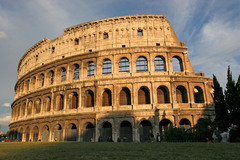
44. Colosseum (Flavian Amphitheater)
Artist / Culture: Imperial Roman / Rome, Italy
Date / Period: 70-80 C.E. / Imperial Roman
Material / Technique: Stone and concrete
Function / Purpose: Public entertainment; hosted gladiatorial games and social gatherings; demonstrates engineering prowess and imperial power
Content / Visual Description: Elliptical amphitheater with multiple stories of arches; Doric, Ionic, and Corinthian columns; vaulted corridors; seating organized by social hierarchy; massive scale emphasizes dominance
45. Forum of Trajan
Artist / Culture: Apollodorus of Damascus / Rome, Italy
Date / Period: 106-113 C.E. / Imperial Roman
Material / Technique: Brick, concrete, and marble
Function / Purpose: Civic, political, and commercial center; celebrates Emperor Trajan's victories
Content / Visual Description: Large rectangular plaza; basilica, libraries, and column of Trajan; column decorated with continuous spiral relief depicting Dacian Wars; combination of functional architecture and commemorative sculpture

46. Pantheon
Artist / Culture: Imperial Roman / Rome, Italy
Date / Period: 118-125 C.E. / Imperial Roman
Material / Technique: Concrete with stone facing
Function / Purpose: Religious; temple dedicated to all Roman gods
Content / Visual Description: Circular interior with massive domed ceiling and oculus; portico with Corinthian columns; harmonious proportions; combines traditional temple front with innovative concrete dome; emphasizes grandeur and engineering mastery

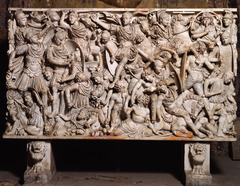
47. Ludovisi Battle Sarcophagus
Artist / Culture: Late Imperial Roman / Rome, Italy
Date / Period: c. 250 C.E. / Late Imperial Roman
Material / Technique: Marble
Function / Purpose: Funerary; commemorates the deceased and possibly Roman military victory
Content / Visual Description: Deeply carved relief showing chaotic battle scene; crowded composition with overlapping figures; dramatic, emotional expressions; heightened movement and intensity characteristic of Late Imperial style