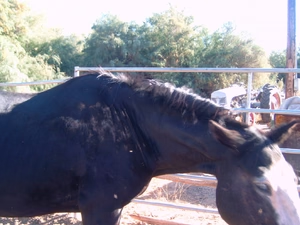
Endoparasites of Horses (Radiology and Parasitology): Nematodes (Roundworms)
 Call Kai
 Learn
 Practice Test
 Spaced Repetition
 Match
 Flashcards
 Knowt Play
1/5

There's no tags or description
Looks like no tags are added yet.
6 Terms

Habronema spp.
Stomach Worm found in the small intestine.
- Host: Horse
- Lifecyle: Indirect
- Intermmediate Host: Fly
- Diagnoses: Eggs and Larvae (rare, not easily found)
- Prepatent Period: 2 months
-TX: Ivermectin, Moxidectin
- Signs: Gastric upset, asymptomatic during low infestation
- Infective Stage: L3
If it not ingested, the larvae can bury into the skin and cause summer sores that can leads to exuberated granulation tissue (‘proud flesh”).
How it happens: Infected fly lays larve around horses mouth, the horse licks its lips or somehow ingests it, the larvae travel down into the intestines where they mature into adults in 2 months, they are excreted through feces, another fly picks them up as the cycle continues.

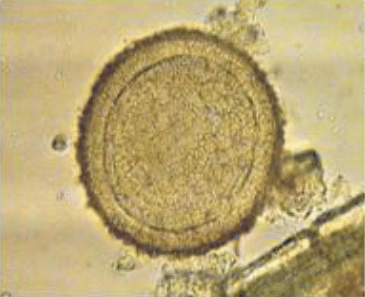
Parascaris Eqourum
Horse Roundworm found in the small intestine.
- Lifecycle: Direct
- Diagnoses: Eggs in the feces, adult worms
- Prepatent Period: 10-12 weeks
- Treatment: Pyrantel, Moxidectin, Ivermectin, Fenbendazole
- Signs: Unthrifty, colick, impacted, coughing
- Infective Stage: L2
THIS IS THE LARGEST PARASITE of Horses!
Deworming can cause impaction as the worms die and form tight knots that’ll obstruct passageways.
There are TWO different species infecting a horse with ascarids: Parascaris equorum, Parascaris univalens (common).
How it happens: The egg is ingested in the environment (maybe a field when grazing), eggs are swallowed and then hatch in the intestines, larvae perform hepato-tracheal migration (go to liver through hepatic portal vein, then into the lungs,then they’re coughed up and swallowed, exit through feces.


Strongylus spp.
Strongyles are found in the large intestine and cecum.
- Lifecycle: Direct
- Prepatent Period: 6 months
- Treatment: Pyran, Moxidectin
- Diagnoses: Eggs in feces
- Signs: Colic, weight loss, lethargy
- Infective Stage: L3
LARGE STRONGYLES ARE MORE PATHNOGENIC
Strongyles ARE CONFUSED for HOOKWORM.

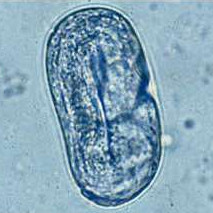
Stronglyoides westeri
Intestinal Threadworm found
- Host: Horse
- Lifecycle: Direct
- Diagnosis: Larvae, Bewers Test
- Prepatent Period: 5-7 days
- Treatment: Ivermectin, Oxibendazole
- Signs: Asymptomatic, Diarrhea in young foals
- Infective Stage: L2
How it happens: Ingestion, Percutaneous, Transmammary (Lactogenic)
This mainly occurs transmammarily and is seen primarily in foals, and adults are rarely effected.
Strongyloides needs WARM soil and the females being the only pathnogenic ones is an issue.
Stronglyoides can either choose to be a parasite and infect, or it can choose to not be and head out into the environment to be ingested.
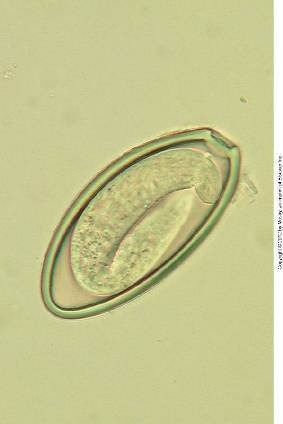
Oxyuris equi
Pinworm is found in the cecum, colon, and rectum.
- Lifecycle: Direct, females travel out anus and lay around anus: leaving a sticky proteanous mass that dries out and becomes irritating, flaky, itchy.
- Diagnosis: Eggs maybe in feces, eggs around
- Prepatent Period: 4-5 months
- Treatment: Moxidectin, Pyrantel, Pamoate
- Signs: INTENSIVE BUTT-SCRATCHING THAT MAY CAUSE RAW SPOTS!
- Infective Stage: L3
This is pretty common in horses.
How it happens: Host ingests egg, eggs hatch and mature into adult in large intestine, females move to perirenal area, extracted through feces.
We can use tape to perform and egg count.

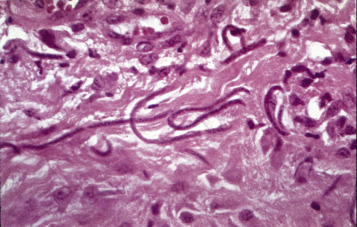
Onchocerca cervicalis
Neck threadworm is found in the dermis.
- Host: Horses
- Lifecycle: Indirect
- Intermmediate Host: Culicoides
- Diagnosis: Microfilaria by skin biopsy
- Prepatent Period: 3-4 weeks.
- Treatment: Ivermectin, Moxidectin
If this infection is bad, it can cause thalmus or blidness.
Parasites invade the NUCHAL LIGAMENT.
How it happens: Culicoides bite horse, larvae enter dermis, microfilaia abundant on ventral midline of abdomen.