CSI exam 3
 Call Kai
 Learn
 Practice Test
 Spaced Repetition
 Match
 Flashcards
 Knowt Play
1/49

There's no tags or description
Looks like no tags are added yet.
50 Terms

arch pattern
ridges enter one side of finger, make a rise, and flow out other side
5% of population
2 types: plain, tented

whorl pattern (circular)
ridges of a pattern flow in a circular
30% of population
4 types: accidental, plain, central pocket, double loop, plain

loop pattern
ridges enter one side of finger, flowing in toward center before recurving and flowing out finger on same side
65% of population
2 types: radial, ulnar
radial loop
flow of patterns runs in direction of radius bone on forearm (toward thumb)
ulnar loop
flow pattern runs in direction of ulna bone ( toward little finger)

how else can loop patterns be described?
right slant- loop flows in direction to right side of persons body
left slant- oop flows in direction to left side of persons body
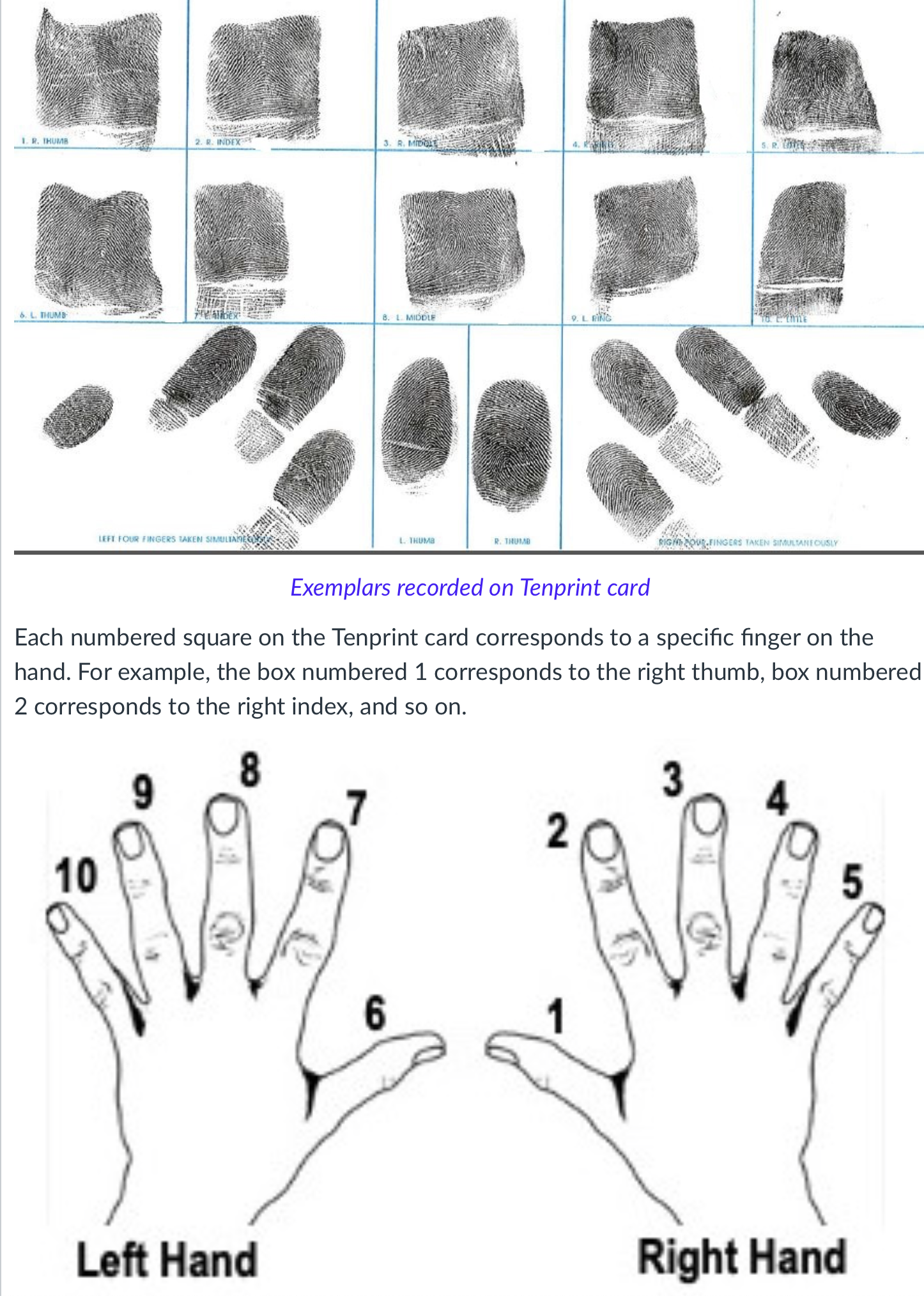
exemplars (known prints)
collected both from individuals who have legitimate access to scene and individuals who are detained as persons of interest
typically recorded on ten print card
rolled on top, simultaneous (plain/flat) on bottom
simultaneous fingerprints
used to verify the finger sequence and accuracy rolled impressions
what do fingerprint analysts use for analysis?
ACE-V
ACE-V
analysis, comparison, evaluation, verification
analysis
involves assessment of an impression to determine suitability for comparison
comparison
observation of two or more impressions to determine existence of discrepancies, similarities, dissimilarities
evaluation
analysts assess value of details observed during the analysis and comparison steps and reaches conclusion
verification
independent application of the ACE process by another analyst to either support/refute conclusions of original analyst. may be conducted as blind verification
blind verification
independent examination of 1 or more fiction ridge impressions at any stage of the ACE process by another analyst who isn to provided with contextual info and has no expectation of determinations/ conclusion to original analyst

blocking out
conducted once ten print card is recorded
analyst examine each pattern in numbered blocks to determine type and number of ridge counts for existing loop and whorl patterns
must be taken bonfire writing fingerprint classification code
blocking out for arches
plain on index-A, plain on other fingers- a
tented on index- T, tented on other fingers- t
ridge counting not done for arches, classified as either plain/tented
blocking out whorls
plain- W on index, w on remaining
central pocket- C on index, c on remaining
double loop- D on index, d on remaining
accidental- X on index, x on remaining
ridge count designation for whorls
designated as either inner (I), outer (O), or meeting (M) depending on ridge counts
inner (I)
trace passes above right delta
3 or more ridges counted between traced ridge and delta
outer (O)
trace passes below right delta
3 or more ridges between traced ridges and delta
meeting (M)
position of trace is irrelevant
less than 3 ridges counted between traced ridge and delta
blocking out loops
radial loops- R on index, r on remaining
ulna- U on index, forward slash (/) or backward slash(\) on remaining
henry classification system
formula used for efficient filling, manual searching, and retrieval of ten print records
how many divisions in the classification formula?
6: primary, secondary, sub-secondary, major, final, key
what is the difference between the henry and american classification system?
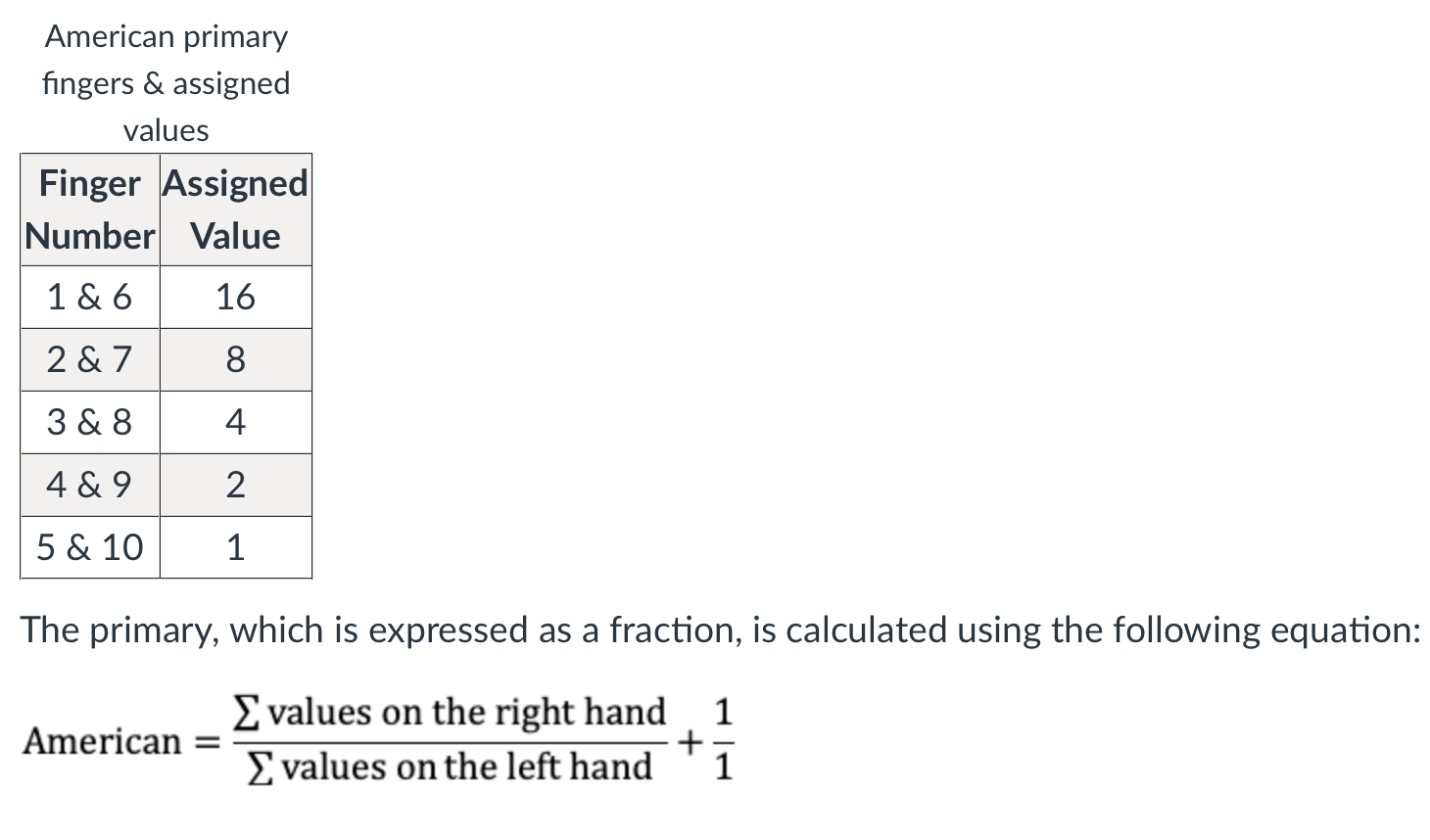
the primary division
primary division
identifies whorl patterns on thumb and fingers of both hands3
Henry primary

american primary
secondary
identifies pattern type appearing on index fingers only (2 and 7)

the small letter group
variation of secondary division which specifies patterns on thumbs and remaining fingers

sub secondary
ridge count designation for loops and whorls appearing on index(2 and 7), middle (3 and 8), and ring fingers(4 and 9)

major division
expressed as fraction, ridge counts for loops or whole on both thumbs

final
ridge count on right little finger if it is a loop. If a loop does not appear on finger #5, then ridge count on left little finger is used if it is a loop
the keys

if two amputed or missing at birth fingers opposite from each other
both given classification of whorls with meet traces (M)
if all ten fingers are missing at birth or amputated

if file becomes too large these modifications were made for easier searching
second sub-secondary
whorl extensions
special loop extensions
if one or more extensions identified in set of rolled fingerprints:
tjheyre expressed in the classification formula directly above the sub secondary
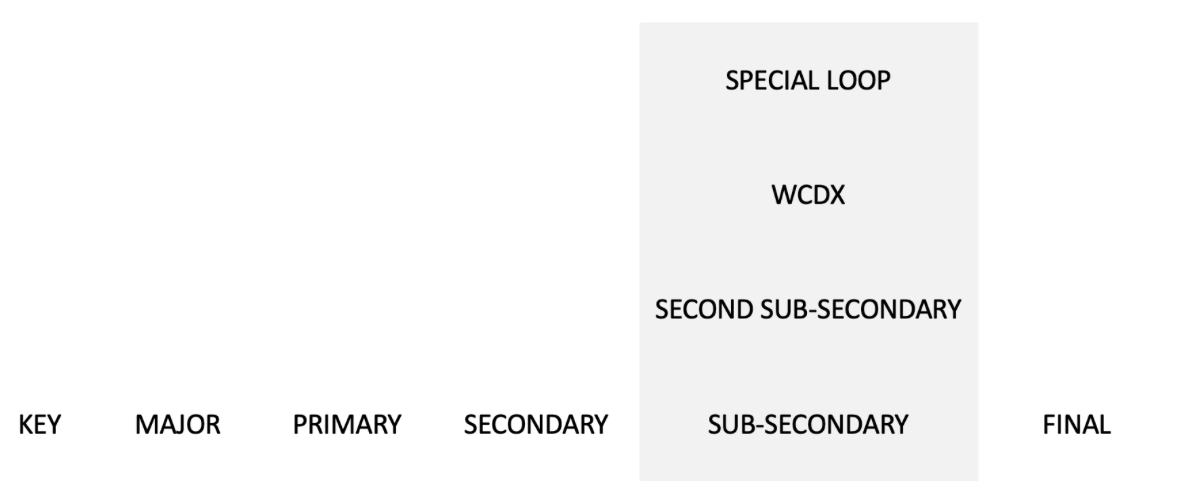
sub secondary
used in sections of filing system where sub-secondary is combo of all inners and outers
whorl extensions
subclassifiying ten print cards when there is large collection of whorls > or equal to 6
special loop extension
appropriate if loop patterns are present on fingers 2,3,4,7,8,9. if loop is present on finger 10, should also be included
national crime information center (NCIC)
computerized info center established for local, state, and federal law enforcement agencies
NCIC fingerprint classification code (FPC)
20 digit alphanumerical code which memorializes pattern type and ridge count corresponding to each finger
NCIC arch pattern two digit codes
plain arches- AA
tented arches- TT
NCIC loop pattern two digit codes
radial- ridge count +50=FPC two digit code
ulnar- ridge count=FPC two digit code

whorl pattern FPC

two digit NCIC FPC code for missing/amputated fingers
XX
two digit NCIC FPC code for scarred/mutilated pattern
SR