Drugs for Deficiency Anemias - Vocabulary
 Note
Note Call Kai
 Learn
Learn Practice Test
 Spaced Repetition
 Match
Match Flashcards
 Knowt Play
1/22

Earn XP
Description and Tags
Key terms and concepts covering red blood cell development, iron metabolism, vitamin B12 deficiency, and folic acid deficiency based on Chapter 47.
Name | Mastery | Learn | Test | Matching | Spaced | Call with Kai | Chat |
|---|
No analytics yet
Send a link to your students to track their progress
23 Terms
Proerythroblasts
The earliest stage of red blood cell development in the bone marrow, characterized by a lack of hemoglobin.
Erythroblasts
The second stage of red blood cell development residing in the bone marrow, during which developing cells gain hemoglobin.
Reticulocytes
Immature erythrocytes that evolve after the erythroblast stage and leave the bone marrow to enter the systemic circulation.
Erythrocytes
Fully mature red blood cells circulating in systemic circulation.

Stages of Red Blood Cell Development
The four evolutionary stages of developing red blood cells: proerythroblast, erythroblast, reticulocyte, and erythrocyte.
Ferritin
A storage complex consisting of iron plus a protein, found within mucosal cells, the liver, and other tissues.
Transferrin
The plasma protein responsible for binding and transporting iron throughout the body.
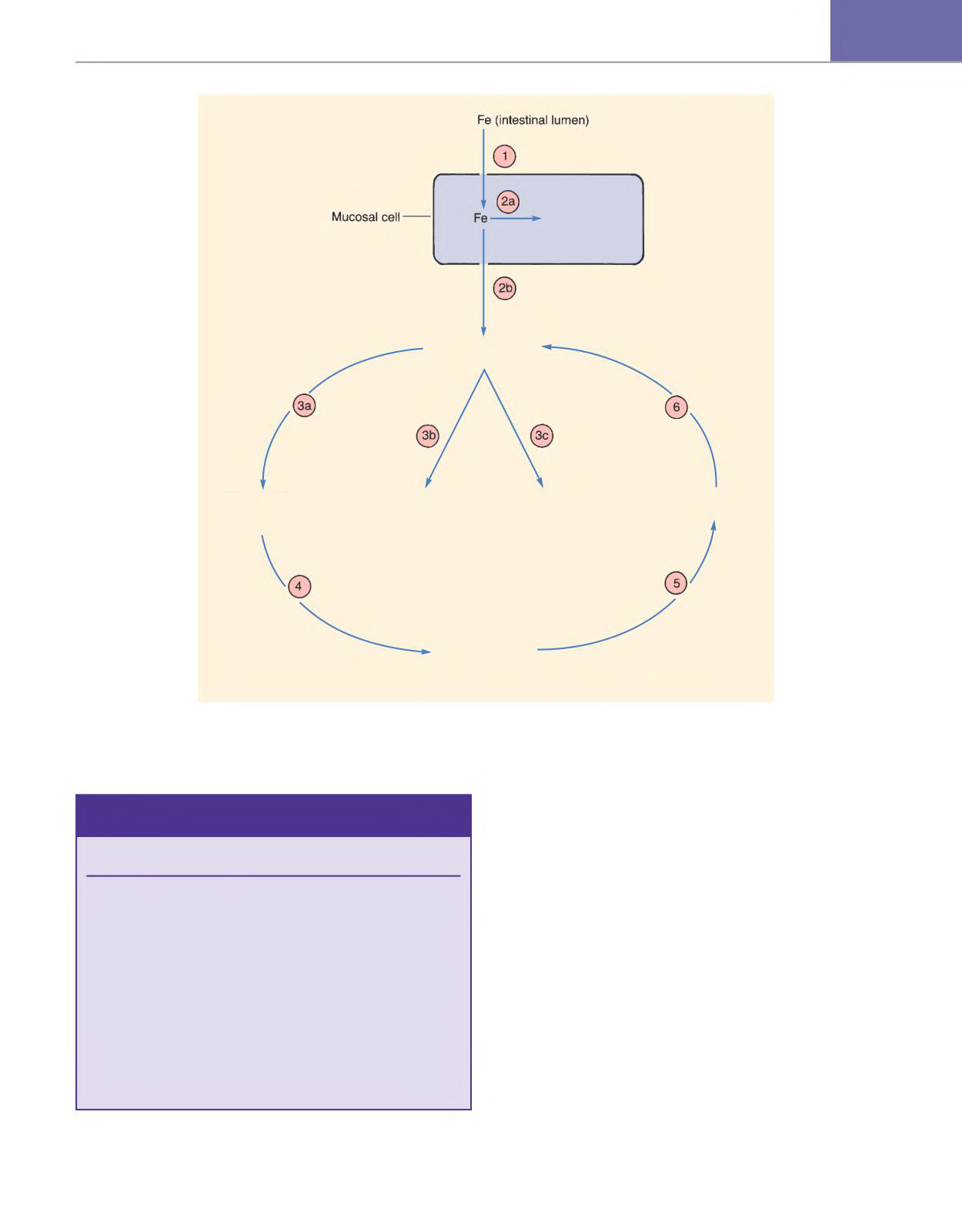
Fate of Iron in the Body
The physiological movement of iron through absorption, transport via transferrin, utilization in circulating hemoglobin (70\text{--}80\text{\freeformat{\%}} of total), storage as ferritin (18\text{\freeformat{\%}}), incorporation into myoglobin (10\text{\freeformat{\%}}), and continuous recycling.
Myoglobin
The oxygen-storing molecule of muscle containing approximately 10\text{\freeformat{\%}} of total body iron.
Hemosiderin
Aggregated ferritin in the bone marrow; its absence is a primary hallmark of iron deficiency anemia.
Serum iron-binding capacity (IBC)
A laboratory measure of iron binding by transferrin; an increase in IBC indicates an increased amount of transferrin not carrying iron, signaling reduced iron availability.
Ferrous sulfate
The oral ferrous salt that serves as the drug of choice for treating iron deficiency anemia and preventing deficiency when dietary intake is insufficient.
Carbonyl iron
A pure elemental iron preparation consisting of microparticles that are absorbed slowly, offering therapeutic efficacy equal to ferrous salts with a lower risk of toxicity.
Cobalamins
Members of the vitamin B12 family, consisting of large molecules that contain an atom of cobalt.
Intrinsic factor
A compound secreted by parietal cells of the stomach required for the efficient absorption of vitamin B12 in the ileum.
Transcobalamin II
The transport protein that binds free vitamin B12 in the blood for distribution to tissues, primarily the liver.
Pernicious anemia
Vitamin B12 deficiency caused specifically by an absence of intrinsic factor, usually secondary to stomach surgery or atrophy of gastric parietal cells.
Megaloblasts
Oversized erythroblasts that appear in the bone marrow as a result of impaired DNA synthesis during vitamin B12 or folic acid deficiency.
Macrocytes
Oversized erythrocytes that enter the circulating blood when growing red blood cell precursors are unable to divide due to deficient DNA synthesis.
Megaloblastic anemia
An anemia characterized by oversized erythroblasts in the bone marrow and oversized erythrocytes in the blood, caused by vitamin B12 or folic acid deficiency.
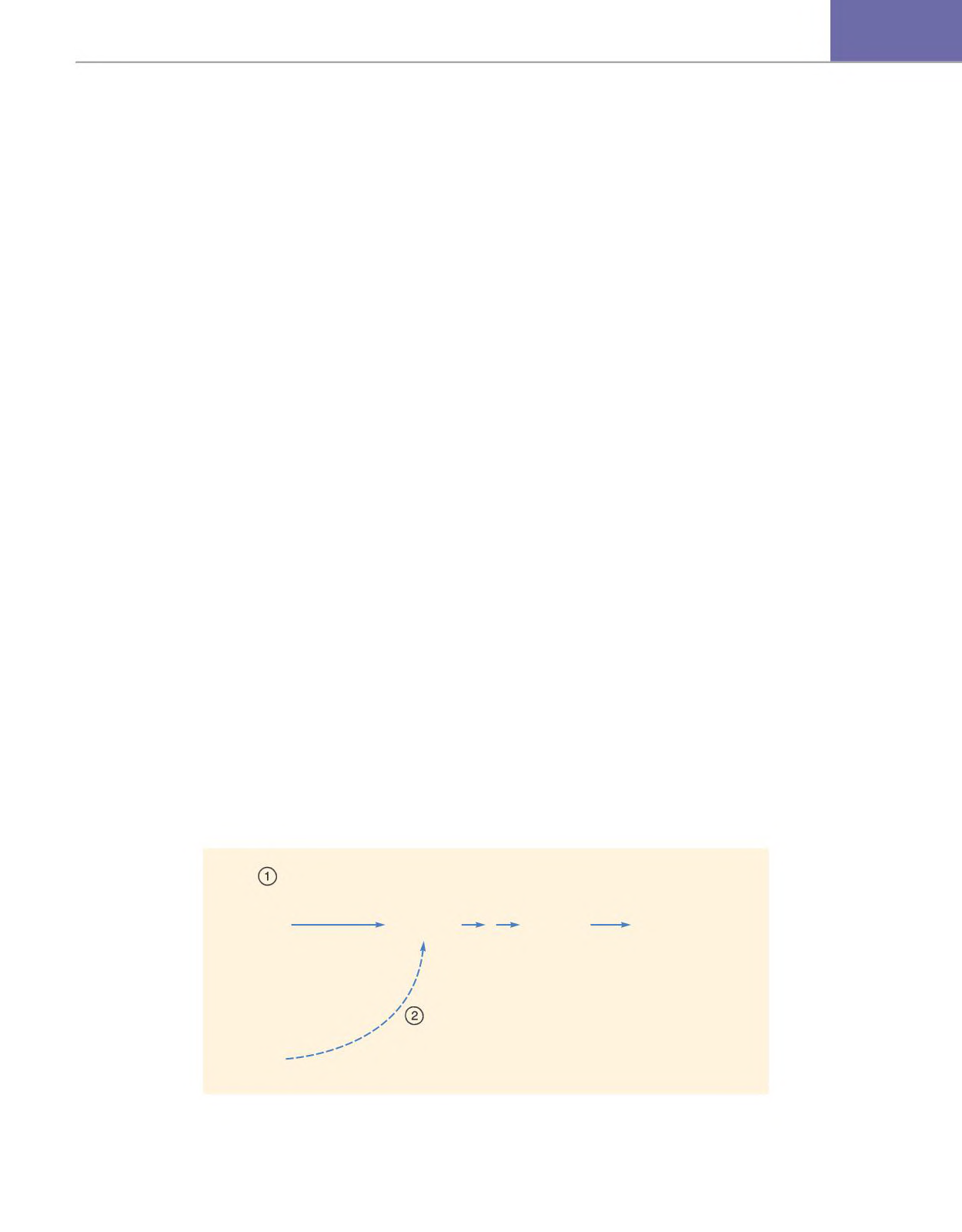
Relationship of Folic Acid and Vitamin B12 to DNA Synthesis
The metabolic interaction where inactive folic acid is activated via a vitamin B12-dependent pathway (or an alternate pathway when folic acid is given in large amounts) to enable DNA synthesis and cell maturation.
Enterohepatic recirculation
The process by which folate from the liver is excreted into the intestine, reabsorbed, and returned to the liver via hepatic-portal circulation, salvaging up to 200μg of folate per day.
Sprue
An intestinal malabsorption syndrome that decreases folic acid uptake, which can be corrected by high doses of oral folic acid.