BIOL190 - Exam 1
 Call Kai
 Learn
Learn Practice Test
 Spaced Repetition
 Match
Match Flashcards
 Knowt Play
1/66

There's no tags or description
Looks like no tags are added yet.
Name | Mastery | Learn | Test | Matching | Spaced | Call with Kai | Chat |
|---|
No analytics yet
Send a link to your students to track their progress
67 Terms
Phenotype
The observable physical or behavioral traits of an organism.
genotype
The specific set of genes or alleles inherited from parents.
gene
basic section of DNA that codes for a specific physical trait or body function
exons + introns
two copies of genes
alleles
a specific variant or version of that gene
homozygous
having two identical alleles (versions) of a gene
heterozygous
having two different alleles of a gene

single-gene inheritance (5)
traits determined by a single gene
rare, but they exist
often call mendelian traits
human disorders: ex. cystic fibrosis
rules of single gene inheritance by MENDEL
Mendel (3)
father of genetics
didn’t know what genes were, how they influenced phenotypes, or how they were inherited at the cellular level
used controlled crosses, pure-breeding strains, dichotomous traits, quantification of results, many trials
what term is used to refer to the progeny generation?
first filial generation— F1
pure-breeding
strains that consistently produce the same phenotype
what kind of cross reveals the segregation of alleles for ONE trait?
monohybrid crosses
Mendel’s 3 postulates of inheritance
genes exist in pairs — 2 alleles per gene (3 in rare cases)
some alleles are dominant and some are recessive
alleles segregate independently during gamete formation
Mendel’s law of segregation
two alleles for each trait will separate from one another during gamete formation and each allele will have an equal probability (1/2) of inclusion in a gamete
random union of gametes at fertilization will unite one gamete from each parent to produce progeny in ratios that are determined by chance
**seen in meiosis 1
3 types of dominance
dominance: phenotype of the heterozygote is the SAME as the phenotype of one of the homozygotes
incomplete dominance: phenotype of the heterozygote is INTERMEDIATE between the phenotypes of the two homozygotes
neither allele is dominant; aka partial dominance, semi dominance
ex. red + white → pink
codominance: phenotype of the heterozygote includes the phenotypes of both homozygotes
can see both alleles in phenotype, does not have to be 50/50
ex. blood type
lethal alleles (4)
alleles that cause an organism to die; can be dominant or recessive
time of death depends on when gene is expressed
some alleles cause a dominant phenotype when present in the heterozygous state, but a recessive lethal phenotype when present in the homozygous state
most lethal alleles are recessive
dominant lethal alleles
RARE.
To be maintained, the carrier must reproduce before they die.
-symptoms of lethality can show up over age, so can reproduce without knowing lethal present
ex. huntington’s
pedigree analysis
often used in humans. can’d do experimental crosses in humans!
basically family tree

what kind of cross does this show?
monohybrid crossing

what kind of dominance is this an example of?
incomplete

what kind of dominance is this an example of?
codominance

B
true-breeding: if you self-cross, progeny should remain the same as parent
usually homozygous

D

what kind of pedigree analysis is this?
autosomal recessive trait
tend to skip 1 generation, since recessive not expressed in heterozygous (carriers)

what kind of pedigree analysis is this?
autosomal dominant trait
tend to show in every generation
mendel’s second law
dihybrid (and trihybrid) crosses reveals the idea of independent assortment
law of independent assortment: during gamete formation, segregating pairs of genes assort independently of each other
traits are inherited independently
all possible combos of gametes should be formed in equal frequency
product rule
predicts the frequency with which two independent events will occur simultaneously
used instead of punnett square, for dihybrid crosses, trihybrid crosses

B
Epistasis
when the effect of one gene masks or modifies the effect of another gene
HAVE to have at least two genes to exhibit epistasis
**does NOT immerge from 2 alleles interacting → dominance
epistasis → 2 genes
**epistasis distorts expected phenotypic ratios; fewer phenotypes than expected
BbEe x BbEe → 9:3:3:1 in dihybrid cross BUT
BbEe x BbEe → 9:3:4 in epistasis

A
what does chi-square test for?
whether observed numbers are significantly different than expected numbers
**expected phenotypic ratios are based on large sample sizes — as sample sizes increase, deviation due to chance decreases (closer to expected numbers)

a) 3:1 ratio
b) x² = 2.55 0.20>p>0.05 → fail to reject hypothesis
what test is used to tell if variation is due to allelic differences or due to separate genes?
complementation test/analysis
complementation test
used to determine if two mutations causing a similar phenotype are alleles (or if they are at different loci)
**only works for recessive mutations
complementation = the production of a wild-type phenotype when two different recessive mutations are united
*mutations do NOT co-occur

what cross does this represent?
complementation

A
what allows x and y chromosomes to pair?
pseudoautosomal regions work for synapsis
x + y have NO similarity EXCEPT for the ends which are called the pseudoautosomal regions — allows the chromosomes to pair
**sex chromosomes were originally autosomes
sex-linked human traits (3)
mainly x-linked because there are more genes on the x
Y is 1/3 size of X; Y has very few genes compared to X
Y chromosome mutations almost always result in INFERTILITY; NOT passed on
males are HEMIzygous for X-linked genes
**x-linked genes and traits can still do other processes: epistasis, etc.

predict the phenotype of the offsprings from these parents


what kind of pedigree analysis does this represent?
sex-linked transmission: X-linkage, recessive
**mostly males
more males than females have phenotype because of HEMIZYGOSITY
females need BOTH recessive alleles, males only need one.

what kind of pedigree analysis is this?
sex-linked transmission: X-linkage, dominant
equal #s of females and males affected

A
dosage compensation
balancing the dosage of X chromosome gene expression in females and males
humans achieve dosage compensation via X-inactivation (make only one active X chromosome) in XX individuals
random inactivation; other organisms inactivate the paternal or maternal X chromosome BUT humans do randomly
not always the way in other species
amplify X chromosome in males XY
X-inactivation
Females, XX — one X chromosome inactivated by one barr bodies
Males, XY — no X chromosome inactivated
→ females and males both have one active X chromosome
How many barr bodies are present in males?
none
how many barr bodies are present in XXX? XXY?
XXX — 2 barr bodies
XXY — 1 barr body; 1 inactivated X chromosome
** body works to only have 1 active X chromosome
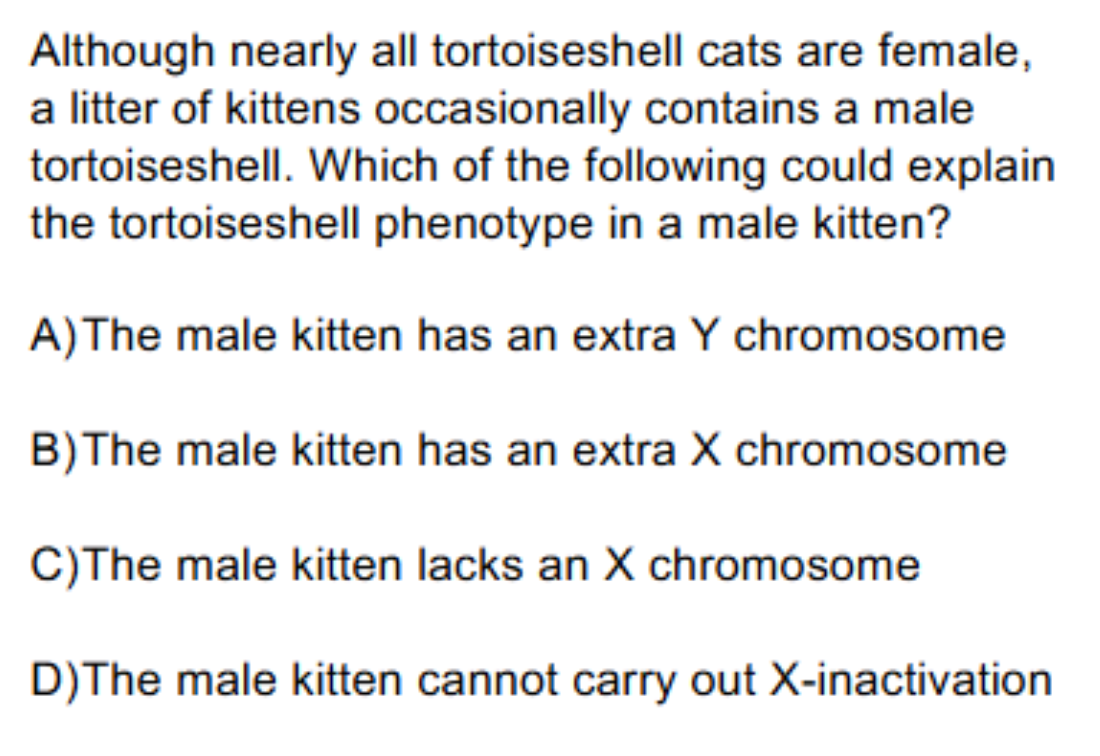
when are females phenotypics mosaics?
if they are heterozygous at X-linked genes
**each cell can have different x-chromosome activated/inactivated
X: cell expresses only one independently BUT some groups of cells could have one gene expressed and others have other gene expressed.
ex. calico cats, patches on body, colorblindedness
what are the mechanisms of inactivation?
epigenetics — modifications in gene function or phenotype that are NOT due to changes in DNA
mechanism of inactivation involves modifying the chromosome so that genes cannot be transcribed
occurs very early in pregnancy (within the 1st week)
a “memory” is created so that the inactivation is carried over to all daughter cells
NOT ALL genes are silent— ~15% escape complete silencing, but with reduced transcription (genes near PAR1)
usually genes closer to the pseudoautosomal region
XXX: despite 2 barr bodies, ~15% of genes likely to still express all 3
mitosis
a diploid (2n) cell produces two daughter diploid (2n) cells
2 copies of all chromosomes

chromosome classification (3)
telocentric (not in humans) — common in fruit flies
**descriptors of chromosomes with respect to location of centromeres

B
steps of mitosis
**metaphase: chromosomes need to line up right
each of the sisters align to the pole; spindles pull to cell
humans: 46 chromosomes lined up → 92 chromatids, each daughter gets 46
order does NOT matter. could line up as a b B A or anything else

meiosis — what is it for?
reduces the amount of genetic material by ½
- if not, would have too much DNA (double the parent)necessary for sexual reproduction (diploid 2n → haploid n)
Crossing over creates mosaics between maternal and paternal genetic material
shuffling of homologous chromosomes creates even more diversity
alleles mix up randomly; mendel’s 2nd law independent assortment
what’s the big difference between meiosis 1 and mitosis?
meiosis I is reductional: diploid to haploid (2n → n)
no haploid with mitosis
meiosis I pulls homologs or sisters to opposite poles?
homologs (based on similarity of sequence)

what is the outcome of this event?
prophase 1 - undergoes recombination which gets rid of bad alleles
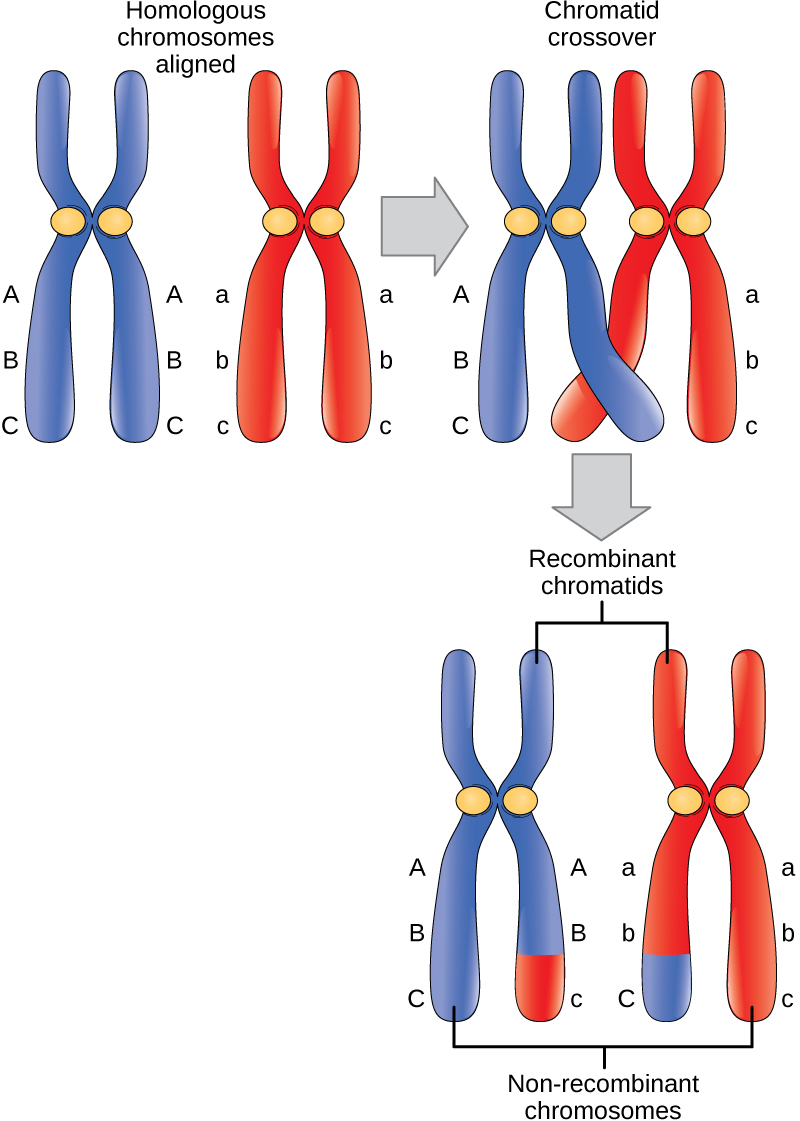
crossing over occurs at the chiasmata (formed between non sister chromatids)

what is the outcome of this event?
homologous chromosomes randomly assemble at the metaphase plate
(mendel’s 2nd law)

what is the outcome of this event?
two haploid cells
each cell contains one complete set of chromosomes

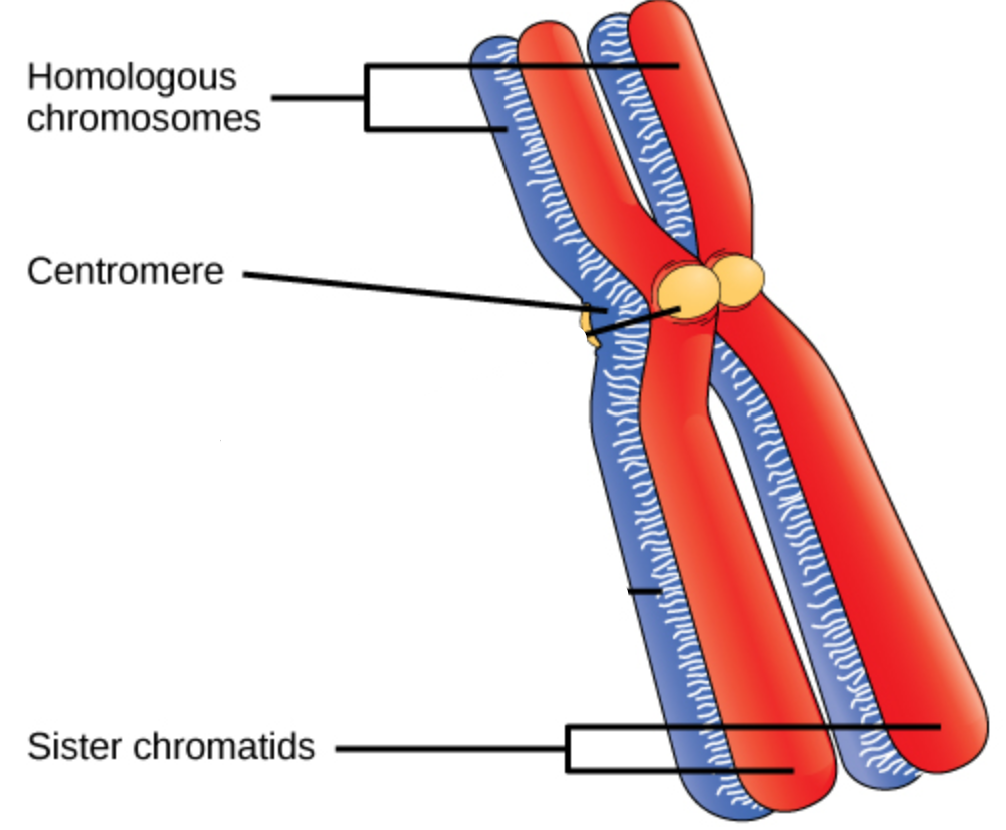
label
!! know difference between homologous chromosomes and sister chromatids
homologous chromosomes ~99% similar
proteins allow recombination to happen
describe how crossing over occurs in meiosis 1
crossover — double strand break
recombinants formed — DSB repaired but causes crossover/recombination
**could have DSB + repair across sister chromatids BUT not observed since same alleles
meiosis II
during meiosis II, sister chromatids go to opposite poles
sister chromatids separate
this is like mitosis
result: 4 cells, each haploid
why is there synthesis before meiosis if the chromosomes are just going to break apart?
constraint based in evolution. S phase with mitosis/meiosis added on later by evolution.

which of mendel’s law does this represent?
1st law — law of segregation
end up with 50/50
separates homologs
one gene → 2 alleles; one set of homolog with 2 alleles

which of mendel’s law does this represent?
2nd law — law of independent assortment
end up with different haploid gametes
why is dosage compensation necessary in humans?
to obtain optimal gene expression levels for x-linked genes
when examining a pedigree, what’s a pattern you can use to differentiate an X-linked from an autosomal trait?
whether more males than females have trait due to males’ hemizygosity
what parts of meiosis correspond with mendel’s law of segregation and law of independent assortment?
law of segregation — homologous chromosomes separate during meiosis 1 for gametes (anaphase 1)
law of independent assortment — random shuffling of homologous chromosomes (metaphase 1)
in what case would mendel’s law of independent assortment not apply?
when genes are on the same chromosome — linked genes