Lab Equipment and Hazard Symbols
 Call Kai
 Learn
 Practice Test
 Spaced Repetition
 Match
 Flashcards
 Knowt Play
1/23

Earn XP
Description and Tags
A comprehensive vocabulary review of laboratory glassware, instruments, and chemical hazard pictograms.
24 Terms

Oxidising
A chemical hazard represented by a pictogram of a flame over a circle inside a red diamond.

Chronic Health Hazard
A chemical hazard represented by a pictogram of a human silhouette with an internal starburst pattern inside a red diamond.
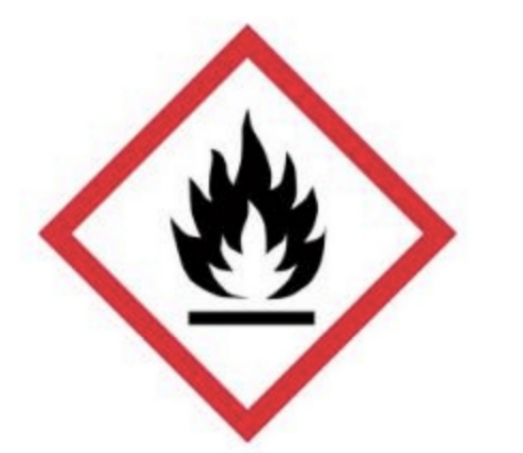
Flammable
A chemical hazard represented by a pictogram of an open flame inside a red diamond.

Corrosive
A chemical hazard represented by a pictogram of liquids pouring from test tubes onto a surface and a hand inside a red diamond.

Health Hazard
A chemical hazard represented by a pictogram of an exclamation mark inside a red diamond.

Explosives
A chemical hazard represented by a pictogram of an exploding bomb inside a red diamond.

Compressed Gas
A chemical hazard represented by a pictogram of a gas cylinder inside a red diamond.

Environmental Hazard
A chemical hazard represented by a pictogram of a dead tree and a fish inside a red diamond.

Acute Toxicity
A chemical hazard represented by a pictogram of a skull and crossbones inside a red diamond.

Beakers
Simple, cylindrical containers with a flat bottom and a spout used for holding, mixing, and heating liquids.

Conical flasks
Containers featuring a narrow neck and a conical body, ideal for swirling liquids without spilling, and capable of being sealed with a stopper for storage or heating.

Test tubes
Small, cylindrical glass tubes used for holding, mixing, or heating small quantities of chemicals, especially for qualitative experiments.

Graduated Cylinders
Tall, narrow vessels with clear volume markings (graduations) used for relatively accurate measurement of liquid volumes (more accurate than beakers or flasks).
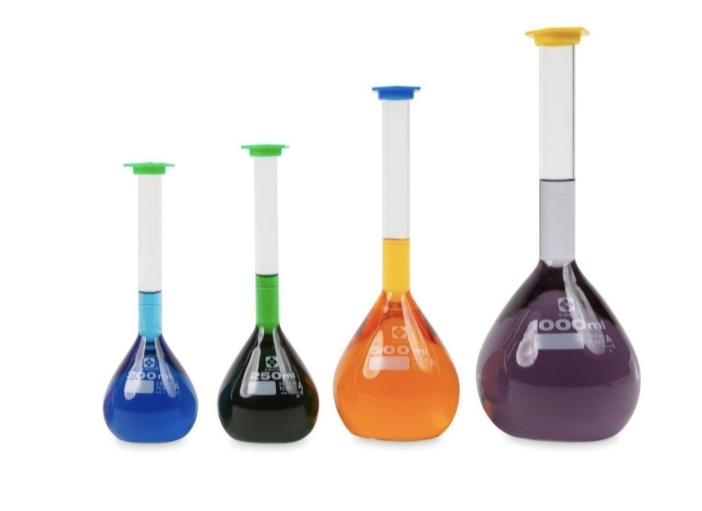
Volumetric Flasks
Containers calibrated to hold a single, highly precise volume with an etched mark on the neck, primarily used for preparing exact chemical solutions.

Pipettes
Tools for transferring precise, measured volumes of liquid from one container to another.

Micropipettes
Pipettes designed specifically to handle microliter quantities of liquid.

Burettes
Long, graduated glass tubes with a stopcock at the bottom used for dispensing precise, variable amounts of liquid, commonly in titration experiments.

Funnels
Conical items used to channel liquids or fine-grained powders into containers with small openings to prevent spills; also used with filter paper for filtration.

Watch Glasses
Shallow, concave dishes used for evaporating liquids, holding small amounts of solids, or covering a beaker.

Condensers
Glassware used in distillation and reflux setups to cool hot vapors, turning them back into liquids.

Analytical Balances
Sophisticated laboratory instruments that measure the mass of substances with high precision.

Hot Plates
Instruments providing a flat, controllable heating surface for samples, often including a magnetic stirrer function.

Lab oven
An instrument used for precise heating, drying, sterilizing, curing, and baking samples or equipment in scientific and industrial settings.

Centrifuge
A device that uses rapid spinning to separate components of a mixture based on density, size, or shape.