Health Assessment Exam 2
 Call Kai
 Learn
Learn Practice Test
 Spaced Repetition
 Match
Match Flashcards
 Knowt Play
1/62

Earn XP
Description and Tags
Respiratory, HEENT, integumentary, musculoskeletal, GI/GU
Name | Mastery | Learn | Test | Matching | Spaced | Call with Kai | Chat |
|---|
No analytics yet
Send a link to your students to track their progress
63 Terms
basic respiratory assessment - expected findings
RR 12-20
SpO2 >95% on RA
breathing even and unlabored
able to speak full sentences between breaths
denies dyspnea
denies cough
chest is symmetrical, AP diameter 1:2
lung sounds clear in all lobes/locations, no adventitious sounds
bronchial lung sounds
heard most clearly when you breathe out
listen high in your chest and over your windpipe for loud, rough, and high-pitched lung sounds
these sounds are normal in bronchial area, but may be abnormal in other areas of the lungs
bronchovesicular lung sounds
these sounds are heard when you breathe in and out
listen in the middle part of your chest
sounds are lower-pitched than bronchial lung sounds but higher-pitched than vesicular lung sounds
normal lung sound locations
bronchovesicular over main bronchi
vesicular over lesser bronchi, bronchioles, and lobes
bronchial over trachea

vesicular lung sounds
these sounds are heard best when you breathe in
listen in the mid-back for soft, smooth, low-pitched sounds
these tell you that something is blocking the airways, and there’s no swelling or narrowing that is inhibiting taking a full breath
fine crackles
fine crackles:
noncontinuous, often at the end of inspiration
high-pitched cackling and popping sounds like rubbing hair strands near ear
not cleared or changed by coughing or changing positions
caused by secretions in or collapse of alveoli or small airways
course crackles:
sounds like bubbling carbonated soft drink
may be heard in pneumonia, heart failure, and restrictive pulmonary diseases
rhonchi
loud, coarse, low-pitched snoring or moaning sound
may change or clear with coughing
caused by secretions and mucous in large airways
heard in disorders causing obstruction of the trachea or bronchus such as bronchitis or COPD
adventitious lung sound locations

stridor
high-pitched crowing sound on inspiration can often be heard without a stethoscope
caused by obstruction of larynx, trachea, or upper airways
may be an airway priority emergency
wheeze
continuous, high-pitched sound with a musical quality similar to a squeak
heard more commonly during inspiration but can be heard during expiration or at the end of expiration from narrowing or bronchospasm of small airways
heard in airway diseases when the thickness of airways increases such as asthma
stridor vs. wheeze

pleural friction rub
superficial, low-pitched, coarse rubbing or grating sound
heard throughout inspiration and expiration, loudest over lower anterolateral surface
not cleared by cough
heard in individuals with pleurisy (inflammation of pleural surfaces) or with pericarditis
pack-years
number of packs smoked per day multiplied by the number of years smoked
assessing tobacco use
for cigarette smokers, record the smoking history in pack-years
use of pipes, cigars, marijuana, vape, chewing tobacco, or snuff is usually recorded in the amount used daily
routine counseling for smoking cessation, recommend against the use of smokeless tobacco - there is no safe tobacco alternative to cigarettes
respiratory considerations for older adults
decreased elasticity and ability to clear the air passages
diminished strength of the respiratory muscles results in diminished breath sounds in the bases
as the alveoli become less elastic and more fibrous, dyspnea on exertion becomes more frequent
kyphoscoliosis: formed by an anteroposterior and a lateral curvature of the spine
may alter the chest wall configuration and make adequate lung expansion more difficult
may also increase the anteroposterior diameter, which may result in shallow breathing
orthopnea
SOB when lying down
paroxysmal nocturnal dyspnea
sudden severe SOB during sleep
tripod position
hands on knees and leaning forward
sign of respiratory distress
increases accessory muscle use
barrel chest
chronic hyperinflation of lungs
emphysema
pectus carinatum
pigeon chest
prominent sternum
scoliosis
spinal curvature
pectus excavatum
funnel chest
sternum goes inward
increases pressure on heart and lungs
tracheal deviation
trachea shifted left or right, close to airway collapse (pneumothorax)
Kussmaul breathing
rapid, deep, labored
Cheyne-Stokes
varying periods of increasing depth interspersed with apnea
retractions
pull in and down muscles to lower diaphragm and intercostals
crepitus
SQ emphysema, bubbles on surface of skin that can be popped
leak in lungs
atelectsis
collapsed alveoli due to external pressure or lack of air from hypoventilation or obstruction by secretions
patients after thoracic or abdominal surgery are at increased risk
may auscultate decreased, diminished, or absent lung sounds where the atelectasis is occurring
other assessment findings may include cough, dyspnea, tachypnea, hypoxia, low grade fever
take action to ensure the patient’s pain is controlled, encourage the patient to take deep breaths (incentive spirometer), and perform a focused respiratory reassessment`
signs of respiratory distress
restlessness
assuming a tripod position
appearance of apprehension
use of accessory muscles
subjective statements of dyspnea
respiratory distress assessment and planning or care actions
assess
stay with the patient and stay calm
position patient for best respiratory advantage
take a full set of vitals including pulse ox
auscultate all lung fields
ask the patient about any history or restrictive airway disease
check current orders for medications and supplemental oxygen therapy
consider asking for help from charge nurse, RT, provider
neck anatomy
anterior triangle:
boundaries - mandible and SCM
subdivisions - submandibular, submental, carotid, muscular
contains - larynx, trachea, esophagus, thyroid and cricoid cartilage, anterior lymph nodes, hypoid bone
posterior triangle:
boundaries - SCM, trapezius, clavicle
subdivisions - occipital and supraclavicular
contains - posterior cervical lymph nodes

neck inspection abnormal findings
thyroid goiter
thyroid nodule
tracheal deviation
lymphatic system
functions - conserve fluid, immunity, absorb liquids
spleen - filter blood, aids immunity, blood storage, iron recycling
tonsils - respond to local inflammation
thymus - gland located in superior mediastinum behind sternum and in front or aorta
lymph nodes of the head and neck
preauricular, parotid, postauricular, occipital, retropharyngeal/tonsillar, submandibular, submental, anterior and posterior chain, supraclavicular
normal findings - palpable or non-palpable, soft, non-tender, symmetrical bilaterally, and moveable

lymphadenopathy
enlarged or swollen lymph nodes
cranial nerves
CN I olfactory - smell
CN II optic - vision
CN III oculomotor - eye movement, eyelid opening, pupil constriction
CN IV trochlear - eye movement downward and inward
CN V trigeminal - facial sensation, chewing
CN VI abducens - eye movement lateral and outward
CNVII facial - facial expressions, taste on front of tongue
CN VIII vestibulocochlear - hearing and balance
CN IX glossopharyngeal - taste on back of tongue, swallowing
CN X vagus - swallowing, speech, parasympathetic control of organs
CN XI spinal accessory - shoulder and neck movement
CN XII hypoglossal - tongue movement
focused eye assessment
sclera, corneal transparency, PERRLA, EOMs
snellen chart - tests far vision
rosenbaum chart - tests near vision
confrontation
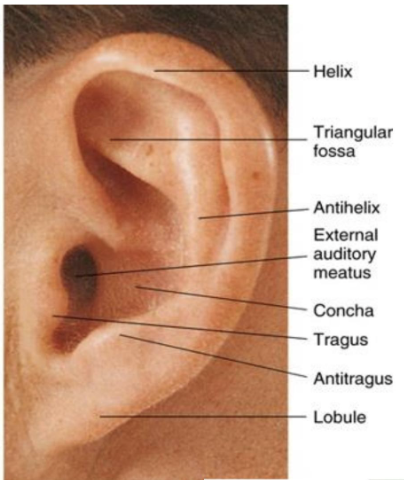
ear anatomy
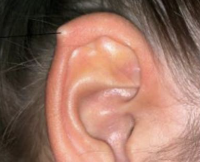
darwin’s tubercle
possible normal variant
hearing assessment
do not rely only on patient self-report
whispered voice test - hear and repeat at least 50% of words
presbycusis: age-related, gradual loss of hearing, typically affecting high-frequency sounds, caused by degeneration of inner ear structure or the auditory nerve
types of hearing loss
conductive
middle and outer ear
blockage
sound is louder in the bad ear during weber test
bone > air during rhine test
sensorineural
inner ear
sound is louder in good ear during weber test
air > bone (normal) during rhine test

weber test
place tuning fork on top of head
patient should hear tone equally in both ears
rhine test
place tuning fork behind ears on mastoid process
when patient no longer hears it, place fork in front of ear
air conduction should be twice as long than bone conduction
expected findings for ears, nose, mouth and throat

otalgia
otorrhea
tinnitus
xerostomia
rhinorrhea
epistaxis
parotitis
presbyopia
cataract
strabismus
scleral icterus
vertigo
presyncope
torticollis
nuchal rigidity
goiter
nystagmus
lymphedema
chronic swelling cause by blockage in lymph draining