Circulatory System, Nervous System, & C-D
 Call Kai
 Learn
Learn Practice Test
 Spaced Repetition
 Match
Match Flashcards
 Knowt Play
1/152

There's no tags or description
Looks like no tags are added yet.
Name | Mastery | Learn | Test | Matching | Spaced | Call with Kai | Chat |
|---|
No analytics yet
Send a link to your students to track their progress
153 Terms
cardi/o
heart
brady/tachy
slow/fast
angi/o
vessel
veno/phlebo
vein
-stasis
to stop
-cyte
cell
hem/o, -emia
blood
atherosclerosis
“hardening of the fatty stuff”
formation of fatty plaques lining blood vessels, which get calcified and hard, leading to arteriosclerosis (hardening of the arteries)
high BP → heart/kidney damage/stroke
myocardial infarction (MI)
blockage of blood flow resulting in the death of muscle tissue in the heart aka a heart attack
mitral prolapse/regurgitation
a heart condition where the flaps of the mitral valve bulge backward into the left upper chamber of the heart during a heartbeat
the back flow is referred to as regurgitation

stenosis
when a heart valve is abnormally narrowing, causing partial obstruction, constricting flow
angina pectoris
“pain in the chest” associated with heart as not enough blood is getting to the heart muscle
accompanied w/ shortness of breath, fatigue, and nausea
nitroglycerine tablets to increase blood flow
arrhythmia/dysrhythmia
general term for abnormal heart rates
“no rhythm” or “abnormal rhythm”
ischemia
“not quite enough blood”
reduced (little oxygen) or blocked blood flow deprives body tissues of essential oxygen and nutrients
cardiologist
a physician specializing in the diagnosis and treatment of diseases of the circulatory system, especially, the heart
dont do surgery, thats a cardiovascular surgeon
hematologist
a physician specializing in disease of the blood
electrocardiogram (ECG/EKG)
a printout recording of the electrical activity of the heart
echocardiography
using ultra high frequency sound waves to form an image of the inside of the heart
cardiac catheterization
long hollow tube (catheter) that is threaded into an artery up into the heart, a material opaque to x-rays is released into the blood flow through the heart imaging the details of the coronary arteries
used to hep identify a blockage and location in the coronary ciruclation
phlebotomist/venipuncturist
specially trained nurse or technician draws blood for lab tests and may also start IVs (intravenous fluids)
greek/latin versions of cutting into the vein

cardiologist
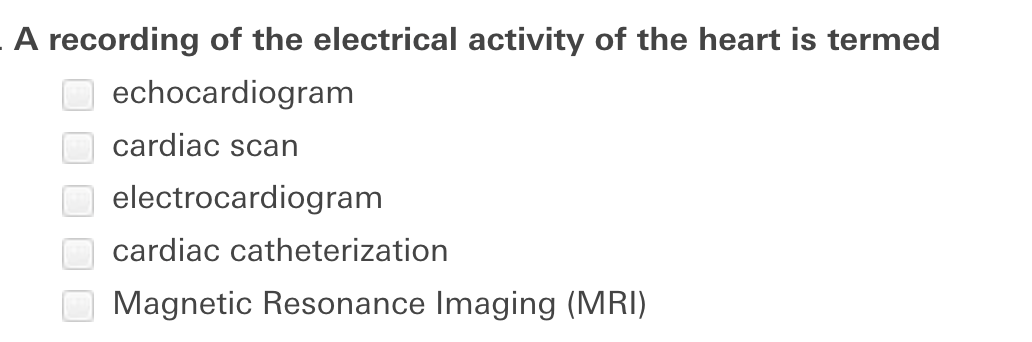
electrocardiogram

abnormally slow heart rate

erythrocytes

phlebitis

myocardial infarct
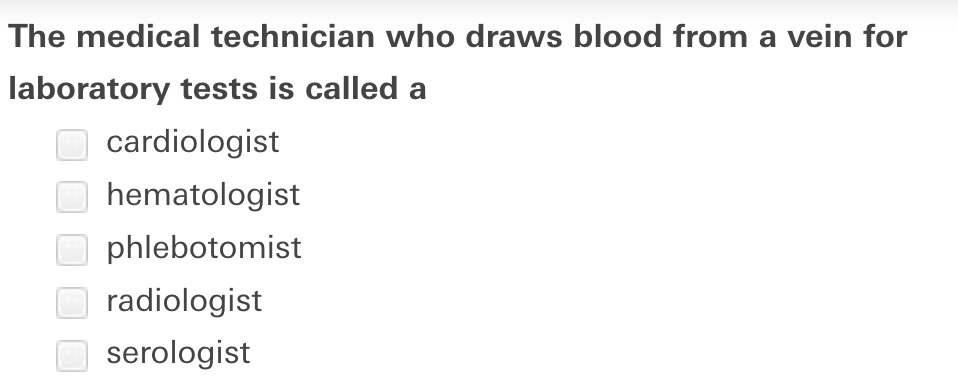
phlebotomist

stenosis
cephal/o
head
cephalgia
headache
encephal/o
inside the head (brain)
myel/o
spinal cord
neur/o
nerve
dys
difficult, painful, abnormal
-cele
hernia, abnormal protrusion of the structure out of normal anatomical position
-pathy
disease, abnormality
-plasia
development, formation, growth
-plegia
paralysis
multiple sclerosis
many hardenings
multiple hard plaques of degeneration of the insulating layer of nerve fibers in the CNS
results in “short circuiting” of nerve impulses
can result in paralysis and sensory disturbances or blindness
cerebrovascular accident (CVA)
stroke
can be caused by a blood vessel in the brain bursting (internal bleeding)
depending on the area of the brain, the patient may suffer paralysis, loss of speech or loss of vision
thrombus
clot arising in blood brain vessel
can result in CVA
embolus
clot arises elsewhere, travels and gets stuck in a brain vessel
can result in CVA
transient ischemic attack (TIA)
not enough blood to the brain
can have same symptoms as strokes (weakness in arm, partial loss in vision)
symptoms < 24 hours
epilepsy
greek word for seizure (not all seizures are epilepsy)
can be controlled with medication, or if unresponsive to drugs it may require surgery
aphasia
loss of speech
can occur if someone has a stroke/injury on the left side of their brain
injury involves the motor speech area (not the one where they can speak but don’t understand what others are saying)
neurologist
a physician specializing in disease of the brain, spinal cord and nerves
don’t do surgery, neurosurgeons do
lumbar (spinal) puncture to tap (LP)
introducing a needle between the lower bony vertebrae of our spinal column in order to sample the cerebrospinal fluid (fluid surrounding the brain and spinal cord)
lab test are done on the fluid for diagnostic purposes (presence of bacteria in meningitis, special proteins in multiple sclerosis, or blood cells)
brain scan
introducing radioactive element into the blood in order to image possible tumors in the brain
electroencephalography (EEG)
an image of the brain’s electrical activity
used to diagnose different types of seizure disorders such as epilepsy, brain tumors, and are used in sleep research to identify stages of sleep
computed tomography (CT)
specialized X-ray that takes multiple images of a body area from different angles
computer integrates the multiple images into slices of the body
better resolution than x-rays and differentiation between types of tissue
magnetic resonance imaging (MRI)
produces images of slices through the body similar to CT but no x-rays are involved
patients body is placed into a strong magnetic field
A computer analyzes this information to show subtle differences in tissue molecular structure producing very high resolution and better differentiation of soft tissue, such as a tumor within the liver.

inflammation of the membranes around the brain
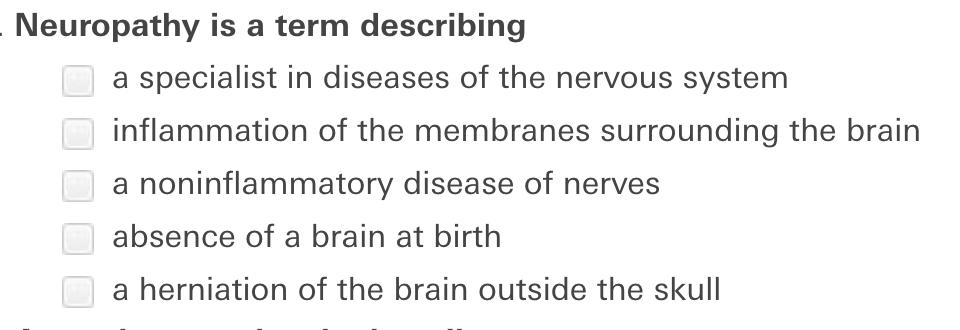
a noninflammatory disease of nerves
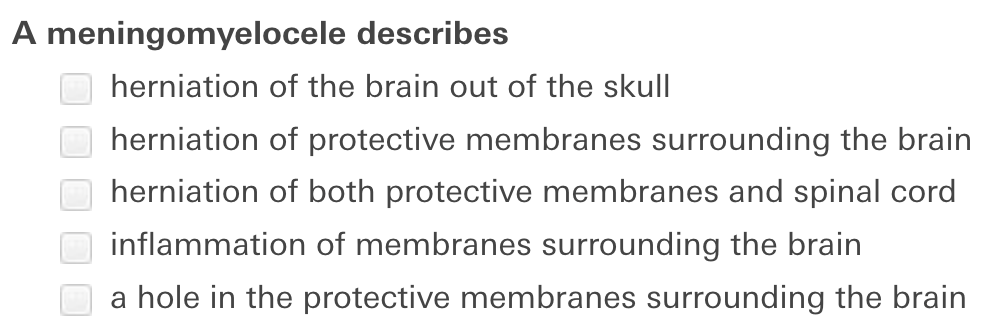
herniation of both protective membranes and spinal cord

speak

a brain scan

anencephalic

magnetic resonance imaging

meningioma

transient ischemic attack (TIA)
Abnormal or lack of development of part of the spinal cord is termed
myelodysplasia
carcin-
malignant
cardio-
heart
cephal-
head
chol-
gall/bile
chondr-
cartilage
circum-
around
colo-
large intestine
colp-
vagina
cyan-
blue
cyst-/cysto-
bladder/sac
dermo-
skin
dento-
teeth
dys-
difficult/painful/abnormal
-cele
hernia (abnormal protrusion of structure out of normal anatomical position)
-centesis
to punture
-cyte
cell
C
centigrade, Celsius
C&S
culture and sensitivity
c/o
complains of
Ca
calcium
CA
cancer
CABG
coronary artery bypass graft
CAD
coronary artery disease
cal
calorie
CAM
complementary and alternative medicine
cap
capsule
CAPD
Continuous Ambulatory Peritoneal Dialysis
CAT or CT
computerized axial tomography
CBC
complete blood count
CBR
complete bed rest
CBT
cognitive-behavioral therapy
CBW
current body weight
CC
chief complaint
cc
cubic centimeter
CCPD
Continuous Cycler Peritoneal Dialysis
CCU
coronary/critical care unit
CD
Crohn’s disease
CDCES
Certified Diabetes Care and Education Specialist
CF
cystic fibrosis