Pre-Clinical Exam
 Call Kai
 Learn
Learn Practice Test
 Spaced Repetition
 Match
Match Flashcards
 Knowt Play
1/212

Earn XP
Description and Tags
June 8, 2026 @ 1:00PM
Name | Mastery | Learn | Test | Matching | Spaced | Call with Kai | Chat |
|---|
No analytics yet
Send a link to your students to track their progress
213 Terms
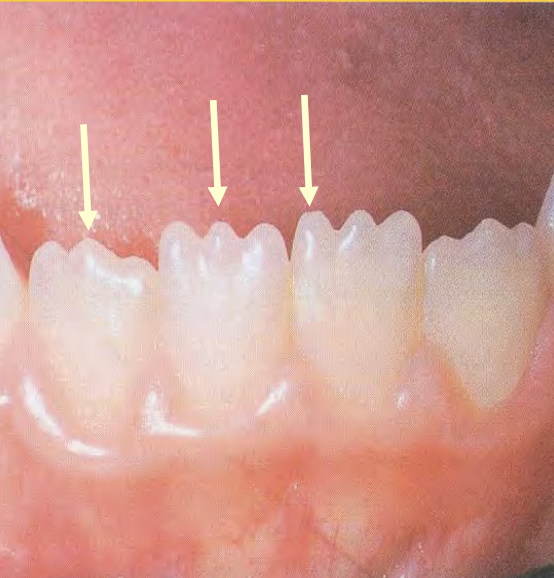
What is the name of the indicated structure on the incisal ridge of the incisors?
Mamelons
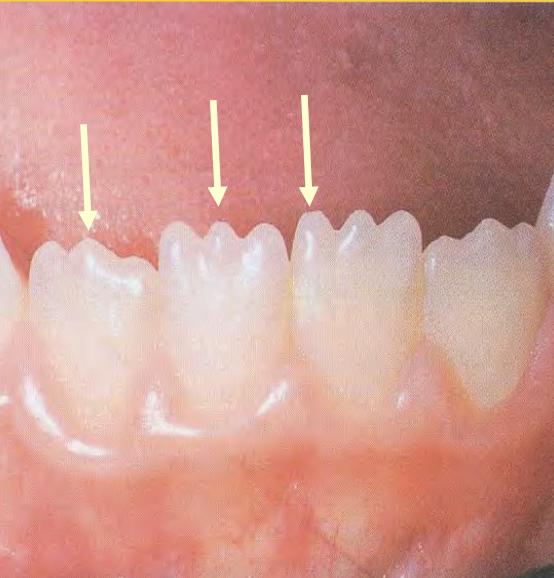
When the indicated structures are worn away, what forms?
The Incisal Edge
Perikymata are:
Positive Anatomy or Ridges
Imbrication Lines are:
Negative Anatomy or Depressions
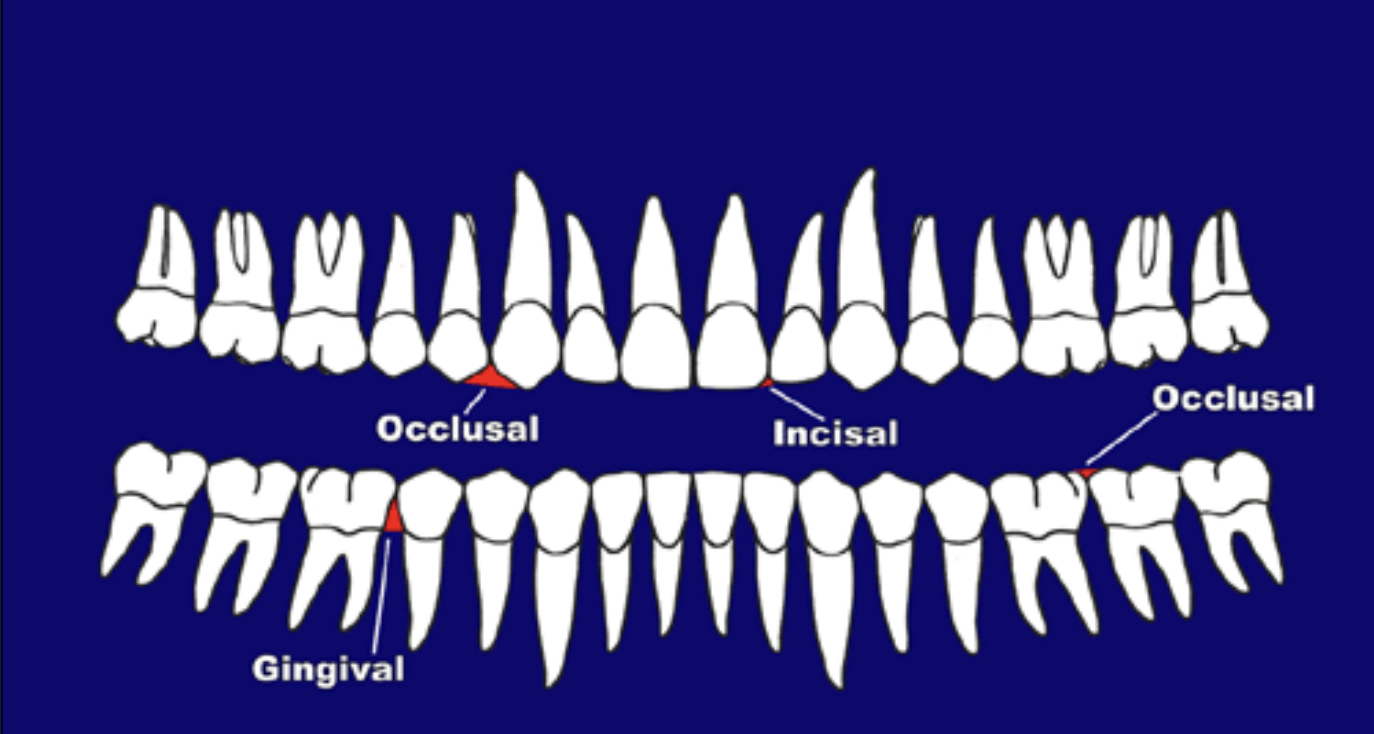
What embrasures are evident from a Facial/Buccal Viewpoint?
Gingival and Incisal/Occlusal Embrasures
What Embrasures are visible from an Occlusal Viewpoint?
Buccal/Facial and Lingual Embrasures
Underdeveloped or Overdeveloped Line angles with have an effect on the ____ of an embrasure.
Size
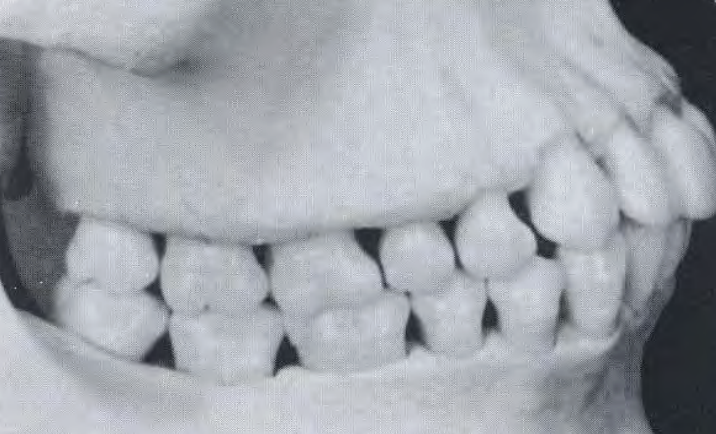
What is the term for triangular shaped space between the teeth normally filled with gingival tissue?
Gingival Embrasures (aka “Interproximal Space”)
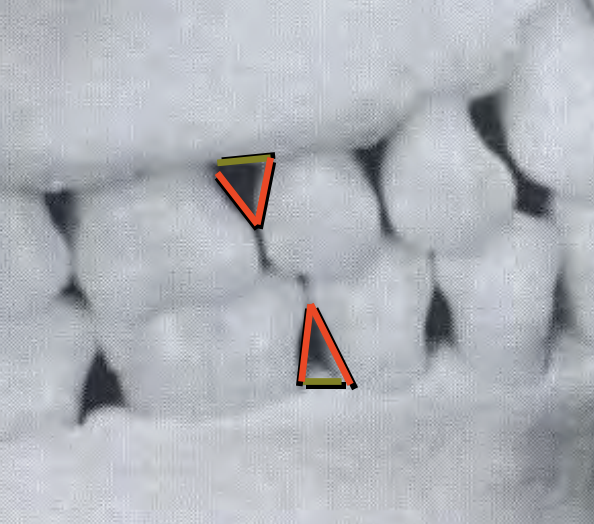
The base of the “triangle” of the Gingival embrasure is known as the
Alveolar Process

The sides of the “triangle” of the Gingival embrasure is known as the
proximal surfaces of the contacting teeth
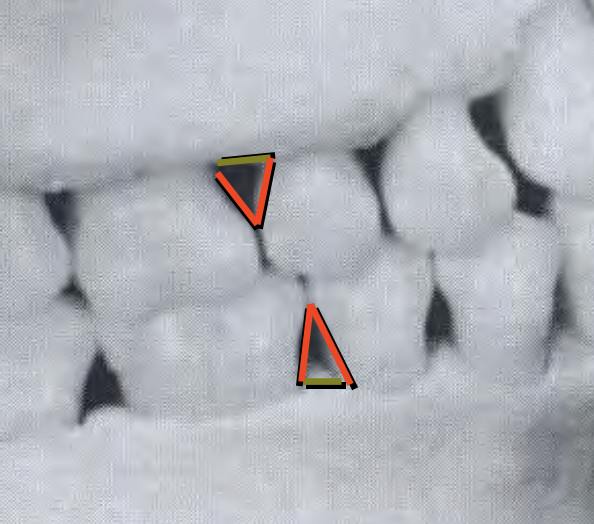
The apex of the “triangle” of the Gingival embrasure is known as the
Area of Contact
Anterior teeth from the facial/buccal view form the _______ Embrasure.
Incisal
Posterior teeth from the facial/buccal view form the _______ Embrasure.
Occlusal
The Largest Embrasure is found between with teeth?
Canine and 1st Premolar
The Smallest Embrasure is found between with teeth?
At the Midline (Between Central Incisors)
In the Maxillary Arch, the Facial/Buccal embrasures are ______ than the respective Lingual Embrasures, EXCEPT surrounding the ________.
Smaller; 1st Molar
What Clinical Issues result from Open or Impinged(Closed) embrasures?
Malpositioned Teeth (Crowding)
Oversized Proximal Contacts (Poorly Contoured Embrasures)
Carries/Fractures (Open Embrasures)
Mesial Cusps are ______ and Mesial Marginal Ridges (MMR) are ______
Larger; Taller
Contacts on posterior teeth are slightly positioned to the ______.
Buccal
In the Occlusal Viewpoint, Line angles on the Buccal are more ______.
Square
In the Occlusal Viewpoint, Line angles on the Lingual are more ______.
Round
Embrasures are typically _____ _______.
Mirror Images
All teeth, permanent and primary, exhibit a taper from ______ to ______.
Facial/Buccal; Lingual
The 3 exceptions for the Facial/Buccal to Lingual Taper are:
Permanent Maxillary 1st Molar
Permanent Mandibular 2nd Premolar (Y-Type)
Primary Maxillary 2nd Molar
All molars, permanent or primary, exhibit a taper from ______ to _______.
Mesial; Distal
The Mesial portion of a posterior tooth is ______ than the distal portion.
Larger
Line angles are ______ on the mesial.
Squarer
Line angles are ______ on the distal.
rounder
Mesial Marginal Ridges (MMR) are usually _______ than the Distal.
Taller (NOTE: The mandibular 1st premolar is an exception")
Molars taper:
Mesial to DIstal
Distal Cusps are _______ than Mesial Cusps.
Smaller
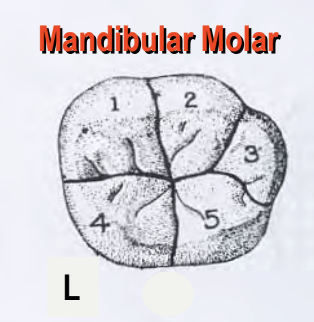
What is the name of the lobe indicated as #1 on the Mandibular Molar Shown?
Mesiobuccal (MB)
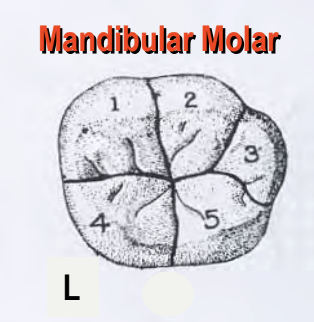
What is the name of the lobe indicated as #2 on the Mandibular Molar Shown?
Distobuccal (DB)
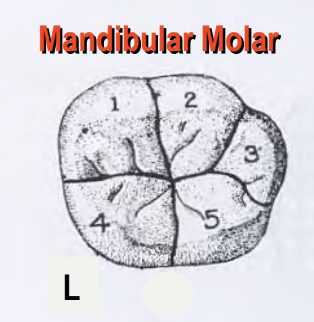
What is the name of the lobe indicated as #3 on the Mandibular Molar Shown?
Distal
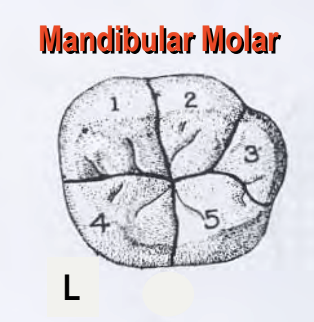
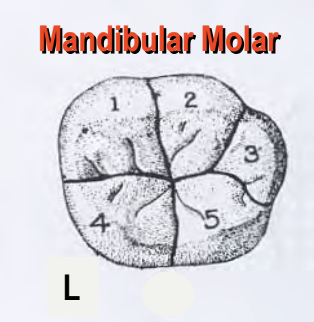
What is the name of the lobe indicated as #4 on the Mandibular Molar Shown?
Mesiolingual (ML)
What is the name of the lobe indicated as #5 on the Mandibular Molar Shown?
Distolingual (DL)
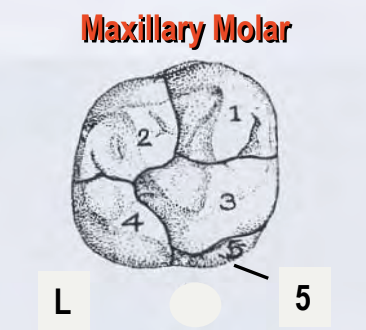
What is the name of the lobe indicated as #1 on the Maxillary Molar Shown?
Mesiobuccal (MB)

What is the name of the lobe indicated as #2 on the Maxillary Molar Shown?
Distobuccal (DB)
What is the name of the lobe indicated as #3 on the Maxillary Molar Shown?
Mesiolingual (ML)
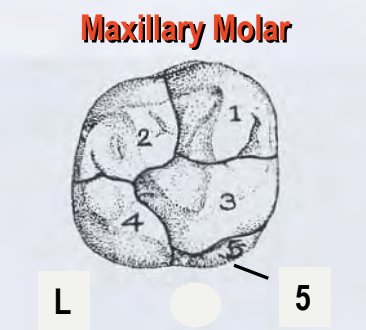
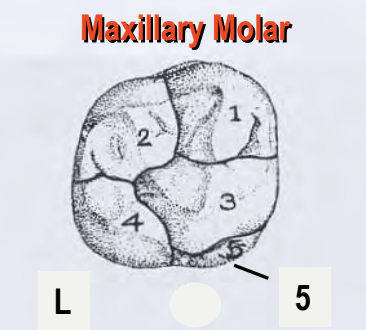
What is the name of the lobe indicated as #4 on the Maxillary Molar Shown?
Distolingual (DL)
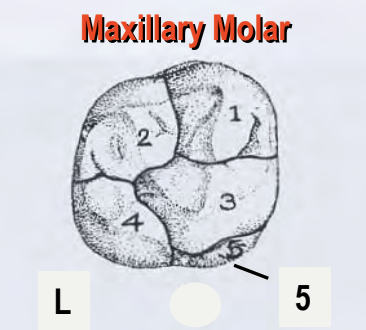
What is the name of the lobe indicated as #5 on the Maxillary Molar Shown?
Carabelli
What is a Developmental Depression?
A defined, recessed, or concave area on the surface of a tooth found between two primary parts of a crown or root.
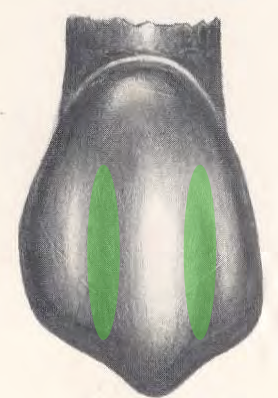
Developmental depressions are typically exhibited as _______
Lobe Divisions
What are the four shapes of the teeth?
Rectangle, Triangle, Trapezoid, and Rhombus
All crowns from the Buccal or Lingual aspect are
Trapezoidal
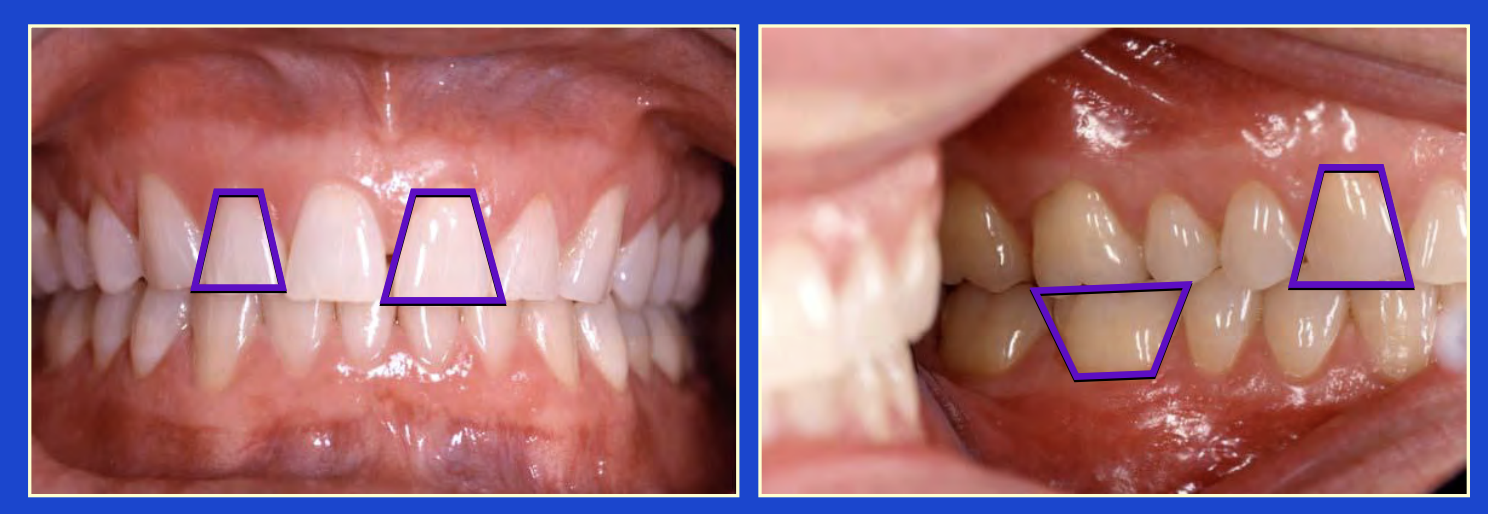
The shorter of the parallel sides will be _______.
Gingival
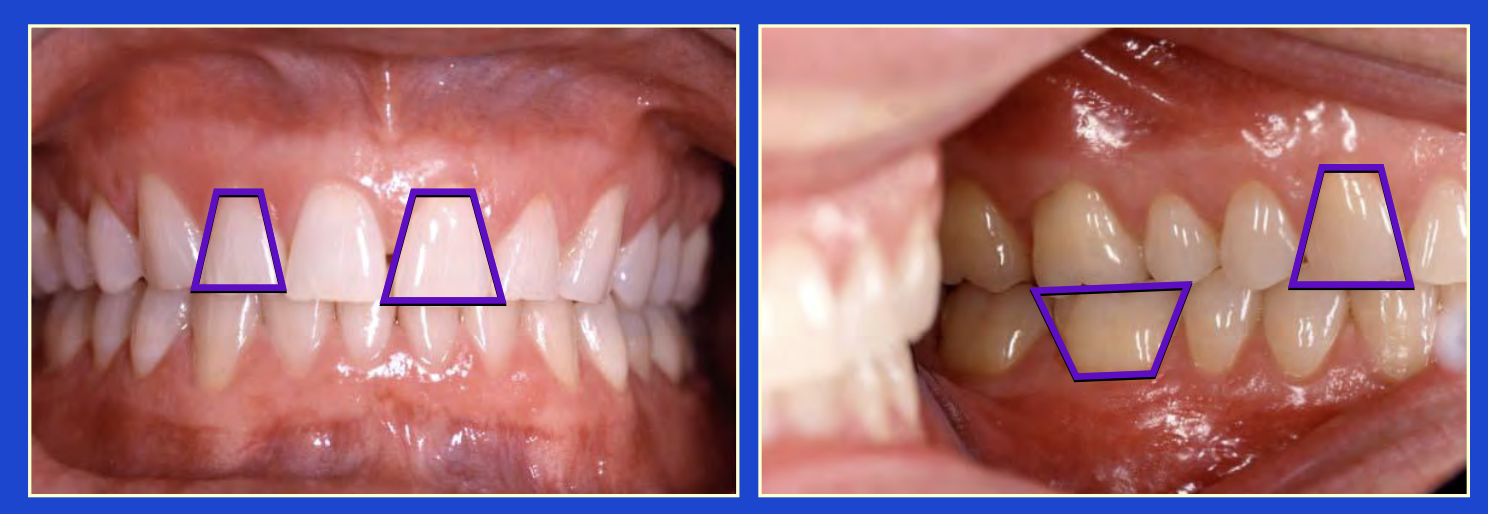
The longer of the parallel sides will be _______.
Incisal/Occlusal
Maxillary posterior teeth from the proximal aspect are
Trapezoidal
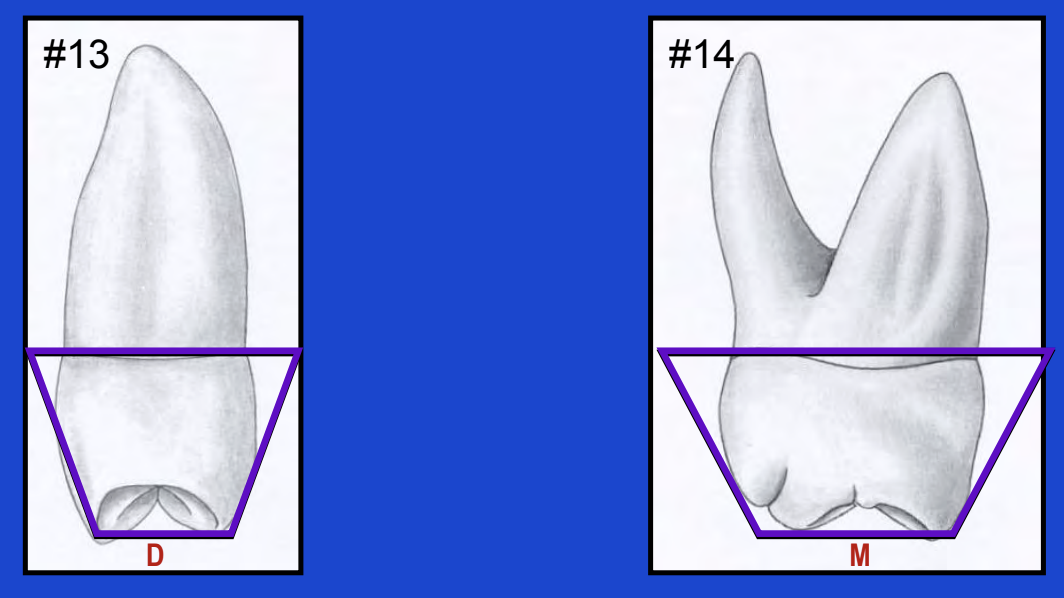
From the proximal aspect, the longer of the parallel sides will be
Gingival
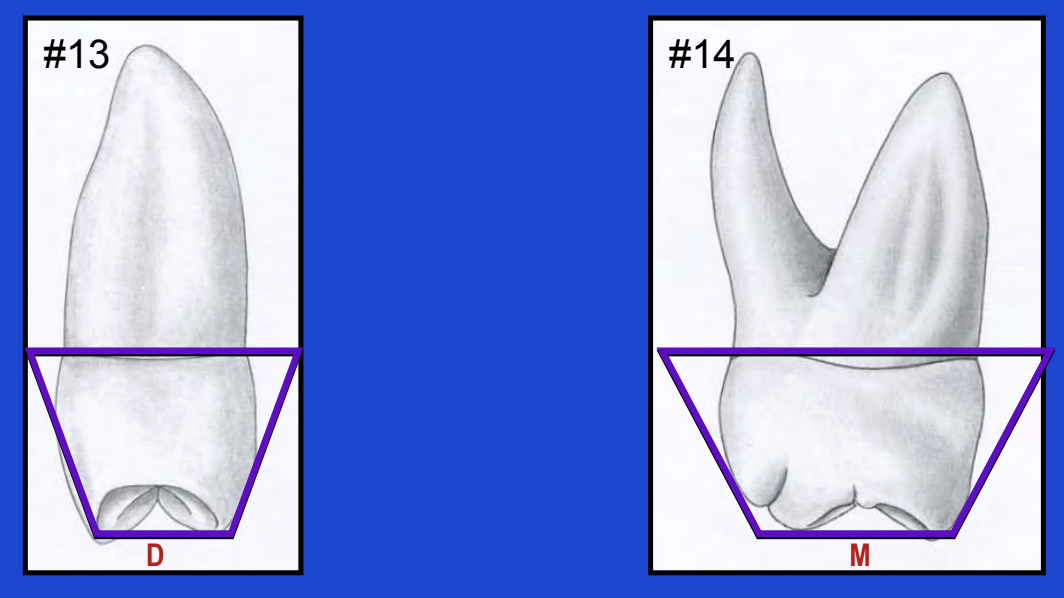
From the proximal aspect, the shorter of the parallel sides will be
Occlusal
Mandibular posterior teeth from the proximal aspect are
Rhomboidal
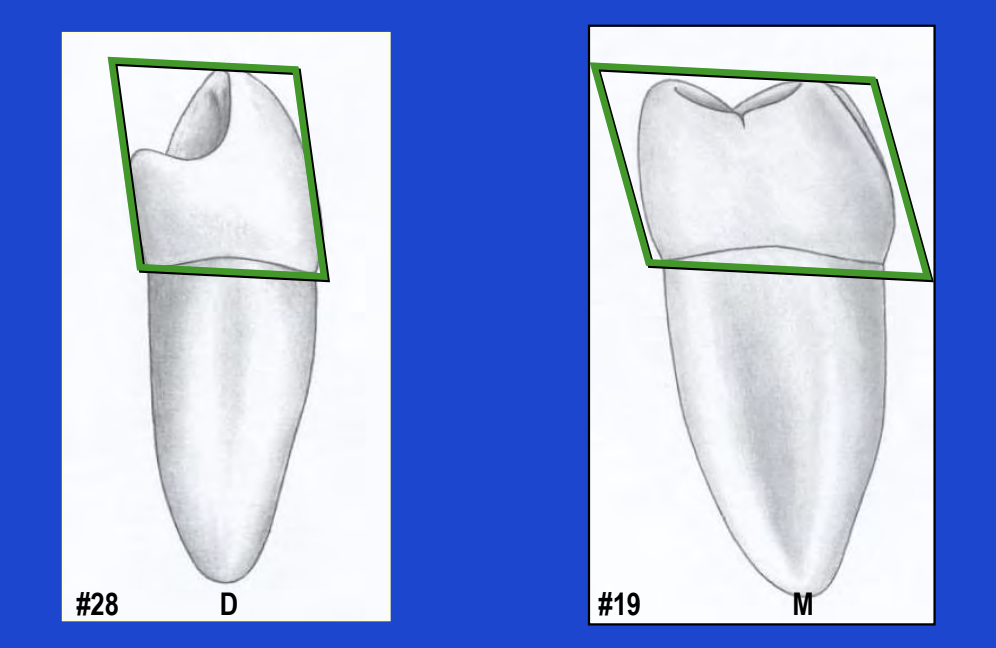
Maxillary & Mandibular anterior teeth from the proximal aspect are
Triangular
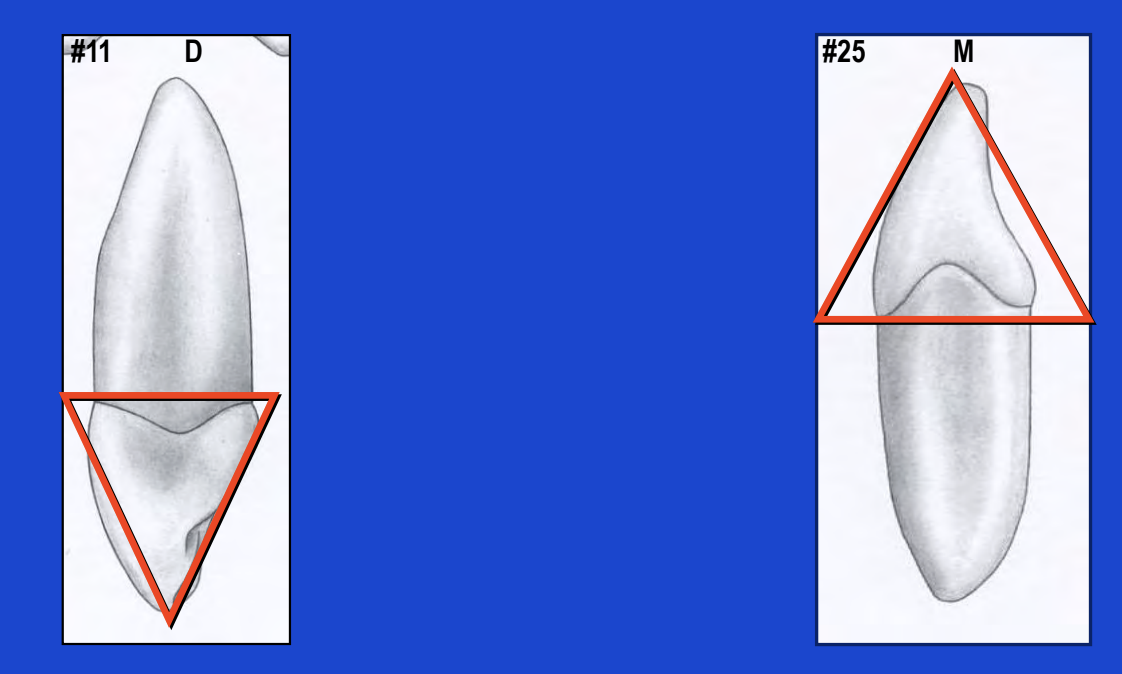

The base of the triangle of the anterior teeth from the proximal aspect is _______.
Gingival
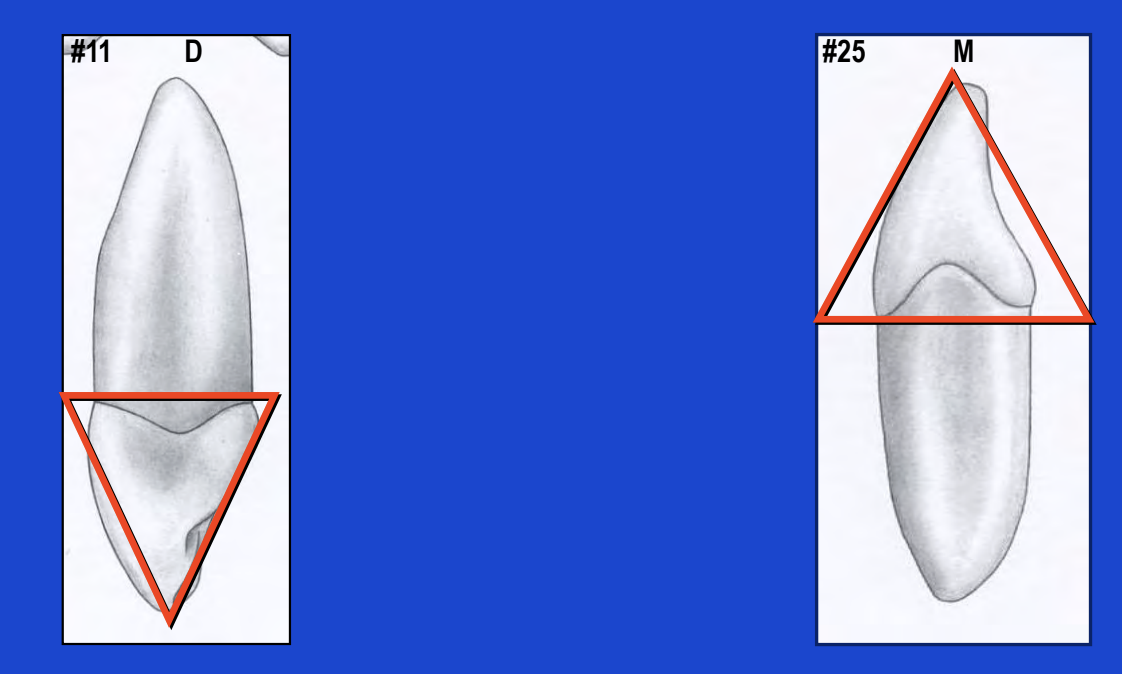
The apex of the triangle of the anterior teeth from the proximal aspect is _______.
Incisal
When two teeth in the same arch are in contact with each other, four V” shaped spaces are created around the contact area that form a spillway called
Embrasures
Every contact area produces _______ embrasures.
4
The name of the 4 embrasures are:
Facial(A)/Buccal(P), Lingual, Incisal(A)/Occlusal(P), Gingival
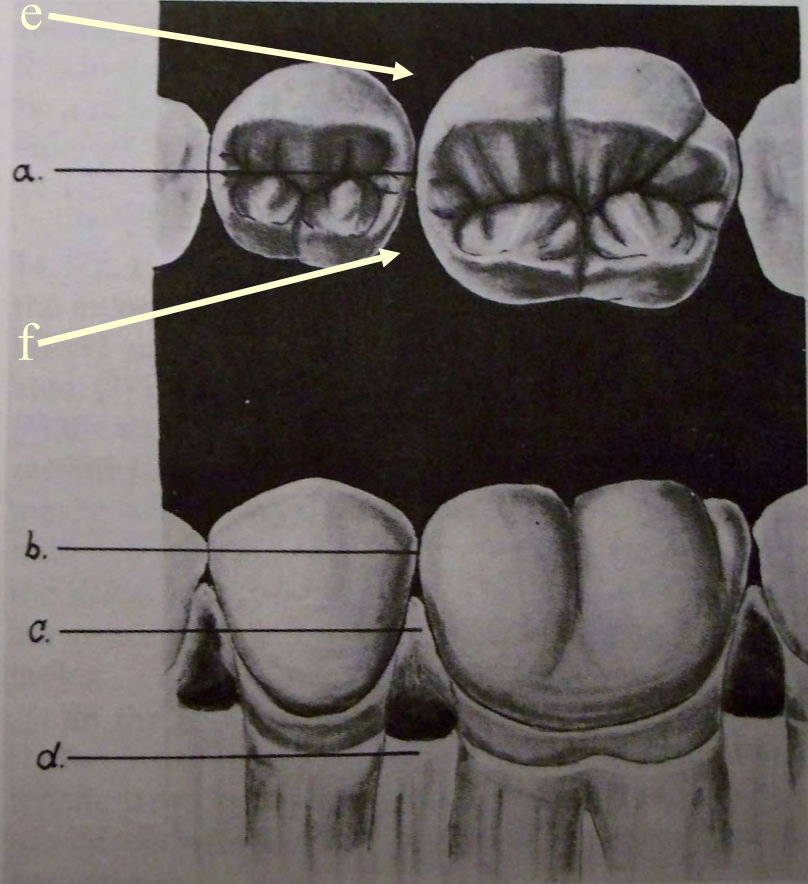
What is indicated by Letter A?
The Occlusal Embrasure
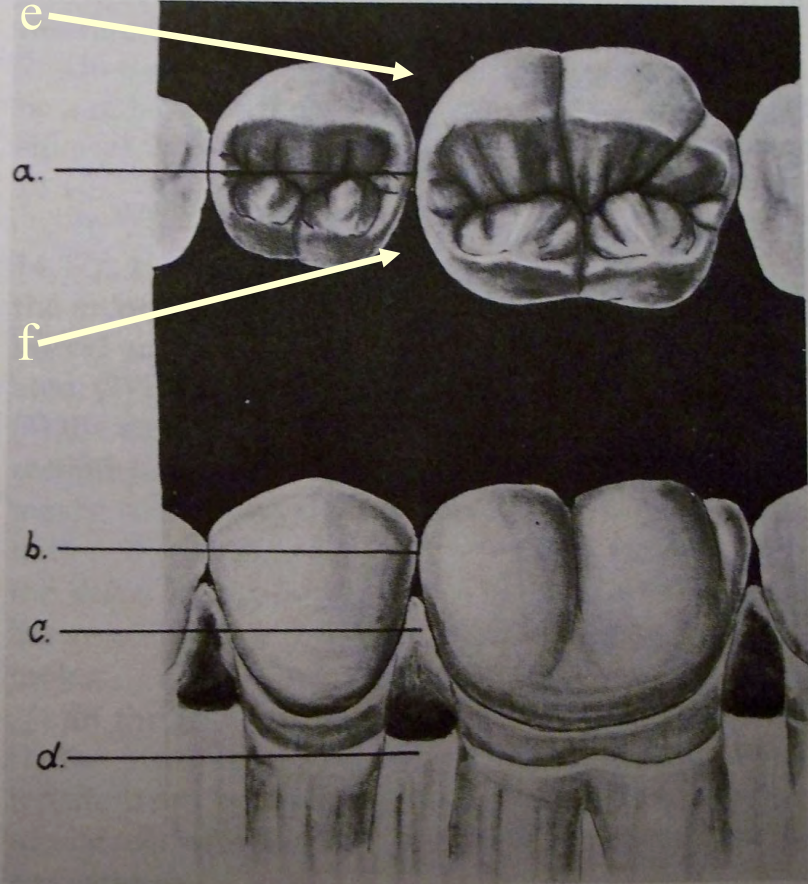
What is indicated by Letter B?
Contact Area
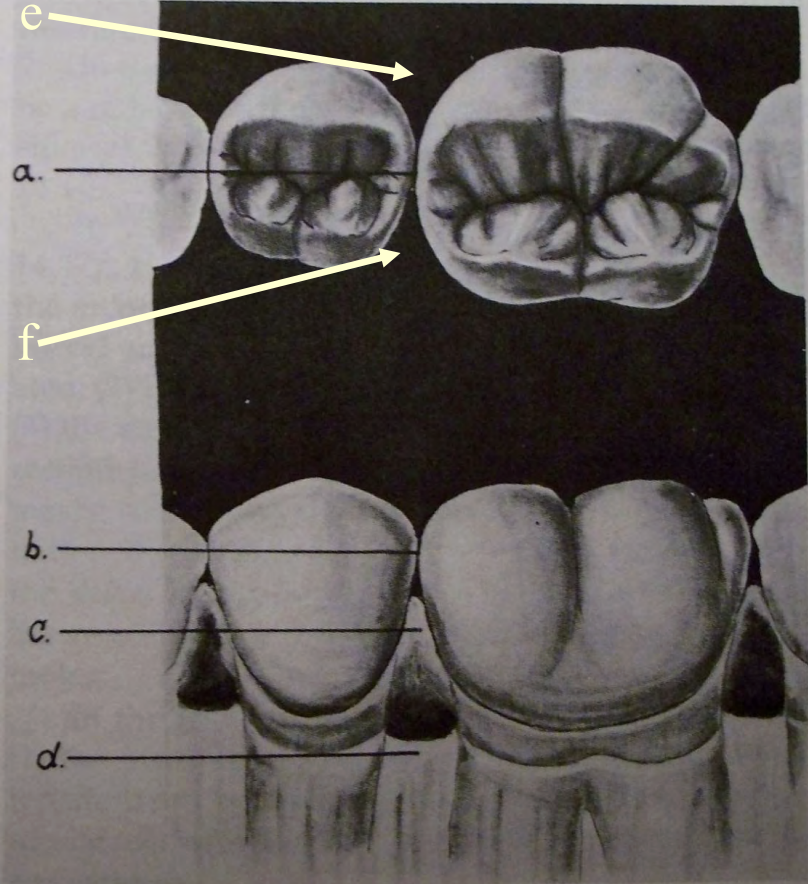
What is indicated by Letter C?
Gingival or Cervical embrasure
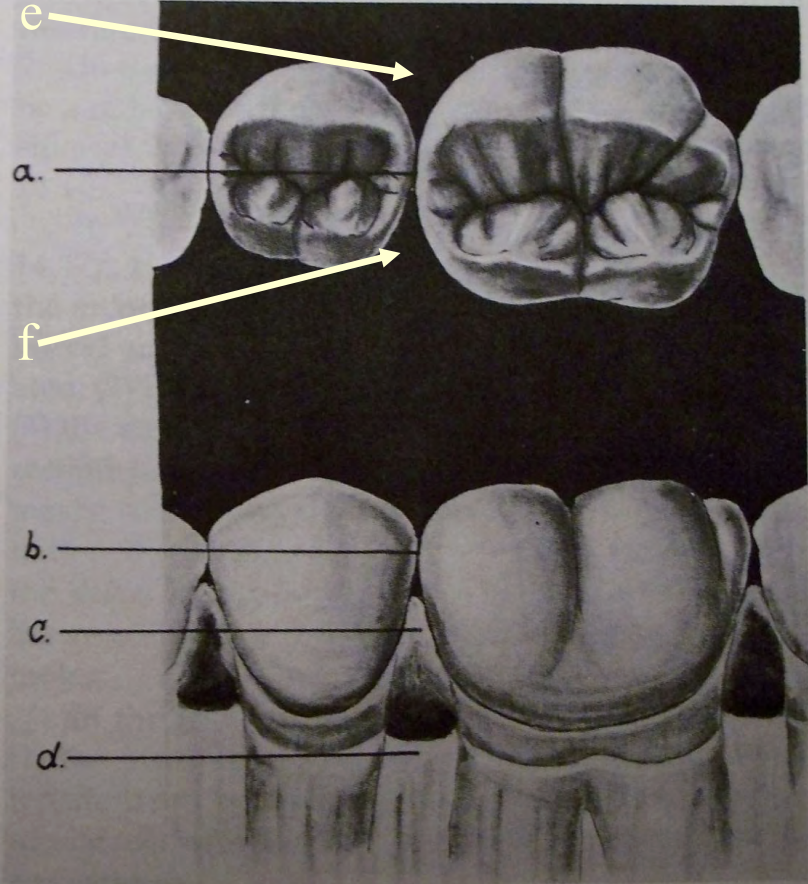
What is indicated by Letter D?
Alveolar Bond

What is indicated by Letter E?
Buccal Embrasure
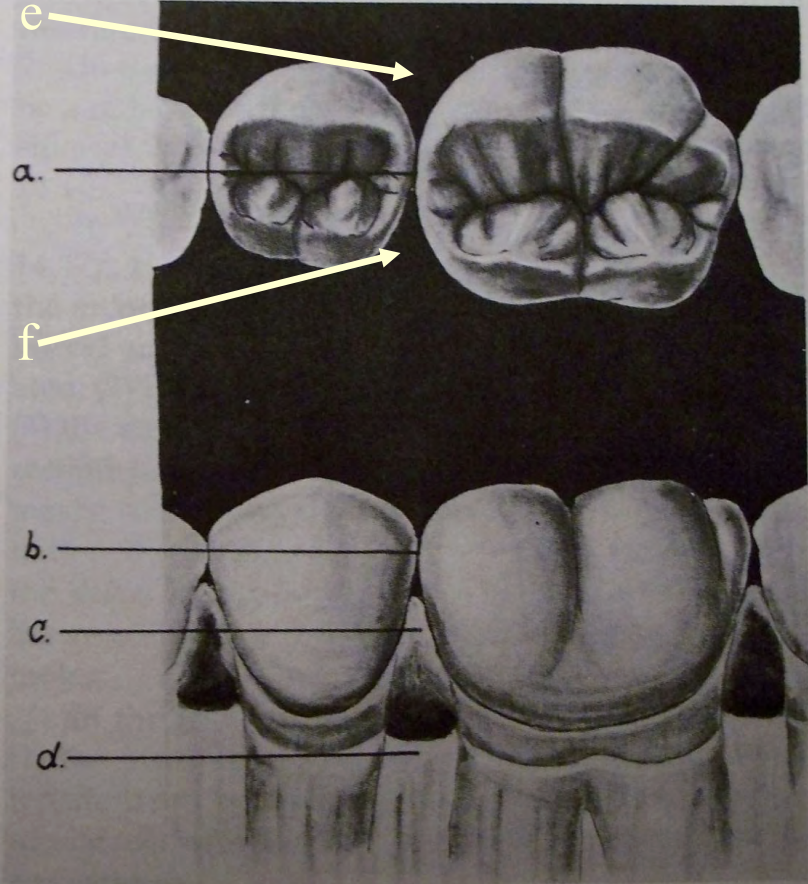
What is indicated by Letter F?
Lingual Embrasure

What is the name of the indicated orange section?
Occlusal Surface
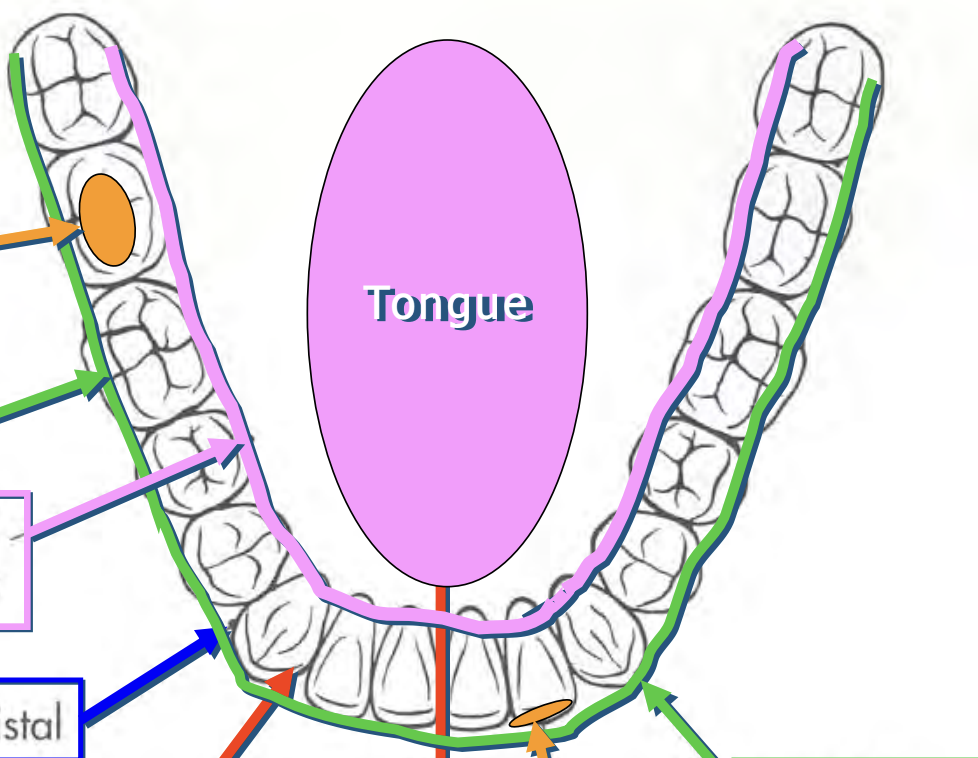
What is the name of the indicated green section?
Buccal/Facial Surface and Labial/Facial Surface

What is the name of the indicated orange section?
Incisal Ridge
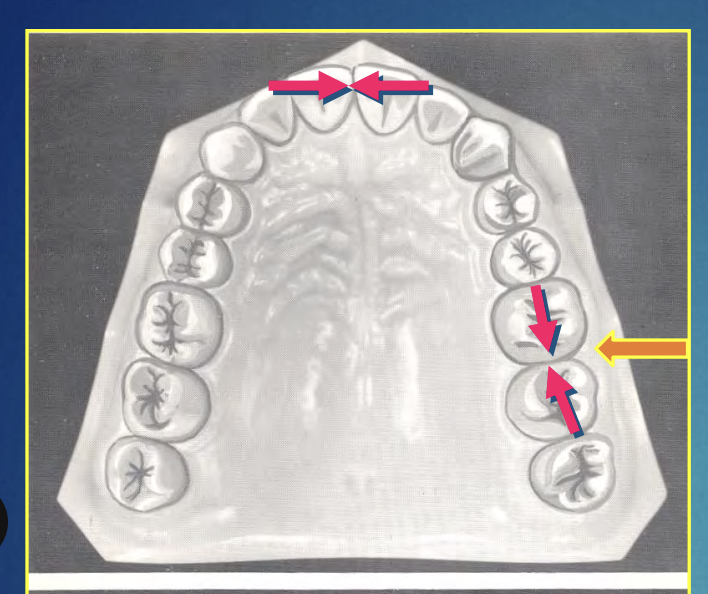
The surfaces of teeth facing toward adjoining teeth in the same arch are termed as
Proximal Surfaces

The surfaces of teeth that are parallel to the long axis of the tooth are termed as
Axial Surfaces
An elevation or mound on the crown portion of the tooth is known as the
Cusp
Any linear elevation on the surface of the tooth is a
Ridge
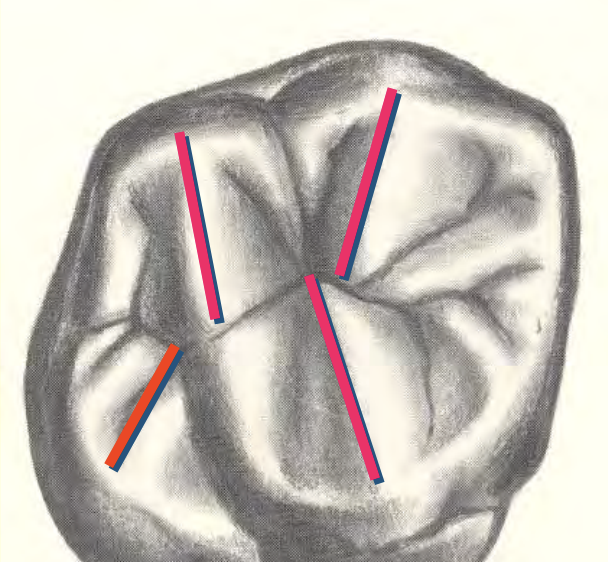
What are the indicated structures?
Triangular Ridges
What ridge descends from the tips of the cusps of posterior teeth toward the central part of the occlusal surface?
Triangular Ridges
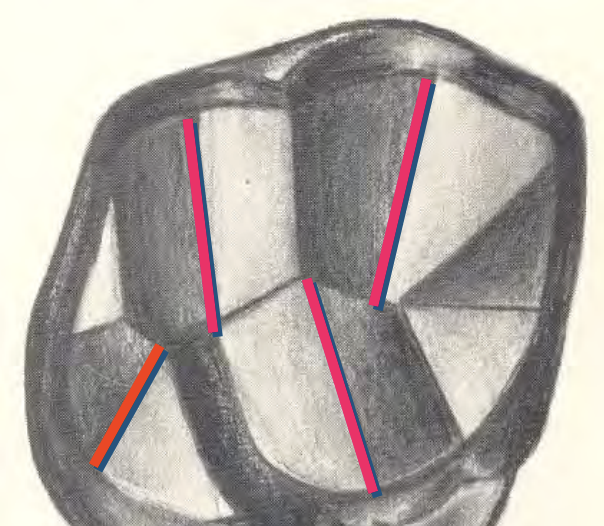
Each cusp only has _____ Triangular ridge.
One
Triangular ridges are wider at the ____ than at the ____.
Base; Tip (think ok a bowling pin)
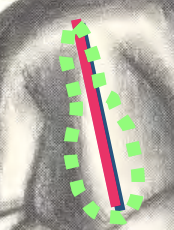
Each Cusp has 4 ridges but only one is a _______ ____.
Triangular Ridge
This ridge descends from the tips of cusps in directions other than toward the central part of the occlusal surface.
Cuspal Ridge
______ Ridges are unique to Maxillary Molars
Oblique
What ridge is formed by the triangular ridge of the DB cusps & the distal cusp ridge of the ML cusp?
Oblique Ridges
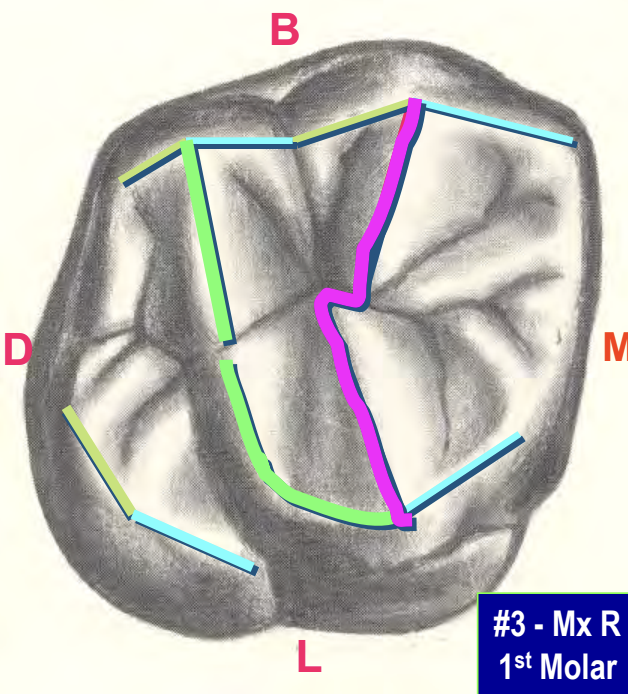
The union of two triangular ridges crossing the surface of a posterior tooth. (Purple)
Transverse Ridge
What ridges are the rounded borders of the enamel that from the mesial and distal margins of the occlusal surface of posterior teeth
Marginal Ridges
What ridges are the rounded borders of the enamel that from the mesial and distal margins of the lingual surface of anterior teeth?
Marginal Ridges
What extends mesiodistally from the incisal most portion of the M and DE marginal ridges?
Incisal RIdge

What is the name of the Red structures?
Marginal Ridges

What is the name of the Pink structures?
Incisal RIdge
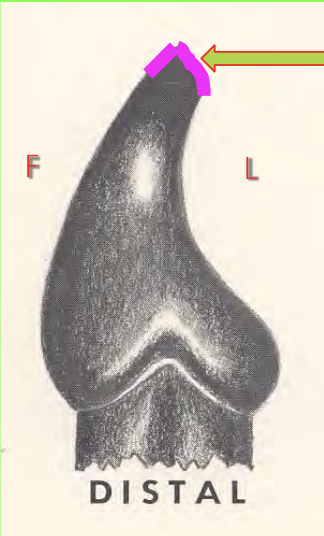
What is the name of the indicated structure?
Incisal Ridge
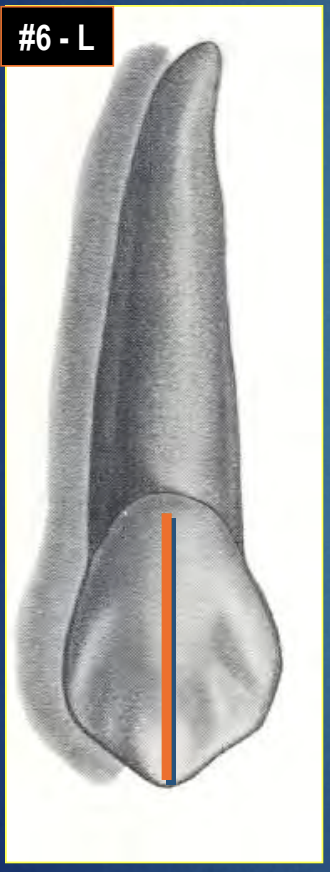
What is the name of the indicated structure?
Lingual Ridge
The lingual ridge extends from the _______ to the ______.
Cusp tip to the cingulum
True or False: The Incisors have lingual ridges
False
All of the teeth have lingual ridges except for the
Incisors
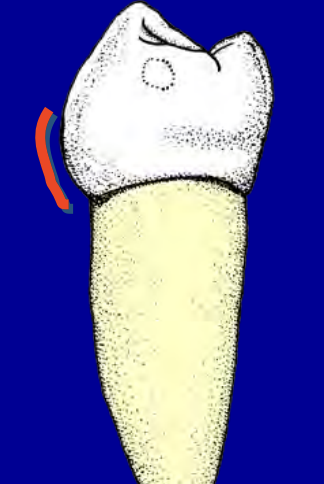
What is the name of the indicated structure?
Cervical Ridge
The cervical ridge occurs at the cervical __/__ (neck) of the tooth crown.
1/3
How many cervical ridges do the anterior teeth have?
2 (F and L)
How many cervical ridges do the posterior teeth have?
1 (Buccal)
The height of contour on the anterior teeth coincides with the ______ ______.
Cervical Ridge
The height of contour on the anterior teeth is created by the
Cervical ridge
The lingual height of contour is located in the _______ of the buccal surfaces of posterior teeth
cervical 1/3 (neck)
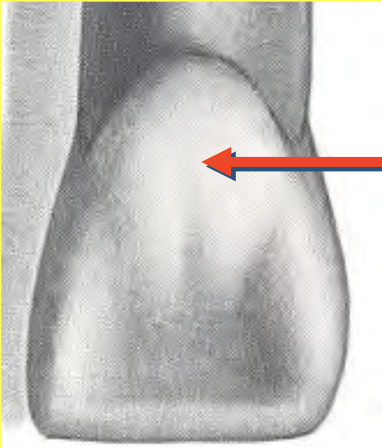
What is the name of the indicated structure?
Cingulum
What created the Lingual height of contour on anterior teeth?
Cingulum
The shape of the lingual fossa on the central incisors is
Trapezoidal
From the Buccal aspect, the first premolars crown’s symmetry is
not as bilaterally symmetrical