MOVESCI 340 Exam 1
 Call Kai
 Learn
Learn Practice Test
 Spaced Repetition
 Match
Match Flashcards
 Knowt Play
1/98

There's no tags or description
Looks like no tags are added yet.
Name | Mastery | Learn | Test | Matching | Spaced | Call with Kai | Chat |
|---|
No analytics yet
Send a link to your students to track their progress
99 Terms
Complete the equation
ATP —> Energy + _____ + _____
ATP —> Energy + ADP + Pi (inorganic!)
what are the two largest components of daily energy expenditure that we have the ability to modify?
non exercise activity thermogenesis AND exercise
what is the major/predominant fuel source utilized by cells DURING REST
lipids
how does CHO contribution to fuel change as exercise intensity increases
contribution of CHO as fuel increases as exercise increases
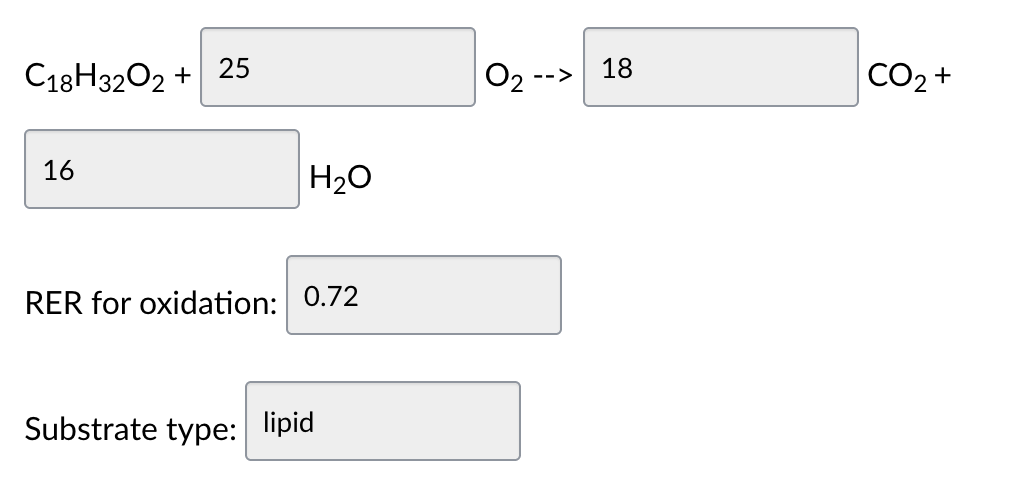
balance the following equation and determine what the RER is, use RER to determine the substrate type
C18H32O2 + ___O2 —> ___CO2 + ___H2O
RER for oxidation: _____
Substrate type: _____
The rate of carbohydrate energy transfer is about ____ compared to the rate of energy transfer from lipid
two-times faster
via what processes do we generate ATP in cells? (3 types)
glycolysis, oxidative phosphorylation, and phosphagen system
which enzyme is sensitive to epinephrine and results in triglyceride breakdown?
hormone sensitive lipase
glycolysis
breakdown of glucose to pyruvate
glycogenolysis
breakdown of glycogen to glucose
glycogenesis
production of glycogen (glucose to glycogen)
gluconeogenesis
production of glucose from non-carbohydrate substrates (ex. protein —> glucose)
what is a hormone released during higher intensity exercise that has a direct impact on fuel/substrate utilization?
epinephrine/norepinephrine
During an acute bout of exercise, what are the major variables that can impact substrate utilization during exercise?
intensity and duration
During high intensity exercise lasting longer than 10 seconds, what is the primary energy system used?
glycolysis
Following consumption of a high glycemic index food, blood glucose __________ then ___________
increases rapidly, decreases rapidly
What is the impact of exercise on circulating insulin levels?
decreases insulin levels

T or F: Considering the situation described in question two, the timing of pre-exercise meals has an impact on blood glucose levels during exercise.
transient hypoglycemia, TRUE
Which of the following is false?
The different energy systems cannot all be active at the same time
ATP-PCr system is predominantly utilized during a quick sprint (less then 10 seconds)
There are aerobic and anaerobic pathways to produce ATP
Aerobic metabolism is relied upon for long durations of exercise
The different energy systems cannot all be active at the same time
What happens to ATP levels in muscle cells during contraction/exercise?
no change
What is the enzyme that produces ATP at the end of oxidative phosphorylation?
ATP synthase
What would a high ADP/ATP ratio indicate?
Low energy state in the cell
what is basal metabolic rate
minimal amount of energy required to sustain the body’s vital functions
measurements made under strict conditions
greater than or equal to a 12-hour fast
not active during the hours before the test
sit quietly for roughly 30 minutes before measuring
roughly 70% of daily expenditure
what is resting metabolic rate
less strict conditions than BMR
Both BMR and RMR measure oxygen consumption
what is the conversion between O2/kg/min and metabolic equivalent of task (MET)
3.5 ml O2/kg/min = 1 metabolic equivalent of task (MET)
what factors affect energy expenditure (6)
physical activity —> exercise activity thermogenesis (EAT)
eating —> thermic effect of food (TEF)
non-exercise activity thermogenesis (NEAT)
climate
pregnancy/lactation
emotions (high or low stress)
physical activity VS. exercise (and their influence on energy expenditure
physical activity includes the activities of daily living such as vacuuming, moving around at work, or commuting to class
exercise is planned physical activity with the purpose of training such as weight lifting, a marathon, or sports
physical activity and exercise are the great change/variation in energy expenditure, normally accounts for 15-30% of daily energy expenditure
physical activity guidelines for americans
150-300 mins/week of moderate intensity aerobic activity
OR
75-150 mins/week of vigorous intensity aerobic activity
OR
a combination of both in addition to 2x/week muscle strengthening at moderate or greater intensity
these are MINIMUMS to reduce the risk of lifestyle related diseases
in terms of METs, 500-1000 MET min/week
sedentary vs. maximal intensities for METs, %VO2max, %HRmax, rate of perceived exertion (RPE)
METs: <1.5 to >9
%VO2max: <37 to >91
%HRmax: <40 to >93
RPE: 1-2 RPE/6 Borg to 9-10 RPE/18-20 Borg
IMPORTANT CONVERSIONS: L to kcal AND kg to lbs
1 L of oxygen consumed = 5 kcals (5kcals/L O2)
1 kg = 2.2 lbs
draw the relationship between exercise volume/fitness level and risk of disease

draw the relationship between exercise volume & risk of atrial fibrillation

what are METs good for? (why do we calculate MET minutes)
150 min/week of aerobic activity = 500-1,000 MET min/week for significant health benefits
METs are a good way to calculate/compare intensity across multiple types of aerobic exercise
MET-minutes to kcals calculation:
920 MET-min
100 kg individual
920 METs minutes * 3.5 ml O2/kg/min * 100kg/200 = 1610 kcals
TEF obligatory thermogenesis
energy requiring processes of digesting, absorbing, and assimilating food
TEF facultative thermogenesis
related to an increased activation of sympathetic nervous system which can lead to an increase in energy metabolism
ex. cold environments
TEF in energy expenditure
generally reaches maximum 1 hr after meal
can account for 10-35% of calories ingested (WE WILL USE 10%)
wide variability among individuals
obese people often found to have lower TEF
NEAT in energy expenditure
best activities are stair climbing and walking (even though most of us sit all day)
has overall decreased in the general population due to more sedentary jobs
london transport workers study - seated drivers vs. standing conductors —> drivers are 2x more likely to have heart disease
how does climate effect energy expenditure
lowest to highest GENERALLY when comparing energy expenditure: moderate climates, warm environments, cold environments
where is the main location of breakdown of substrates for energy?
mitochondria
BUT some glucose breakdown occurs in the cytoplasm (glycolysis)
air inspired percent breakdown by O2, CO2, and N2
O2: 20.93%
CO2: 0.03%
N2: 79.04%
what are the macronutrients used as fuel (3 + non macronutrient)
carbohydrates (CHO): C_n(H2O)_n where n = 3-7
GLUCOSE: C6H12O6
lipids: major fuel source at rest
protein: very small contribution, often near starvation it creates fuel
ketones: NOT a macronutrient, but can be used as fuel
standard energy content of macronutrients
carbohydrate = 4 kcal/g
fat = 9 kcal/g
protein = 4 kcal/g
alcohol = 7 kcal/g
carbohydrate distribution in the body

what is glycogen, where is it stored, and what is breakdown called
storage form of CHO (long linkage of glucose)
stored in liver and muscle
liver glycogen: maintenance of blood glucose
muscle glycogen: local store of fuel for muscle contraction
glycogen breakdown
glycogenolysis is the breakdown into glucose for fuel
main source of fuel during moderate to high intensity exercise
how is fat stored in the body?
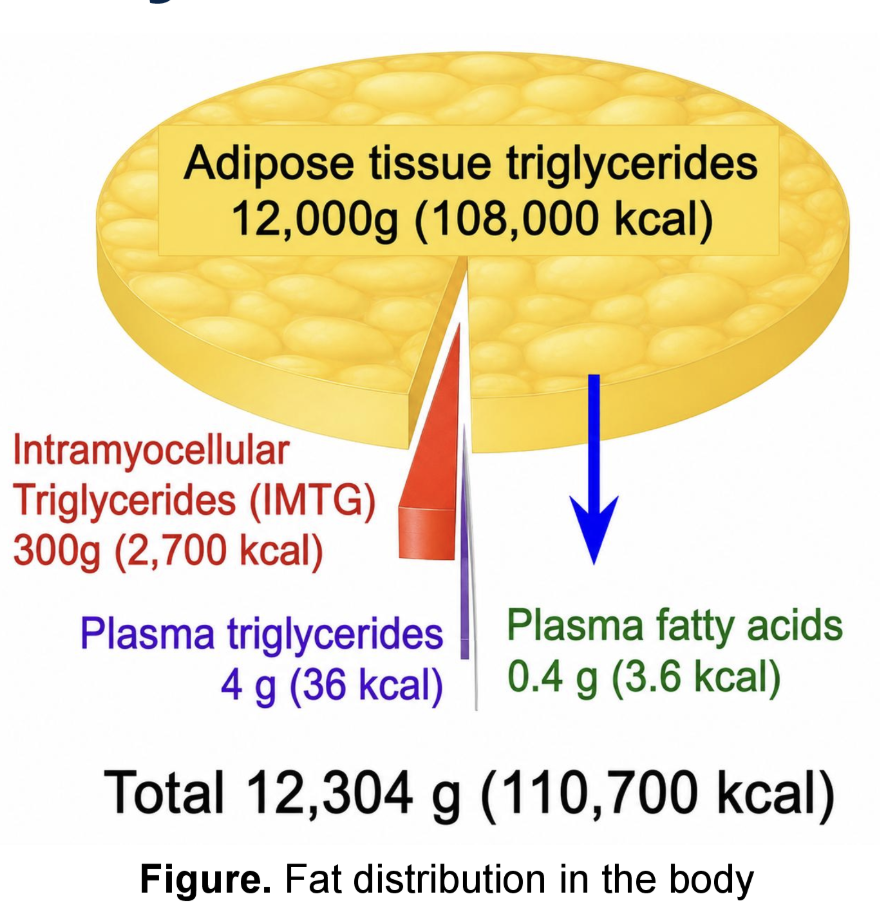
triglyceride breakdown
triglycerides must be broken down to release fatty acids for energy
LIPOLYSIS: triglyceride breakdown
LIPASE: enzyme that breaks down triglycerides
HORMONE-SENSITIVE LIPASE (HSL): epinephrine regulates lipolysis through HSL
protein structure

how is protein “turned over”
anabolism: building up tissue, protein synthesis
catabolism: breakdown of tissue, protein degradation (increases with aging)
protein catabolism for energy
impractical fuel source
ammonium ions (NH4+) are toxic to cells
proteins are the most important structural and functional components of cells
what is a ketone and how can it be used at fuel?
carbon-containing molecules that can be transformed into ATP-producing substrates
increase production during prolonged exercise and exercise while fasted
ketones can also fuel the CNS when blood glucose is low
when carb storage is low, ketones enter citric acid cycle to produce ATP
what is respiratory exchange ratio (respiratory quotient)?
RQ = VCO2/VO2
RQ provides an index of the relative use of CHO and fat
RQ = 0.70-1.0 —> 0.70 is all fat, 1.0 is all carbs, 0.85 is roughly 50/50
RQ = RER
draw the relationship between energy supply and time for the three main ATP supply chains (3)

when is ATP-PCr used as a fuel source?
quick energy
short, intense bout (predominantly <10s)
when is glycolysis used as a fuel source?
breakdown of glucose to pyruvate
endpoint (aerobically): pyruvate —> acetyl CoA —> TCA —> ETC
moderate duration/intensity
endpoint (anaerobically): pyruvate —> lactate —> H+ ions
short duration/higher intensity
when is oxidative phosphorylation used as a fuel source?
acetyl-coa derived from either CHO or lipid sources
generate reducing equivalents (NADH and FADH2) to drive the electron transport chain (ETC) and generate lots of ATP
in general, endless supply for lower intensity (rest and low intensity/long duration)
can all ATP-generating systems occur at the same time?
YES! All of the ATP-generating systems are active in cells at all times
factors that impact substrate choice (4)
intensity (endurance exercise)
duration (endurance exercise)
diet/meals
fasted vs fed state
timing of last meal
high vs. low CHO diet/meal
hormones
epinephrine
insulin and glucagon
draw and explain the fed state vs. fasted state pathways within the liver

what two metabolic byproducts are used in gluconeogenesis?
lactate and alanine are substrates for gluconeogenesis/
what are the preferred substrates for skeletal muscles at rest and during exercise?
rest: fatty acids
exercise: fatty acids and glucose/glycogen (intensity and duration dependent)
what are the preferred substrates for brain at rest and during exercise?
rest: blood glucose, can use lactate and ketones —> fatty acids are too big to pass the BBB
exercjse: blood glucose, can use lactate and ketones
what are the preferred substrates for red blood cells at rest and during exercise?
rest: blood glucose
exercise: blood glucose
what are the preferred substrates for liver at rest and during exercise?
rest: fatty acids
exercise: fatty acids, blucose, and amino acids (intensity, duration, and nutrition dependent)
what are the preferred substrates for the heart at rest and during exercise?
rest: fatty acids, glucose (depending on time of last meal)
exercise: fatty acids, glucose, and lactate (intensity dependent)
what is the ATP : ADP ratio?
this ratio is critical to the energy status of a cell
Metabolic byproducts are key messengers in cells
in a typical cell, 500 ATP molecules to 1 ADP molecule per cell
500:1
ATP levels are steady (even during exercise!!)
byproducts do accumulate
break down of one ATP causes a decrease in ATP by 1 (500 to 499)
but, 2x change in the number of molecules of ADP (1 to 2)
ratio is how 499:2
what is the importance of the ATP : ADP ratio? why is it so large?
allows cells to be highly sensitive to changes in byproducts of ATP breakdown while being able to recycle ATP rapidly
relevant for how cells regulate which substrates to utilize
slowly producing byproducts: use slow energy source (lipid)
quickly producing byproducts/need ATP quickly: use quick energy source (glycogen)
quick build-up of ADP triggers use of glycogen as energy source!
what action occurs when AMPK targets Acetyl CoA carboxylase (ACC)
INC fatty acid entry into mito
INC fat oxidation
what action occurs when AMPK targets FAT/CD36
INC fatty acid transport
what action occurs when AMPK targets GLUT4
INC glucose transport
what action occurs when AMPK targets glycogen synthase
inhibits glucogen synthesis
draw stimulation and inhibition pathways by AMPK

explain the six steps of the contraction cycle

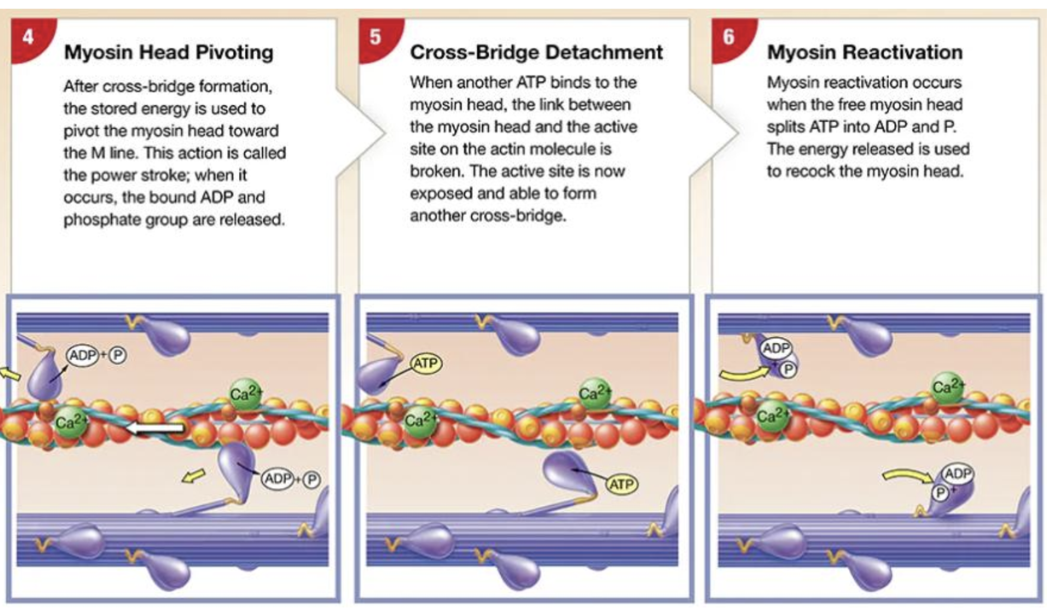
what are the most common sources of fuel for carbs and fats?
carbs: muscle glycogen
fats: plasma FFA
What are the three irreversible, regulated steps of glycolysis?
Hexokinase, PFK-1, and pyruvate kinase
hexokinase purpose in glycolysis
converts glucose to G6P
hexokinase stimulators
glucose, insulin, Ca2+, epinephrine
hexokinase inhibitors
high levels of G6P, F6P
phosphofructokinase (PFK) purpose in glycolysis
converts F6P to F1,6 bisphosphate
phosphofructokinase (PFK) stimulators
ADP, Pi, AMP, high pH
phosphofructokinase (PFK) inhibitors
high ATP/ADP, citrate, low pH
pyruvate kinase purpose in glycolysis
converts phosphoenolpyruvate to pyruvate
pyruvate kinase stimulators
F16DP, insulin
pyruvate kinase inhibitors
high ATP/ADP, acetyl-coA, glucagon
what cell conditions and energy state stimulates glycolysis
high AMP, low ATP, low citrate, low energy state
what cell conditions and energy state inhibit glycolysis
high ATP, high citrate, fasting with high glucagon, high energy state
what are the regulatory enzymes of glycogenolysis
glycogen phosphorylase
glycogen phosphorylase purpose in glycogenolysis
converts glycogen to G1P to G6P
glycogen phosphorylase stimulators
ADP, Pi, AMP, Ca2+, epinephrine
glycogen phosphorylase inhibitors
high ATP/ADP, citrate
Describe the mechanism of muscle glycogenolysis regulation (hormonal + Ca²⁺ + AMP pathway)
Epinephrine/norepinephrine binds a β-adrenergic receptor
activating a Gs protein
which activates adenylate cyclase to convert ATP to cAMP
cAMP activates protein kinase A, which phosphorylates and activates phosphorylase kinase (Ca²⁺ released during muscle contraction also directly activates phosphorylase kinase).
Active phosphorylase kinase phosphorylates glycogen phosphorylase, converting it from inactive phosphorylase b to active phosphorylase a (AMP can also promote this and blocks the reverse reaction).
Active phosphorylase a then cleaves glucose units off glycogen using Pi,
producing glucose-1-phosphate, the first and rate-limiting step of glycogen breakdown.
what are liver and muscle glycogen used for?
liver: maintain blood glucose
muscle: provide glucose for muscular contraction
steps of liver glycogenolysis
Glucagon binds its receptor on the liver cell membrane
activating adenylate cyclase to convert ATP to cAMP
cAMP activates protein kinase A, which phosphorylates and activates phosphorylase kinase
Active phosphorylase kinase then phosphorylates glycogen phosphorylase, converting it from inactive phosphorylase b to active phosphorylase a
Active phosphorylase a cleaves glucose units off glycogen using Pi, producing glucose-1-phosphate.
which two gluconeogenic pathways are reciprocally regulated
glycolysis and gluconeogenesis
what are the 3 ways glucose enters the muscle INSULIN-DEPENDENT
resting conditions
post-meal
rest/digest
what are the 3 ways glucose enters the muscle INSULIN-INDEPENDENT
exercise
muscle contraction
energetic stress (AMPK)
mechanistic steps of glucose uptake during exercise
muscle contraction
increased intramuscular Ca2+ levels
energetic stress (sensed by AMPK, energy demands are inc)
GLUT4 vesicles moving to the muscle fiber membrane
glucose removed from the plasma and into the muscle fiber
glucose “trapped” in muscle fiber by hexokinase (rate-limiting enzyme) converting glucose to glucose-6-phosphate
how do glucose transport protein (GLUT4) levels relate to exercise duration
longer you exercise, more transport of glucose into the muscle (insulin independent), which leads to a greater expression of GLUT4 over time