TI2- antimicrobial MOR
 Call Kai
 Learn
 Practice Test
 Spaced Repetition
 Match
 Flashcards
 Knowt Play
1/19

There's no tags or description
Looks like no tags are added yet.
20 Terms
explain the evolution of antimicrobial resistance
every time a bacteria replicates it copies its DNA and theres a chance that it can introduce a point mutation into the copying process
the point mutation may have no effect on the bacteria or one thats not very relevant
however after the population has be treated with the bacteria ofen the ones with the mutation will survive and are able to replicate and form a population which all have the mutation and are resistant

what are the 4 pillars of the UK governments action plan for antimicrobial resistance

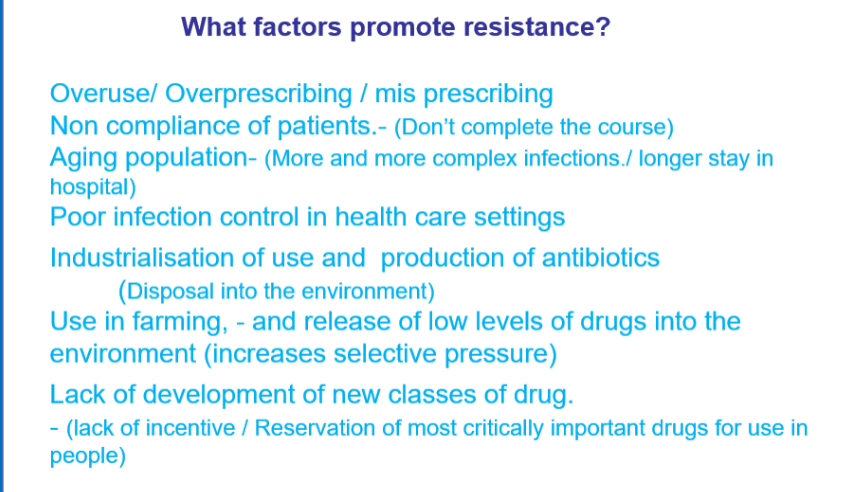
what factors promote antimicrobial resistance
which bacteria raise the most concern when considering resistance

describe what innate/intrinsic bacteria is
its where the whole species of a bacteria is resistant to a certain type of antibiotic
mycoplasma-no cell wall so innate resistance to beta lactams
e.coli resistance to vancomycin as its big and cannot get through porin channels
describe aquired antibiotic resistance
this is where some species or strains of a bacteria will be resistant to an antibiotic and others wont be or they arent all the time
there are two different types:
phenotypic reversible-this is if they have reversible resistance this is associated with bacteria which have a sort of life cycle e.g. bacteria growing in a biofilm or dormancy
genetic this is irreversible and has two different types firstly mutations single base mutations which confers a low level of resistance except trimethoprim. then accumulation of mutations cause a high level of mutations. secondly new genetic material this is when bacteria acquire new genetic material mostly acquired on plasmid also it can occur when genetic material is inserted into the chromosome
what are the two types of antimicrobial resistance
innate/intrinsic
acquired- genetic and phenotypic
what is bacterial conjugation
its the transfer of plasmids between different species which increases the spread of antimicrobial resistance
what are the three mechanisms of antibiotic resistance
they can inactivate /modify drug
alter the drugs target site
altered transport ( alter the drugs uptake/exit )
describe how bacteria are able to become resistant to beta lactam drugs by inactivation
the bacteria can produce an enzyme called beta lactamases which hydrolyse the beta lactam antibiotics
e.g. bacteria like S.aureus and P.aeruginosa have intrinsic resistance
there are also plasmid mediated beta lactases and a lot of different types which vary in their spectrum of activity

explain the effect beta lactases have on negative and positive bacteria

explain the role of beta lactases inhibitors in combating resistance

explain how bacteria can be resistant to beta lactams by altering their target site

explain how bacteria can be resistant to beta lactams through an altered uptake
just in gram negative bacteria
the bacteria are able to reduce the number of their porin channels
this decreases their permeability and prevents uptake of the beta lactams.
e.g. pseudomonas aeruginosa, intrinsic resistance naturally has a smaller amount of porin channels
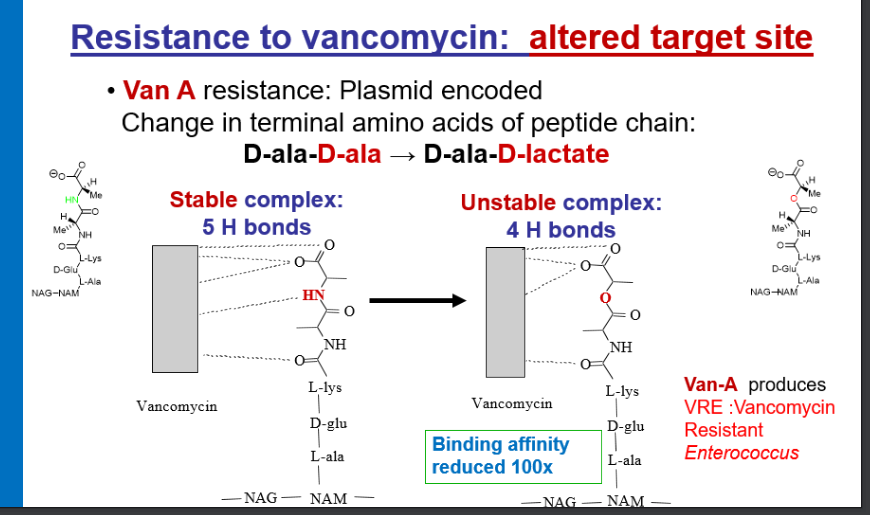
explain how bacteria can have resistance to glycopeptides like vancomycin by an altered target
explain how bacteria can be resistance towards amino glycosides through drug inactivation
the bacteria produce aminoglycoside modifying enzymes which add different side chains onto the glycoside drug to make it ineffective
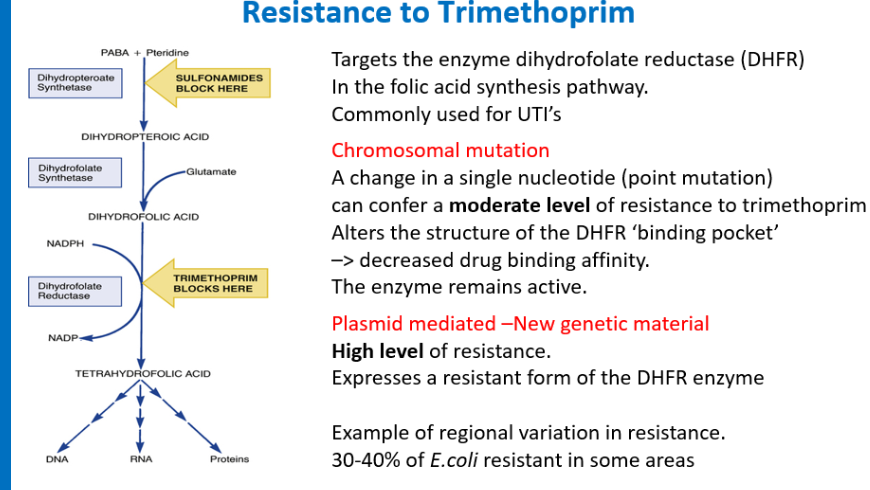
explain how bacteria can be resistant to trimethroprim
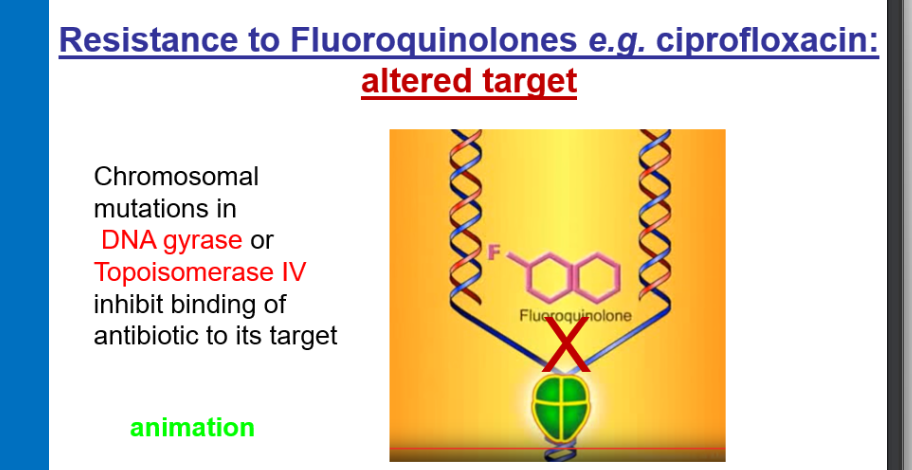
explain how bacteria can be resistant to fluroquinolones e.g. ciprofloxacin by altering their target
explain how bacteria can be resistant to tetracyclines by altering their uptake

what are the two classes of drugs associated with antimicrobial resistance
