Flashcards Frog Anatomy - Photos
 Call Kai
 Learn
 Practice Test
 Spaced Repetition
 Match
 Flashcards
 Knowt Play
1/36

There's no tags or description
Looks like no tags are added yet.
37 Terms
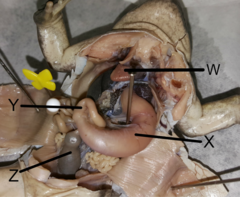
Stomach (photo)
Identify X

Duodenum (photo)
Identify Y

Heart (photo)
Identify W
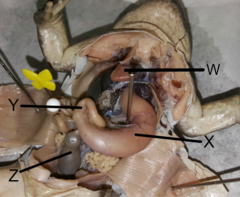
Large intestine (photo)
Identify Z
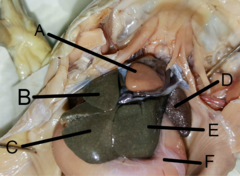
Ventricle (photo)
Identify A

Right Lobe of Liver (photo)
Identify B
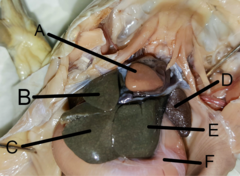
Left Posterior Lobe of Liver (photo)
Identify C

Lung (photo)
Identify D
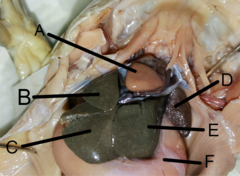
Left Anterior Lobe of Liver (photo)
Identify E
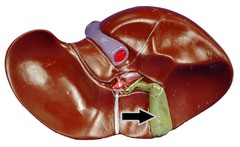
Gall bladder (photo)
Identify structure at arrow

Spleen (photo)
Identify (arrow)

Teste (photo)
Identify X

Kidney (photo)
Identify Y

Small Intestine (photo)
Identify Z

Eustachian Tube (photo)
Identify X

Nostrils (photo)
Identify Y

Nictitating membrane (photo)
Identify arrow

Tympanic membrane (photo)
Identify arrow

Oviducts (photo)
Identify A

Eggs (photo)
Identify B

messentry
- Suspends intestines, anchors but allows movement
- prevents intestines from tying up
Cloaca
-common opening for digestive, urinary, and reproductive tracts
-also known as the large intestine
-humans don't have it

frog heart
3 chambered heart

human heart
4 chambers

small intestine
Digestive organ where most chemical digestion and absorption of food takes place

liver
makes bile

Gallbladder
stores bile
bile
A substance produced by the liver that breaks up fat particles.
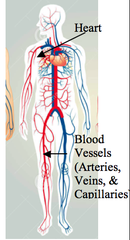
circulatory system
Transports oxygen, waste, nutrients, hormones, heat, etc... around the body
digestive system
Breaks down food into absorbable units that enter the blood for distribution to body cells.
respiratory system
Brings oxygen into the body. Gets rid of carbon dioxide.

Trachea
Allows air to pass to and from lungs

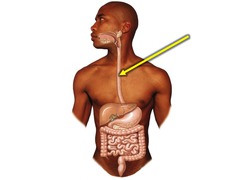
Esophagus
Tube connecting the mouth to the stomach
Diaphragm
Large, flat muscle at the bottom of the chest cavity that helps with breathing
-frogs don't have it

reproductive system
Reproduce offspring- produce male sex cells (sperm) and female sex cells (oocytes)

fat bodies (frog)
Masses of fat in the body cavities of frogs needed for hibernating and mating
-humans don't store fat this way

stomach
large muscular sac that continues the mechanical and chemical digestion of food
